
When someone controls more than half of a blockchain’s computing power, they can pull off a 51% attack, a scenario where a single entity or group gains majority control over a blockchain’s network to manipulate transactions. Also known as a majority attack, this isn’t science fiction—it’s a real risk for smaller blockchains that rely on proof-of-work mining. If one miner or group holds over 51% of the network’s hash rate, they can stop new transactions, reverse their own payments, and prevent others from confirming coins. It doesn’t mean they can steal coins from wallets or create new ones out of thin air—but it does break the core promise of blockchain: trust without a central authority.
This kind of attack is expensive and hard to pull off on big networks like Bitcoin or Ethereum, where the hash rate runs into exahashes per second. But for smaller chains—especially those with low market caps and minimal mining activity—it’s surprisingly possible. Projects like Ethereum Classic and Bitcoin Gold have been hit before. In 2020, Ethereum Classic lost over $5 million in double-spent transactions after a 51% attack. These aren’t theoretical threats—they’re financial disasters that happen when networks don’t have enough distributed mining power to protect themselves.
The hash rate, the total computational power used to mine and process transactions on a blockchain is the key metric here. The higher the hash rate, the harder it is for one player to dominate. That’s why Bitcoin is safe: thousands of miners spread across the globe contribute to its security. But for newer chains that rely on a handful of mining pools or use less secure consensus models, the risk spikes. Even something as simple as a single mining pool suddenly going offline—or worse, turning malicious—can leave a network exposed.
And it’s not just about mining. The double spending, the act of spending the same digital currency twice by exploiting a network’s lack of consensus is the main goal of a 51% attack. Imagine sending 100 coins to an exchange, waiting for confirmation, then reversing that transaction on your own fork of the chain. The exchange thinks you paid, but you still have your coins. That’s how scams happen. And because many exchanges and users trust small chains too easily, the damage spreads fast.
What you’ll find in the posts below isn’t just theory. You’ll see real cases where fake airdrops, shady exchanges, and dead projects exploited weak blockchain security to trick people. You’ll learn why some crypto platforms vanish overnight—not because of market crashes, but because their underlying chains were vulnerable to a 51% attack. You’ll also see how projects like SushiSwap on Polygon or IncomRWA avoid these risks by choosing stronger infrastructure. This isn’t just about mining power. It’s about who you trust with your money—and why some blockchains are just not built to last.
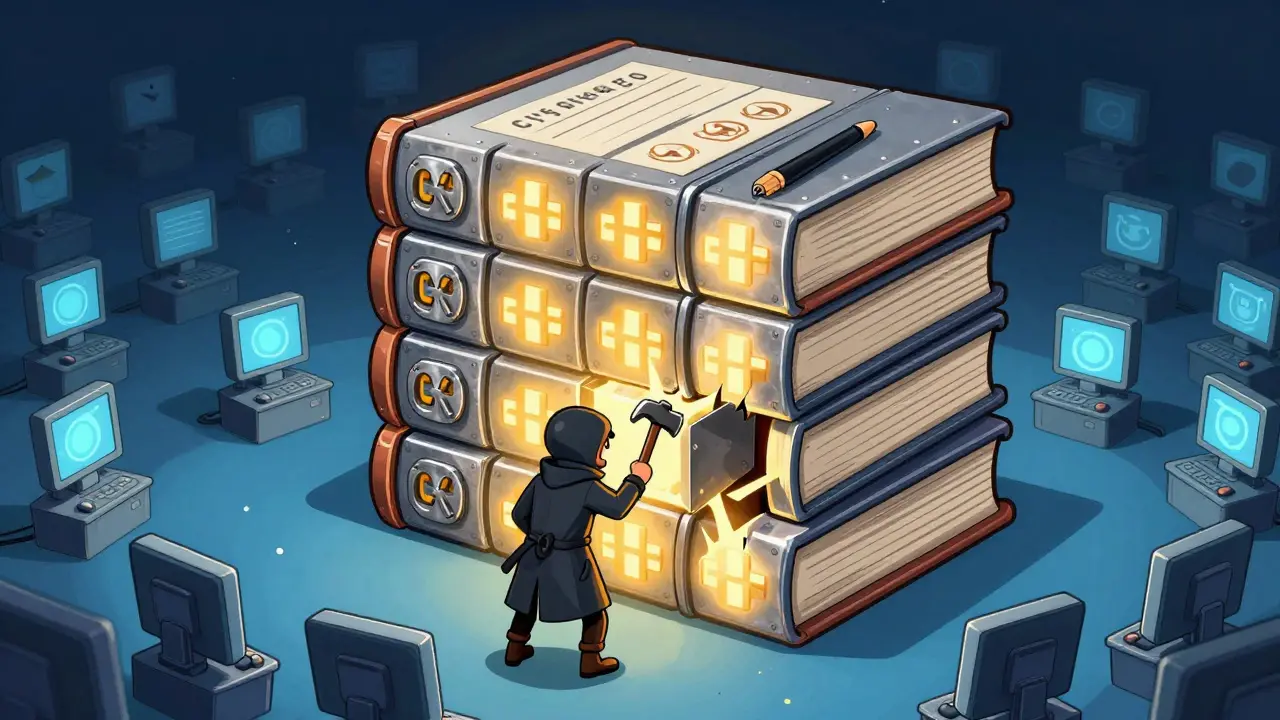
Blockchain data is designed to be unchangeable, but it's not impossible to alter. Learn how, when, and why blockchain immutability can be bypassed-with real examples from Ethereum, Bitcoin Gold, and enterprise systems.