
When you hear about Bitcoin mining hardware, specialized machines built to solve complex math problems and validate Bitcoin transactions. Also known as ASIC miners, these devices are the backbone of the Bitcoin network—without them, no new coins get created and no transactions get confirmed. Unlike regular computers or GPUs, Bitcoin mining hardware is built for one thing: brute-force hashing. They don’t browse the web, stream videos, or run apps. They just crunch numbers, nonstop, 24/7.
Early on, people mined Bitcoin with their home PCs. That ended in 2013. Today, the only machines that make sense are ASIC miners, application-specific integrated circuits designed solely for Bitcoin’s SHA-256 algorithm. Brands like Bitmain, MicroBT, and Canaan dominate the market. Models like the Antminer S21 or WhatsMiner M50S can hash trillions of times per second—but they also sip power like a thirsty desert traveler. A single ASIC can pull 3,000 watts or more. That’s more than your entire home refrigerator, oven, and AC unit combined.
Profitability isn’t about the machine anymore. It’s about electricity cost, the single biggest factor in whether mining turns a profit or loses money. If you’re paying $0.15 per kWh, you’re likely losing. If you’re in a region with cheap hydro or solar power—think Quebec, Georgia, or parts of Texas—you might still break even. The hardware doesn’t care about hype. It only cares about how much it costs to run and how much Bitcoin it earns in return.
Most of the posts here don’t talk about mining rigs directly—but they all touch the edges of this world. You’ll find stories about how mining bans in Ecuador and Morocco push users into risky workarounds. You’ll see how Ethereum’s shift away from mining changed the entire hardware market. You’ll read about crypto regulations that make owning or importing ASICs risky or illegal. Even airdrops and DeFi projects rely on Bitcoin’s security, which only exists because mining hardware keeps the chain alive.
So if you’re thinking about buying a miner, or just wondering why your neighbor’s garage is humming like a jet engine, this collection gives you the real picture. No fluff. No hype. Just what works, what doesn’t, and what’s changed since the last bull run.
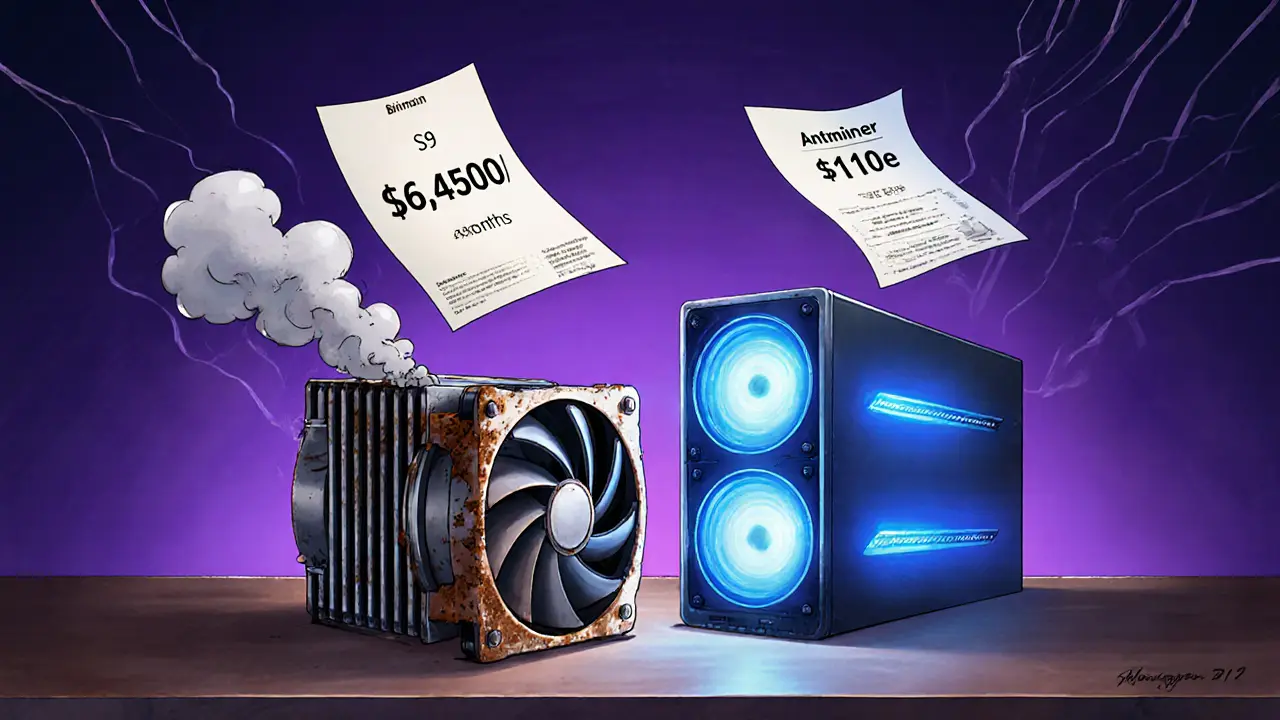
In 2025, buying used mining hardware looks cheap-but it’s a losing strategy. New ASICs are 7x more efficient, cheaper to run, and retain value. Learn why new hardware is the only smart choice for profitable Bitcoin mining.