
When a blockchain hard fork, a permanent split in a blockchain network that creates two separate chains with different rules. Also known as blockchain fork, it happens when developers or miners can't agree on how the network should evolve — and instead of compromising, they build a new path forward. This isn’t just a technical glitch. It’s a power struggle. It’s a vote. And it can turn your holdings into two different assets — or wipe them out entirely if you’re not careful.
Hard forks aren’t rare. They’re built into the DNA of open networks. Bitcoin split into Bitcoin and Bitcoin Cash in 2017 because some wanted bigger blocks for faster, cheaper transactions. Ethereum split into Ethereum and Ethereum Classic after the DAO hack, with one group choosing to reverse the theft and the other insisting the code must never be changed. These weren’t accidents. They were decisions — and each one changed how people trusted the system.
Behind every hard fork is a blockchain consensus, the method by which network participants agree on the state of the ledger. Also known as proof-of-work or proof-of-stake, it’s the rulebook that tells nodes what’s valid. When the rulebook gets rewritten, and not everyone accepts the new version, you get a fork. That’s why some hard forks succeed — like Bitcoin Cash, which still trades today — and others vanish into obscurity, like Bitcoin Gold, with almost no users left. The key isn’t just the technical change. It’s the community. If miners, developers, and users don’t back the new chain, it dies. No code can save a blockchain without people.
And here’s the real risk: if you hold crypto on an exchange during a hard fork, you might not get the new coins. Exchanges decide whether to support the fork. Some do. Some don’t. Some freeze your funds for weeks. You could lose out on free tokens — or worse, get stuck with a worthless chain because no one else is trading it. That’s why understanding forks isn’t just for developers. It’s for anyone who owns crypto.
Hard forks also expose how fragile trust can be. When a network splits, you’re not just watching code change — you’re watching beliefs fracture. One side believes in scalability. The other in immutability. One side trusts developers. The other trusts the original code. These aren’t just debates. They’re values. And they shape the future of every coin you hold.
That’s why the posts below matter. They don’t just report on forks. They show you what happens after — the scams that pop up, the exchanges that vanish, the tokens that crash, and the ones that actually survive. You’ll see how fake airdrops pretend to be fork rewards. How exchanges like BitFex or BTCsquare disappear when the rules change. How Egypt and Vietnam ban crypto not because of forks, but because they can’t control what happens when a network splits. You’ll learn what to watch for, who to trust, and how to protect your assets when the chain breaks.
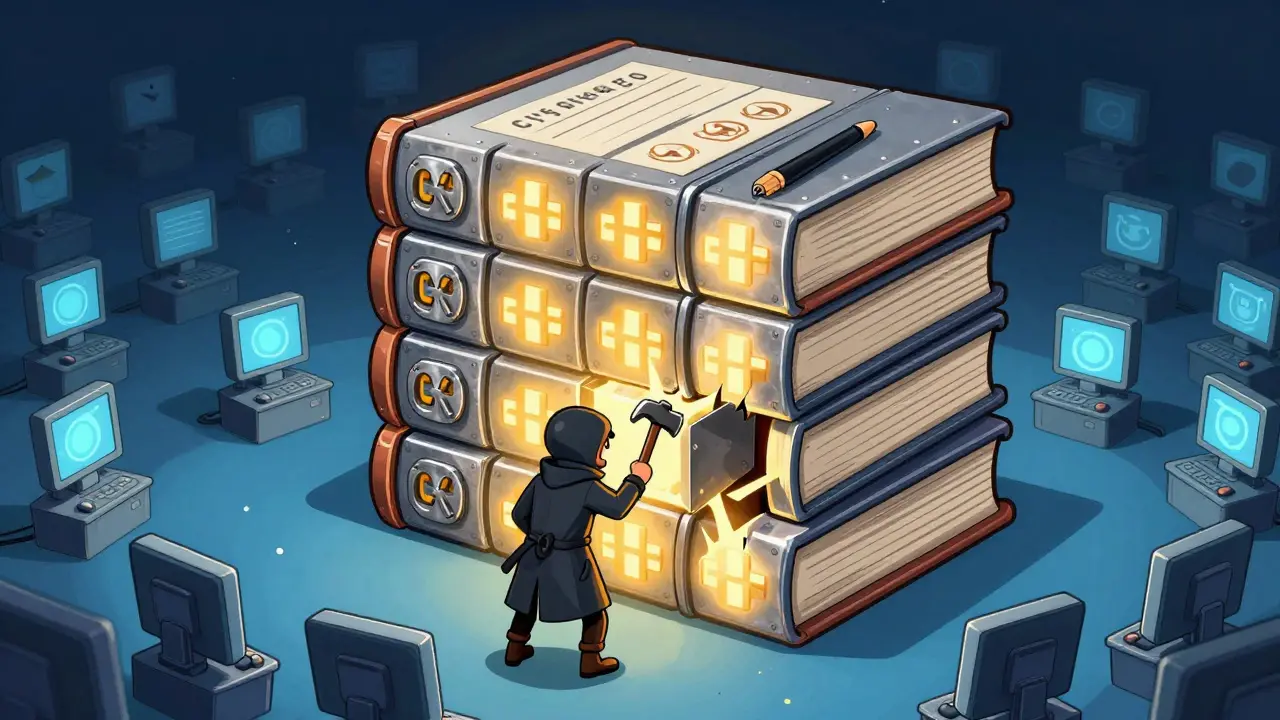
Blockchain data is designed to be unchangeable, but it's not impossible to alter. Learn how, when, and why blockchain immutability can be bypassed-with real examples from Ethereum, Bitcoin Gold, and enterprise systems.