
When you hear delete blockchain, the idea of removing data from a decentralized, tamper-proof ledger, it sounds like a contradiction. Blockchains are built to be permanent. Once data is written, it’s copied across hundreds or thousands of nodes. There’s no central delete button. This isn’t a glitch—it’s the whole point. blockchain immutability, the core feature that makes blockchains trustworthy is what stops you from erasing transactions, token transfers, or smart contract code. Even if you own the private key to a wallet, you can’t remove the history of what it did. The network remembers.
So why do people ask how to delete blockchain? Often, it’s because they made a mistake—sent crypto to the wrong address, traded on a scam platform, or joined a project that vanished. Some want to erase personal data for privacy. Others are frustrated after losing money to a rug pull. But here’s the truth: you can’t delete the blockchain. You can only stop using it. What you can delete is your local copy—the node software on your computer, the wallet files, the cache. But the ledger? It’s still out there. Even if a project shuts down, like YFX, a decentralized perpetuals platform that became a ghost project with no team or liquidity, the transactions remain on the chain. The same goes for failed airdrops like CELT, a token that crashed 98% after a silent release to private investors. The data doesn’t vanish. It just becomes irrelevant.
Some blockchains, like those used by enterprises, allow for data pruning or off-chain storage. But even then, the hash of the data stays on-chain as proof it existed. The distributed ledger technology, the broader system behind secure, decentralized data sharing that doesn’t always need crypto tokens, still keeps a record. If you’re trying to comply with GDPR or erase personal info, you can’t delete the blockchain—you can only mask or anonymize the data linked to it. That’s why real solutions focus on encryption, zero-knowledge proofs, or storing sensitive data off-chain. You can’t undo the past on a blockchain. But you can learn from it. Below, you’ll find real cases where people tried to escape bad crypto moves, got scammed by fake airdrops, or discovered that the most dangerous blockchains aren’t the ones that can’t be deleted—they’re the ones that never had anything valuable to begin with.
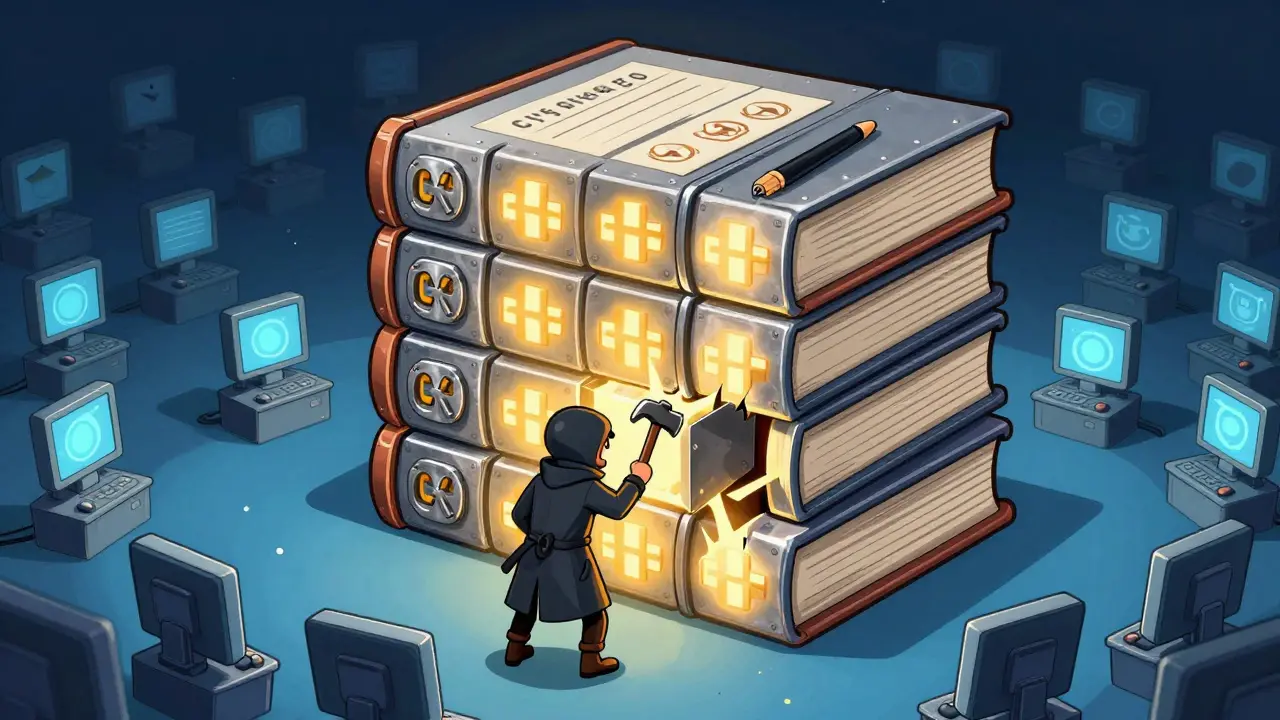
Blockchain data is designed to be unchangeable, but it's not impossible to alter. Learn how, when, and why blockchain immutability can be bypassed-with real examples from Ethereum, Bitcoin Gold, and enterprise systems.