
When you trade crypto on leverage, the liquidation process, the automatic closing of a leveraged position when losses exceed collateral. Also known as margin call execution, it’s the moment your trade gets shut down before you lose everything. It’s not a punishment—it’s a safety net. Exchanges and DeFi protocols use it to protect themselves and other users from defaults. But if you don’t understand how it works, you could lose your entire stake in seconds.
The liquidation price, the specific market price at which a leveraged position becomes unsafe and triggers automatic closure. is calculated based on your collateral, leverage level, and the asset’s volatility. For example, if you borrow $5,000 to buy Bitcoin with 10x leverage and put down $500 as collateral, a 10% drop in Bitcoin’s price wipes out your equity. That’s when the margin trading, the practice of borrowing funds to amplify crypto positions, often leading to liquidation if markets move against you. system kicks in. No warning. No second chance. The system sells your position instantly to cover the loan.
This isn’t just about centralized exchanges like Binance or OKX. In DeFi liquidation, the automated removal of undercollateralized loans on decentralized protocols like Aave or Compound., smart contracts handle everything. If your collateral value drops below the required threshold, anyone can trigger the liquidation—and get a reward for doing it. That’s why you see bots racing to snap up discounted assets the moment your position becomes risky. It’s not personal. It’s code.
People think liquidations only happen to beginners. But even experienced traders get caught. A sudden market crash, a failed airdrop, or a liquidity crunch on a DEX like ViperSwap or ThunderSwap can send prices spiraling faster than any stop-loss can react. That’s why monitoring your liquidation price isn’t optional—it’s survival. Tools like ZKSwap or Firebird Finance give you real-time alerts, but they won’t save you if you’re over-leveraged.
There’s no magic trick to avoid liquidation. But there are simple rules: never trade more than you can afford to lose, keep extra collateral handy, and avoid high leverage on volatile tokens like GOUT or TREMP. If you’re using a platform like HKD.com or BULL Finance, check their liquidation thresholds before opening a position. And always, always understand the difference between a margin call and a full wipeout.
Below, you’ll find real-world breakdowns of how liquidation plays out across different platforms—from centralized exchanges to DeFi protocols. You’ll see how traders in Nigeria, Bangladesh, and Australia have been affected by sudden price swings. You’ll learn how the 2025 Investment and Securities Act is changing margin rules. And you’ll find out why some of the biggest losses in crypto history happened not because of hacks, but because someone ignored the liquidation process.
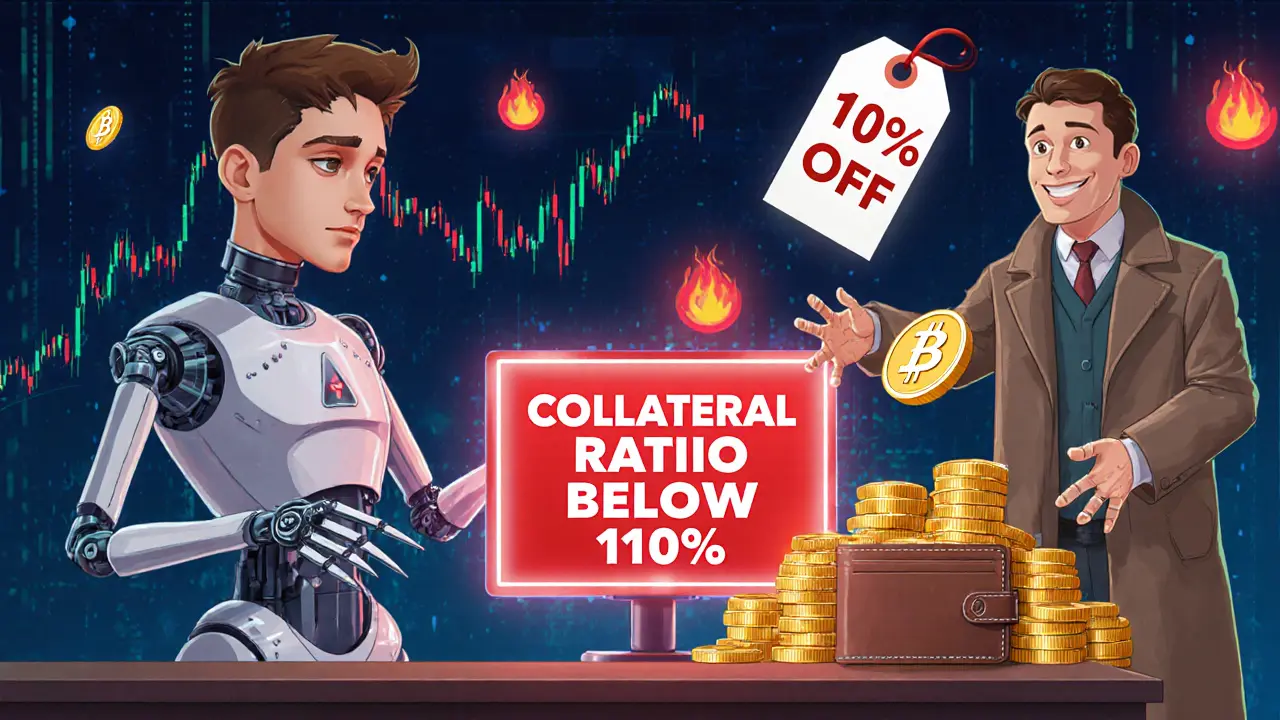
Learn how liquidation works in collateralized loans on blockchain, why it's faster and riskier than traditional lending, and how to avoid losing your crypto to automated liquidations.