
When you trade cryptocurrency in Morocco, a country that has officially banned all cryptocurrency transactions since 2017. Also known as the Kingdom of Morocco, it’s one of the few African nations with a total crypto prohibition—not just regulation, but a full legal block. Unlike Nigeria or India, where crypto is taxed or overseen, Morocco treats digital assets like illegal drugs: possession, trading, or even promoting them can land you in legal trouble.
The ban isn’t just about banks refusing to process crypto payments—it’s enforced by the Central Bank of Morocco, the national financial authority that controls all monetary activity. Also known as Bank Al-Maghrib, it explicitly forbids financial institutions from handling any crypto-related transactions. This means no exchanges, no wallets linked to local banks, and no payment processors can touch Bitcoin, Ethereum, or any altcoin. If you’re caught using crypto to send money abroad or buy goods, you could face fines, account freezes, or even criminal charges under money laundering laws. The government doesn’t publish exact penalty numbers, but reports from locals and financial watchdogs confirm fines range from 20,000 to 100,000 Moroccan Dirham (roughly $2,000–$10,000 USD), depending on the scale of the activity.
Despite the ban, crypto use hasn’t disappeared—it’s gone underground. Moroccans rely on peer-to-peer platforms, offshore exchanges, and stablecoins like USDT to send remittances, hedge against inflation, or buy goods from international sellers. Some use VPNs to access exchanges, others trade through friends or informal networks. But every transaction carries risk. Authorities monitor suspicious bank transfers, and there have been documented cases of people arrested for using crypto to pay for imported electronics or crypto mining equipment.
What’s worse, there’s no legal path to compliance. You can’t register as a crypto user, apply for a license, or report your holdings. The system is designed to make crypto invisible—not regulated. That’s why most guides on Morocco crypto penalties focus on avoidance, not compliance. If you’re living there, your best move is to treat crypto like cash you can’t legally spend—use it carefully, or not at all.
Below, you’ll find real cases and breakdowns of how crypto bans play out in practice—like the Ecuador banking shutdown, Bolivia’s fine structures, and Nigeria’s shift from ban to regulation. These aren’t just distant stories. They show how governments react when people refuse to give up digital money—and what happens when you’re caught in the middle.
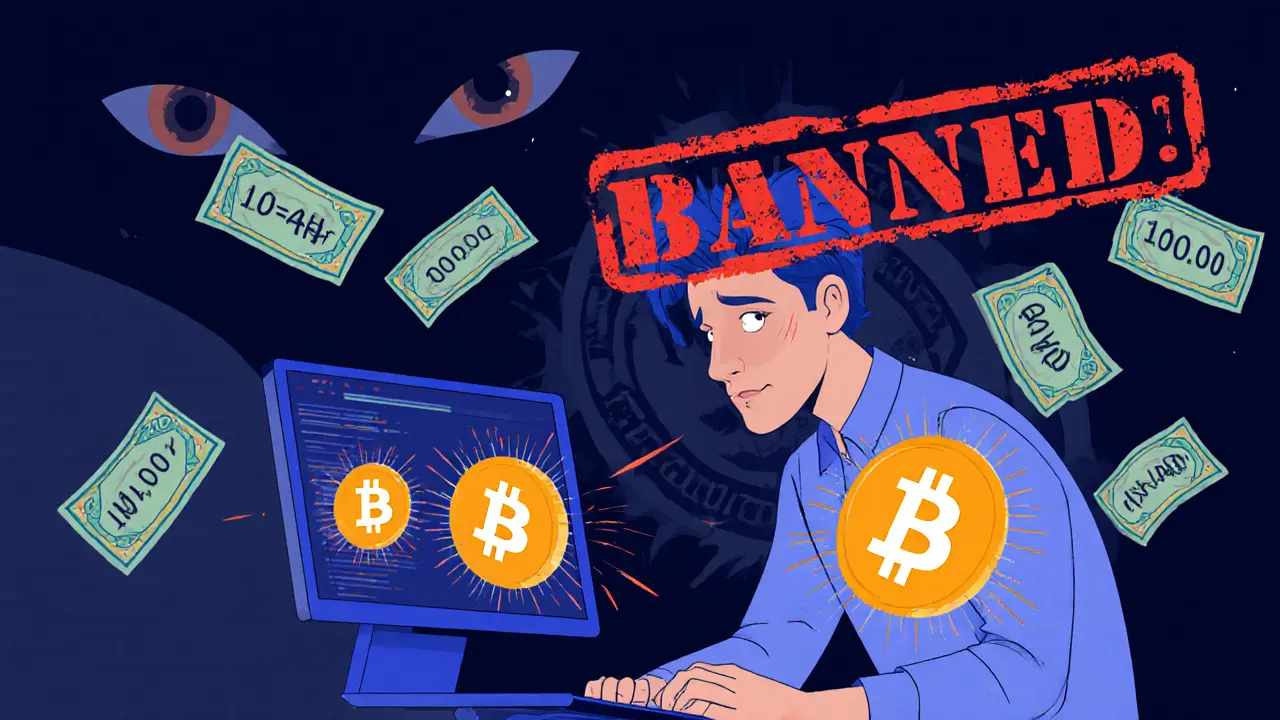
Morocco bans crypto trading with fines up to $50,000, but a 2025 law will legalize it under strict rules. Learn current penalties, tax changes, and how to stay compliant before the new system launches.