
When you hear New Bitcoin miners, modern mining machines built to handle Bitcoin’s growing difficulty with less power and more efficiency. Also known as ASIC miners, they’re not just faster—they’re the only way most people can mine Bitcoin profitably today. The old days of mining with a gaming GPU are long gone. Since the 2024 halving, the network’s difficulty jumped again, and only machines built specifically for Bitcoin—like the Antminer S21 or WhatsMiner M50—can keep up. If you’re still using hardware from 2022, you’re likely losing money on electricity alone.
What makes a Bitcoin mining hardware, specialized machines designed to solve Bitcoin’s cryptographic puzzles at scale. Also known as ASIC miners, they’re the backbone of the network successful isn’t just raw power. It’s efficiency. The best new miners today deliver over 200 TH/s while using less than 20 joules per terahash. That’s a 60% improvement over just two years ago. Companies like MicroBT and Bitmain are racing to cut costs, not just because miners want to save money, but because electricity prices are rising everywhere—from Texas to Kazakhstan. If your miner uses more than 30 joules per TH, it’s already outdated.
And it’s not just about the machine. The real game is in mining profitability, the net return you get after paying for electricity, hardware, and maintenance. A miner that costs $5,000 might look expensive, but if it pays for itself in six months and keeps earning for years, it’s a bargain. Most new miners today are bought by professional mining farms, not individuals. But that doesn’t mean you’re out of luck. Some smaller operators are finding success by leasing hash power or joining mining pools with low fees. The key? Don’t buy hardware unless you’ve checked the current Bitcoin price, your local electricity rate, and the miner’s estimated ROI using a real-time calculator.
There’s also a quiet shift happening in where mining happens. After China’s 2021 ban, the U.S. became the top mining country. But now, places like Paraguay, Canada, and even parts of the Middle East are stepping up, using cheap hydro or solar power. These locations aren’t just cheaper—they’re more stable. If your miner is running in a country with sudden power cuts or crypto bans, you’re risking your investment. The new wave of miners isn’t just about tech—it’s about location, reliability, and long-term planning.
You won’t find a single article here claiming you can mine Bitcoin for free. That’s a scam. But you will find real breakdowns of the latest machines, honest reviews of mining pools, and clear guides on how to calculate your costs before you spend a dime. Whether you’re looking at a used S19 Pro or considering a new model from MicroBT, the posts below give you the facts—no hype, no fluff. What matters isn’t how loud your rig is. It’s how much Bitcoin you actually keep after the bills are paid.
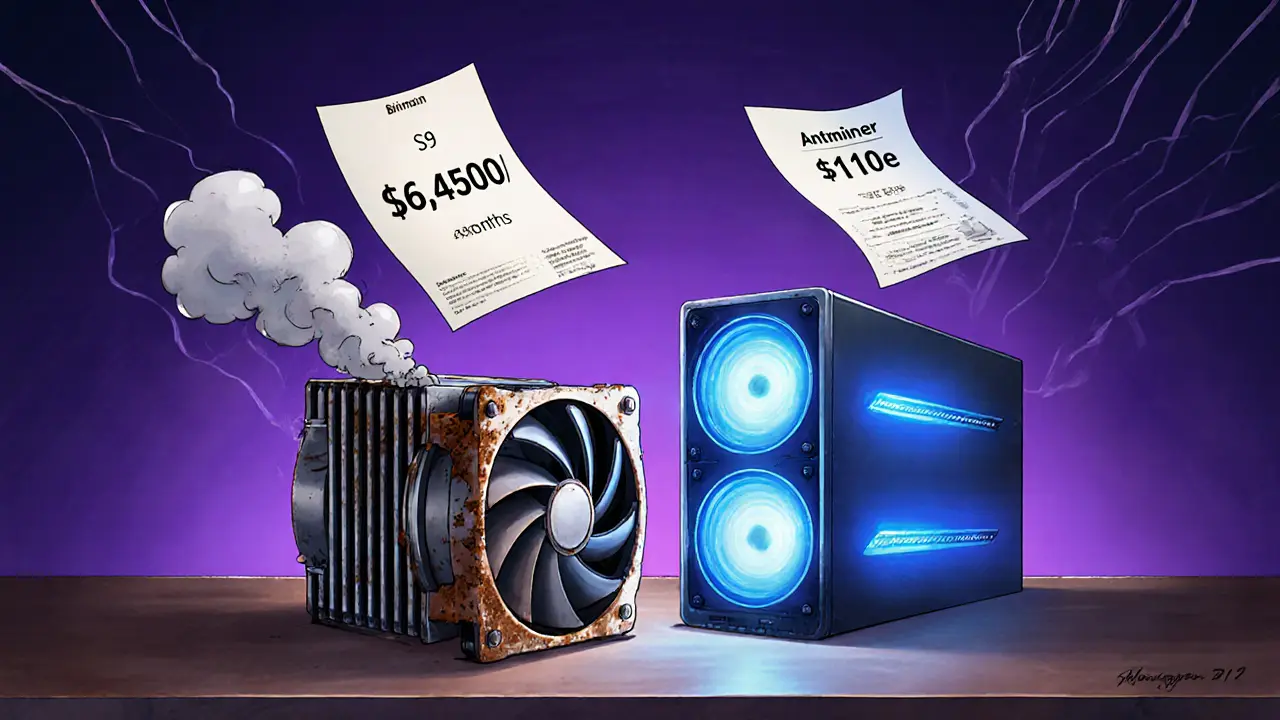
In 2025, buying used mining hardware looks cheap-but it’s a losing strategy. New ASICs are 7x more efficient, cheaper to run, and retain value. Learn why new hardware is the only smart choice for profitable Bitcoin mining.