
When you buy a used ASIC miner, a specialized computer built to mine Bitcoin and other cryptocurrencies by solving complex math problems. Also known as application-specific integrated circuit miners, these machines were once the backbone of home mining—but many are now outdated, overheated, or worn out from years of nonstop work. Buying one isn’t like buying a used laptop. These devices run 24/7, heat up to 90°C, and often fail after 18–24 months of heavy use. If you’re thinking about picking one up for cheap, you need to know what you’re getting into.
The biggest mistake people make is assuming a lower price means a better deal. A $300 Antminer S19 Pro from 2021 might look great until you realize it uses 3,250 watts—far more than newer models. Electricity costs alone could eat your profits. Then there’s the wear. If the fan bearings are noisy or the heat sinks are caked with dust, the chip inside is likely running hotter than it should. That means shorter life, higher failure rates, and no warranty. You’re not just buying hardware—you’re buying risk.
Not all used ASIC miners are the same. Some, like the Antminer S9 from 2016, are practically dead today—they can’t compete with today’s efficiency standards. Others, like the AvalonMiner 1246 or Bitmain’s S17+, still have legs if they’ve been well-maintained. Look for sellers who provide hash rate test logs, power consumption records, and proof of recent cleaning. If they can’t show you data, walk away. The Bitcoin mining difficulty, a measure of how hard it is to mine Bitcoin, adjusted every two weeks keeps rising, so your miner needs to be fast and efficient just to break even.
Another thing to watch: firmware. Many used miners run old software that doesn’t support modern pool protocols or has security holes. A miner that can’t connect to your mining pool is just a fancy space heater. You’ll also need to consider cooling. If you’re running this in your garage or basement, you’re adding AC costs to your electricity bill. In some places, the heat output alone makes it illegal without permits.
And don’t forget the electricity cost, the single biggest factor in whether mining turns a profit. In the U.S., if your power bill is over $0.12 per kWh, even a decent used miner might not pay for itself. In Europe or Southeast Asia, where rates are lower, the math changes. Always run the numbers with a mining calculator before you hand over cash.
There’s also the resale problem. If you buy a used ASIC miner and it dies in six months, you won’t get much back. The market for old rigs is thin. Buyers know exactly what they’re getting—and they’re not paying premiums for outdated tech. That’s why some miners now turn to staking, earning crypto rewards by locking up coins instead of using power-hungry hardware—it’s quieter, cheaper, and just as profitable for many.
So what’s the real story with used ASIC miners? They can work—if you’re smart. But they’re not a get-rich-quick fix. You need to know how to test them, where to buy from, and whether your electricity costs make sense. Below, you’ll find real reviews, buyer guides, and warnings from people who’ve been there—some lost money, others found a quiet edge. Don’t skip the details. Your next dollar of profit depends on it.
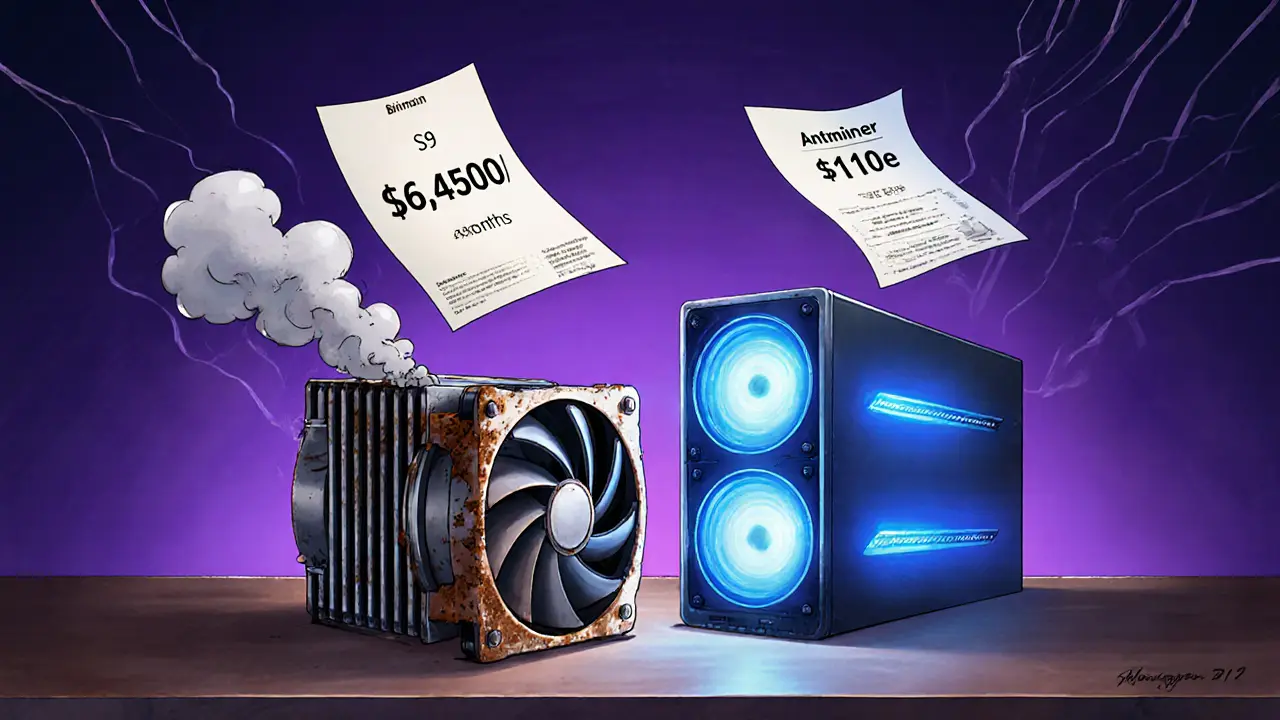
In 2025, buying used mining hardware looks cheap-but it’s a losing strategy. New ASICs are 7x more efficient, cheaper to run, and retain value. Learn why new hardware is the only smart choice for profitable Bitcoin mining.