
When people talk about Bangladesh crypto adoption, the rising use of cryptocurrencies like Bitcoin and Ethereum by everyday citizens despite official restrictions. Also known as crypto usage in Bangladesh, it’s not about government approval—it’s about survival, remittances, and bypassing broken systems. While the central bank bans financial institutions from handling crypto, millions in Bangladesh are still buying, selling, and holding digital assets. They’re not doing it for speculation. They’re doing it because it works.
One of the biggest drivers is remittances, money sent home by Bangladeshi workers abroad. Traditional services like Western Union charge up to 10% in fees. Crypto platforms let users receive dollars in Bitcoin or USDT, then cash out through local P2P traders for a fraction of the cost. This isn’t theoretical—it’s daily life for families relying on overseas income. And it’s not just workers. Young entrepreneurs in Dhaka and Chittagong are using digital wallets, apps like Trust Wallet and MetaMask to store and swap crypto without bank approval. Also known as self-custody crypto tools, they’re replacing traditional banking for those who can’t access loans or savings accounts.
The government’s stance hasn’t changed. The Bangladesh Bank still calls crypto illegal for banks. But enforcement is messy. You won’t find a single case of someone going to jail just for buying Bitcoin on Binance P2P. Instead, regulators focus on large exchanges and money laundering—leaving individual users largely alone. Meanwhile, crypto-related Telegram groups and local Facebook communities are thriving. People share trading tips, warn about scams, and coordinate cash pickups in tea shops and markets. It’s grassroots finance, built on trust and necessity.
What’s next? If inflation keeps rising and the taka weakens, more people will turn to crypto as a store of value. Some believe the government will eventually create a digital currency—but that won’t replace Bitcoin. It will just add another layer. Right now, Bangladeshis aren’t waiting for permission. They’re building their own financial system, one crypto transaction at a time.
Below, you’ll find real guides on how people in Bangladesh are trading crypto, what wallets they trust, how they avoid legal risks, and what’s changing as global rules shift. No fluff. Just what works.
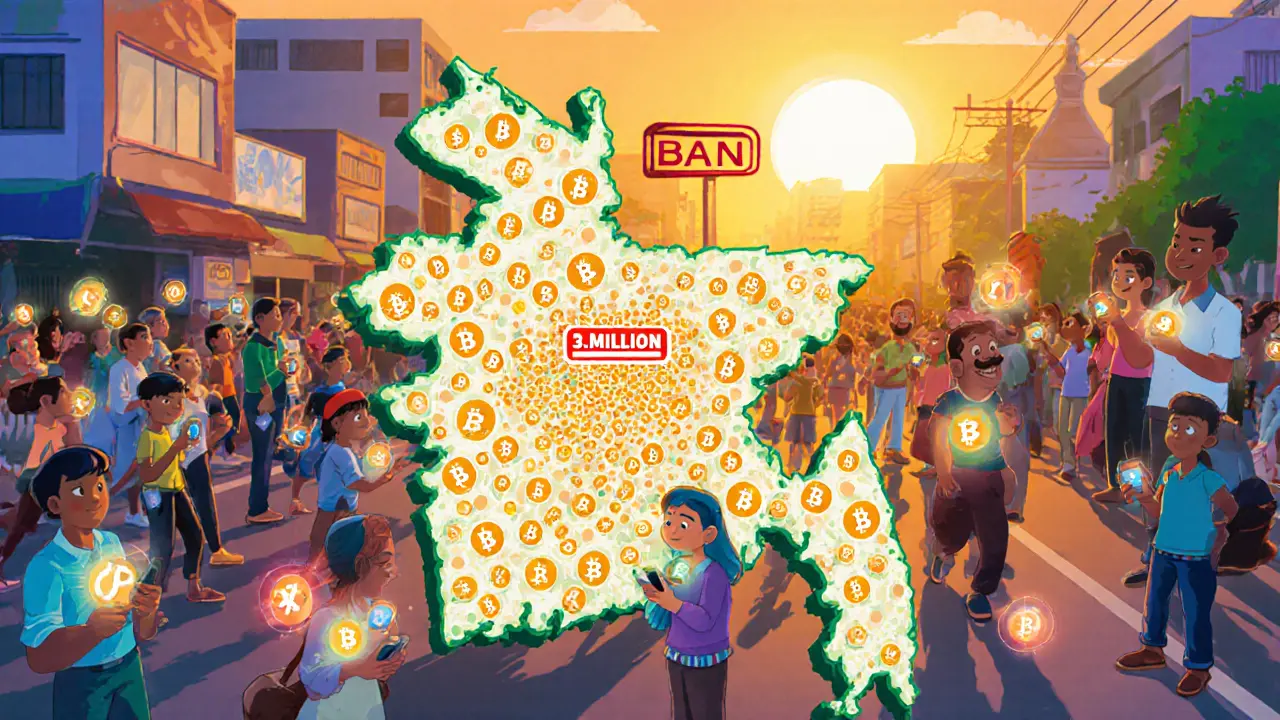
Bangladesh ranks #35 in global crypto adoption despite a total ban, with 3.1 million users relying on stablecoins for cheap remittances. Explore why the market thrives, how users bypass restrictions, and what the future may hold.