
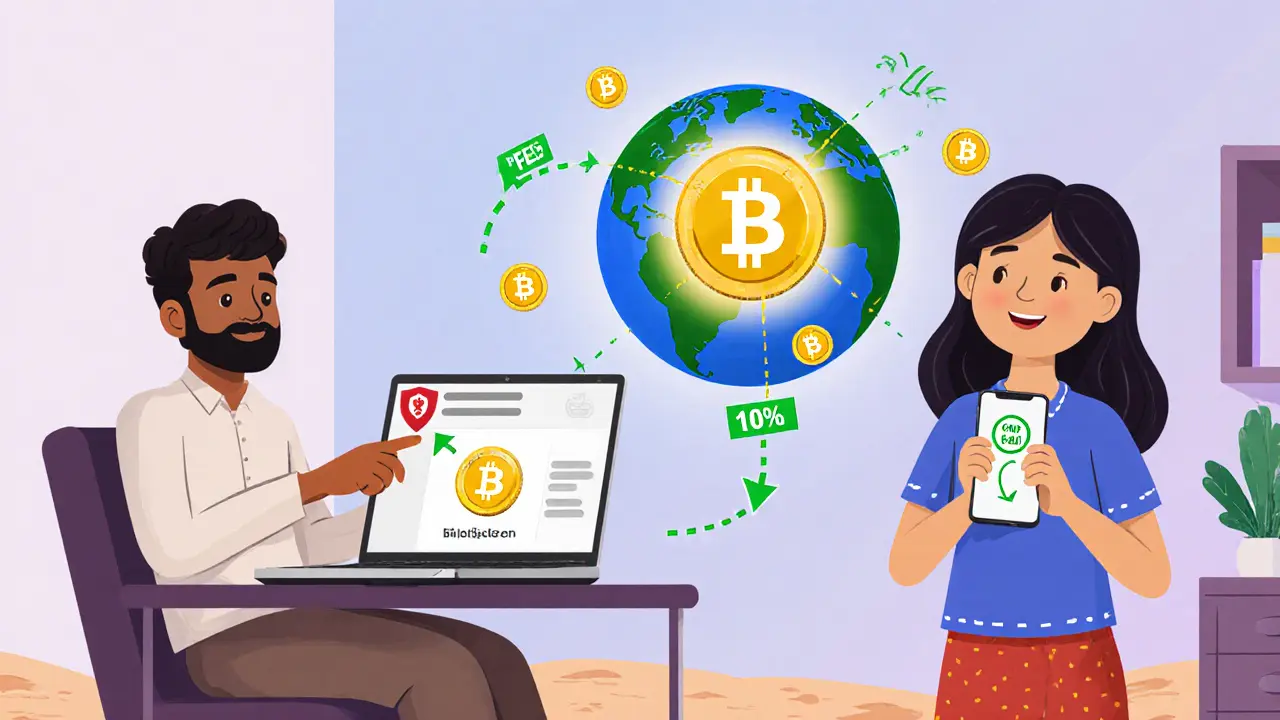
Remittance Cost Calculator
Compare the cost of sending money to Bangladesh using traditional services versus stablecoin-based transfers. See how much you could save with crypto remittances.
Why Stablecoins Save Money
Traditional remittance services in Bangladesh typically charge 7% fees or more. Stablecoins like USDT offer near-instant transfers with fees under 1%, saving you money while bypassing regulatory restrictions. This is why stablecoins dominate crypto adoption in Bangladesh for cross-border payments.
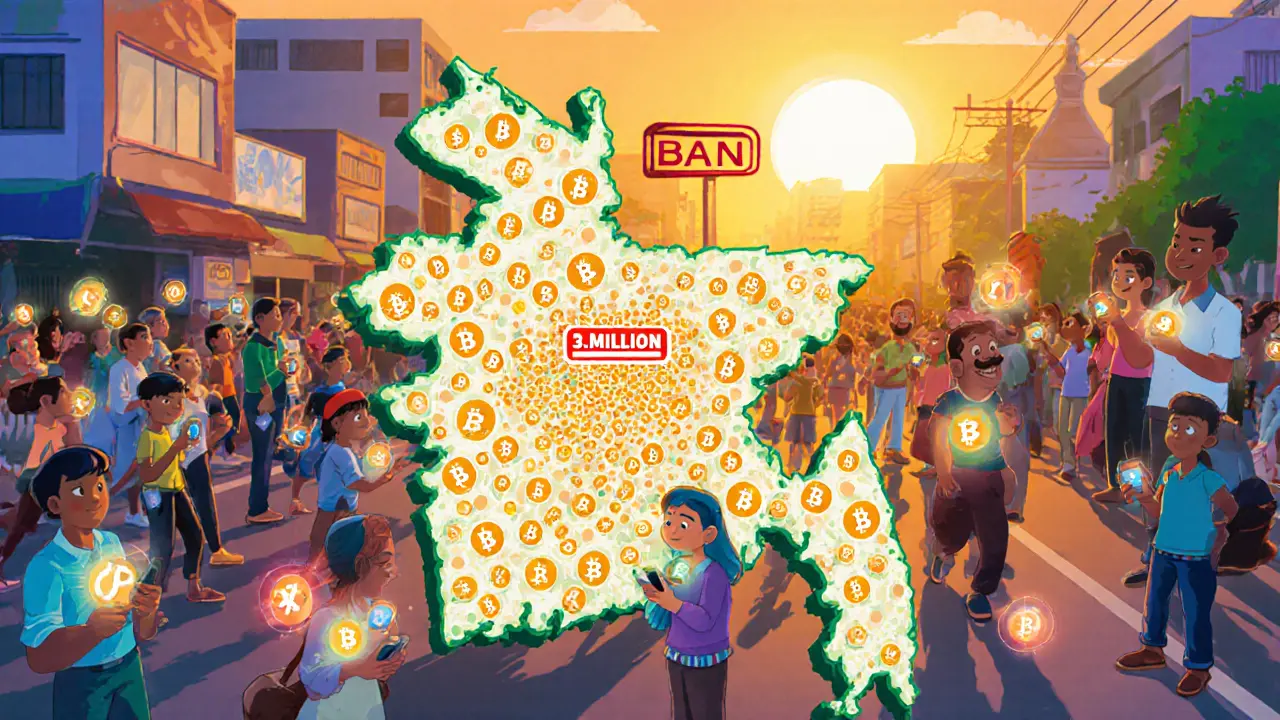
When it comes to digital finance, Bangladesh cryptocurrency adoption is a paradoxical case where a complete regulatory ban coexists with millions of active users. 2025 data shows more than 3.1 million verified crypto users in the country, a figure that places Bangladesh at rank 35 globally despite official prohibition. This article breaks down the numbers, explains why users keep transacting, compares Bangladesh with its South Asian neighbours, and looks ahead to what could change.
Key Takeaways
- Bangladesh hosts roughly 3.1 million verified crypto users in 2025, ranking it #35 worldwide.
- Stablecoins dominate usage, mainly as cheap cross‑border remittance tools.
- Adoption survives because enforcement is limited and users employ VPNs, international exchanges, and peer‑to‑peer platforms.
- India leads South Asia with an adoption index of 1.000; Pakistan follows at 0.619, while Bangladesh trails due to stricter bans.
- Future growth hinges on regulatory tweaks, improvements in financial inclusion, and continued pressure on traditional remittance channels.
What the Numbers Really Say
According to CoinLaw’s 2025 report, Bangladesh’s verified crypto user base has reached 3.1 million. That translates to roughly 1.9 % of the nation’s 165 million population, a sizable slice for a market under a total ban. CoinLedger places Bangladesh at rank 35 in its global adoption index, while Chainalysis historic data shows the country once hovered around the top 15 in certain metrics before the ban intensified.
The bulk of activity centres on stablecoins-digital assets pegged to fiat currencies. Users cite lower fees, faster settlement, and the ability to bypass costly traditional remittance pipelines. In a country that receives an estimated $20 billion in overseas worker remittances each year, even a modest cost reduction is a strong incentive.
Why Adoption Persists Despite a Complete Ban
The Bangladeshi government classifies all cryptocurrency activities as illegal, banning buying, selling, and using digital assets. Enforcement, however, focuses on high‑profile exchanges and large‑scale operators, leaving a grey‑zone where individuals can still transact.
Three practical factors keep the ecosystem alive:
- Limited enforcement tools: Authorities lack the technical capacity to monitor every VPN‑encrypted transaction.
- Economic necessity: Remittance fees in traditional channels can exceed 7 %, while stablecoin transfers often stay under 1 %.
- International platform compliance: Many global exchanges require identity verification (KYC) that satisfies local verification standards, allowing Bangladeshi users to stay “under the radar.”
Regional Comparison: Bangladesh vs India and Pakistan
| Country | Adoption Index | Verified Users (millions) | Key Use Cases |
|---|---|---|---|
| India | 1.000 | 45 | trading, DeFi, remittance |
| Pakistan | 0.619 | 5.4 | freelance payments, remittance |
| Bangladesh | 0.342 | 3.1 | stablecoin remittance |
The table shows Bangladesh’s index is lower than its neighbours, but the absolute number of users is still impressive given the legal environment. India’s open market fuels massive speculative trading, while Pakistan enjoys a more permissive stance. Bangladesh’s niche focus on stablecoins indicates a pragmatic, necessity‑driven adoption rather than speculative hype.
How Users Get Around the Ban
Most Bangladeshi crypto participants rely on three technical work‑arounds:
- VPNs and proxy services: By masking IP addresses, users can access blocked exchanges.
- International peer‑to‑peer platforms: Services like LocalBitcoins or decentralized exchanges let users trade directly, bypassing local regulators.
- Off‑shore wallets with KYC: Platforms that verify identity according to global standards (e.g., Binance, Kraken) allow users to hold and transfer assets while appearing compliant.
These methods carry legal risk, but the economic upside-especially for workers sending money home-often outweighs the perceived threat.

Stablecoins: The Unsung Hero of Bangladeshi Remittances
Stablecoins such as USDT, USDC, and BUSD have become the default vehicle for cross‑border transfers. Their price stability means recipients receive the expected value, unlike volatile Bitcoin or Ethereum. A typical transaction looks like this:
- A migrant worker in the Middle East purchases USDT on an international exchange via VPN.
- The USDT is sent to the recipient’s mobile wallet in Bangladesh.
- The recipient converts USDT to local Taka through a peer‑to‑peer platform, paying a fraction of the traditional remittance fee.
Because the process skips multiple banking intermediaries, funds can arrive in minutes, not days. This speed and cost advantage is the primary driver behind the 3.1 million user figure.
Future Outlook: Will the Ban Hold?
Several scenarios could reshape the landscape:
- Regulatory softening: If the central bank recognizes the utility of stablecoins for remittances, it may introduce a licensing framework similar to India’s proposed crypto‑exchange guidelines.
- Technological push: Wider adoption of blockchain‑based national digital wallets (like Cambodia’s Bakong) could offer a legal avenue for digital assets.
- International pressure: Global financial institutions urging greater financial inclusion may nudge Bangladesh toward a more balanced stance.
Until any of these shifts happen, the underground ecosystem will likely keep expanding, driven by the same economic incentives that sparked its birth.
Quick FAQ
How many people use crypto in Bangladesh?
About 3.1 million verified users were recorded in 2025, making Bangladesh the 35th most‑adopted country worldwide.
Is cryptocurrency illegal in Bangladesh?
Yes. The central bank classifies all crypto activities as illegal, but enforcement mainly targets large exchanges, not individual users.
Why are stablecoins so popular there?
Stablecoins provide a low‑cost, fast way to move money across borders. Their price tie to the US dollar means recipients get a predictable amount, unlike volatile coins.
How do Bangladeshi users bypass the ban?
Most rely on VPNs, international peer‑to‑peer platforms, and offshore exchanges that perform KYC, allowing them to trade while staying under the radar.
Will the government eventually allow crypto?
It’s uncertain. Growing demand for affordable remittance solutions could push regulators toward a licensing model, but political concerns about financial stability remain high.
Understanding Bangladesh’s unique crypto story helps investors, policymakers, and everyday users see how economic need can outpace even the strictest bans. The data shows that as long as people need cheaper, faster ways to send money home, the digital asset underground will keep thriving.


Rohit Sreenath
People keep shouting about the ban, but the real story is that cheap remittance is a lifeline for millions. When you compare the 1‑percent fee of stablecoins to the 7‑percent charge of traditional channels, the choice becomes obvious.