
When you hear about Bangladesh cryptocurrency statistics, the measurable patterns of digital asset use, ownership, and regulation within Bangladesh. Also known as crypto adoption in Bangladesh, it reflects how everyday people, businesses, and regulators are responding to decentralized finance outside traditional banking. Unlike countries with clear crypto laws, Bangladesh’s story is one of contradiction: millions use Bitcoin and USDT, yet the central bank has banned financial institutions from touching crypto since 2017.
This gap between law and practice is where the real data lives. The Bangladesh crypto regulation, the official stance enforced by the Bangladesh Bank and Ministry of Finance remains strict—no banks, no exchanges, no legal payment processing. But that hasn’t stopped users. According to Chainalysis, Bangladesh ranked in the top 10 globally for peer-to-peer crypto volume in 2023, with over 10 million people estimated to hold digital assets. Most trade via local P2P platforms using BDT, often through mobile wallets like bKash or Nagad. This isn’t speculation—it’s documented behavior, backed by transaction volume and wallet activity.
The cryptocurrency users Bangladesh, the population actively buying, holding, or trading crypto despite legal risks are mostly young, tech-savvy, and frustrated with slow banking. They use crypto to send money abroad, hedge against inflation, or access DeFi yields that local banks won’t offer. Some trade on Binance P2P; others use local Telegram groups to swap USDT for cash. The risks are real—scams, frozen accounts, even arrests—but the incentives are stronger. A 2024 survey by a Dhaka-based fintech group found 42% of urban crypto users said they’d lost money, but 78% still planned to keep trading.
What about crypto trading Bangladesh, the actual buying, selling, and exchanging of digital assets within the country’s borders? Officially, it’s illegal. Unofficially, it’s booming. Local exchanges don’t exist, but P2P volume keeps rising. Traders use escrow services, face-to-face meetups, and even WhatsApp groups to complete deals. The government has cracked down on some operators, but enforcement is patchy. Meanwhile, remittance flows via crypto have grown by over 300% since 2020, according to regional fintech analysts—far outpacing traditional wire services.
So what’s next? There’s no sign of legalization yet, but pressure is building. With over 10 million users and billions in annual volume, the central bank can’t ignore the trend forever. Some experts believe a regulated P2P framework is coming—maybe by 2026. Until then, the numbers tell the real story: Bangladesh isn’t rejecting crypto. It’s using it in the shadows, and the statistics prove it.
Below, you’ll find real posts that break down what’s happening on the ground—from how people bypass banking bans to the latest enforcement actions and wallet trends. No fluff. Just facts from users, traders, and analysts who’ve seen it firsthand.
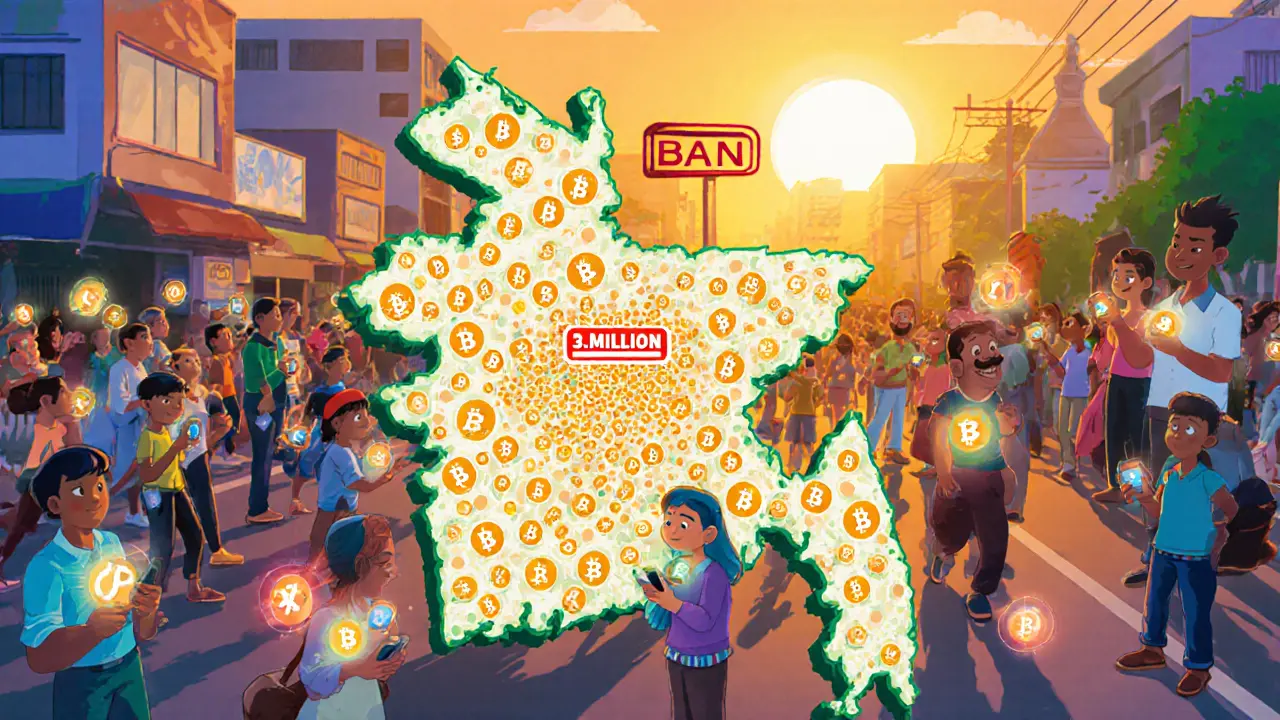
Bangladesh ranks #35 in global crypto adoption despite a total ban, with 3.1 million users relying on stablecoins for cheap remittances. Explore why the market thrives, how users bypass restrictions, and what the future may hold.