
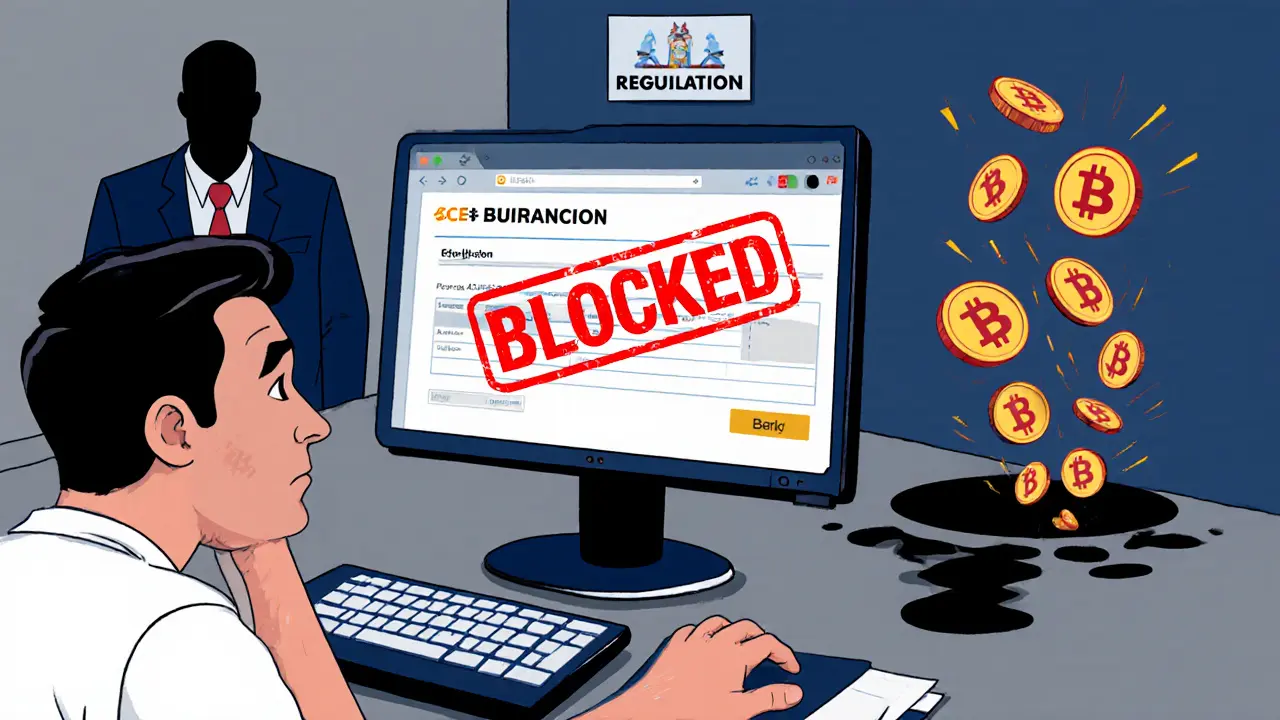
When you try to buy crypto and your bank blocks the transaction, you’re hitting a banking crypto restriction, a policy where financial institutions refuse to process transactions related to cryptocurrencies. Also known as crypto banking bans, these rules aren’t just about fear—they’re often legal mandates from central banks or governments trying to control financial flows. These restrictions don’t just slow you down—they can mean fines, account freezes, or even criminal charges in places like Morocco and Bolivia.
It’s not just about individual banks saying no. Countries like Morocco, a nation that has enforced a full ban on cryptocurrency trading with penalties up to $50,000 and Bangladesh, where 3.1 million people still use stablecoins despite a legal ban show how these policies play out in real life. In Nigeria, the rules changed in 2025: crypto is now regulated by the SEC, not banned, but unlicensed exchanges are shut down. Meanwhile, in India, tax rules and RBI pressure make it harder to move money between banks and exchanges—even though trading isn’t illegal. These aren’t random policies. They’re responses to concerns over money laundering, capital flight, and loss of monetary control.
So what do people do when banks say no? They find workarounds. In Bangladesh, users rely on peer-to-peer stablecoin trades to send money home cheaply. In Nigeria, traders use licensed platforms that comply with SEC rules. Some turn to decentralized exchanges that don’t require bank links at all. Others use crypto-friendly remittance services or prepaid cards funded with crypto. These aren’t loopholes—they’re adaptations. And they’re happening everywhere banking crypto restrictions exist.
What you’ll find below isn’t just a list of articles. It’s a real-world map of where crypto is blocked, where it’s tolerated, and how people are getting around it. You’ll see how penalties are enforced, how new laws are changing the game, and why some countries can’t stop crypto even when they try. Whether you’re trying to avoid fines, understand your rights, or just figure out if you can still use your bank to buy Bitcoin—this collection gives you the facts without the fluff.
Ecuador bans banks from handling crypto transactions, forcing users into risky P2P workarounds. Learn how the ban works, who it hurts most, and what’s changing in 2025.