
When we talk about crypto adoption ranking, a measure of how widely cryptocurrency is used by individuals and businesses in a country. Also known as digital currency usage rate, it’s not just about how many people own Bitcoin—it’s about who’s actually using it to send money, pay for goods, or escape inflation. The top spots aren’t always held by countries with the strictest rules. In fact, some of the highest adoption happens where crypto is technically banned.
Take Nigeria, a country that legalized crypto under securities law in 2025, making exchanges regulated but not legal tender. Despite past bans, Nigerians have been among the world’s most active crypto users, using it for remittances, small business payments, and saving against currency collapse. Meanwhile, Egypt, a nation with a total crypto ban enforced by its central bank. still reports over 3 million holders—people trading on peer-to-peer platforms, ignoring the law because they have no other choice. And in Australia, where new consumer protection laws require all crypto platforms to hold licenses. adoption is growing through trusted, regulated channels, not rebellion.
The crypto adoption ranking isn’t about how many people own tokens—it’s about how deeply they’re woven into daily life. In places like Nigeria and Vietnam, crypto is a tool for survival. In the U.S. and EU, it’s often a speculative asset. In Bolivia, trading can land you with fines. In Australia, it’s a licensed service. These differences shape everything: how people buy, what platforms they use, and whether they trust the system.
What you’ll find below isn’t just a list of articles—it’s a map of where crypto is working, where it’s hiding, and where governments are finally catching up. From airdrops tied to privacy tools like Monsoon Finance to DEXs like ViperSwap and ZKSwap that let users trade without banks, these posts show the real-world mechanics behind the rankings. You’ll see how tax laws in India and Nigeria change behavior, how staking replaces mining in Ethereum, and why a ban in Egypt doesn’t stop millions from participating. This isn’t theory. It’s what people are doing right now, in their homes, on their phones, and under the radar.
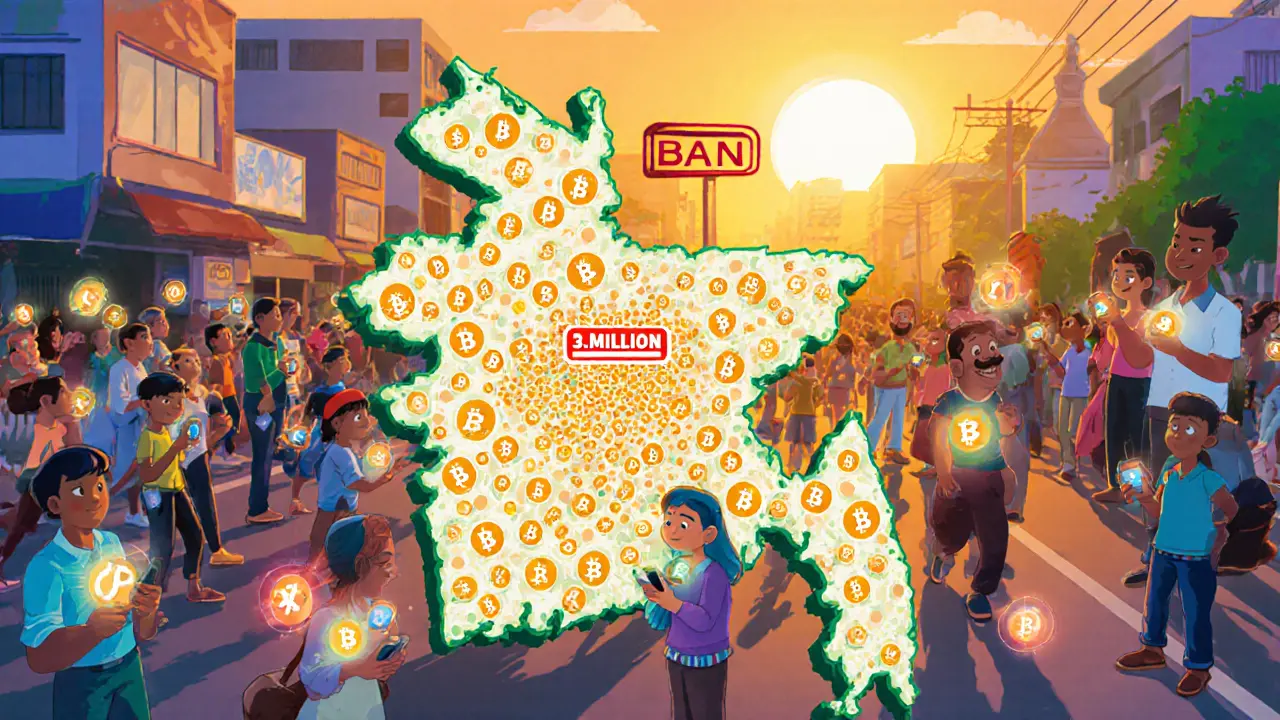
Bangladesh ranks #35 in global crypto adoption despite a total ban, with 3.1 million users relying on stablecoins for cheap remittances. Explore why the market thrives, how users bypass restrictions, and what the future may hold.