
When it comes to crypto exchanges in Russia, platforms that let users buy, sell, or trade digital assets like Bitcoin and Ethereum under Russian jurisdiction. Also known as Russian crypto trading platforms, they operate in a legal gray zone—officially restricted, but still widely used through loopholes and offshore workarounds. The Russian government doesn’t ban crypto ownership, but it bans banks and financial institutions from processing crypto transactions. That means you can hold Bitcoin, but you can’t use Sberbank to buy it directly.
This creates a split: Russian crypto regulations, the official rules set by the Central Bank of Russia and Ministry of Finance. Also known as Russia’s crypto legal framework, they block licensed exchanges from operating domestically and require all transactions to be reported under anti-money laundering rules. Meanwhile, P2P crypto Russia, peer-to-peer trading networks where individuals swap crypto for rubles without banks. Also known as Russian crypto marketplaces, they’re where most Russians actually trade—using apps like LocalBitcoins, Paxful, and Telegram groups to avoid banking restrictions. These P2P deals often happen in person, via bank transfers, or through electronic wallets like Qiwi and WebMoney.
What about actual exchanges? Platforms like Binance, OKX, and Bybit aren’t officially registered in Russia, but they still serve Russian users through VPNs and international accounts. Some Russian traders use exchanges based in Kazakhstan, Turkey, or the UAE to bypass local rules. But there’s a catch: if you’re caught using an unregulated platform, you could face fines or account freezes—even if you didn’t break any law yourself. The government’s focus isn’t on users, but on intermediaries. So if you run a P2P service or promote an exchange, you’re the target.
And then there’s the ruble. With inflation and sanctions, many Russians turn to crypto not for speculation, but for survival. Stablecoins like USDT are used to protect savings, pay for imports, or send money abroad. Crypto isn’t a luxury here—it’s a tool. That’s why even with bans, adoption keeps growing. In 2025, over 12 million Russians are estimated to hold crypto, mostly through P2P channels.
What you’ll find in the posts below are real stories and facts about how Russians trade crypto despite the rules. You’ll see how people avoid banking blocks, why some exchanges vanish overnight, and what happens when the government cracks down. No hype. No promises. Just what’s actually happening on the ground.
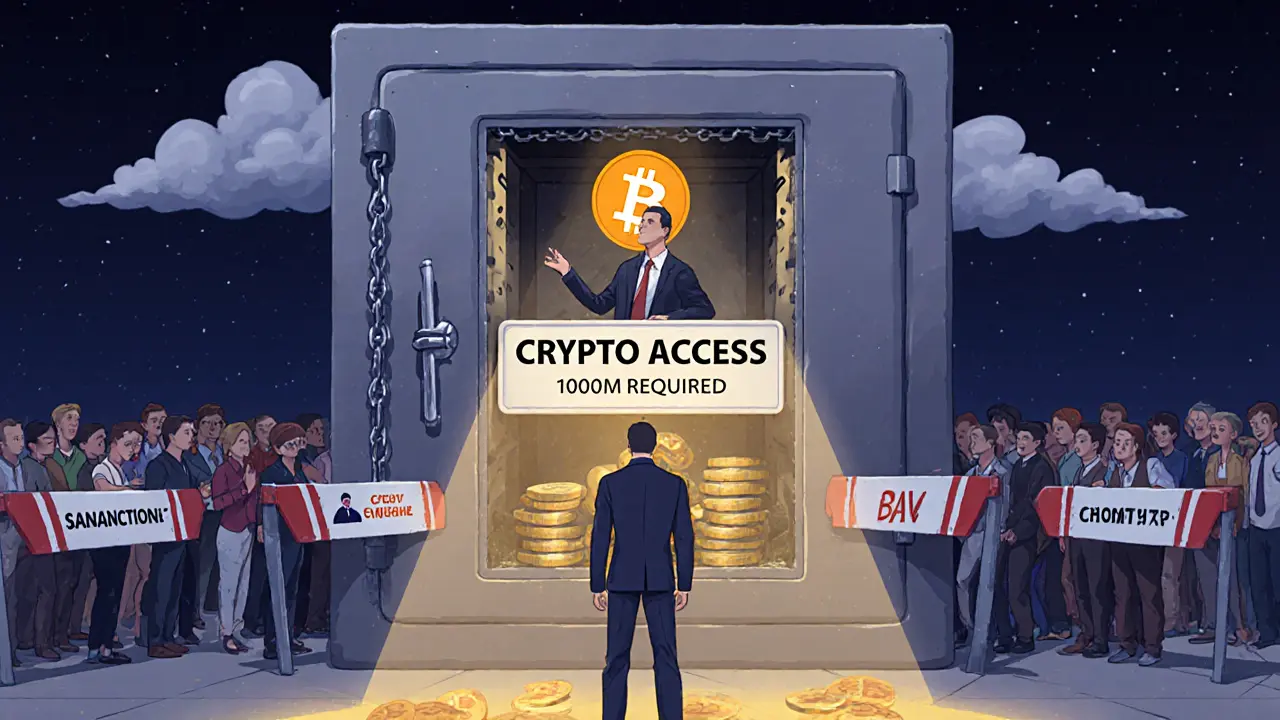
Russian citizens face severe crypto restrictions in 2025: only the ultra-rich can trade legally. Most rely on P2P and VPNs, risking bank freezes and scams. The system favors sanctioned trade over personal freedom.