
For crypto for Russian citizens, a complex mix of legal gray zones, banking restrictions, and real-world survival strategies. Also known as cryptocurrency use in Russia, it’s not about speculation—it’s about keeping value when the system won’t let you move money freely. The Russian government never officially banned crypto, but it made using it through banks nearly impossible. Banks now block transactions tied to crypto exchanges, freeze accounts linked to foreign wallets, and report suspicious activity under anti-money laundering rules. That’s why most Russians who use crypto don’t use banks at all.
Instead, they rely on P2P crypto Russia, peer-to-peer trading platforms where people swap cash for Bitcoin or USDT directly with others. Also known as cash-for-crypto, this method bypasses banks entirely. You meet someone in a public place, hand over rubles, and they send crypto to your wallet. It’s slow, risky, and sometimes dangerous—but it works. That’s why stablecoins like USDT are the real currency here. They hold value better than the ruble, move instantly, and can be traded anywhere with internet. People use them to pay for imports, send money to family abroad, or even buy groceries online from foreign stores.
And while Russia doesn’t allow crypto exchanges to operate legally, it doesn’t stop individuals from holding or trading. The problem isn’t the tech—it’s the lack of safe access. Many Russians use foreign platforms like Binance or OKX, but they can’t deposit or withdraw directly. So they use P2P, crypto ATMs in some cities, or even gift cards traded for crypto. Some even buy Bitcoin from miners who still operate in Siberia, where electricity is cheap. But beware: scams are everywhere. Fake airdrops, fake exchanges, and fake wallet apps are designed to steal your keys. If a site promises free tokens or high returns with no risk, it’s a trap. Real crypto for Russian citizens doesn’t come free—it comes from knowing how to protect yourself.
There’s no official roadmap, no legal framework, no government support. But crypto still moves. People adapt. They use Telegram groups to find trusted traders. They track exchange rates in real time. They learn to spot phishing links before clicking. And they avoid anything that asks for their private key. This isn’t investing—it’s survival. The posts below show you exactly how others are doing it: from bypassing banking bans in countries like Ecuador and Vietnam, to spotting fake tokens that look real but have zero volume, to understanding how stablecoins keep value when local currencies crash. You won’t find magic solutions here. But you will find real stories, real risks, and real ways to protect what you have.
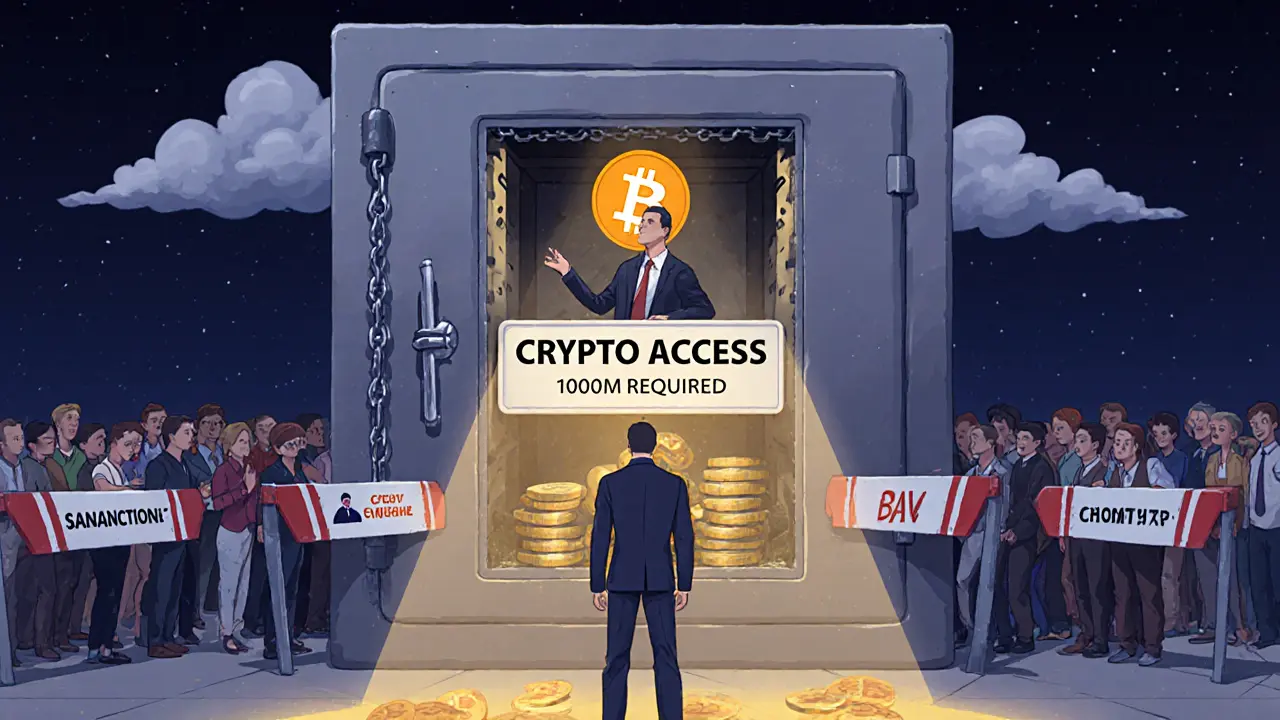
Russian citizens face severe crypto restrictions in 2025: only the ultra-rich can trade legally. Most rely on P2P and VPNs, risking bank freezes and scams. The system favors sanctioned trade over personal freedom.