
When it comes to Cyprus crypto restrictions, the rules around buying, selling, and using digital assets in Cyprus are clear but tightly enforced. Also known as crypto regulations in Cyprus, these rules don’t ban crypto outright—but they make it hard to use without jumping through legal hoops. Unlike countries that fully ban crypto, Cyprus lets you hold and trade it, but only if you play by the rules set by the Cyprus Securities and Exchange Commission (CySEC). This isn’t about stopping innovation—it’s about control. If you’re using crypto in Cyprus, you’re not just dealing with markets—you’re dealing with bureaucracy.
One big thing people don’t realize: crypto exchanges, platforms where you trade Bitcoin, Ethereum, or altcoins. Also known as digital asset exchanges, they must be licensed by CySEC to operate legally in Cyprus. Most global exchanges like Binance or Kraken aren’t licensed there, so if you’re using them from Cyprus, you’re technically outside the law—even if you’re not breaking any criminal code. That’s why local traders often turn to P2P platforms or VPNs to access foreign services. But here’s the catch: banks in Cyprus are required to flag any crypto-related transactions. If your account shows regular transfers to Binance or KuCoin, you might get a call from your bank asking for proof of source. No proof? Your account could be frozen.
crypto regulations Cyprus, the legal framework that governs how digital assets are treated under financial law. Also known as Cyprus crypto law, it treats crypto as property, not currency. That means every trade, every swap, every time you use Bitcoin to buy something, you owe capital gains tax. The government tracks this through KYC requirements on licensed platforms and bank reporting. And while you can still buy crypto privately with cash or through P2P, you’re on your own when it comes to proving what you paid for it. No receipts? No deductions. No proof of origin? You risk penalties.
What about airdrops or token sales? If you’re getting free tokens from a project based outside Cyprus, you still need to report them. The tax office doesn’t care if you didn’t pay for them—if they have value when you receive them, they’re taxable income. And if you’re running a crypto business—like a wallet service or a trading bot—you need a full license. No gray area. No exceptions. This isn’t a suggestion. It’s the law.
So what’s the real impact? Most Cypriots who use crypto stick to holding Bitcoin or Ethereum long-term, avoiding frequent trades to dodge tax headaches. Others use offshore wallets and never link them to their local bank. A few even move to Portugal or Malta, where the rules are simpler. But for those who stay? They’re playing a high-stakes game of compliance. The government isn’t trying to kill crypto. It’s trying to own it. And if you’re not careful, you’ll be the one paying the price.
Below, you’ll find real reviews and breakdowns of platforms that Cypriots actually use—and the ones that got them into trouble. No hype. No fluff. Just what’s working, what’s risky, and what’s outright dangerous under Cyprus’ current rules.
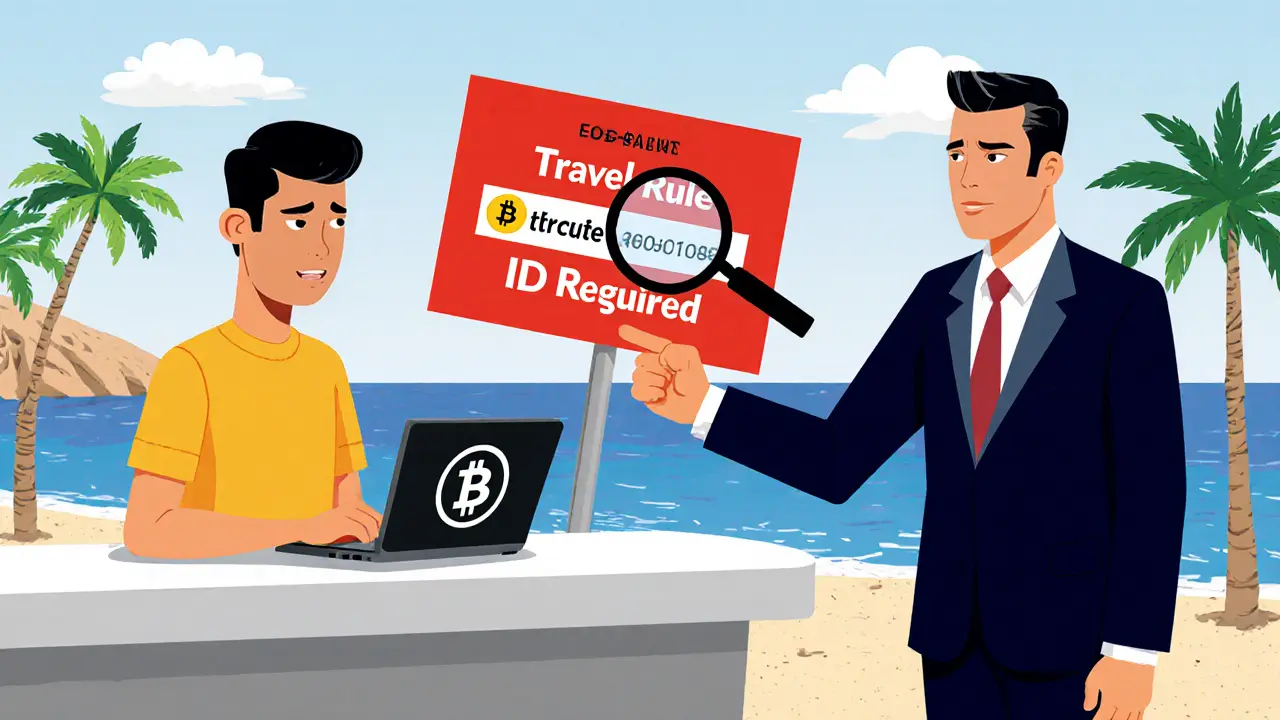
Cyprus allows crypto but banks impose strict rules under EU MiCA laws. Learn how the Travel Rule, sanctions checks, and dual regulation impact crypto transactions in 2025.