
Cyprus Banking Restrictions on Crypto Transactions: What You Need to Know in 2025

Home Cyprus Banking Restrictions on Crypto Transactions: What You Need to Know in 2025

Cyprus Banking Restrictions on Crypto Transactions: What You Need to Know in 2025

11 Nov 2025

Cyprus Crypto Transaction Compliance Calculator

Results will appear here after calculation

When you think of Cyprus and crypto, you might picture sunny beaches, low taxes, and a thriving startup scene. But behind the scenes, the country’s banks have quietly built some of the strictest controls on crypto transactions in the EU. If you’re running a crypto business in Cyprus-or trying to move money between crypto and euros-you need to understand the real rules, not the marketing.

Why Cyprus Banks Are Tightening the Noose on Crypto

Cyprus doesn’t ban crypto. In fact, it’s one of the few EU countries that doesn’t tax capital gains on crypto sales. But that doesn’t mean banks are welcoming crypto businesses with open arms. The truth is, banks in Cyprus are scared. Not of crypto itself, but of getting fined millions for breaking EU anti-money laundering (AML) laws.

Since June 2025, every bank operating in Cyprus has been legally required to treat crypto-asset service providers (CASPs) like any other financial institution. That means if you’re a crypto exchange, wallet provider, or trading platform, you’re now under the same watchful eye as a bank. The Cyprus Securities and Exchange Commission (CySEC) registered 87 CASPs by mid-2025, but getting a bank account? That’s still a nightmare for most.

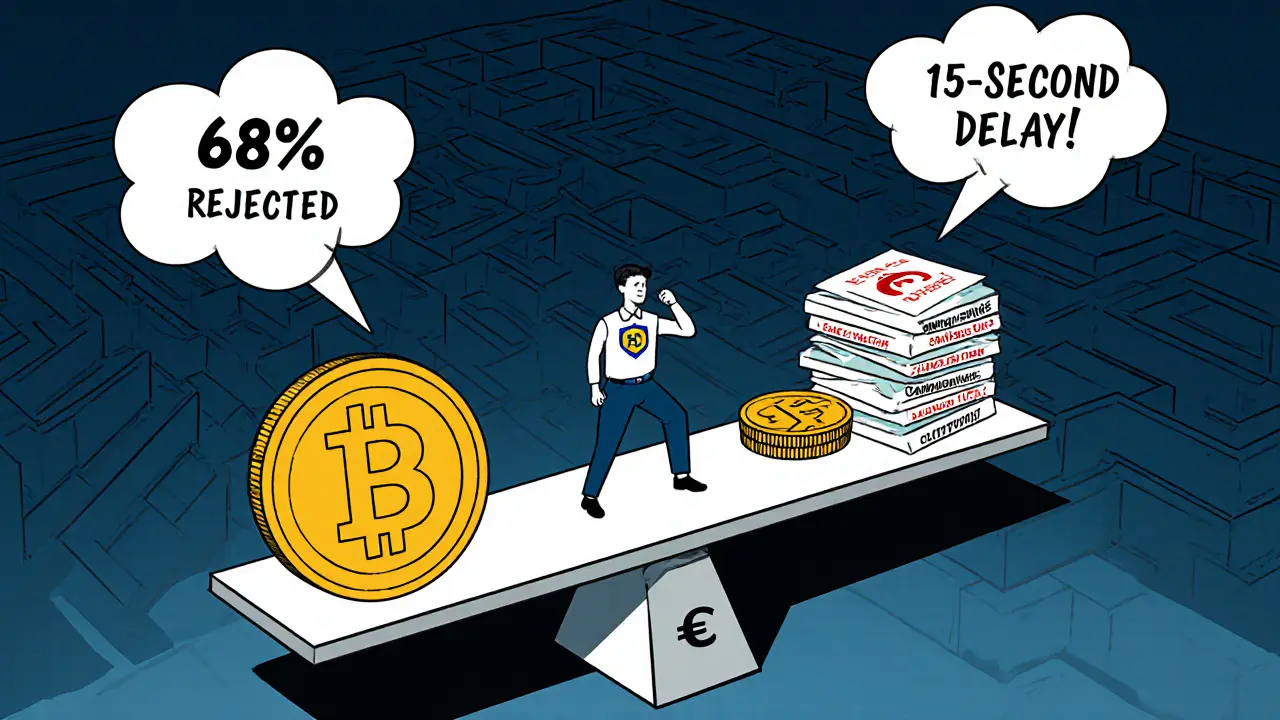
The Central Bank of Cyprus (CBC) has made it clear: cryptocurrencies are not legal tender. They’re not money. They’re assets. And when you try to move them into or out of a bank account, the system treats it like a high-risk transaction. That’s why 68% of crypto businesses in Cyprus reported trouble opening or keeping a bank account, according to a Q2 2025 survey by the Cyprus Blockchain Association.

The Travel Rule: The Hidden Gatekeeper

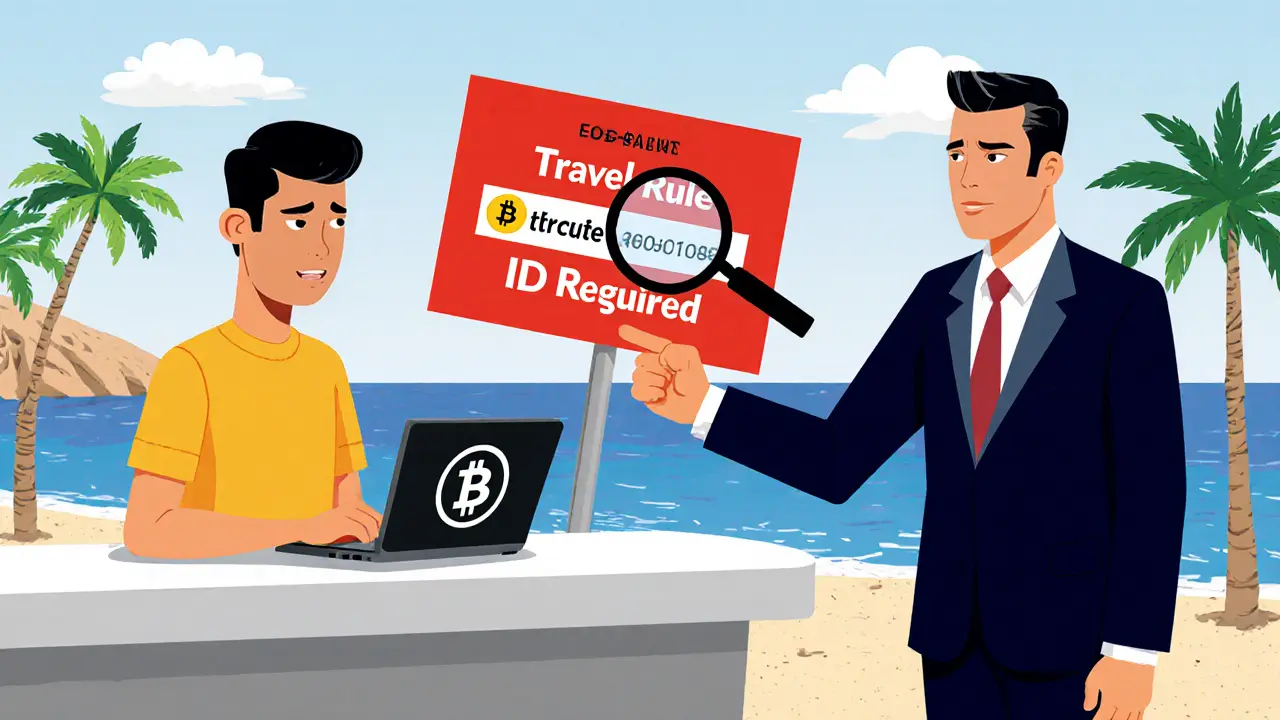
The biggest change came with the EU’s Transfer of Funds Regulation (TFR), which Cyprus implemented in June 2025. This is called the Travel Rule. And it’s the main reason your crypto transfers are slower, harder, and more paperwork-heavy than ever.

Here’s how it works: if you send more than €1,000 in crypto from one wallet to another, the bank or exchange must verify the identity of both the sender and receiver. That means your name, ID number, and address must travel with the transaction-just like a wire transfer. This isn’t optional. It’s mandatory.

And it’s not just for exchanges. If you’re using a self-hosted wallet (like MetaMask or Ledger) and try to deposit crypto into a Cypriot bank, the bank will freeze the transaction until they can verify who you are. Many users report delays of 3-7 days while banks scramble to check names against EU sanctions lists. The Unit for Combating Money Laundering (MOKAS) received over 1,200 suspicious transaction reports from CASPs in just the first three months after the rule went live.

Real-Time Checks and the 15-Second Delay

Banks in Cyprus now have to verify the beneficiary of every crypto transaction in real time. That sounds fast, but it’s not. Early trials showed transaction processing times increased by 15-20 seconds per transfer. For businesses moving hundreds of transactions a day, that adds up to hours of lost productivity.

The system works like this: when you initiate a crypto-to-euro conversion, your bank pulls up a live check with CySEC’s registry to confirm the sender is a licensed CASP. If they’re not registered, the transaction is blocked. If they are, the bank still needs to match the wallet address to a verified identity. No exceptions. No shortcuts.

Fines for getting this wrong are brutal. Banks that fail to verify a transaction can be hit with penalties of up to €5 million-or 10% of their annual turnover, whichever is higher. That’s why most banks would rather say no than risk it.
A cartoon scale balancing Bitcoin and euros, with paperwork forming a maze and regulatory labels floating above.

Who’s in Charge? The Dual-Regulation Maze

Cyprus doesn’t have one regulator for crypto. It has two.

CySEC handles everything except electronic money tokens (EMTs). That includes Bitcoin, Ethereum, DeFi tokens, NFTs, and most stablecoins. They’re the ones who license exchanges, enforce AML rules, and audit CASPs. If you’re running a crypto business, you need CySEC approval to operate legally.

The Central Bank of Cyprus (CBC) controls EMTs-stablecoins pegged to the euro, like EURS or EURT. They’re the only crypto assets banks are allowed to hold directly. But even then, banks need special permission. And they still have to apply the same Travel Rule checks.

This split creates confusion. A business might be approved by CySEC but still get turned down by a bank because the CBC hasn’t cleared their EMT structure. It’s not a bug-it’s a feature. The government wants to control the flow of money tightly, even if it slows things down.

The Sanctions Trap: One Wrong Move, One Fine

In September 2025, Cyprus launched its National Sanctions Unit. This is a new government body that watches every crypto transaction for links to sanctioned individuals or countries. It’s not just about Russia or Iran anymore. The unit flags anyone connected to entities on EU or UN lists-even if the connection is indirect.

If your wallet address was once linked to a wallet owned by a sanctioned person (even years ago), your bank might freeze your account. You won’t get a warning. You won’t get an explanation. You just wake up to a locked account and a 30-day investigation.

This has created a chilling effect. Many crypto entrepreneurs now avoid self-hosted wallets entirely. They use only licensed exchanges, even if it costs them more in fees. Why? Because exchanges handle the sanctions screening for you. It’s easier than fighting with your bank later.

A 2027 fintech office where verified crypto transactions pass through a gate while unverified ones bounce away.

What’s Next? The 2027 Deadline

By 2027, every bank in Cyprus must offer instant euro payments across the EU under Regulation (EU) 2024/886. That means faster transfers, lower fees, and better integration with SEPA. Sounds good, right?

But here’s the catch: those instant payments will only work if the sender and receiver are fully verified. Crypto transactions won’t be eligible unless they pass the same checks as bank transfers. That’s pushing more users toward licensed CASPs. Analysts predict that by 2027, 95% of crypto transactions in Cyprus will go through registered providers-up from 78% today.

The CBC’s Innovation Hub is now working directly with fintechs to build compliant payment bridges. But for now, the message is clear: if you want to move crypto money in Cyprus, you need to play by the banks’ rules.

Can You Still Use Crypto in Cyprus?

Yes-but only if you accept the limits.

If you’re an individual: you can buy, hold, and sell crypto. You won’t pay tax on gains. But if you try to cash out to your bank account, expect delays, extra ID checks, and possibly a frozen account if your wallet history looks suspicious.

If you’re a business: you must register with CySEC. You need internal AML policies, staff training, and real-time transaction monitoring. You’ll pay for compliance. You’ll wait for approvals. And you’ll still struggle to find a bank willing to work with you.

The best strategy? Use licensed exchanges like Bitstamp or Kraken that are registered in Cyprus. They handle the heavy lifting. Keep your crypto on the exchange until you need euros. Then move it slowly, with full documentation. Don’t try to bypass the system. The penalties aren’t worth it.

Bottom Line: Compliance Over Convenience

Cyprus isn’t shutting down crypto. It’s trying to control it. The government wants the benefits-jobs, innovation, tax revenue-without the risks. So they built a system where crypto is legal, but banking it is hard.

The rules are complex. The penalties are harsh. The banks are cautious. But if you understand the Travel Rule, know who regulates what, and accept that speed and privacy are gone, you can still operate successfully.

This isn’t the Wild West. It’s a tightly regulated European financial zone. And if you want to play here, you play by their rules.

Comments
Laura Hall
Laura Hall
Nov 12 2025

bro i just tried to cash out 500 euros from my meta mask and my bank froze my account for 10 days. no explanation. no email. just silence. now i’m using kraken like a good little sheep.

Arthur Crone
Arthur Crone
Nov 13 2025

typical eu overregulation. if you want freedom dont live in a country where banks act like secret police. crypto was supposed to be decentralized not bureaucratic.

Rebecca Saffle
Rebecca Saffle
Nov 14 2025

why are we letting europe dictate how we use our own money? this is financial colonialism. they dont want innovation they want control. and theyll kill any startup that tries to break free.

Adrian Bailey
Adrian Bailey
Nov 16 2025

sooo... i got my cysec license last month and applied for 3 bank accounts. all 3 said no. one even asked for a 3 year audit trail of every single wallet interaction i ever had. like bro its a blockchain its public. you can literally see every tx. but nope they want a pdf with footnotes. i just gave up and started using bitstamp as my bank lol. its cheaper than the lawyer fees anyway 😅

Rachel Everson
Rachel Everson
Nov 16 2025

if you’re a small crypto biz in cyprus just use licensed exchanges. dont fight the system. it’s not worth the stress. kraken, bitstamp, binance eu - they handle the travel rule, sanctions checks, everything. you just send your crypto there, wait a few hours, and withdraw euros. yes you pay fees but at least your account stays open. peace of mind > savings.

Johanna Lesmayoux lamare
Nov 16 2025

travel rule is the real villain here.

ty ty
ty ty
Nov 18 2025

oh wow crypto is illegal now? what a surprise. next they’ll make you wear a badge that says ‘i own eth’

BRYAN CHAGUA
BRYAN CHAGUA
Nov 20 2025

the reality is that cyprus is trying to balance innovation with compliance. it’s messy but understandable. banks aren’t evil - they’re terrified of losing their licenses. the system is flawed but fixable. we need better tech integration, not more bureaucracy.

Debraj Dutta
Debraj Dutta
Nov 22 2025

in india we have similar issues but worse. at least cyprus has a clear regulator. here banks just shut accounts without warning. i admire how structured this is, even if it’s slow.

tom west
tom west
Nov 22 2025

87 registered casps and still no bank will touch them? this isn’t regulation this is institutional sabotage. every single one of these ‘compliance’ measures is just a way for legacy banks to kill competition. they’d rather lose billions in crypto revenue than risk losing their 1980s banking model. it’s pathetic.

dhirendra pratap singh
Nov 23 2025

my account got frozen for 3 weeks because my wallet once received 0.001 eth from a mixer in 2021. no warning. no appeal. just silence. now i use cashapp to buy btc and then send it to a friend in georgia to cash out. this is not freedom. this is digital serfdom 😭

Ashley Mona
Ashley Mona
Nov 24 2025

you know what’s wild? the banks are using the same tech that crypto was supposed to replace. they’re still running legacy systems that take 15 seconds to verify a tx. imagine if we just used zk-proofs or on-chain identity. but nope, they’d rather hire 50 compliance officers to manually check names against a spreadsheet. we’re stuck in the stone age while the future’s on fire.

Suhail Kashmiri
Suhail Kashmiri
Nov 25 2025

if you’re using a self hosted wallet in cyprus you’re asking for trouble. you think you’re being cool? you’re just the reason the whole industry gets shut down. be responsible. use the exchange. stop being a crypto bro.

Kristin LeGard
Kristin LeGard
Nov 25 2025

why should i trust a european bank to decide what my money is? this is the same system that crashed in 2008 and got bailed out with our taxes. now they want to police my crypto? no thanks. i’m moving my assets to switzerland or uae where they don’t treat you like a criminal for owning digital gold.

Arthur Coddington
Arthur Coddington
Nov 26 2025

we’re not fighting banks. we’re fighting the ghost of bureaucracy. the travel rule was written by someone who’s never held a private key. it’s like requiring every letter you send to include your birth certificate. it’s not security. it’s performance art for regulators who need to look busy.

Phil Bradley
Phil Bradley
Nov 28 2025

just had my 4th bank rejection today. they said ‘your wallet history is too complex.’ what does that even mean? i bought eth in 2020, swapped it for matic, then sent it to a defi pool, then withdrew to a new wallet. that’s not complex. that’s normal crypto behavior. but apparently in cyprus that’s ‘suspicious.’ i just want to buy coffee with usdc. is that too much to ask?

Stephanie Platis
Stephanie Platis
Nov 30 2025

the central bank’s stance is legally sound. cryptocurrencies are not legal tender. they are assets. therefore, any transaction involving conversion to fiat must be subject to full aml/kyc protocols. any suggestion otherwise is either naive or deliberately misleading. compliance is not optional - it is the foundation of financial integrity.

Michelle Elizabeth
Michelle Elizabeth
Dec 1 2025

they call it innovation hub but it’s really just a velvet cage. you get to play with crypto as long as you wear the regulatory leash. the real innovators? they left for dubai or montenegro. cyprus is just a museum now - beautiful, clean, and completely lifeless.

Joy Whitenburg
Joy Whitenburg
Dec 2 2025

so i tried to send 1200 eur from my coinbase to my bank and it got stuck for 5 days. i called the bank. the rep said ‘we’re waiting for cysec to confirm the sender’s license.’ i said ‘but coinbase is licensed!’ she said ‘we don’t trust their api.’ i just… i just cried. this isn’t finance. it’s tech horror.

Kylie Stavinoha
Kylie Stavinoha
Dec 3 2025

cyprus is a microcosm of the global crypto dilemma: how do you preserve financial sovereignty without enabling crime? the answer isn’t to ban or ignore - it’s to build better infrastructure. imagine a blockchain-based identity layer that banks could query in real time, with zero-knowledge proofs to protect privacy. we have the tech. what we lack is the political will to implement it. until then, we’re just arguing over the speed of our chains.

Joanne Lee
Joanne Lee
Dec 4 2025

As someone who’s navigated both U.S. and EU crypto regulations, I find Cyprus’s approach surprisingly balanced - even if it’s frustrating. The real issue isn’t regulation itself, but the lack of interoperability between regulators and tech providers. If CySEC and the CBC could share a unified API for real-time CASP verification, most delays would vanish. This isn’t about distrust - it’s about outdated systems. The 2027 deadline might finally force the kind of integration that’s been needed since 2020.

BRYAN CHAGUA
BRYAN CHAGUA
Dec 4 2025

I agree with Joanne. The real breakthrough won’t come from more rules - it’ll come from standardization. If every licensed CASP in the EU had to publish a machine-readable compliance schema, banks could auto-verify without manual checks. We’re not asking for less oversight. We’re asking for smarter oversight.

Write a comment