
When you use a no KYC crypto exchange, a cryptocurrency platform that doesn’t require identity verification to trade. Also known as non-KYC exchange, it lets you send, swap, or buy crypto without handing over your driver’s license, passport, or selfie. That’s not magic—it’s how decentralized finance was meant to work. While most big platforms like Coinbase or Binance demand proof of who you are, these exchanges skip the paperwork entirely. You don’t need to wait days for approval. You don’t need to worry about your personal data being leaked or sold. You just log in and trade.
But here’s the catch: decentralized exchange, a peer-to-peer trading platform that runs on blockchain code instead of a company’s server. Also known as DEX, it’s the backbone of most no KYC services. These aren’t websites run by a CEO in a suit—they’re smart contracts on chains like Ethereum, Solana, or BNB Chain. You control your keys. Your wallet connects directly. No middleman. No records kept. That’s why they’re popular in places where crypto is restricted, like Russia, Nigeria, or Vietnam. It’s also why they’re risky. If you send funds to the wrong address, there’s no customer support to help you. If the contract has a flaw, your money could vanish. And if the platform gets shut down by regulators, you’re out of luck.
Then there’s anonymous crypto trading, the practice of buying, selling, or swapping digital assets without revealing your identity. It’s not just about avoiding KYC—it’s about preserving financial privacy. People use it for remittances, protecting savings from local bank freezes, or simply not wanting their trading habits tracked. But anonymity doesn’t mean untraceable. Blockchain is public. If you link your wallet to an exchange that does KYC later, or use the same wallet to buy a NFT with your real name, your history can be pieced together. True privacy requires tools like mixers, privacy coins, or using fresh wallets for each trade.
What you’ll find below isn’t a list of the "best" no KYC exchanges. It’s a collection of real-world stories about platforms that tried to offer anonymity—and what happened next. Some turned out to be scams with fake volume. Others vanished overnight. A few still work, quietly, with zero marketing and zero reviews. You’ll see how users in Ecuador and Bangladesh bypass banking bans. You’ll learn why Exonium got flagged as inactive, and why some "free token" offers are just traps. There’s no hype here. Just what’s real, what’s risky, and what’s completely fake. If you’re looking to trade without handing over your ID, this is your starting point.
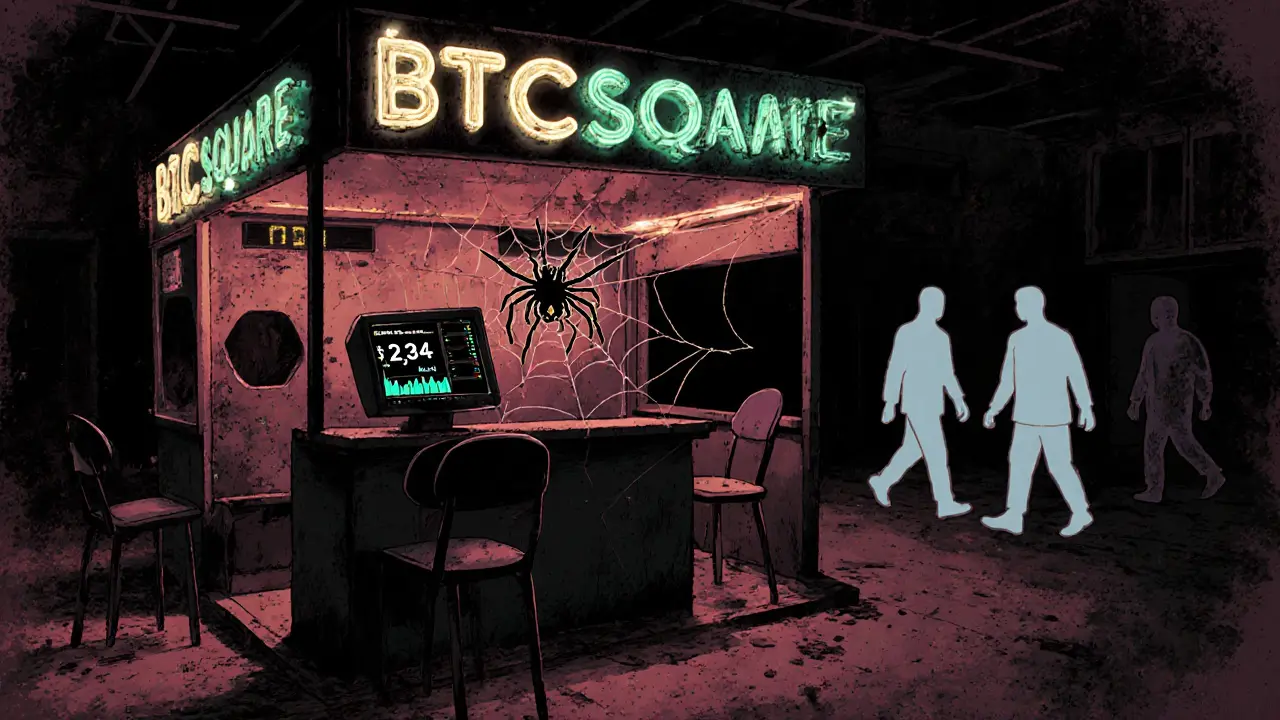
BTCsquare claims to be a no-KYC crypto exchange with low fees, but its trading volume is near zero, making it unusable. No app, no support, no users - just a ghost platform.