
When the Russian crypto ban, a set of government restrictions that block banks from processing cryptocurrency transactions. Also known as crypto payment restrictions, it was introduced to control capital flight and maintain financial sovereignty. Russia didn’t outlaw owning Bitcoin or altcoins — it outlawed using banks to buy, sell, or convert them. That’s a huge difference. People can still hold crypto in wallets, trade peer-to-peer, or use offshore exchanges. But if you try to link your Sberbank account to Binance, you’re breaking the rules.
The ban hit hardest in cities like Moscow and St. Petersburg, where crypto adoption was growing fast. Now, users rely on P2P platforms, online marketplaces where individuals trade crypto directly without banks. Also known as peer-to-peer crypto trading, these platforms have become the lifeline for millions. Telegram groups, local cash meetups, and encrypted apps replaced traditional exchanges. Meanwhile, Russian miners kept running hardware — not because they’re defiant, but because electricity is cheap and the grid doesn’t care if your rig runs on Bitcoin. The government even tried to tax mining income in 2024, but enforcement is patchy at best.
It’s not just about control. The Russian ruble, the national currency that lost value due to sanctions and inflation. Also known as RUB, it has pushed many Russians toward stablecoins like USDT as a store of value. With inflation hitting 10%+ in some years, people saw crypto not as a gamble, but as insurance. That’s why, even with the ban, Russia still ranks in the top 15 globally for crypto usage. The data doesn’t lie — users adapt. They don’t quit. They find ways.
What’s next? The government talks about launching its own digital ruble, but so far, it’s slow, clunky, and unpopular. Meanwhile, crypto tools like DeFiChain DEX and ZKSwap keep getting mentioned in Russian forums — not because they’re legal, but because they work. No KYC. No bank interference. Just direct, fast trades. And while exchanges like Exonium get flagged as risky, they’re still used because there’s no better option.
You won’t find a single Russian bank offering crypto services. But you’ll find thousands of people trading it anyway. That’s the real story behind the Russian crypto ban. It’s not about stopping crypto. It’s about forcing it underground. And underground markets don’t disappear — they get smarter.
Below, you’ll find real analyses of how Russians bypass restrictions, what tools they use, and how global crypto platforms respond. No fluff. Just facts from users on the ground.
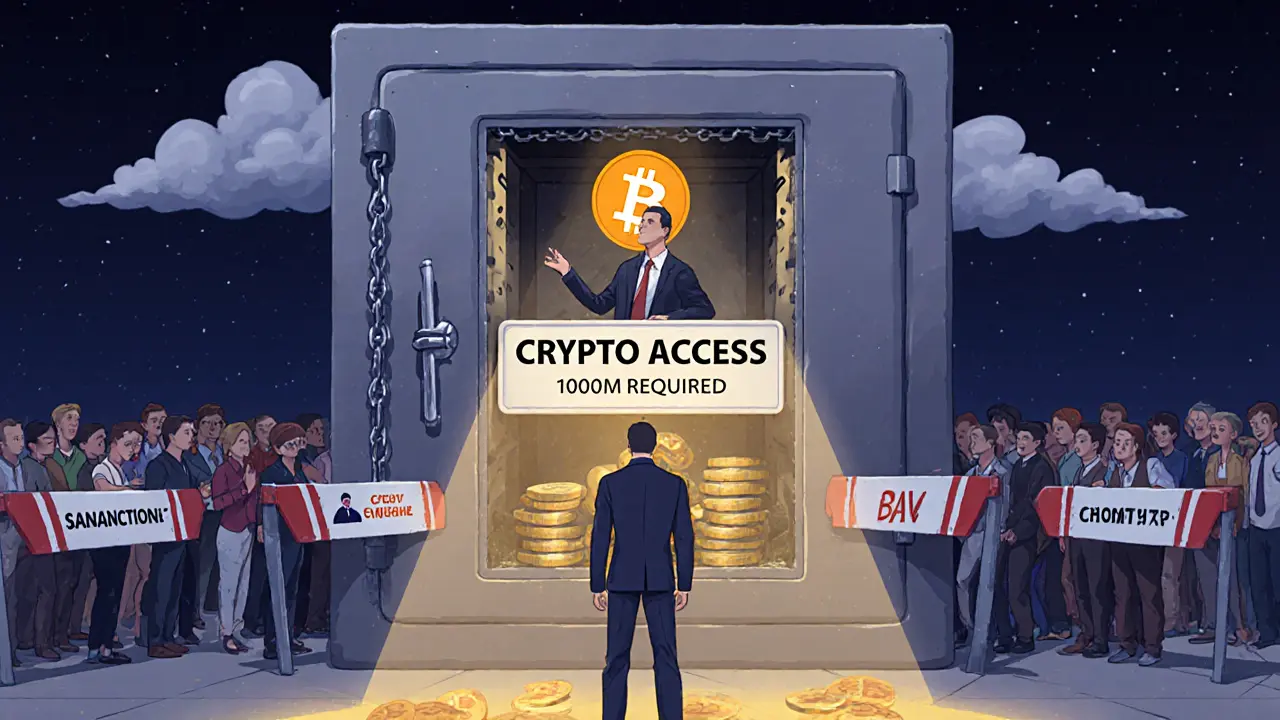
Russian citizens face severe crypto restrictions in 2025: only the ultra-rich can trade legally. Most rely on P2P and VPNs, risking bank freezes and scams. The system favors sanctioned trade over personal freedom.