

You want to trade crypto without handing over half your profit to gas fees. You are tired of watching Ethereum transactions sit in 'pending' for twenty minutes while the price moves against you. That is exactly why QuickSwap v3 exists. Built on the Polygon network, this decentralized exchange (DEX) promises near-zero fees and lightning-fast swaps. But does it actually deliver on that promise in 2026, or is it just another flashy interface hiding thin liquidity?
I have been tracking DeFi protocols since the early days of Uniswap V1. I live in Perth, where internet speeds are decent but patience for slow tech is low. After testing QuickSwap v3 extensively across its supported chains, here is the honest truth about what works, what doesn't, and whether you should trust your capital with it.
What Exactly Is QuickSwap v3?
QuickSwap is a leading decentralized exchange operating primarily on the Polygon PoS chain and other EVM-compatible networks like Base and Immutable zkEVM. Unlike centralized exchanges such as Binance or Coinbase, QuickSwap does not hold your funds. Instead, it uses smart contracts to facilitate peer-to-peer trades directly from your wallet.
The "v3" in the name refers to its underlying technology: a concentrated liquidity model. This is crucial. In older versions of DEXs, your liquidity was spread evenly across all possible prices. With v3, you choose a specific price range. If the token stays within that range, you earn significantly more fees. If it leaves, you stop earning until it returns. This makes capital much more efficient for providers but adds a layer of complexity for traders who need to understand slippage and ranges.
QuickSwap launched in October 2021, founded by Roc Zacharias and Sameep Singhania. They built it specifically to solve the two biggest pain points of Ethereum-based DeFi at the time: high gas costs and slow confirmation times. Today, it serves as the backbone of the DragonFi ecosystem, connecting over 1,000 tokens across 80,000+ pairs.
Fees and Speed: The Core Value Proposition
Let’s talk money. Why do people use QuickSwap? For speed and cost. On the Ethereum mainnet, a simple swap can cost anywhere from $5 to $50 depending on network congestion. On Polygon, via QuickSwap, that same transaction often costs less than $0.01. We are talking fractions of a cent.
| Feature | QuickSwap v3 (Polygon) | Uniswap v3 (Ethereum) | SushiSwap (Multi-chain) |
|---|---|---|---|
| Average Gas Fee | < $0.01 | $2.00 - $20.00+ | $0.01 - $5.00 (varies by chain) |
| Swap Completion Time | ~2.3 seconds | 15 - 60 seconds | ~5 seconds (on L2s) |
| Taker/Maker Fees | 0.00% (plus LP fee) | Variable (0.05% - 1%) | Variable (0.3% standard) |
| Primary Chain Focus | Polygon, Base | Ethereum, Arbitrum | Ethereum, Polygon, BSC |
| Liquidity Model | Concentrated (V3) | Concentrated (V3) | Concentrated (V3) |
The data shows QuickSwap is unbeatable on raw cost if you are trading on Polygon. However, there is a catch. The "0.00% taker/maker fee" structure means you don’t pay a platform fee to QuickSwap itself, but you still pay a protocol fee to the Liquidity Providers (LPs). Standard pools usually charge 0.05%, 0.3%, or 1% depending on the volatility of the pair. For stablecoin pairs like USDC/USDT, this is negligible. For volatile meme coins, that 1% fee matters.
Speed is equally impressive. User tests show average swap completion in 2.3 seconds on Polygon. Compare that to 15-60 seconds on Ethereum during busy periods. If you are scalping or trying to enter a position before a news event breaks, those extra seconds on Ethereum can be the difference between profit and loss.
User Experience and Interface
Does it look good? Yes. Does it work well? Mostly. The QuickSwap interface is clean, dark-mode friendly, and intuitive. Connecting your wallet takes one click. They support MetaMask, Coinbase Wallet, WalletConnect, and many others. Once connected, you see your balances instantly.
The mobile app deserves special mention. Many DEXs have terrible mobile experiences. QuickSwap’s app, updated in late 2024, includes push notifications for pool performance and one-tap wallet connections. It feels native, not like a web wrapper. This is huge for users who want to manage positions on the go.
However, the learning curve spikes when you move beyond simple swaps. Using the Concentrated Liquidity feature requires understanding price ranges. If you set a range too narrow, you might get impermanent loss quickly. If you set it too wide, your capital efficiency drops. QuickSwap provides 47 tutorial videos and 28 written guides, which helps, but you still need to do your homework. There is no "auto-optimize" button that works perfectly for every market condition.
Liquidity and Token Selection
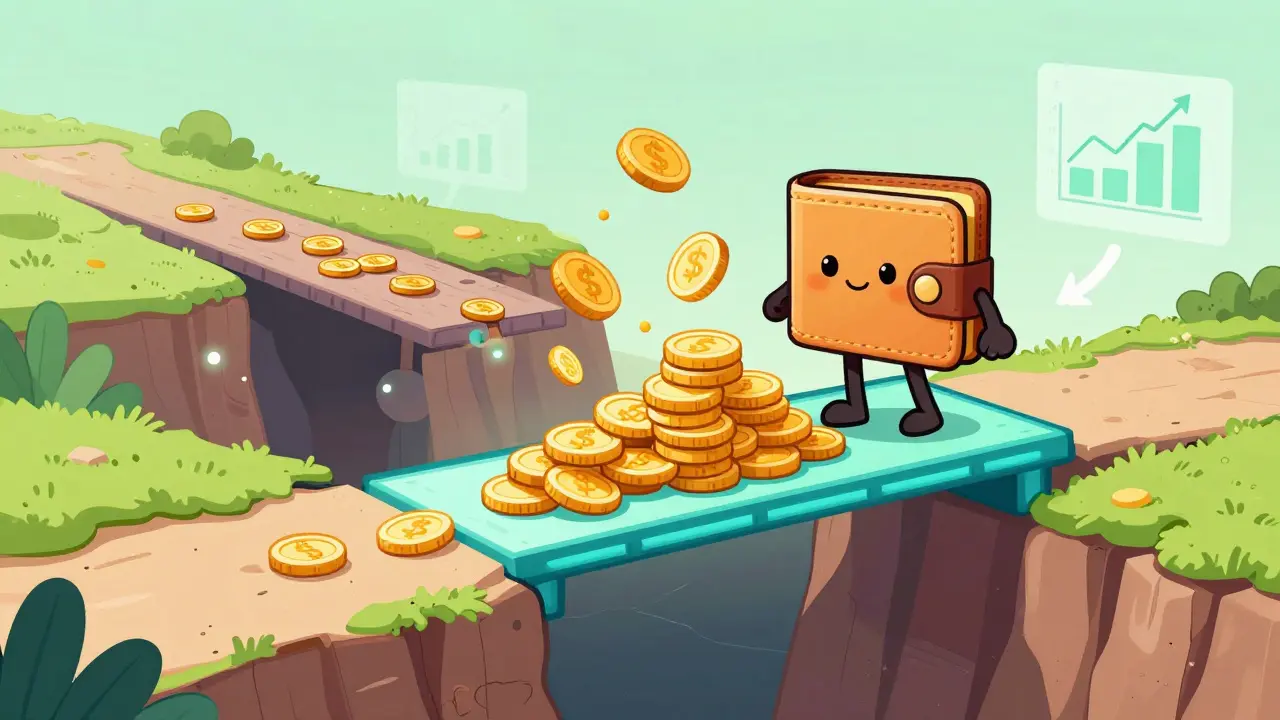
Can you trade what you want? QuickSwap lists over 1,000 tokens. That sounds like a lot, but compared to Uniswap’s tens of thousands, it’s smaller. The key metric isn’t just the number of tokens, but the depth of liquidity.
For major pairs like ETH/USDC, MATIC/USDT, or WBTC/ETH, liquidity is deep. You can move large amounts with minimal slippage. CoinGecko data from late 2024 showed an average bid-ask spread of 0.697%, which is competitive. However, for obscure altcoins or new launches, you might find yourself facing higher slippage because the order book is thinner.
QuickSwap holds roughly 22% market share on Polygon DEXs, trailing behind Uniswap (45%) and SushiSwap (28%). This means Uniswap often has deeper liquidity for cross-chain assets. If you are trading a niche token that launched primarily on Ethereum, you might get a better rate on Uniswap despite the higher gas fees. Always check the quote before confirming.
Security and Trust: Should You Worry?
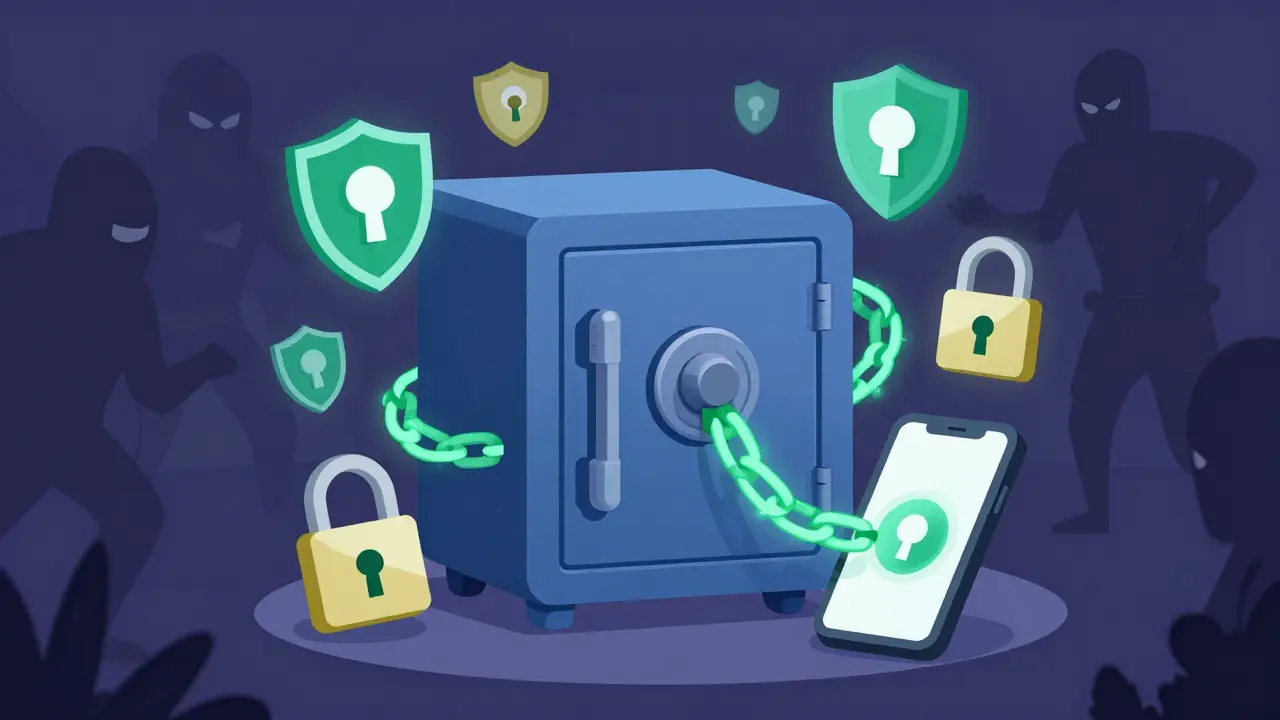
This is the most important section. Read it carefully. QuickSwap is non-custodial. This means they cannot steal your funds unless you sign a malicious transaction. Your private keys stay in your wallet. That is the beauty of DeFi.
However, "non-custodial" does not mean "risk-free." Smart contract bugs exist. Hackers target popular DEXs regularly. QuickSwap has undergone multiple audits, but no audit guarantees 100% security. The team has a strong track record since 2021, and their codebase is open-source, allowing the community to inspect it.
There is also the regulatory angle. QuickSwap operates without direct oversight from any government authority. This is common for DeFi but presents a risk. If regulations tighten in the US or EU, platforms like QuickSwap could face pressure to implement KYC (Know Your Customer) checks or block certain IP addresses. Currently, there is no KYC required. You can trade anonymously. Whether that remains true in 2027 depends on global policy shifts.
Another risk is MEV (Maximal Extractable Value). Bots can sometimes front-run your trades, causing you to buy slightly higher or sell slightly lower than expected. QuickSwap’s Liquidity Hub aims to mitigate this with MEV protection features, but it is not foolproof. During high volatility, expect some slippage regardless of protections.
Who Is QuickSwap v3 Best For?
Not everyone needs QuickSwap. Here is how to decide:
- High-Frequency Traders on Polygon: If you trade daily on Polygon, QuickSwap is essential. The low fees allow you to take smaller profits per trade without being eaten alive by gas costs.
- Liquidity Providers Seeking Yield: The concentrated liquidity model lets you earn more fees on less capital. If you understand risk management, this is a powerful tool.
- Casual Users Holding Stablecoins: Moving between USDC, USDT, and DAI is cheap and fast. Perfect for rebalancing portfolios.
- Not For Large Institutional Trades: If you are moving millions of dollars, the liquidity depth might cause significant slippage. You would likely use OTC desks or specialized institutional DEX aggregators.
- Not For Ethereum-Native Only Traders: If you only care about tokens on Ethereum Mainnet and refuse to bridge to Layer 2s, QuickSwap offers little value over Uniswap.
How to Get Started Safely
If you decide to try QuickSwap, follow these steps to minimize risk:
- Use a Hardware Wallet: Connect Ledger or Trezor via WalletConnect. Never leave large amounts in a hot wallet like MetaMask on your phone.
- Start Small: Do your first swap with $10-$20. Check the output amount. Confirm the fees. Make sure you understand the slippage tolerance setting.
- Beware of Fake Sites: Bookmark the official URL. Scammers create look-alike domains. Always verify the address bar.
- Check Slippage Settings: For stable pairs, keep slippage at 0.5%. For volatile tokens, you may need to increase it to 1-3%, but be aware you might pay more than expected.
- Revoke Permissions Regularly: Use tools like Revoke.cash to ensure old approvals don’t linger on your wallet after you stop using a pool.
Final Verdict
QuickSwap v3 is a robust, efficient, and user-friendly DEX that dominates the Polygon ecosystem. It solves the core problems of DeFi: cost and speed. If you are active on Polygon or Base, it is arguably the best option available today. The concentrated liquidity features offer advanced users great yield opportunities, though they require careful management.
It is not perfect. Liquidity for niche tokens is thinner than on Uniswap, and the lack of regulatory clarity poses long-term risks. But for the vast majority of retail traders and DeFi enthusiasts, the benefits far outweigh the drawbacks. Just remember: you are responsible for your own security. The platform gives you the tools; you must wield them wisely.
Is QuickSwap safe to use in 2026?
Yes, QuickSwap is generally considered safe due to its non-custodial nature and extensive smart contract audits. However, as with all DeFi platforms, risks remain including potential smart contract vulnerabilities, phishing attacks, and user error. Always verify URLs and use hardware wallets for significant holdings.
What are the fees on QuickSwap v3?
QuickSwap charges 0% platform fees for traders. However, you pay a protocol fee to liquidity providers, typically ranging from 0.05% to 1% depending on the trading pair. Gas fees on Polygon are negligible, usually less than $0.01 per transaction.
How does QuickSwap compare to Uniswap?
QuickSwap is faster and cheaper due to its focus on Polygon and Layer 2 networks. Uniswap has deeper overall liquidity and supports more tokens, especially on Ethereum Mainnet. Choose QuickSwap for low-cost, high-frequency trading on Polygon/Base. Choose Uniswap for maximum token variety and deep liquidity on Ethereum.
Do I need KYC to use QuickSwap?
No, QuickSwap is a decentralized exchange and does not require Know Your Customer (KYC) verification. You connect your wallet and trade anonymously. This preserves privacy but means there is no customer support to recover lost funds.
What is concentrated liquidity in QuickSwap v3?
Concentrated liquidity allows providers to allocate their capital to a specific price range rather than spreading it across all prices. This increases capital efficiency and potential earnings but requires active management to avoid impermanent loss if the price moves out of your selected range.