
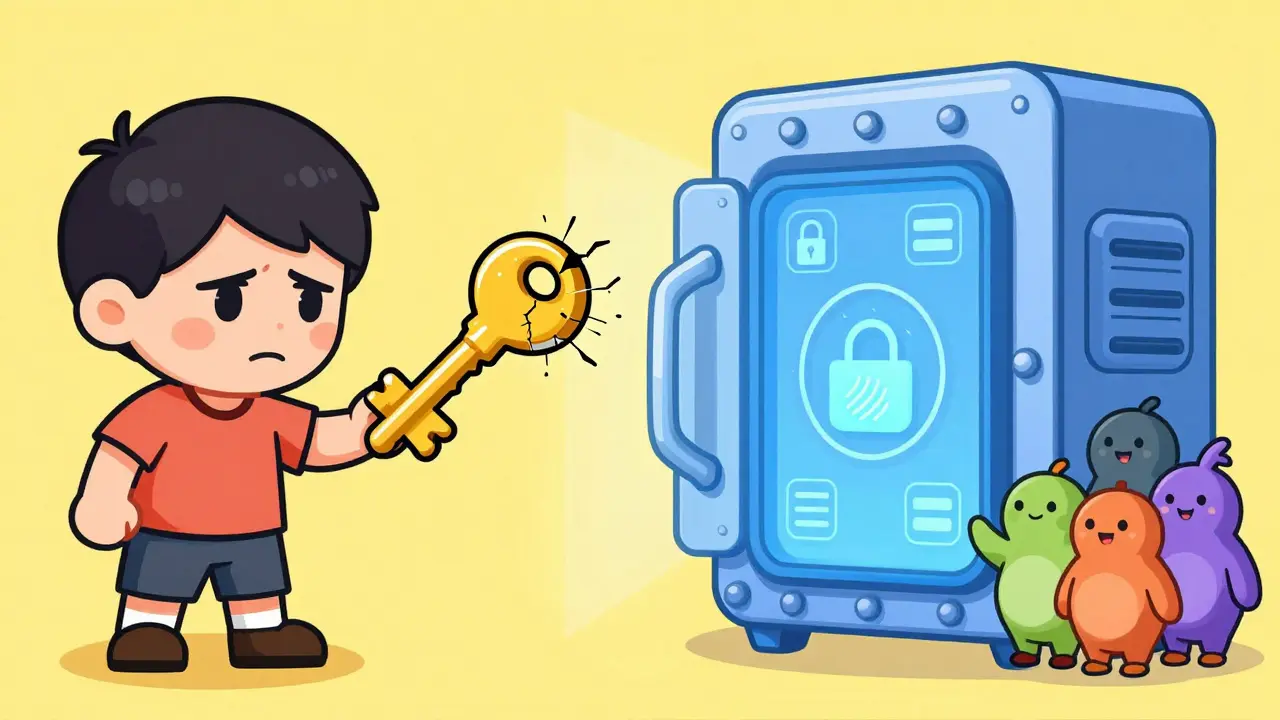
Imagine losing the only key to your house and having no way to get back inside. In the crypto world, that's exactly what happens when you lose your seed phrase. For years, we've accepted this risk as the price of total control. But what if your wallet acted more like a modern bank account-where you can recover access through a trusted friend or use a fingerprint to sign a transaction-without actually giving up ownership of your funds? That is the promise of Account Abstraction is a blockchain technology standard that separates the control of user funds from the execution of smart contracts, effectively turning a wallet into a programmable smart contract.
For a long time, most of us have used what are called Externally Owned Accounts (EOAs). If you use a standard wallet like MetaMask, you're using an EOA. These are simple: one private key controls everything. If the key is gone, the money is gone. Account abstraction flips this script by moving the logic of the account into a smart contract. Instead of a static key, your account becomes a piece of code that can follow custom rules.
The Big Shift: EOAs vs. Smart Contract Wallets
To understand why this matters, we have to look at the limitation of the traditional model. In a standard setup, the private key is the only way to authorize a transaction. It's a "single point of failure." If a hacker steals your key, they have everything. If you forget it, you're locked out forever.
With account abstraction, your "account" is actually a Smart Contract Wallet. This means the wallet can have a set of requirements before it releases funds. Want to require two different signatures for any transfer over $1,000? You can do that. Want to allow a trusted group of friends to help you reset your password? That's possible too. It brings the flexibility of a programmable app to the security of a blockchain.
| Feature | Traditional EOA | Account Abstraction |
|---|---|---|
| Control Mechanism | Single Private Key | Programmable Logic/Code |
| Recovery | Impossible if seed is lost | Social Recovery (Guardians) |
| Gas Fees | User must always pay in native token | Can be sponsored by others (Gasless) |
| Transaction Logic | Single action per signature | Batching multiple actions at once |
How it Actually Works: The ERC-4337 Standard
On Ethereum, the heavy lifting for this technology happens through ERC-4337. This isn't a change to the core blockchain itself, but a set of rules that lets developers build these smart accounts on top of the existing system. It uses a few clever components to make things feel seamless for the user.
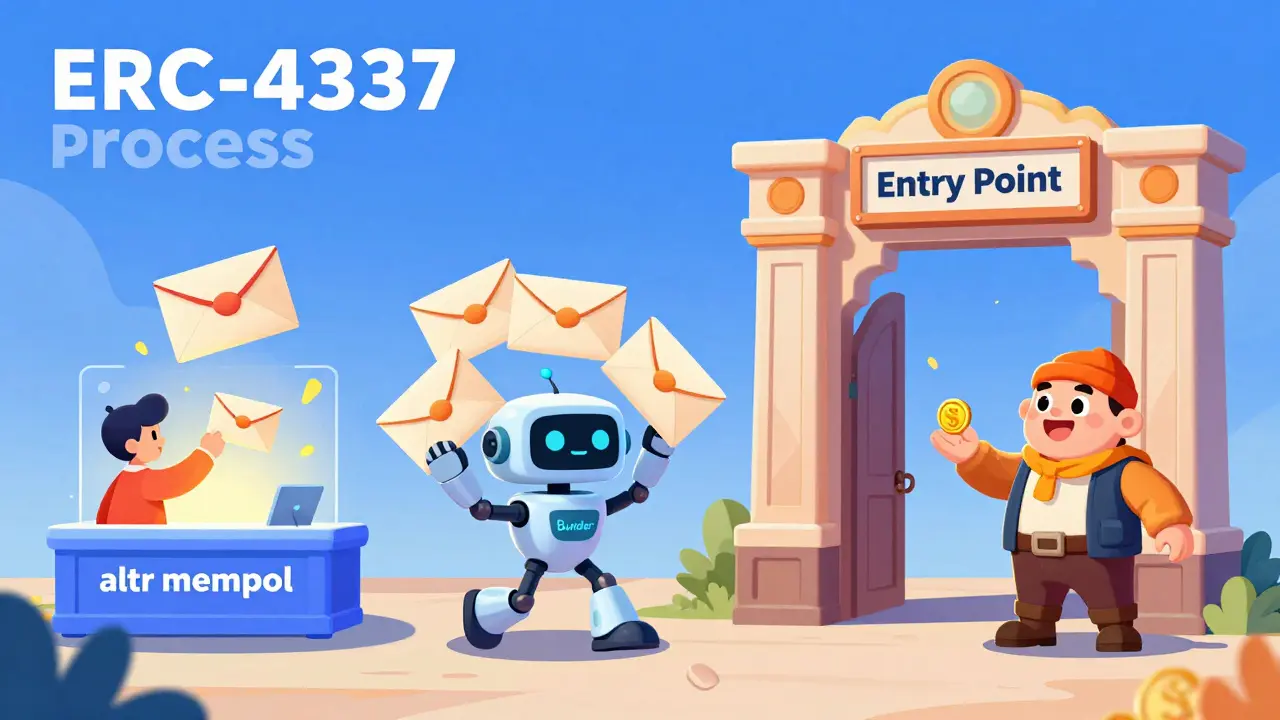
First, there's the UserOperation. Instead of a traditional transaction, the user creates an object that says, "I want to do X." This doesn't go straight to the chain; it goes into a special waiting area called an alt mempool.
Then come the Bundlers. These are specialized nodes that grab these UserOperations, bundle them together, and send them to a single, trusted Entry Point contract. This Entry Point is the gatekeeper-it verifies that the request is legit before triggering the smart contract wallet to execute the move.
One of the coolest parts of this setup is the Paymaster. A Paymaster is a contract that can say, "I'll pay the gas for this user." This allows a company to offer a "gasless" experience. Imagine using a DeFi app where you don't need to buy ETH just to move your USDC; the app developer simply covers the cost to make your onboarding easier.
Real-World Benefits for Regular People
So, why should the average person care about the plumbing of UserOperations and Bundlers? Because it fixes the most annoying parts of crypto. Here are the most practical wins:
- Social Recovery: You can designate "guardians" (trusted friends or a secondary hardware wallet). If you lose your main key, 3 out of 5 guardians can sign a transaction to give you back access to your account. No more panicking over a piece of paper with 12 words on it.
- Transaction Batching: Ever noticed how you have to "Approve" a token and then "Swap" it in two separate steps? With account abstraction, you can bundle these into one click. One signature, multiple actions.
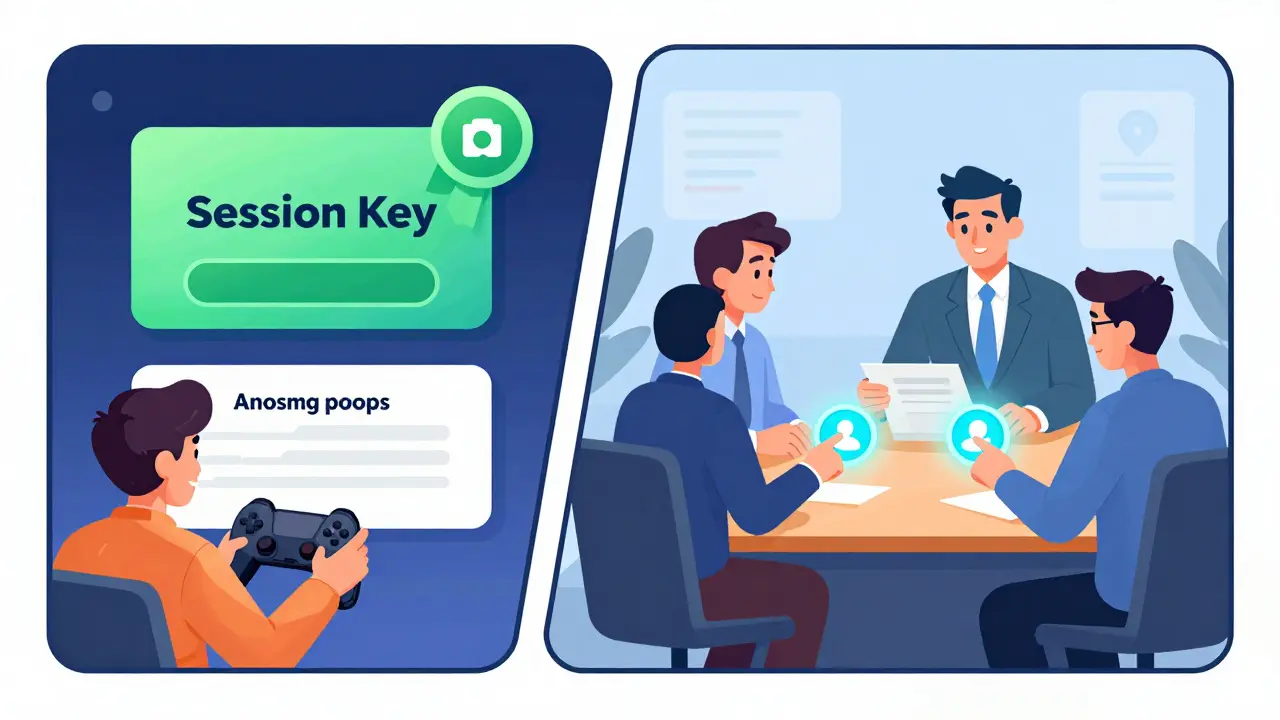
- Session Keys: Gamers love this. You can create a temporary key that only works for 24 hours and can only spend a small amount of money. This lets you play a blockchain game without signing a popup every single time you move your character.
- Custom Security: For a business, this is a game-changer. A company can set a rule that any payment over $10,000 requires approval from both the CEO and the CFO. This moves corporate treasury management away from a single person holding a dangerous private key.
Is it different on other blockchains?
It's interesting to see how different chains handle this. While Ethereum had to build ERC-4337 as a layer to avoid changing its core, Solana was designed with these principles from day one. On Solana, accounts are essentially "storage buckets." They don't distinguish between a "user account" and a "contract account" in the same rigid way Ethereum does. This means Solana has natively enabled a form of account abstraction since its launch in 2020, making it naturally more flexible for these types of interactions.
The Hurdles to Total Adoption
If this is so much better, why isn't everyone using it? The main issue is that it's technically complex to set up. Creating a smart account requires more gas initially than creating a simple EOA. Also, the infrastructure for Bundlers and Paymasters is still maturing. We're moving from the "experimental" phase to the "usable" phase.
Most people still use MetaMask because it's the industry standard, but the tide is turning. New wallet providers and platforms are integrating these features in the background. The goal is for the user to not even know "account abstraction" is happening-they just know their wallet is easy to use and they can't accidentally lose their life savings by misplacing a seed phrase.
Do I need a new wallet for account abstraction?
Not necessarily, but you will need a wallet provider that supports smart accounts. Traditional EOAs (like a basic MetaMask account) cannot be "converted" into smart accounts because they are fundamentally different types of entities on the blockchain. You would typically create a new smart contract wallet through a supported service.
Is it more expensive to use?
Deploying a smart contract wallet generally costs more gas than creating a simple private key account. However, once the account is set up, the ability to batch transactions can actually save you money and time in the long run.
Can a Paymaster steal my funds?
No. A Paymaster only handles the gas fee for the transaction. It does not have access to the funds inside your smart contract wallet. The security of your assets still depends on the logic defined in your account's smart contract and the keys you use to authorize it.
What is the difference between a multisig and account abstraction?
A multisig (like Safe) is actually an early form of account abstraction. It's a smart contract that requires multiple signatures. Full account abstraction (like ERC-4337) expands on this by adding features like social recovery, gas sponsorship via Paymasters, and a standardized way for any app to interact with these accounts without needing a specialized interface.
Does account abstraction remove the need for seed phrases?
It doesn't necessarily remove the need for a root of trust, but it removes the reliance on a single seed phrase for daily access. By using social recovery or biometric keys, you can recover your account even if your original seed phrase is lost, provided your guardians are still available.
Wrapping Up and Next Steps
If you're a developer, the next move is to look into tools that simplify the integration of Bundlers and Paymasters, as doing it from scratch is a heavy lift. For the regular user, start exploring wallets that offer social recovery or "smart' account features. It's the first step toward a world where blockchain is actually usable for people who aren't "crypto nerds." Once you experience a gasless transaction or a one-click batch swap, going back to a traditional EOA feels like using a flip phone in the age of smartphones.


Gloris Young
Finally some clarity on this. Definitely makes the onboarding process feel way less scary for new people.