
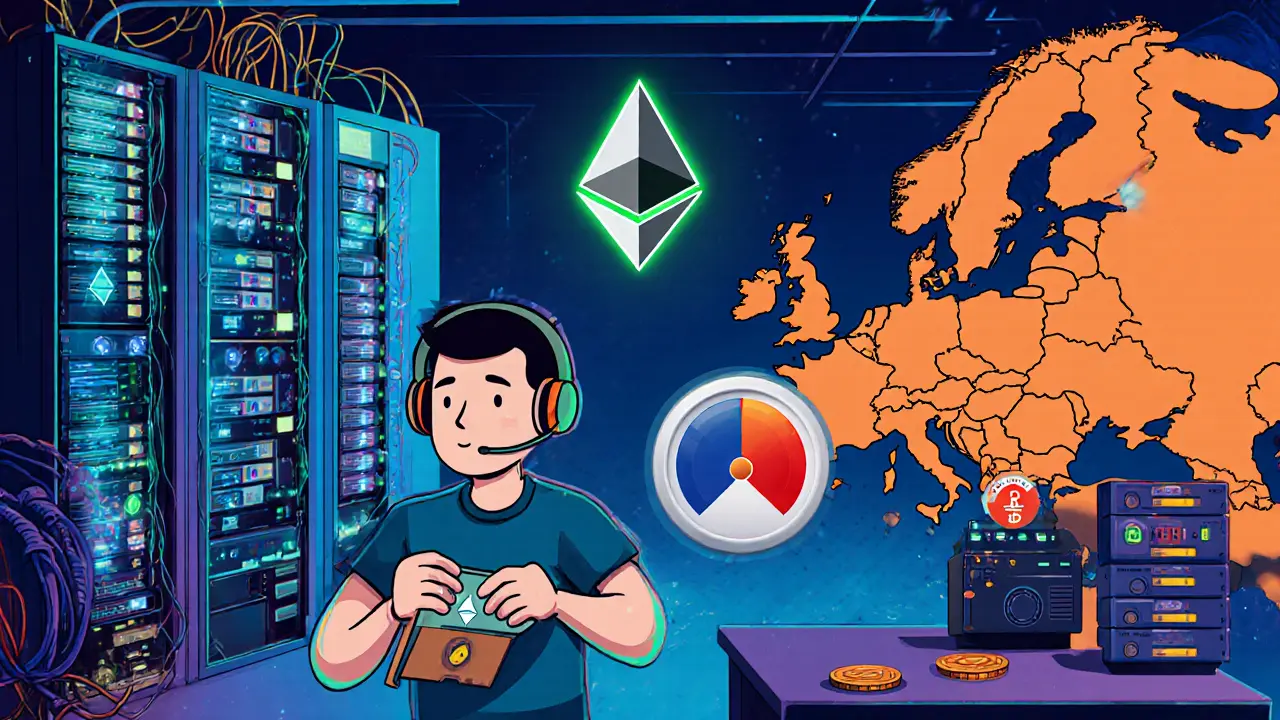
Ethereum Mining vs Staking Cost Calculator
Compare the financial and environmental impact of Ethereum mining versus staking based on your specific inputs.
Your Mining Inputs
Your Staking Inputs
Comparison Results
Enter your values and click 'Calculate Comparison' to see your results.
Environmental Impact:
With Proof of Stake, Ethereum's energy consumption has decreased by over 99% from PoW (from ~70 TWh/yr to ~0.7 TWh/yr).
This is equivalent to reducing the energy use of an entire data center farm.
When Ethereum is a decentralized blockchain platform that runs smart contracts and powers a huge ecosystem of apps switched from GPU‑based mining to a pure staking model, the whole crypto world took notice. The change, known as The Merge, turned a power‑hungry Proof of Work (PoW) system into a lean Proof of Stake (PoS) network overnight on September 15 2022. This article walks through why the shift matters, how it works, what it means for your wallet, and where the technology heads next.
What Mining Looked Like on Ethereum
Before The Merge, Ethereum relied on Proof of Work to secure the chain. Miners fired up high‑end GPUs, solving cryptographic puzzles that required massive electricity and expensive hardware. A competitive rig typically cost between $2,000 and $10,000, plus ongoing power bills of $200‑$500 per month depending on local rates. Those costs were the baseline for anyone who wanted a slice of block rewards, which fluctuated with network difficulty and ETH price.
Beyond the bill, the environmental criticism was relentless. Studies showed Ethereum’s PoW consumed roughly the same amount of electricity as a small European country, fueling regulatory pressure and public backlash. For individual hobbyists, the noise, heat, and constant maintenance made mining a full‑time ordeal.
The Merge: From PoW to Proof of Stake
The transition was engineered in years of roadmap planning. Proof of Stake replaces computational work with a financial stake: validators lock up ETH and are randomly chosen to propose and attest to new blocks. The minimum to run a solo validator is 32 ETH (about $80k‑$120k in 2025), but pooling services let participants stake as little as 0.01 ETH.
Technically, The Merge merged the original execution layer (the PoW chain) with the new consensus layer (the PoS chain). Once merged, the old mining software stopped working, and the network instantly slashed its energy use by more than 99 %. Validators now earn rewards from transaction fees and a modest block reward distributed every 6.4 minutes (an epoch).
Energy, Speed, and Scalability Gains
Energy consumption is the headline figure: PoS needs only a fraction of the electricity that PoW demanded. Independent audits confirm a reduction from around 70 TWh per year to under 1 TWh - a drop comparable to switching off an entire data‑center farm.
Speed also improved. While PoW blocks took roughly 12‑15 seconds to finalize, PoS finality is now around 5‑6 seconds on average. The reduced latency helps DeFi protocols, NFT marketplaces, and gaming dApps deliver smoother user experiences.
Looking ahead, sharding will split the chain into multiple parallel shards, further boosting throughput and lowering the hardware burden on validators.
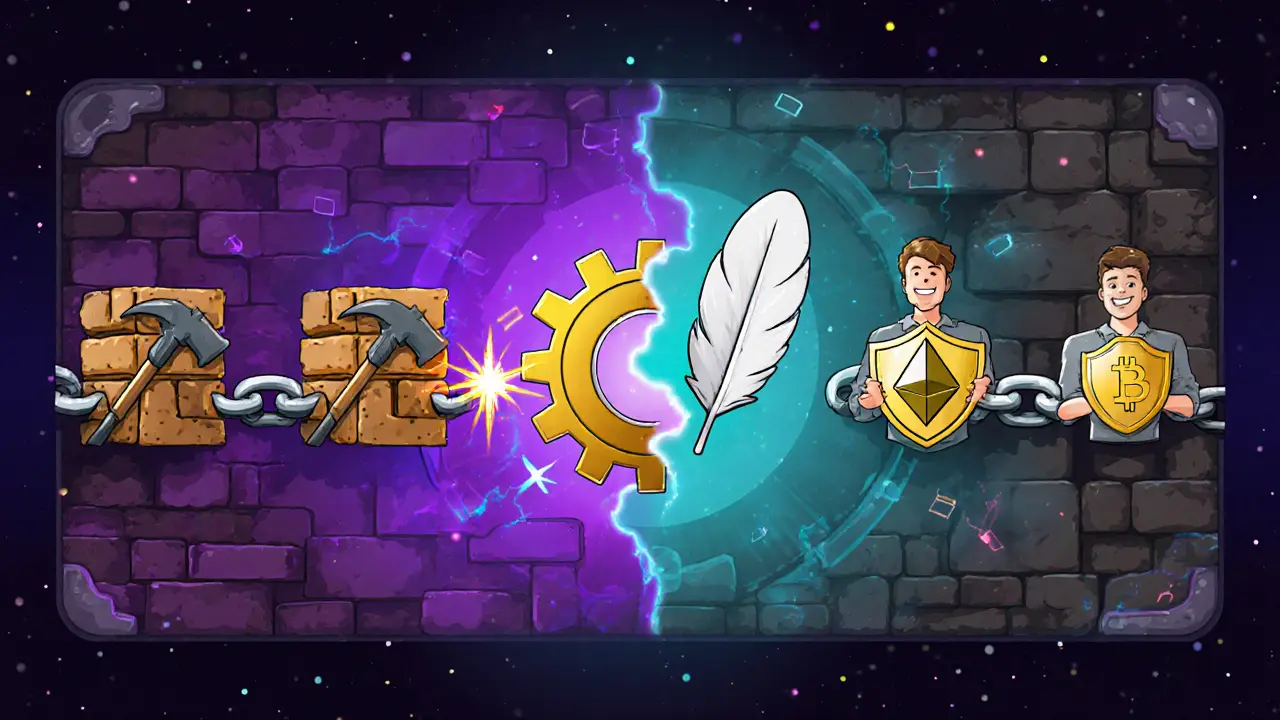
Economic Comparison: Mining vs Staking
| Metric | GPU Mining (PoW) | Staking (PoS) |
|---|---|---|
| Energy Use | ~70 TWh/yr | ~0.7 TWh/yr |
| Initial Capital | $2,000‑$10,000 for rig | 32 ETH (~$100k) for solo; $0.01‑$100 for pooled |
| Ongoing Cost | $200‑$500/mo electricity | Minimal - server cost ≈ $10‑$30/mo |
| Average APY | Varied 2‑6 % (high volatility) | 4‑7 % (more stable) |
| Entry Barrier | Technical setup, hardware procurement | Low for pools; moderate for solo |
The numbers show a clear tilt toward staking for most users. Even though the solo validator entry cost looks high, pooled solutions dramatically lower that threshold, letting anyone with a fraction of an ETH participate.
How to Start Staking on Ethereum
There are three main pathways:
- Centralized exchanges - Platforms like Gemini, Coinbase, and Kraken let you deposit ETH and click ‘Stake’. Setup takes about 30 minutes, and the platform handles validator duties, slashing protection, and reward distribution.
- Pooled staking services - Services such as Lido, Rocket Pool, or staking modules in DeFi wallets let you stake as little as 0.01 ETH. You receive a tokenized representation of your stake (e.g., stETH) which you can trade or use in other protocols while still earning rewards.
- Solo validator - Run your own node on a Linux server, install the official
prysmorlighthouseclient, and lock up 32 ETH. This route demands 20‑40 hours of initial setup, continuous monitoring, and a reliable internet connection, but it offers the highest fee revenue and full control.
For beginners, the exchange route is the safest bet. If you already use a hardware wallet, pooling services provide a good balance of control and convenience.

Risks, Penalties, and Liquidity Constraints
Staking isn’t risk‑free. Validators that go offline or act maliciously can be slashed, losing a percent of their staked ETH. Most reputable services carry slashing insurance, but solo operators bear the full risk.
Another pain point is the lockup period. After you unstake, ETH remains illiquid for about 5‑7 days while the protocol processes the withdrawal. This delay matters if you need quick access to funds during market swings.
Regulatory uncertainty also looms. Some jurisdictions view PoS as a securities‑like activity, potentially imposing reporting requirements. However, the lower environmental footprint has generally earned more favorable treatment compared to PoW mining.
Broader Impact: From Ethereum to the Whole Crypto Landscape
Ethereum’s successful transition set a blueprint for other networks. Cardano, Solana, and Polkadot already operate on PoS‑type models, and newer projects are designing hybrid consensus mechanisms that borrow from Ethereum’s experience.
Staking now represents roughly 35 % of total value locked across all PoS cryptocurrencies, with over $40 billion worth of ETH staked as of 2025. The growth has attracted institutional players, fueling the development of staking‑as‑a‑service platforms and increasing the overall security of the ecosystem.
Future roadmap items for Ethereum include full sharding rollout and improvements to the withdrawal process, making staking even more accessible and liquid. As the network scales, the demand for validator hardware will drop, allowing even modest cloud instances to run nodes efficiently.
Quick Checklist for Moving from Mining to Staking
- Assess how much ETH you can allocate - 32 ETH for solo, otherwise choose a pool.
- Pick a staking method: exchange, pooled service, or solo validator.
- Secure a reliable internet connection and, for solo, a Linux server.
- Read the official validator guide - focus on slashing rules.
- Consider lockup periods and plan liquidity needs.
- Monitor rewards and network updates (e.g., sharding announcements).
Can I stake Ethereum with less than 32 ETH?
Yes. Staking pools and services like Lido let you stake as little as 0.01 ETH. You receive a tokenized stake (e.g., stETH) that represents your share of the pooled rewards.
What happens to my mining hardware after The Merge?
Most miners either sell the GPUs, repurpose them for other PoW coins like Ethereum Classic, Ravencoin, or keep them as a backup investment. The hardware still has resale value in the gaming market.
Is staking on an exchange safe?
Exchange staking is convenient and generally safe because the platform handles validator duties and often provides insurance against slashing. However, you trust the exchange with custody of your ETH, so choose a reputable, regulated service.
How long does it take to withdraw staked ETH?
Withdrawal requests enter a queue that takes about 5‑7 days to complete. The delay is built into the protocol to ensure network stability.
What are the main risks of running a solo validator?
The biggest risks are slashing for downtime or double‑signing, and the need for constant monitoring. Hardware failure, network outages, or software bugs can lead to penalties and loss of staked ETH.


Will Atkinson
Ethereum's big move is like a sunrise for the ecosystem! The shift to staking cuts down the energy bill and opens the door for more folks to join. If you’ve been watching the charts, you’ll see the volatility settle a bit. Let’s keep the good vibes rolling!