

Running a cryptocurrency exchange in Taiwan isn't just about setting up servers and listing tokens. It’s about navigating one of the most structured regulatory environments in Asia. The Financial Supervisory Commission (FSC) is Taiwan's primary financial regulator responsible for overseeing banks, insurance companies, and increasingly, digital asset platforms has moved from a stance of cautious observation to active enforcement. If you are an exchange operator looking to serve Taiwanese users, or if you are already operating there, the rules have tightened significantly since late 2023.
The core reality is this: the FSC treats cryptocurrency as a "virtual commodity," not legal tender. This classification might sound like a loophole, but it actually triggers strict Anti-Money Laundering (AML) requirements. You cannot simply operate anonymously. You must register, segregate assets, and prove you aren't facilitating fraud. With new laws passed in 2024 and more on the horizon for 2025, the window for unregulated operations has closed.
Understanding the VASP Framework
To understand the regulations, you first need to understand who they apply to. The FSC uses the term Virtual Asset Service Provider (VASP) is any entity that facilitates the exchange, transfer, or management of virtual assets for others. This definition is broad. It covers centralized exchanges, wallet providers, and even some payment processors dealing with crypto.
If your platform allows users to buy, sell, or trade cryptocurrencies, you are likely a VASP. As a VASP, you fall under the jurisdiction of the FSC’s AML guidelines. This means your operational model must shift from "move fast and break things" to "compliance first." The framework distinguishes between two types of assets:
- Security Tokens: These are treated like traditional stocks. They fall under the Securities and Exchange Act. Trading these requires working through licensed securities dealers, primarily via the Taipei Exchange (TPEx) is the official exchange in Taiwan authorized to regulate and facilitate Security Token Offerings (STOs).
- Non-Security Virtual Assets: Bitcoin, Ethereum, and other utility or store-of-value tokens fall here. They are regulated under the specific VASP guidelines focused on AML and consumer protection.
This distinction matters because the compliance burden for security tokens is exponentially higher. Most general-purpose exchanges will focus on the latter category, but they must still adhere to rigorous standards.
Mandatory AML Registration: The Gatekeeper
The single most important step for any exchange operating in Taiwan is completing the Anti-Money Laundering Registration is a mandatory process where VASPs register with the FSC to demonstrate compliance with money laundering prevention measures. This requirement was solidified in July 2024. Before this, registration was somewhat ambiguous, but now it is a hard requirement.
Here is what the registration process entails:
- Entity Verification: You must provide detailed information about your corporate structure, ownership, and beneficial owners. The FSC wants to know exactly who is behind the platform.
- AML/CFT Protocols: You need to present your internal policies for detecting and reporting suspicious transactions. This includes Know Your Customer (KYC) procedures that meet international standards.
- Operational Details: Describe how you handle customer funds, your technology stack, and your security measures.
Without this registration, you are operating illegally. The penalties for non-compliance are severe, including heavy fines and potential custodial sentences for executives. The Taiwanese Ministry of Justice has explicitly supported these measures to criminalize financial crimes involving cryptocurrency. So, don't treat this as optional paperwork.
The Eight Pillars of VASP Guidelines
In September 2023, following the global shockwaves from the FTX collapse, the FSC introduced comprehensive VASP Guidelines are a set of eight operational standards issued by the FSC to ensure transparency, security, and fairness in virtual asset services. While these guidelines initially lacked "hard law" status, industry expectations indicate that full compliance is now effectively mandatory. Here is what they require:
| Requirement Area | Specific Obligation |
|---|---|
| Issuer Responsibilities | Mandatory publication of a "whitepaper" on your website detailing the asset's purpose and risks. |
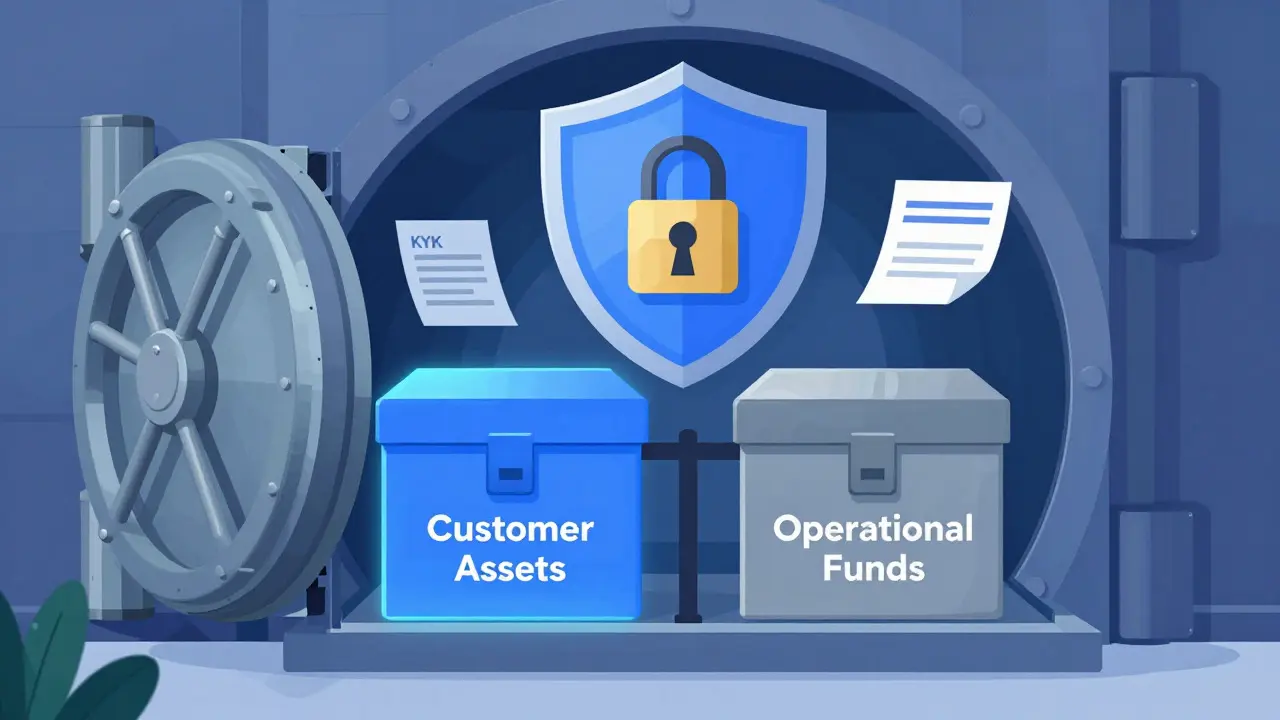
| Asset Segregation | Customer assets must be kept separate from the exchange's own operational funds. No commingling. |
| Transaction Conduct | Trading must be fair, transparent, and free from manipulation. Best execution practices are expected. |
| Information Security | Robust cybersecurity measures, including both cold and hot wallet management protocols. |
| Public Disclosure | Regular updates on platform health, incidents, and regulatory changes must be shared with users. |
| Internal Controls | Established audit trails, internal review processes, and independent auditing mechanisms. |
| Offshore Operations | Specific rules for VASPs operating outside Taiwan but serving Taiwanese residents. |
| Review Mechanisms | Processes to vet new virtual assets before listing them on the exchange. |
Notice the emphasis on asset segregation. After FTX, regulators everywhere are obsessed with proving that user funds are safe. In Taiwan, this means maintaining clear accounting records that show customer balances are distinct from company equity. Auditors will check this.
Security Tokens and the Taipei Exchange
If your exchange plans to list Security Tokens are digital representations of ownership in a real-world asset, such as stocks or bonds, regulated under securities law, the path is narrower. The FSC has authorized the Taipei Exchange (TPEx) to manage these offerings. Currently, market participation is extremely limited due to high regulatory thresholds.
As of mid-2026, there is only one officially approved security token issuance program in Taiwan. Why so few? Because the compliance costs are prohibitive for most startups. To trade security tokens, you generally need to be a licensed securities dealer. For most crypto exchanges, this means partnering with traditional financial institutions rather than launching STO markets directly. Keep this in mind if you are planning a product roadmap that includes tokenized securities.
ETFs and Institutional Access
Taiwan is slowly opening doors for institutional investors. The FSC, working with the Securities Business Association of the Republic of China is an industry body that collaborates with the FSC to establish guidelines for professional investment in virtual assets, has established five key points allowing professional investors to access foreign virtual asset ETFs.
This doesn't mean retail investors can buy Bitcoin ETFs on their local brokerages yet. But it signals a major shift. Traditional finance is integrating with crypto. For exchanges, this creates an opportunity to partner with banks and wealth managers who need compliant infrastructure to offer these products to their high-net-worth clients. However, strict investor qualification requirements remain in place to protect less sophisticated buyers.

Looking Ahead: The Virtual Asset Management Bill
The current framework is based on guidelines and AML laws, but a dedicated Virtual Asset Management Bill is proposed legislation aimed at creating a comprehensive legal framework specifically for digital asset markets in Taiwan is in development. The FSC resolved to propose new draft legislation in September 2024, targeting digital asset market trading regulation.
What does this mean for you?
- More Clarity: The bill aims to replace ad-hoc guidelines with codified law. This reduces ambiguity but may introduce stricter licensing requirements.
- Higher Barriers: Expect minimum capital requirements and more detailed operational audits.
- Consumer Protection: Enhanced dispute resolution mechanisms and compensation schemes for victims of fraud may be included.
A feasibility study report was expected around the end of 2024, with a draft law anticipated in mid-2025. By August 2026, keep a close watch on legislative updates. The final version of this bill will define the next decade of crypto operations in Taiwan.
Industry Response and Self-Regulation
Interestingly, the industry hasn't fought this tooth and nail. Instead, major exchanges formed the Taiwan Virtual Asset Service Provider Association is a self-regulatory organization comprising 24 major crypto exchanges in Taiwan, promoting compliance and industry standards. This 24-member group actively engages with the FSC during legislative debates.
Why join? Because self-regulation gives you a voice. The association helps shape practical implementation details, ensuring that rules are enforceable without killing innovation. It also signals to regulators that you are serious about compliance. If you are entering the market, consider engaging with this body. Their insights can save you months of trial and error.
Practical Steps for Compliance
If you are ready to operate in Taiwan, here is your checklist:
- Register as a VASP: Complete the AML registration with the FSC immediately. Do not delay.
- Segregate Funds: Set up separate bank accounts and wallets for customer assets. Document this clearly.
- Implement KYC/AML: Use robust identity verification tools. Monitor transactions for suspicious patterns.
- Publish Whitepapers: For every asset you list, provide a clear, accessible whitepaper explaining its utility and risks.
- Secure Your Infrastructure: Invest in cold storage solutions and regular penetration testing. Cybersecurity is a regulatory requirement, not just a best practice.
- Engage Local Counsel: Laws change fast. Have a legal team familiar with FSC regulations reviewing your operations quarterly.
The cost of compliance is high, but the cost of non-compliance is existential. Taiwan offers a stable, progressive environment for crypto businesses that respect the rules. Those who ignore them will find the door closing quickly.
Is cryptocurrency legal in Taiwan?
Yes, cryptocurrency is legal in Taiwan. The Financial Supervisory Commission (FSC) recognizes it as a "virtual commodity." However, it is not considered legal tender, meaning you cannot use it to pay taxes or debts unless the creditor agrees. Operating an exchange requires strict compliance with AML regulations.
Do I need to register my exchange with the FSC?
Yes. All Virtual Asset Service Providers (VASPs) operating in Taiwan must complete mandatory Anti-Money Laundering (AML) Registration with the FSC. This requirement was solidified in July 2024. Failure to register can result in severe fines and criminal penalties for executives.
What are the penalties for non-compliance?
Penalties include significant administrative fines and potential custodial sentences for individuals involved in financial crimes. Four new anti-fraud laws passed in 2024 enhanced these penalties, reflecting the government's zero-tolerance approach to crypto-related money laundering and fraud.
Can retail investors buy crypto ETFs in Taiwan?
Currently, access to foreign virtual asset ETFs is limited to professional investors. The FSC has established guidelines for this, but strict investor qualification requirements remain. Retail access may expand in the future as regulations evolve, but for now, it is restricted to accredited entities and high-net-worth individuals.
How do security tokens differ from other cryptocurrencies in Taiwan?
Security tokens are regulated under the Securities and Exchange Act, similar to traditional stocks. They can only be traded by licensed securities dealers, primarily through the Taipei Exchange (TPEx). Other cryptocurrencies fall under VASP guidelines focused on AML and consumer protection. The compliance threshold for security tokens is much higher.
When will the new Virtual Asset Management Bill take effect?
The FSC proposed draft legislation in September 2024, with a feasibility study completed in late 2024. A formal draft law was anticipated in mid-2025. As of August 2026, operators should monitor legislative updates closely, as the final bill will introduce more detailed operational guidelines and potentially stricter licensing requirements.