
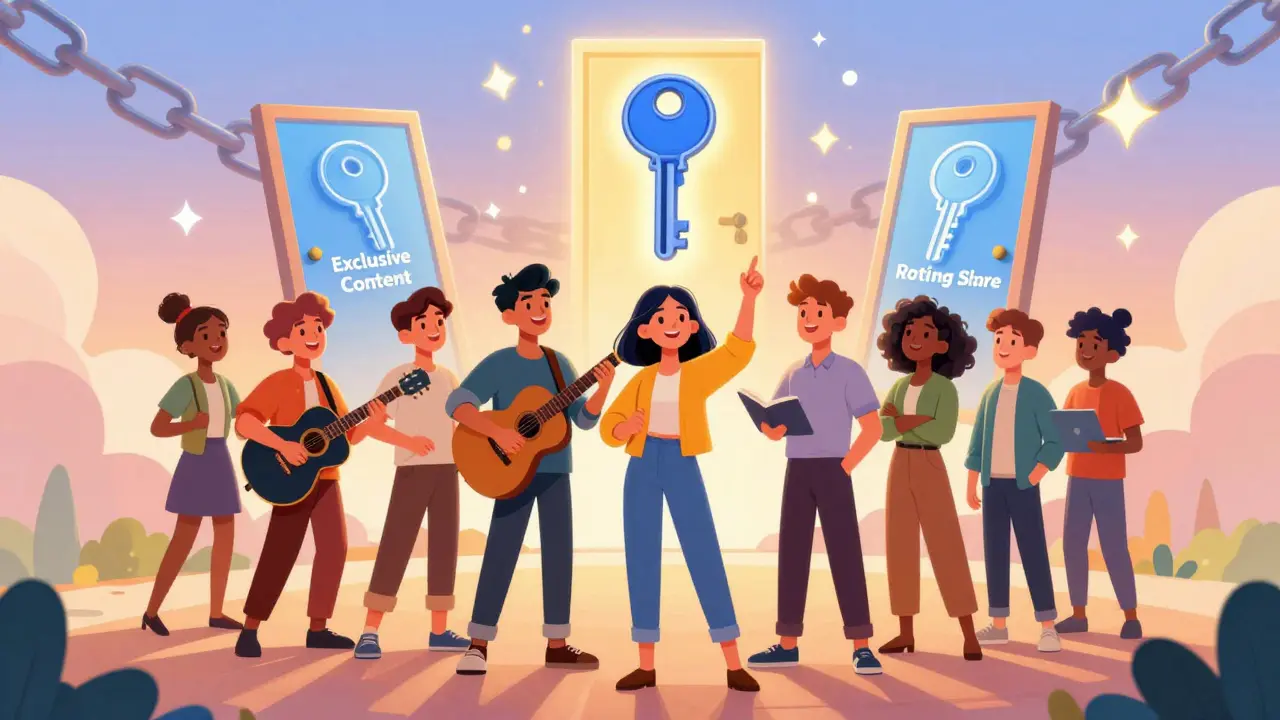
Forget selling merch or running ads. If you’ve built a loyal following-whether you’re a musician, artist, educator, or just someone with a tight-knit community-you can now turn that loyalty into real, recurring income using a social token. Unlike NFTs that sell one-off digital art, social tokens are about ongoing relationships. They’re digital keys that unlock access, influence, and shared value between you and your fans. And in 2026, launching one isn’t just for tech insiders anymore. It’s a viable path for creators who know their audience and are ready to build something real.
What Exactly Is a Social Token?
A social token is a cryptocurrency tied directly to you-or your community. It’s not meant to be traded like Bitcoin for quick profits. Instead, it represents access: early content, private Discord channels, voting rights on future projects, or even a share of future revenue. Think of it as a membership card, but on the blockchain.
The first big example was RAC’s $RAC token, launched in 2020. Fans who held $RAC got exclusive tracks, behind-the-scenes access, and a say in album art. By 2024, over 4.2 million creators globally used social tokens to earn $3.8 billion in direct revenue. That’s 17% of the entire creator economy. The numbers don’t lie: creators with social tokens report 3.2 times more recurring income than those relying on NFTs alone.
There are three main types:
- Creator tokens (like $RAC or $FAR): Personal, tied to one person.
- Community tokens (like $FWB or $BANK): For groups, where holders vote on decisions.
- Platform tokens (like $RLY): Used by services to power multiple creator tokens.
The key difference from NFTs? NFTs sell a thing. Social tokens sell a relationship.
Why Now? The 2026 Landscape
2026 is the year social tokens stopped being a gimmick and became a tool. Ethereum’s Dencun upgrade slashed gas fees by 90% for token transactions. Solana’s Firedancer client made networks faster and more stable. Coinbase now lets you buy social tokens right in its Creator Marketplace alongside NFTs. Patreon is testing token-gated subscriptions. These aren’t small updates-they’re infrastructure upgrades that make launching a token easier than ever.
Market cap for social tokens hit $12.3 billion in Q3 2025. But here’s the catch: 80% of projects launched in 2023 failed by 2025. Why? Most didn’t have real utility. They were just tokens with no purpose. The ones that succeeded? They gave holders something they couldn’t get anywhere else.
Who Should Even Try This?
If you have fewer than 5,000 highly engaged followers, don’t launch a token yet. Harvard Business Review studied 317 launches and found projects with under 5,000 active followers had an 82% failure rate. Engagement matters more than total followers. A community of 3,000 people who comment, share, and show up for your livestreams is better than 50,000 passive scrollers.
Best fits:
- Musician with a Patreon-like fanbase
- Artist who releases weekly digital work
- Online teacher with recurring courses
- Podcaster with a loyal listener group
- Community builder (like a Discord mod turned leader)
If you’re just starting out and your last post got 20 likes, wait. Build first. Then tokenize.
The 6-Step Launch Process
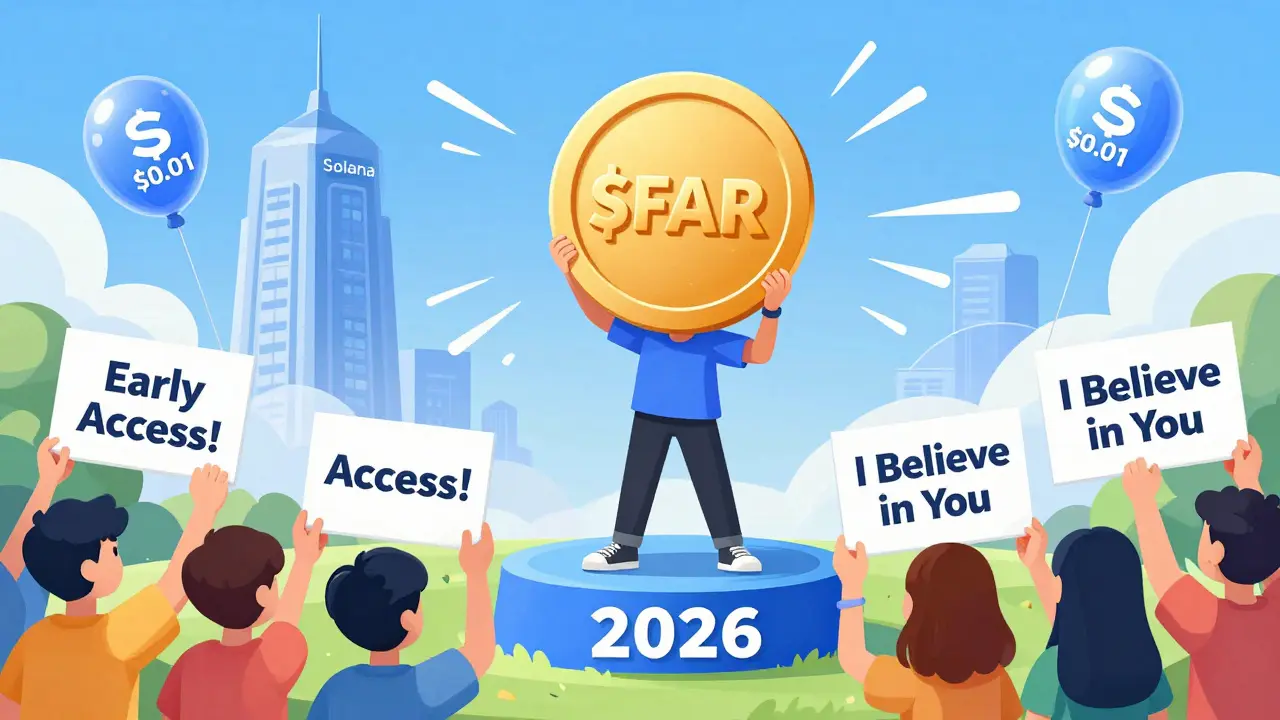
Launching a social token isn’t a one-click deal. It’s a 6-phase project that takes 3-6 months. Here’s how it breaks down:
- Build your community first-Start 3-6 months before launch. Talk to your audience. Ask what they’d pay for. Do polls. Run small experiments. Maybe offer a free bonus to the first 100 people who join your Discord. You’re not selling a token-you’re building trust.
- Design the tokenomics-This is where most fail. You need to answer: How many tokens total? How are they distributed? What do they do? A good rule: 60-70% to the community, 15-20% to you (with a 12-month vesting schedule), 5-10% for marketing, and 5% for liquidity. Never give more than 20% to your team. People smell insider deals.
- Choose your blockchain-Ethereum is still the most trusted, but gas fees can spike. Solana is cheaper ($0.01 per transaction) and faster. Polygon is a good middle ground. Most creators now use Solana or Polygon for launch. Ethereum is fine if you’re targeting high-value users who already use MetaMask.
- Deploy the smart contract-You don’t need to code it yourself. Platforms like TokenMinds, Rally, or Mighty Networks let you build a token with a form. But if you’re technical, use ERC-20 (Ethereum) or SPL (Solana) standards. Always get it audited. A $5,000 audit from CertiK or PeckShield is non-negotiable. In 2024, 18% of social tokens had critical vulnerabilities. You don’t want to be one of them.
- Launch smart-Don’t dump tokens on Uniswap on day one. Start with a private sale to your most loyal 100-200 fans. Give them early access. Offer discounts. Let them feel like pioneers. Then open to the public. This builds momentum and trust.
- Integrate utility-This is the make-or-break. If your token doesn’t unlock something, it’s just a digital baseball card. Link it to: exclusive content, early access, voting on next projects, discounts on merch, or even a share of your income. One creator tied 100 tokens to a monthly 30-minute Zoom call. Another gave holders 10% of all course sales. Real value. Real retention.
What Can Go Wrong?
There are three big traps:
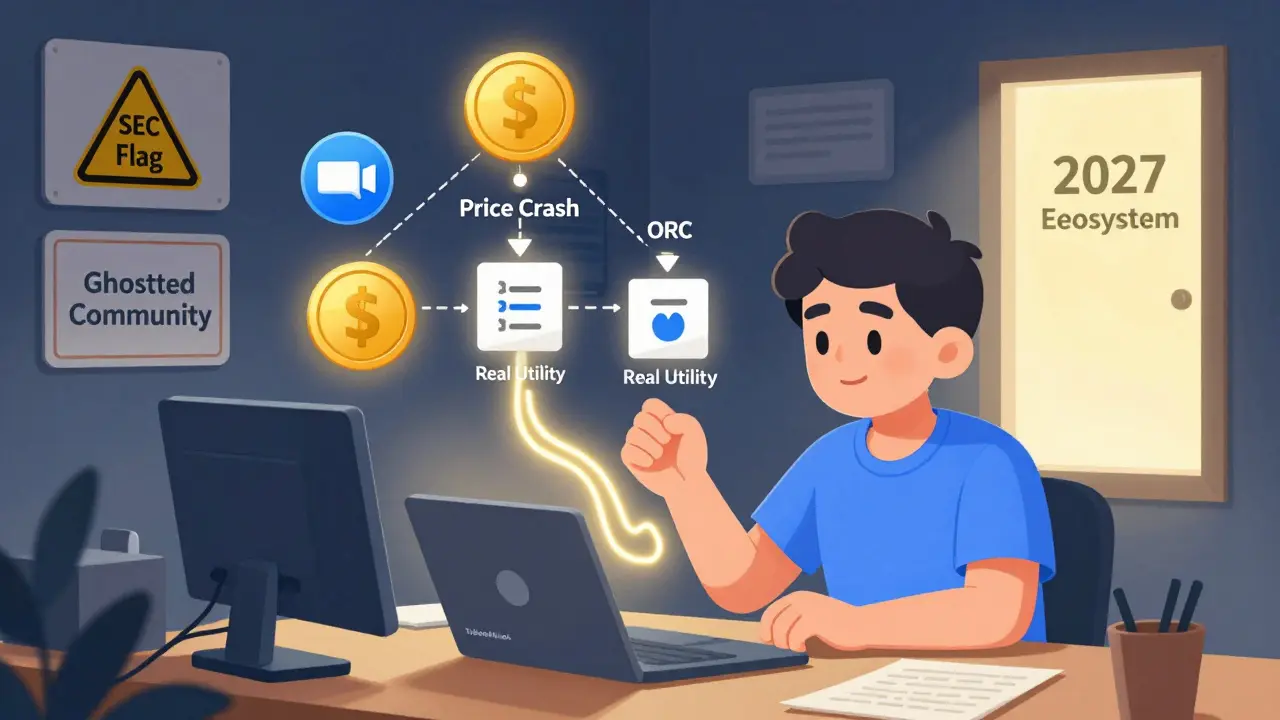
- Regulatory gray zones-The SEC hasn’t banned social tokens, but they’ve flagged 41% as potential securities. If your token promises profit or分红, you’re in danger. The solution? Make utility clear. No “investments,” no “returns.” Say: “This token gives you access to X.” Not “This token will rise in value.”
- Volatility kills trust-Social tokens dropped 63% on average in 2024. One influencer’s token crashed 70% after a single bad tweet. The market reacts fast. Your token’s value is tied to your reputation. Stay active. Stay honest. Don’t ghost your community.
- Technical overload-If you don’t understand wallets, gas fees, or smart contracts, you’ll drown. Use platforms that handle the backend. TokenMinds, Rally, and Mighty Networks have done the heavy lifting. You focus on your audience. They handle the blockchain.
And here’s the hard truth: if you stop creating, your token dies. Unlike stocks, social tokens don’t have companies behind them. They have you. If you go quiet for three months? Holders leave. Your token’s value plummets. This isn’t passive income. It’s active partnership.
Real Examples That Worked
RAC’s $RAC token: 300% higher fan engagement. Holders helped choose album covers. One fan said, “Owning $RAC felt like being part of the creative process.”
Farok’s $FAR: A digital artist who gave token holders early access to every NFT drop. He didn’t sell NFTs-he sold experiences. His monthly revenue jumped 4x.
A music teacher in Berlin launched $BEAT for her online lessons. Holders got weekly practice tracks, live feedback, and voting rights on curriculum. She now has 1,200 active token holders. Her students pay less than Patreon, but she earns more because they’re invested.
These weren’t lucky breaks. They were intentional. Each creator mapped utility before launch. They didn’t just say “buy my token.” They said, “Here’s what you’ll get-and why it matters.”
What You Need to Get Started
You don’t need a degree in crypto. But you do need:
- A community of at least 5,000 engaged followers
- A clear idea of what your token unlocks
- 15-20 hours a week for the first 3 months (yes, really)
- A wallet (MetaMask, Phantom, or Coinbase Wallet)
- $200-$1,000 for deployment and audit (Solana/Polygon are cheaper than Ethereum)
Most creators spend 80-120 hours learning the basics before launch. Use free resources: TokenMinds’ Complete Guide, Coinbase’s Creator Hub, and Mighty Networks’ token tutorials. Don’t skip this. You’re not just launching a token-you’re building a new business model.
What Comes Next?
By 2027, Gartner predicts 65% of top influencers will have social tokens. But Forrester warns 80% of current projects will collapse without real utility. The winners? Those who treat tokens like memberships-not investments. Those who keep showing up. Those who give more than they take.
The future isn’t about selling art. It’s about building ecosystems. Your token isn’t a product. It’s a promise. And promises only hold weight if you keep them.
Do I need to be a coder to launch a social token?
No. Platforms like Rally, TokenMinds, and Mighty Networks let you create a token with a simple form. You just need to define the utility, distribution, and rules. You don’t write code-you make decisions. The platform handles the blockchain side. That said, understanding basics like wallets, gas fees, and smart contracts helps you avoid mistakes.
How much does it cost to launch a social token?
On Solana or Polygon, you can launch for under $300 total: $50-$150 in gas fees, $500-$1,500 for a smart contract audit (recommended), and $100-$200 for exchange listing or marketing. Ethereum can cost $1,000+ if gas spikes. Most creators budget $1,000-$2,500 total for a safe launch. Never skip the audit-it’s insurance.
Can I make money immediately after launching?
Not unless you already have a strong community. The token itself doesn’t create demand-it reveals it. If you launch to 500 people who don’t care, you’ll make $0. If you launch to 5,000 who’ve been waiting for this? You’ll see sales fast. Revenue comes from utility, not hype. Focus on what your holders get, not how much the token price rises.
Are social tokens legal?
It depends. The SEC doesn’t ban them, but if your token promises profit or分红, it could be classified as a security. The safest path: design your token to give access, not returns. Say: “100 tokens = monthly live Q&A,” not “This token will increase in value.” The EU’s MiCA framework gives clearer rules than the US. If you’re unsure, consult a lawyer who specializes in digital assets.
What happens if my token’s price crashes?
If your utility is real, it won’t matter. People who joined for access won’t leave just because the price dropped. But if your token’s value was based on speculation, people will bail. That’s why transparency matters. If your token drops 70%, explain why: “I had a personal issue and took a break. Here’s what’s next.” Honesty builds loyalty. Silence kills trust.
Should I use Ethereum or Solana?
For most creators in 2026, Solana is the better choice. It’s faster, cheaper, and handles spikes better. Ethereum is more trusted but can cost $50+ in gas during busy times. Polygon is a good middle ground-Ethereum security with Solana prices. If your audience already uses MetaMask, Ethereum is fine. If you want low friction, go Solana or Polygon.


Jeremy buttoncollector
so like... the whole premise hinges on this idea that community = value, but what if your community is just 5k people who follow you because you post cat memes and call it art? like, sure, tokenomics look sexy on paper, but if your utility is a discord channel where you say "hey guys" twice a week, you're just minting digital loneliness. the blockchain doesn't care if you're chill. it just records transactions. and trust? trust is built in real time, not in a smart contract. also, gas fees are still a nightmare on eth. just saying.