
Remember the days when swapping tokens on Ethereum felt like paying rent for a luxury apartment just to buy a coffee? If you’ve traded on-chain before, you know the pain of gas fees eating your profits. That’s exactly why Loopring Exchange exists. It’s not just another place to trade; it’s an attempt to fix the speed and cost problems of Ethereum without sacrificing security.
But here is the catch: Loopring isn’t like Uniswap or Binance. It uses a different technology called zkRollups and an order book model that feels more like traditional stock trading than typical DeFi swapping. Before you connect your wallet, you need to know if this platform actually saves you money or if it comes with hidden costs. Let’s break down what Loopring really offers in 2026.
What Exactly Is Loopring?
Loopring is a decentralized exchange (DEX) protocol and Ethereum Layer-2 scaling solution launched in 2017. Unlike many newer platforms, Loopring has been around since the early days of the ICO boom. Its main job is twofold: it lets you trade cryptocurrencies directly from your wallet, and it acts as a bridge to make Ethereum transactions faster and cheaper.
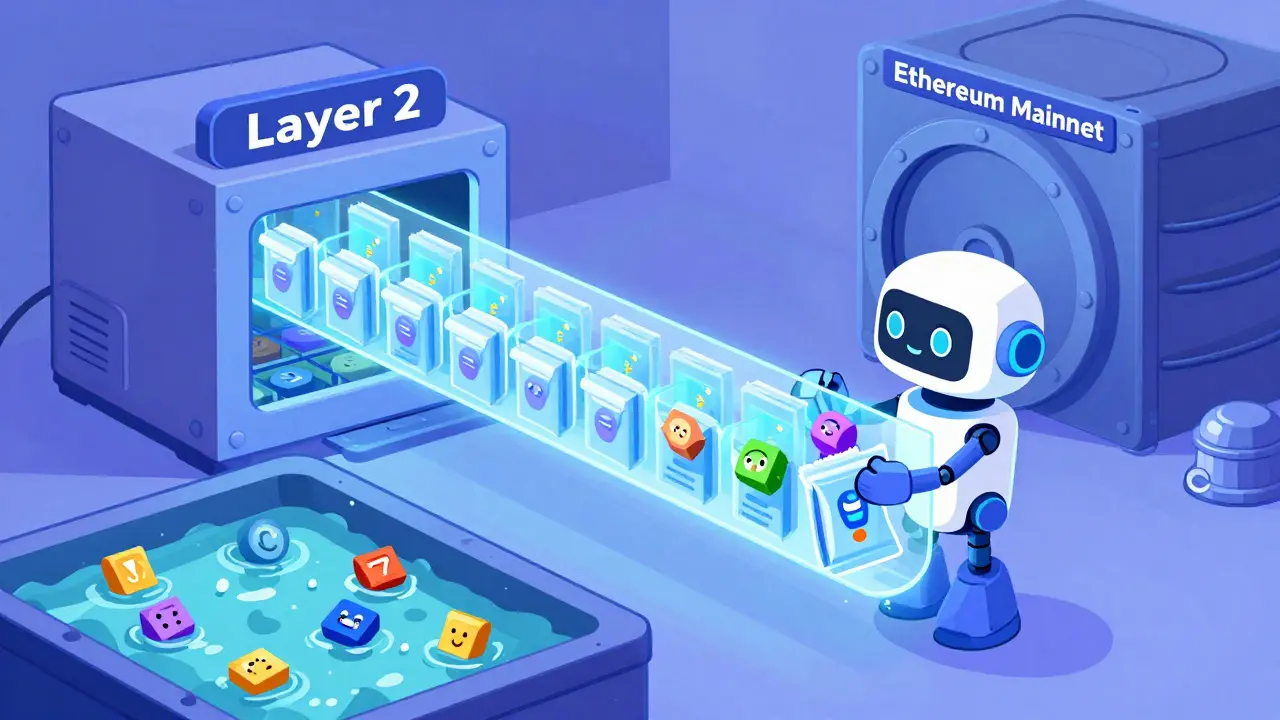
The secret sauce here is zkRollup technology, which is a method that bundles multiple transactions into single proofs to reduce network load. Instead of every trade hitting the main Ethereum blockchain (Layer 1), Loopring processes them off-chain. It then sends a mathematical proof back to Ethereum to verify everything is correct. This means you get the security of Ethereum but at a fraction of the cost and time.
Most decentralized exchanges use something called an Automated Market Maker (AMM). You probably know this as the pool system where you swap against a contract. Loopring does something different. It uses an order book model, which is a system matching buyers and sellers based on price and time priority. This allows for better price discovery and less slippage, especially for larger trades. If you prefer seeing a list of bids and asks rather than a simple "swap" button, this might feel familiar.
How Much Does It Cost to Trade?
Fees are usually the dealbreaker for DEX users. Loopring’s structure is aggressive compared to industry standards, but there’s a twist.
| Fee Type | Loopring | Industry Average | Notes |
|---|---|---|---|
| Taker Fee | 0.10% | 0.2181% | You pay when taking liquidity (market orders) |
| Maker Fee | 0.00% | 0.178% | You pay nothing when adding liquidity (limit orders) |
| ETH Withdrawal | 0.002 ETH | ~0.0006 - 0.0007 ETH | Higher than competitors like Joyso or EtherDelta |
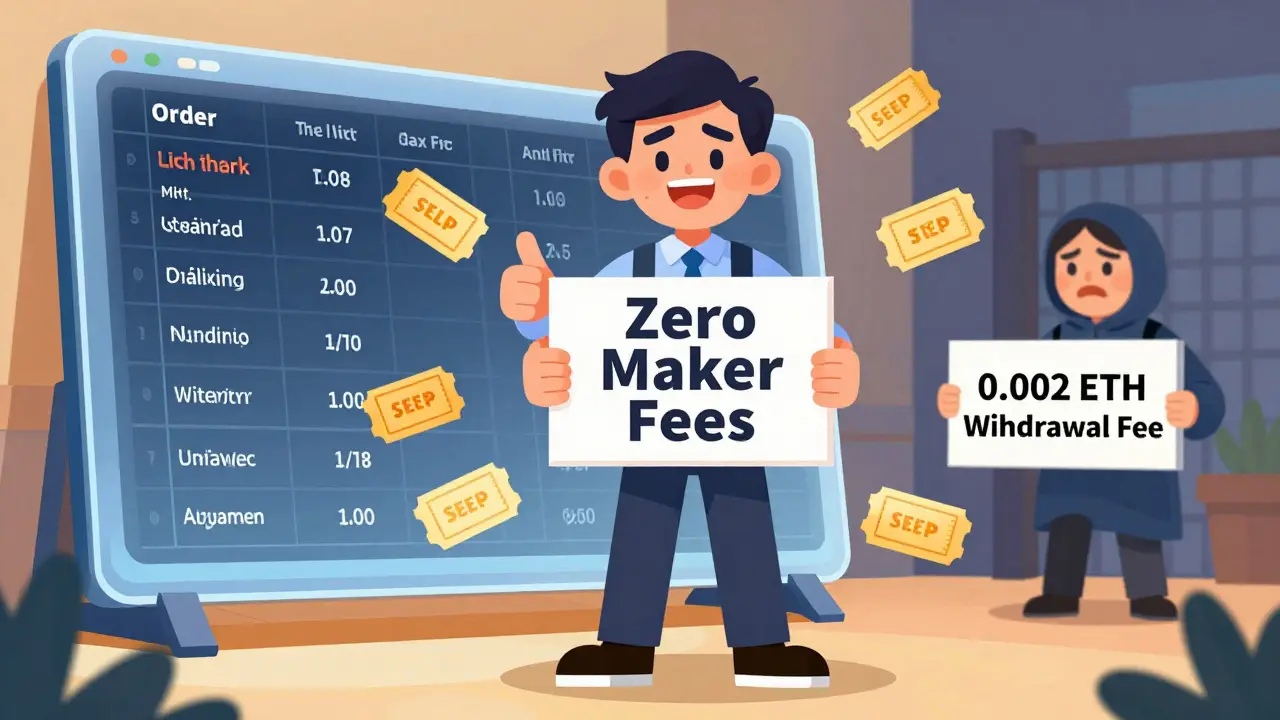
If you are a maker-meaning you place limit orders that sit in the book waiting to be filled-you pay zero fees. That is rare. Even takers (those who execute immediately) pay half the average rate. However, watch out for withdrawals. Moving your ETH out of the Loopring network costs 0.002 ETH. While that sounds small, if ETH is trading high, that fee can add up quickly compared to other exchanges charging fractions of that amount. For small balances, this withdrawal fee can eat into your gains significantly.
Security and Control: Do You Own Your Keys?
In the world of centralized exchanges (CEXs) like Coinbase or Binance, the platform holds your money. If they go bankrupt or get hacked, your funds are at risk. Loopring takes a different approach. It is non-custodial. This means your assets never leave your control in the same way they do on a CEX. The smart contracts hold the funds, but you retain the ability to withdraw them at any time, provided the network is operational.
The security relies on Zero-Knowledge Proofs, which are cryptographic methods that verify transaction validity without revealing underlying data. These proofs ensure that the off-chain calculations are correct before they are recorded on Ethereum. Because the code is open-source, anyone can audit it. This transparency builds trust, but it also places responsibility on you. You must manage your own private keys and seed phrases. If you lose access to your wallet, there is no customer support hotline to reset your password.
User Experience: Is It Easy to Use?
Let’s be honest: Loopring is not the simplest interface you will ever see. If you are used to the one-click swaps on Uniswap or the polished apps of centralized exchanges, Loopring requires a bit of learning.
- Wallet Connection: You need a Web3 wallet like MetaMask. You don’t deposit funds into an exchange account; you connect your wallet directly.
- Top-Up Process: To start trading, you must "top up" your Loopring wallet. This involves moving assets from Layer 1 (Ethereum) to Layer 2 (Loopring). This process is free of gas fees within the Loopring ecosystem once you are inside, but the initial transfer requires understanding the difference between the two layers.
- Order Types: Since it uses an order book, you need to understand limit orders versus market orders. Placing a limit order means setting a specific price you want to buy or sell at. A market order executes immediately at the best available price.
The documentation can be technical. If you are new to DeFi, terms like "Merkle trees" and "atomic swaps" might appear in help guides. Expect to spend a few hours reading tutorials or watching videos before you feel comfortable placing your first trade. It’s not designed for absolute beginners who just want to click "buy" and walk away.
Limitations and What’s Missing
Loopring isn’t perfect. Its biggest limitation is asset support. Because it is built specifically for Ethereum, it does not support Bitcoin or many other non-Ethereum-based chains. If you are looking to trade BTC directly on Loopring, you can’t. You are limited to ERC-20 tokens and ETH.
Another issue is liquidity. While the order book model is efficient, it only works well if there are enough people trading. Compared to giants like Uniswap, Loopring’s liquidity pools are smaller. This means for very large trades, you might experience slippage, or you might not find a counterparty at your desired price. For everyday retail traders, this is rarely a problem, but high-volume traders should check the depth of the books first.
Loopring Token (LRC): What Is It?
Every major protocol has a native token, and Loopring uses LRC, which is the utility token used for staking and governance within the Loopring ecosystem. As of late 2025, LRC trades around $0.09 with a market cap of roughly $121 million.
Holding LRC doesn’t automatically give you discounts on trading fees in the same way some other platforms do, but it plays a crucial role in the network’s security. Users stake LRC to secure the network and participate in governance decisions. The price of LRC is volatile, having seen drops of over 11% in a single month recently. If you plan to use Loopring long-term, holding LRC aligns your interests with the health of the network, but treat it as a speculative asset, not a stable store of value.
Who Should Use Loopring?
Loopring is ideal for:
- Active Traders: If you place many limit orders, the zero-maker fee structure can save you significant money compared to AMM platforms.
- Ethereum Purists: If you want to stay within the Ethereum ecosystem but hate gas fees, Loopring’s Layer-2 solution is a great middle ground.
- Privacy-Conscious Users: The zero-knowledge proofs offer a layer of privacy regarding your transaction details, though your address remains public on the ledger.
It is likely not for you if:
- You primarily trade Bitcoin or Solana assets.
- You have a very small balance (under $100) because the withdrawal fee will hurt.
- You want a "set it and forget it" experience without learning about order books.
Final Thoughts
Loopring Exchange remains a unique player in the crowded DeFi space. It bridges the gap between the ease of centralized order books and the security of decentralized protocols. While the withdrawal fees are higher than some competitors and the learning curve is steep, the potential savings on trading fees for active makers are real. If you are willing to learn the ropes and stick to Ethereum-based assets, Loopring offers a robust, secure, and cost-effective way to trade in 2026.
Is Loopring safe to use?
Yes, Loopring is considered highly secure because it is non-custodial and uses Ethereum-level security via zkRollups. Your funds are held in smart contracts, not by a central company. However, you are responsible for securing your own wallet credentials. If you lose your private key, you lose access to your funds.
Can I trade Bitcoin on Loopring?
No, Loopring is built exclusively on the Ethereum network. It supports ETH and ERC-20 tokens. It does not support Bitcoin (BTC) or assets from other blockchains like Solana or Polygon directly.
Why are Loopring withdrawal fees so high?
The withdrawal fee of 0.002 ETH covers the cost of processing the transaction back to the main Ethereum Layer-1 network. While Loopring makes internal transfers cheap, moving funds out to the main chain still incurs a base cost. This fee is higher than some competitors but ensures the network remains sustainable.
What is the difference between Loopring and Uniswap?
Uniswap uses an Automated Market Maker (AMM) model with liquidity pools, while Loopring uses a traditional order book model. Loopring also operates as a Layer-2 scaling solution using zkRollups, whereas Uniswap primarily operates on Layer-1 or integrates with various L2s differently. Loopring offers zero fees for makers, which Uniswap typically does not.
Do I need to hold LRC tokens to trade?
No, you do not need to hold LRC tokens to execute trades on the exchange. However, holding and staking LRC allows you to participate in governance and helps secure the network. It is optional for basic trading functionality.