
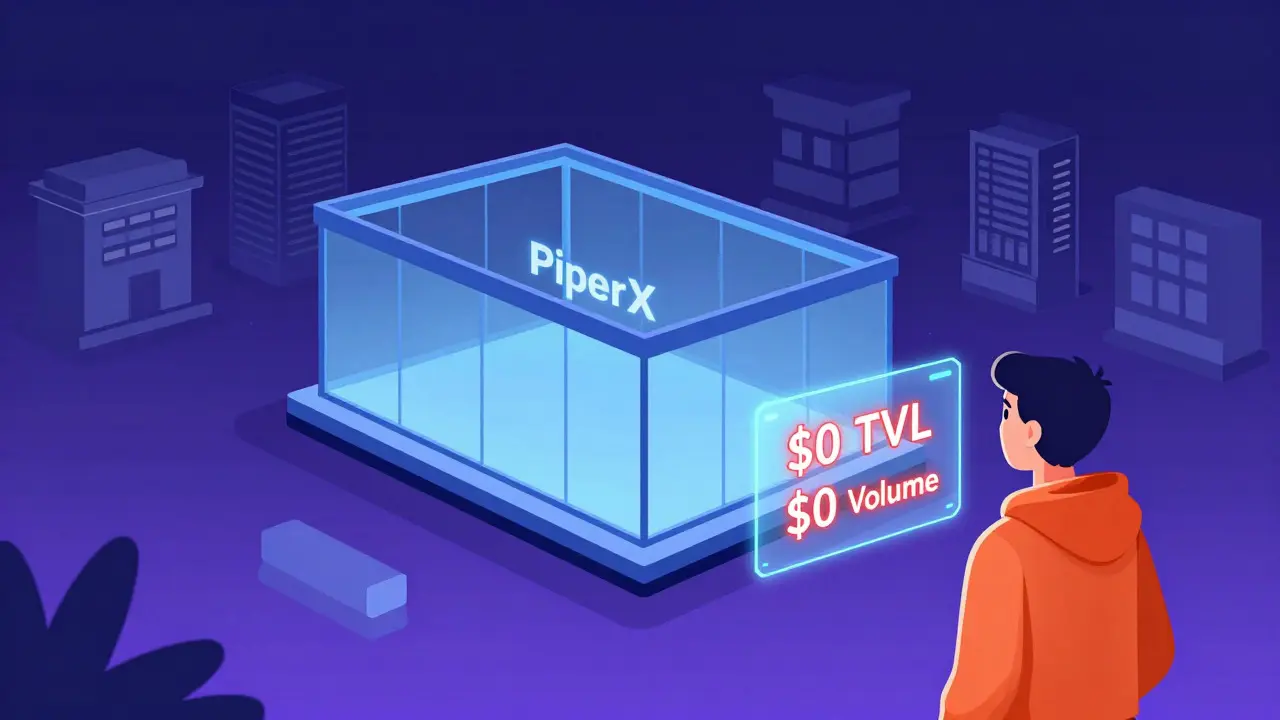
You’ve probably heard the hype about PiperX v3. It promises to unlock a massive market for creators by turning ideas into tradeable assets. But if you’re looking for a place to swap Bitcoin for Ethereum right now, you’re going to be disappointed. In fact, you won’t find any trading volume at all. As of mid-2026, PiperX is still in its pre-mainnet phase, sitting on $0 Total Value Locked (TVL) and $0 trading volume.
So why are people talking about it? Because PiperX isn’t trying to be another copy of Uniswap or PancakeSwap. It’s building something entirely different: an Intellectual Property Finance (IPFi) platform built on top of the Story Protocol blockchain. This article breaks down what PiperX v3 actually is, how its unique technology works, and whether it’s worth your attention once it finally launches.
What Is PiperX v3?
PiperX v3 is a next-generation decentralized exchange (DEX) specifically designed for intellectual property assets. Unlike traditional crypto exchanges that handle fungible tokens like USDT or native coins like ETH, PiperX focuses on non-fungible, IP-backed tokens. These are digital representations of real-world creative works-music rights, patent licenses, character designs, or brand trademarks.
The platform was founded by the team behind Story Protocol, aiming to solve a specific problem: liquidity. In the traditional world, selling a piece of intellectual property is slow, expensive, and opaque. In the crypto world, most DeFi protocols ignore these assets because they don’t fit neatly into standard automated market maker (AMM) models. PiperX v3 attempts to bridge this gap by creating a dedicated liquidity layer for these high-value, low-frequency assets.
It’s important to understand that PiperX is not a general-purpose exchange. You won’t go there to day-trade meme coins. Instead, it targets a niche segment of the broader Real-World Asset (RWA) tokenization trend. According to data from Gartner’s Digital Asset Report, blockchain-based IP tokenization represents less than 0.01% of the global IP market as of late 2025. PiperX is betting that this number will grow significantly, positioning itself as the primary infrastructure for that growth.
How PiperX v3 Technology Works
The core innovation of PiperX v3 lies in its technical architecture, which differs sharply from established DEXs like Uniswap or Raydium. Traditional AMMs rely on deep liquidity pools to minimize slippage-the difference between the expected price of a trade and the executed price. For rare IP assets with low liquidity, this usually results in terrible prices for traders.
PiperX addresses this with a custom bonding curve algorithm. According to their technical documentation (v1.2, updated August 2025), this design aims to keep slippage under 0.5% even for assets with less than $10,000 in liquidity. By comparison, conventional AMMs often see slippage rates of 2-5% at similar liquidity levels. This makes it theoretically possible to trade emerging creator assets without losing half your value to price impact.
Another key feature is the integration with Story Protocol’s consensus mechanism. Story introduces AI agents as network participants, and PiperX leverages this through its 'DeFAI Agent' infrastructure. These agents facilitate agent-to-agent transactions, allowing smart contracts to automatically buy, sell, or license IP based on predefined criteria. For example, an AI agent could monitor streaming data for a song and automatically adjust the licensing fee for a playlist inclusion, executing the transaction on-chain instantly.
The platform also features a proprietary system called 'CreativityProof.' This patent-pending technology allows users to earn yield not just by providing liquidity, but by contributing to the creation or verification of IP metadata. It shifts the incentive model from pure capital provision to active participation in the IP ecosystem.
| Feature | PiperX v3 | Uniswap / PancakeSwap |
|---|---|---|
| Asset Type | IP-backed NFTs & Tokens | Fungible Cryptocurrencies |
| Liquidity Model | Custom Bonding Curves | Constant Product Formula (x*y=k) |
| Slippage (Low Liquidity) | < 0.5% | 2-5%+ |
| Primary Users | Creators, IP Lawyers, Collectors | Traders, Degens, Institutions |
| Fee Structure | Dynamic (0.15% - 0.3%) | Fixed (typically 0.3% - 1%) |
| Network | Story Protocol (L1) | Ethereum, BSC, Solana, etc. |

Current Status: Why There Are No Reviews Yet
If you search for user reviews of PiperX v3 on Trustpilot or Reddit, you’ll find almost nothing. That’s because the platform hasn’t launched on mainnet yet. As of October 2025, metrics show $0 TVL and $0 volume. The roadmap indicates a planned mainnet launch targeting Q1 2026, meaning we are currently in the testing and development phase.
However, testnet participants have provided some early feedback. On forums like r/defi, developers praised the novel 'Farming Yield Voting' mechanism but noted a steep learning curve. One tester, 'CryptoCreator89,' reported spending three hours to complete a single test swap due to the complexity of the agent-native interface. Another user, 'NFT_Lawyer,' expressed concern about the legal recognition of on-chain IP claims, highlighting a major hurdle for mainstream adoption.
This lack of user activity means there are no real-world performance metrics to analyze. The claims of low slippage and reduced impermanent loss are theoretical, based on whitepaper simulations rather than live market data. Until mainnet goes live, PiperX remains a concept rather than a proven tool.
Risks and Challenges
Investing in or using early-stage DeFi projects always carries risk, and PiperX faces several unique challenges:
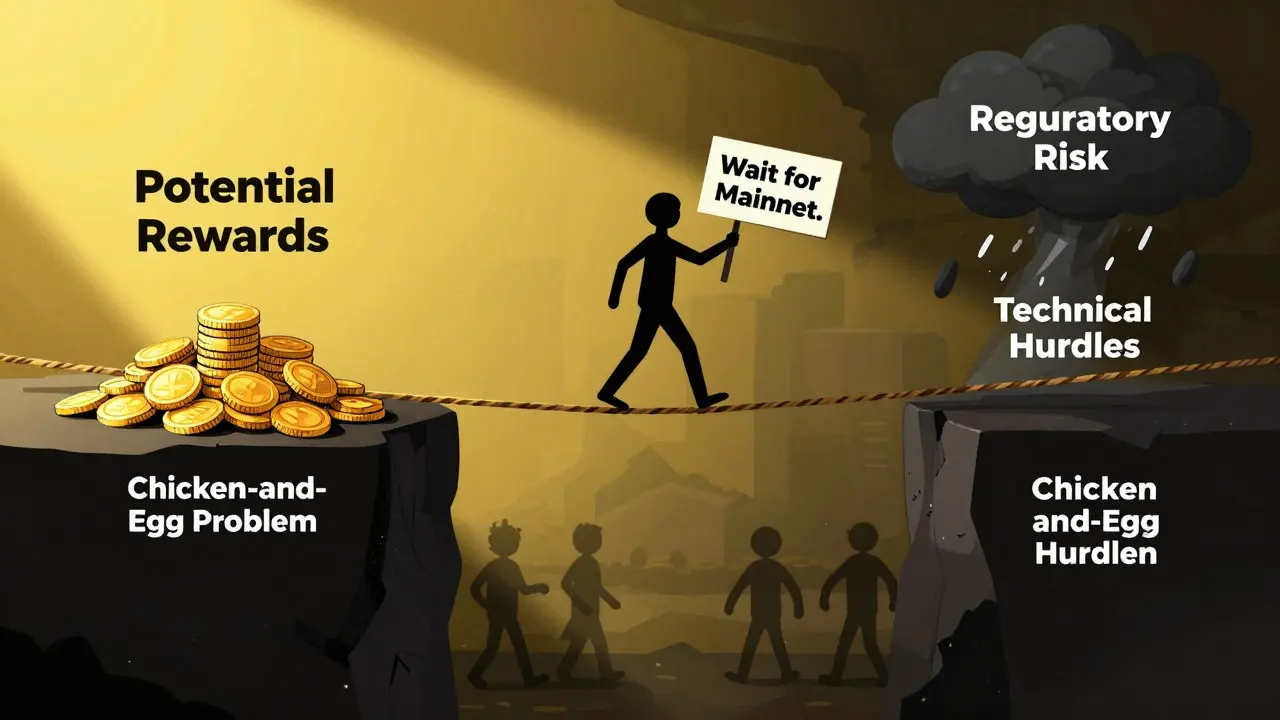
- The Chicken-and-Egg Problem: To attract liquidity providers, PiperX needs valuable IP assets. To attract IP creators, it needs liquidity. Dr. Elena Rodriguez from Messari noted that this hurdle has stalled similar initiatives for five years. Without a critical mass of both sides, the marketplace remains empty.
- Regulatory Uncertainty: The SEC’s September 2025 framework stated that IP-backed tokens may qualify as securities depending on their economic substance. This creates compliance uncertainty for both the platform and its users. If regulators classify these tokens as securities, PiperX may need to implement strict KYC/AML procedures, potentially reducing its appeal to privacy-focused crypto users.
- Market Timing: Decrypt’s September 2025 DeFi Outlook reported that only 12% of surveyed IP lawyers believe blockchain-based IP markets will gain meaningful traction before 2027. If adoption is slower than expected, PiperX may struggle to sustain operations.
- Technical Dependency: PiperX relies entirely on Story Protocol’s ability to maintain reliable IP metadata verification. The Block Research identified this as a significant security risk, noting that there is no established blockchain precedent for verifying complex legal metadata on-chain.
Who Should Watch PiperX v3?
PiperX is not for everyone. If you’re a casual crypto trader looking for quick profits, stick to established platforms like Coinbase or Binance. PiperX is designed for a specific audience:
- Digital Creators: Musicians, artists, and writers who want to tokenize their work and earn passive income through fractional ownership or licensing.
- IP Investors: Individuals or funds interested in diversifying into real-world assets beyond real estate and commodities.
- DeFi Developers: Engineers building tools for the RWA sector who want to integrate with Story Protocol’s SDK.
For these groups, PiperX offers a glimpse into a future where intellectual property is as liquid as cryptocurrency. But until the mainnet launches and real assets begin flowing, it remains a high-risk, speculative bet on the success of the entire IPFi narrative.
Conclusion: Wait for Mainnet
PiperX v3 presents an intriguing vision for the future of intellectual property finance. Its focus on solving liquidity issues for IP assets through custom bonding curves and AI-driven agents sets it apart from generic DEXs. However, the platform is still in its infancy, with no live trading volume and significant regulatory and technical hurdles ahead.
For now, the best approach is to watch closely. Follow the Story Protocol developments, monitor the Q1 2026 mainnet launch date, and wait for real-world usage data before committing any funds. The potential rewards are high, but so are the risks associated with being an early adopter in such a specialized and unproven market.
Is PiperX v3 safe to use?
As of mid-2026, PiperX v3 is not yet live on mainnet, so there is no live financial risk. However, when it launches, users should exercise caution. The platform relies on new technology (Story Protocol) and operates in a regulatory gray area. Smart contract audits and insurance coverage details will be crucial indicators of safety upon launch.
What is the difference between PiperX and Uniswap?
Uniswap is a general-purpose DEX for swapping fungible cryptocurrencies like ETH and USDC. PiperX is a specialized DEX for trading intellectual property assets (IPFi). PiperX uses custom bonding curves to handle low-liquidity, high-value assets, whereas Uniswap relies on large liquidity pools for common tokens.
When will PiperX v3 launch on mainnet?
According to the public roadmap updated in September 2025, PiperX targets a mainnet launch in Q1 2026. Delays are common in crypto development, so this date should be treated as an estimate rather than a guarantee.
Does PiperX charge trading fees?
Yes, PiperX implements a dynamic protocol fee ranging from 0.15% to 0.3%, depending on the liquidity depth of the asset. 70% of these fees go to liquidity providers, and 30% goes to the protocol treasury.
What is Story Protocol?
Story Protocol is the Layer 1 blockchain that powers PiperX. It is designed to verify and manage intellectual property metadata on-chain, using AI agents to facilitate transactions. PiperX is the primary exchange built on top of this infrastructure.


Don Fizy
Hey folks, just wanted to drop a quick note about the bonding curve tech mentioned here. It’s actually pretty slick for low-liquidity assets because it avoids that nasty slippage spike you get with standard AMMs. I’ve seen similar implementations in niche DeFi protocols before and they work well if you’re patient. Keep an eye on the Q1 2026 launch date though, crypto timelines are always optimistic :)