
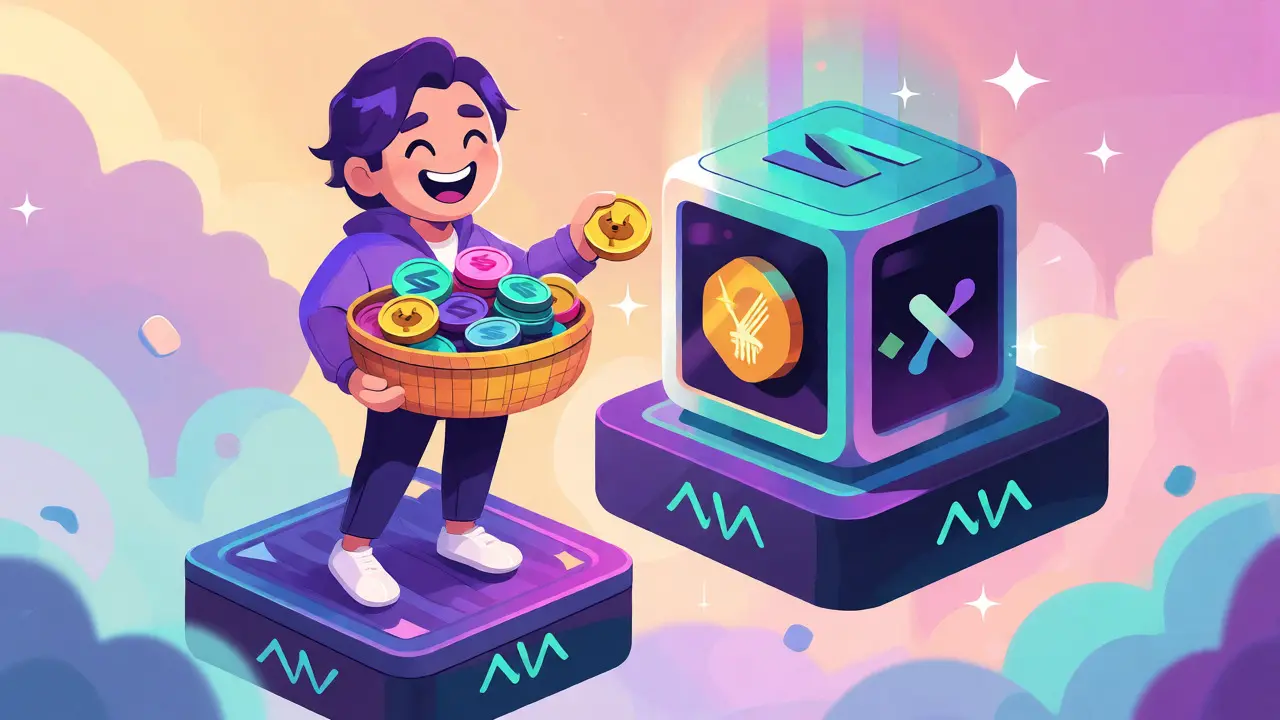
Have you ever wanted to trade Bitcoin or Ethereum using your dog-themed meme coins as collateral, without selling them first? That’s the core promise of Quanto, a decentralized exchange (DEX) built specifically for perpetual futures trading on the Solana blockchain. Launched in late 2024, Quanto isn’t trying to be everything to everyone. It targets traders who want high leverage, low fees, and the freedom to use volatile assets as margin. But does it hold up against giants like Hyperliquid? Let’s break down what works, what doesn’t, and whether this platform fits your trading style.
The Core Innovation: Any Asset as Collateral
Most perpetual exchanges force you to convert your holdings into stablecoins like USDC or USDT before you can open a position. Quanto flips this script. Its "any collateral" model lets you deposit almost any Solana-based token-whether it’s SOL, JUP, or even a small-cap meme coin-and use it directly as margin for perpetual contracts. This saves you from paying swap fees and avoids the risk of being liquidated simply because you converted your assets at a bad price.
This flexibility is powerful but comes with strings attached. Because meme coins are volatile, Quanto requires a higher collateral ratio. While standard platforms might ask for 110% coverage, Quanto often demands 105% or more depending on the asset's volatility index. You need to monitor your positions closely; if your collateral drops in value faster than your profit grows, you’re at risk of liquidation.
Performance and Fees: The Solana Advantage
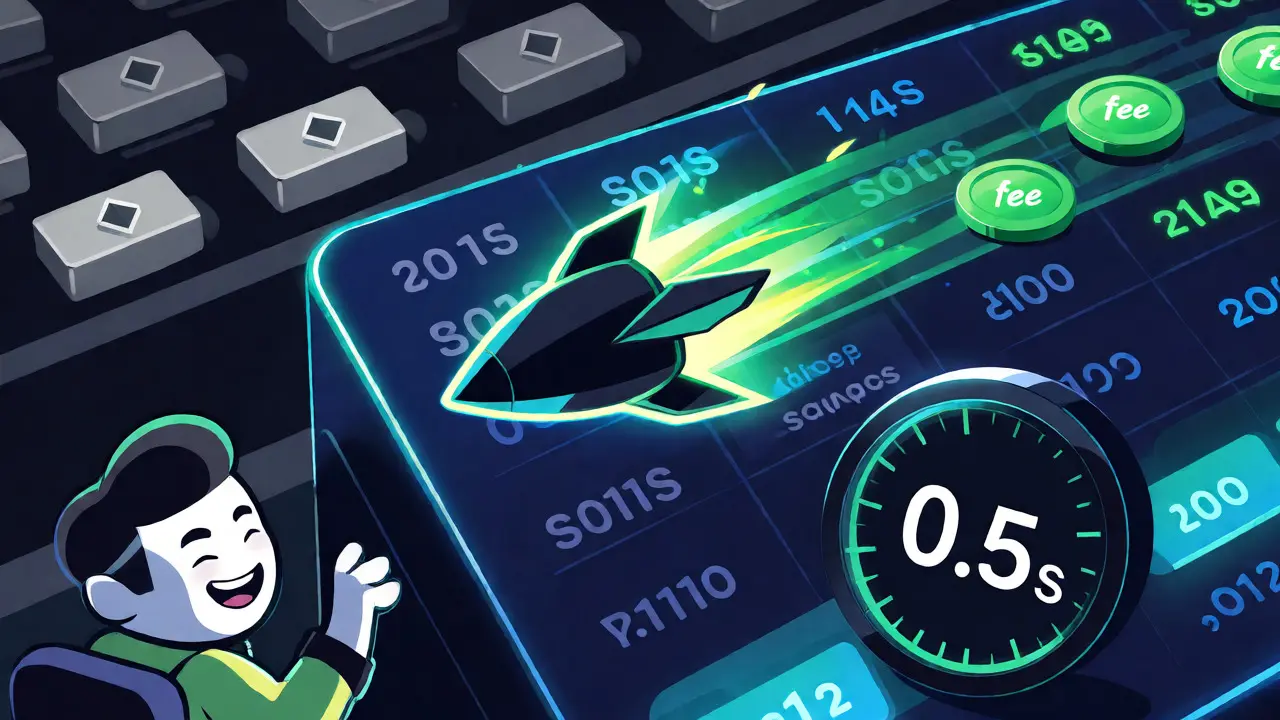
Running on Solana gives Quanto a massive speed advantage. Transactions settle in under a second, and confirmation times hover around 400-600 milliseconds. For day traders, this means you can enter and exit positions quickly without worrying about network congestion or gas spikes that plague Ethereum-based exchanges.
Fees are another strong suit. Quanto charges a maker fee of 0.02% and a taker fee of 0.05%. Compare this to competitors like Hyperliquid, which charges slightly higher rates, and the savings add up over hundreds of trades. Plus, holding the native QTO token unlocks tiered discounts, reducing fees by up to 15%. If you’re an active trader, stacking QTO is practically mandatory to stay competitive on costs.
| Feature | Quanto | Hyperliquid | GMX |
|---|---|---|---|
| Blockchain | Solana | Ethereum L2 (Arbitrum) | Arbitrum / Avalanche |
| Collateral Type | Any Solana Asset | USDC Only | ETH / Stablecoins |
| Maker Fee | 0.02% | 0.025% | 0.02% - 0.07% |
| Max Leverage | 100x | 50x | 50x |
| Liquidity Depth | Low ($1.2M avg) | High ($15M+) | Medium |
Liquidity: The Elephant in the Room
Here’s the biggest catch. Quanto is still young, and its order books aren’t deep. Average depth per major pair sits around $1.2 million. If you’re trading with $500 or $5,000, you won’t notice slippage. But if you’re moving $50,000 or more, you’ll likely eat through multiple price levels, getting a worse fill than expected. Institutional traders looking for large block executions should look elsewhere until Quanto matures further.
For retail users, however, this liquidity level is sufficient. The platform handles typical retail sizes smoothly, and the sub-second execution ensures you don’t get stuck in pending transactions while the market moves against you.
The QTO Token: Utility and Risks
The QTO token isn’t just for show. It serves two main purposes: governance and fee discounts. Holding QTO gives you voting rights on protocol upgrades and reduces your trading fees. More importantly, 70% of all trading fees generated on the platform are burned-sent to a dead address forever. This deflationary mechanism aims to increase scarcity over time, potentially driving up the token’s value if volume grows.
But don’t let the burn hype blind you. QTO has a relatively small market cap compared to established tokens. Its price is highly correlated with Quanto’s trading volume. If volume dries up, the burn rate slows, and the token’s utility diminishes. Treat QTO as a speculative asset within your portfolio, not a safe haven.

User Experience and Onboarding
Getting started takes about 23 minutes for most new users. You’ll need a Solana wallet like Phantom or Backpack. Connect it, fund it with SOL for gas and collateral, and you’re ready to trade. The interface is clean but packed with options. Grid trading bots and hidden orders are available, letting you automate strategies or conceal your trade size from other market participants.
Support is decent. The Telegram community is active, with average response times under 30 minutes for technical issues. Documentation is thorough, covering everything from basic spot swaps to advanced perpetual mechanics. However, some users have reported occasional glitches during extreme volatility spikes, where liquidation engines lag behind price movements. Always keep extra buffer capital to avoid unexpected knockouts.
Who Should Use Quanto?
Quanto shines for specific types of traders:
- Meme Coin Holders: If you’re sitting on bags of WIF, BONK, or POPCAT, you can short SOL or long ETH using those bags as collateral without selling.
- High-Frequency Retail Traders: Low fees and fast settlement make it ideal for scalping and day trading.
- Risk-Tolerant Speculators: If you understand leverage risks and can monitor positions actively, the 100x leverage offers significant upside potential.
It’s less suitable for conservative investors who prefer stablecoin-only collateral or institutions needing deep liquidity for large orders.
Is Quanto safe to use?
Quanto is a non-custodial DEX, meaning you retain control of your private keys. However, smart contract risks always exist. The platform has undergone audits by CertiK, but no system is immune to bugs. Users should start with small amounts and ensure their wallets are secure.
Do I need KYC to trade on Quanto?
No. As a decentralized exchange, Quanto does not require Know Your Customer (KYC) verification. You only need a compatible Solana wallet to connect and trade.
What happens if my collateral loses value?
If your collateral’s value drops significantly relative to your position, you may face liquidation. Quanto implements a 'Collateral Shield' feature that restricts highly volatile assets during extreme market swings to mitigate cascading liquidations, but maintaining a healthy collateral ratio is still critical.
Can I withdraw my funds anytime?
Yes, since Quanto is non-custodial, you can withdraw your assets back to your Solana wallet at any time, provided there are no open positions locking up that specific collateral.
How does Quanto compare to Binance Futures?
Binance offers deeper liquidity and more pairs but requires KYC and holds custody of your funds. Quanto provides self-custody, lower fees, and flexible collateral but lacks the sheer volume and institutional support of Binance. Choose Quanto for autonomy and cost-efficiency; choose Binance for liquidity and convenience.