
When you hear about Ethereum or Solana securing their networks, it’s not magic. It’s money. Specifically, it’s validator rewards - the real economic engine that keeps blockchains running without miners, without coal plants, and without the energy waste of old-school proof-of-work. Since Ethereum switched to proof-of-stake in 2022, the whole game changed. Validators don’t guess hashes. They lock up their coins. And in return, they get paid. Not just a little. We’re talking billions in annual payouts across major networks.
How Validators Earn: Two Layers of Rewards
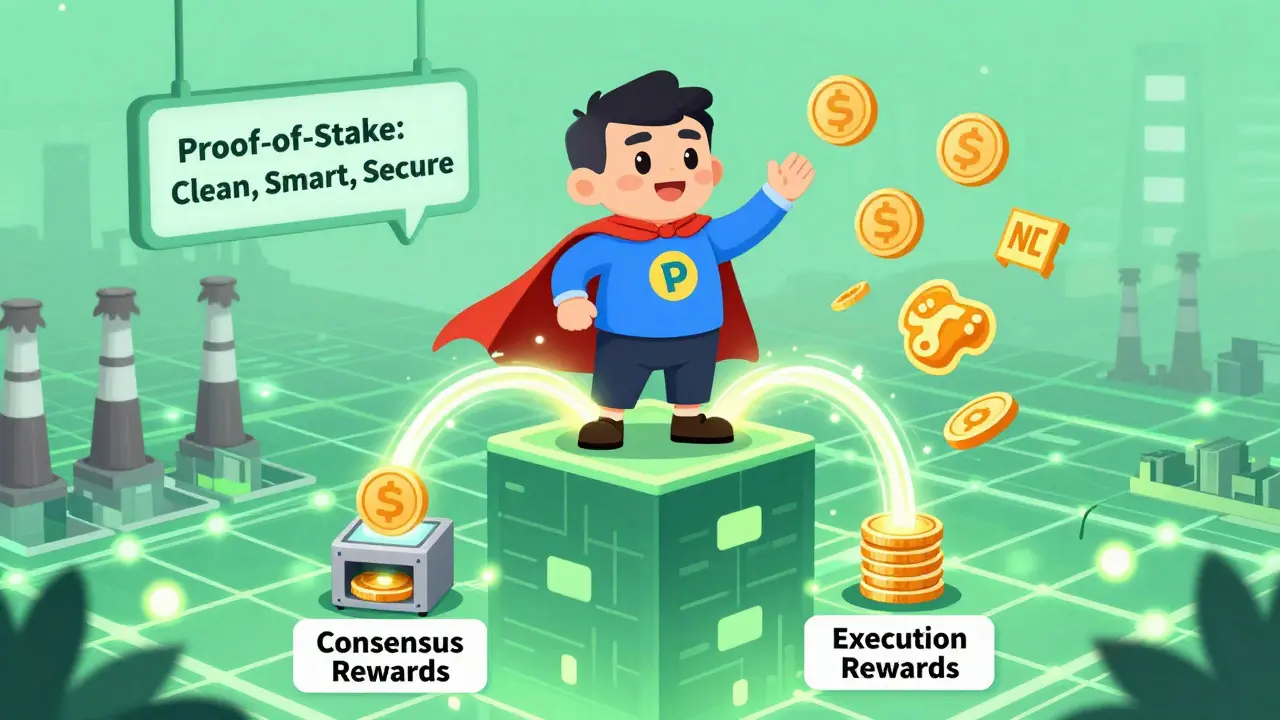
Validators don’t get paid in one way. They get paid in two. First, there’s the consensus layer reward. This is brand-new cryptocurrency created by the network itself, like printing money - but with rules. On Ethereum, this comes from protocol inflation. Every time a validator successfully attests to a block or proposes one, the system mints new ETH and adds it to their balance. It’s automatic. It’s predictable. And it’s the foundation of network security. Then there’s the execution layer reward. This isn’t new money. It’s old money - transaction fees and Maximal Extractable Value (MEV). When you send ETH, pay for an NFT, or swap tokens on a DEX, you pay a fee. The validator who includes your transaction in a block gets that fee. On Ethereum, this goes directly to a wallet address you set up. No middleman. Just pure income from network usage. Think of it like a toll road. The government builds the road (consensus reward) and charges tolls (execution reward). The validator runs the toll booth and gets paid both for being there and for collecting the fees.Why Different Blockchains Pay Differently
Not all validators are created equal. Each blockchain has its own reward formula. On Cosmos Hub, rewards are split equally among validators based on voting power. If 10 validators each have the same stake, they each get roughly the same slice of the block reward. Then they take a commission - usually 5% to 15% - and pass the rest to delegators. It’s fair, simple, and keeps small players in the game. Solana goes the other way. It’s fast. It’s busy. Thousands of transactions per second mean validators earn way more from fees than from inflation. A top Solana validator might make 70% of their income from MEV and transaction fees, not from newly minted SOL. That’s why hardware matters here. You need a server that can handle the load, not just a wallet. Avalanche offers variable APYs - sometimes hitting 8.5% annually. That’s high, but it’s not magic. It’s inflation. The network creates more AVAX to keep validators interested. If rewards drop too low, people stop staking. And if people stop staking, the network gets weak. Ethereum sits in the middle. Base rewards are stable, around 3.5% to 5% APY depending on total staked ETH. But the real money? The fees. During high demand - like an NFT drop or a DeFi surge - validators can pull in extra ETH from fees that dwarf their inflation earnings. That’s why some top validators now earn 2x or 3x their base reward during peak times.Staking Isn’t Just for Millionaires
You don’t need 32 ETH to be a validator. You don’t even need a server. That’s where staking pools come in. On Ethereum, you can stake as little as 0.1 ETH through services like Lido, Coinbase, or Kraken. These platforms group thousands of small stakes together, run the validator hardware, and split the rewards. They charge a fee - usually 10% to 15% - but they handle the tech, the uptime, and the slashing risks. Liquid staking takes it further. Instead of locking your ETH, you get a token - like stETH or rETH - that represents your staked position. You can trade it, use it in DeFi, or even borrow against it. Your ETH is still earning rewards in the background. It’s like having a savings account that pays interest and lets you spend the money too. On Solana and Avalanche, stake pools work the same way. You delegate your tokens. The pool operator runs the validator. You get paid. No code. No server. No risk of getting slashed because you forgot to update your software.
Penalties: The Other Side of the Coin
Rewards are great. But if you mess up, you lose money. Fast. Validators who go offline, miss attestations, or try to cheat the system get slashed. That means a chunk of their staked tokens gets destroyed. On Ethereum, a single missed attestation might cost you 0.02 ETH. A full downtime of 24 hours? That could mean losing 1% of your stake. That’s not a warning. That’s a financial hammer. This isn’t punishment. It’s insurance. The system is designed so that attacking it costs more than it’s worth. If you’re trying to double-spend or create fake blocks, you’ll lose your stake. And that stake? It’s real money. People don’t risk $50,000 just to break a blockchain.Commission: The Validator Business Model
Validators aren’t charities. They’re service providers. If you’re running a validator, you charge a commission - typically 0% to 20% - on rewards earned from delegated stake. Why? Because you’re paying for servers, bandwidth, security audits, monitoring tools, and customer support. A validator with 10,000 ETH delegated might earn $100,000 in rewards a year. If they charge 10%, that’s $10,000 in income. That’s a business. The best validators don’t just charge low fees. They offer uptime guarantees, 24/7 monitoring, clear dashboards, and fast support. Some even provide tax reports or staking analytics. The market rewards reliability. A validator with 99.9% uptime and 5% commission will attract more stake than one with 95% uptime and 3% commission.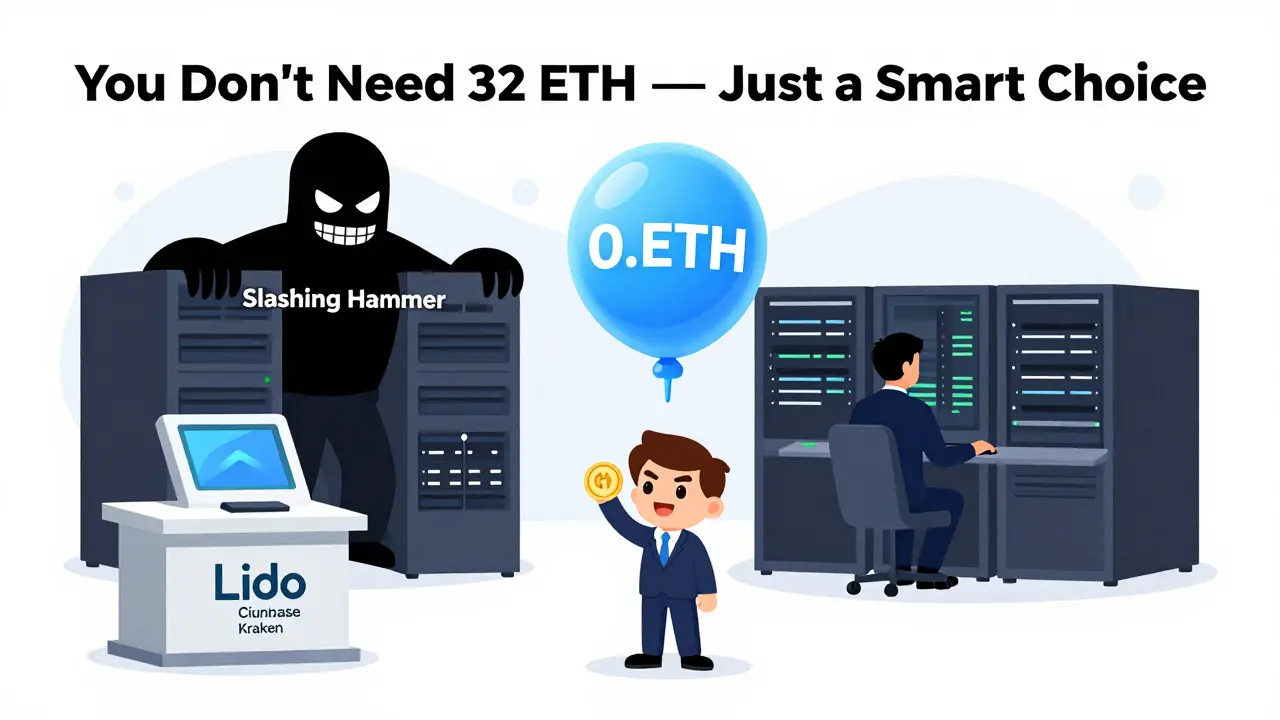
The Rise of Institutional Validators
Five years ago, validators were hobbyists with laptops. Now? It’s Wall Street. Exchanges like Binance, Coinbase, and Kraken run thousands of validators. Hedge funds, family offices, and crypto-native firms have built dedicated staking infrastructure. They use enterprise-grade hardware, multi-sig key management, and geographically distributed nodes to avoid single points of failure. This is good for reliability. Bad for decentralization. When 30% of Ethereum’s staked ETH is controlled by just three exchanges, the network isn’t as decentralized as it should be. The more power one operator has, the more they can influence consensus. That’s why some networks now limit how much stake any single entity can hold. Cosmos Hub caps it at 10% per validator. Ethereum doesn’t - yet.What’s Next? The Future of Validator Rewards
The validator economy is still young. And it’s changing fast. Some networks are testing dynamic inflation - where reward rates adjust based on how much ETH or SOL is staked. If too many people stake, inflation drops. If too few, it rises. The goal? Keep staking attractive without flooding the market with new tokens. Others are adding new revenue streams. Validators on Arbitrum and Polygon now earn from data availability services. On Celestia, validators get paid to store and verify blockchain data. That’s not just validation anymore - it’s infrastructure-as-a-service. Liquid staking will keep growing. More DeFi protocols will integrate staked tokens as collateral. We’ll see staking derivatives, staking ETFs, and maybe even staking-backed loans from traditional banks. But the biggest question remains: Can these networks stay secure as inflation drops? Ethereum’s inflation is already under 1%. What happens when it hits 0.5%? Will validators still earn enough to justify the risk? The answer will shape the next decade of blockchain.What You Need to Know
- Validator rewards are the backbone of proof-of-stake blockchains. Without them, networks collapse. - You earn in two ways: new tokens (consensus) and fees (execution). - Staking pools let anyone participate - no 32 ETH needed. - Slashing isn’t a threat - it’s the system’s defense mechanism. - Commission rates matter. Lower fees don’t always mean better value. - Institutional staking improves reliability but risks centralization. - Future rewards may come from data services, not just block production.How much do validators earn on Ethereum?
Ethereum validators earn between 3.5% and 5% APY on their staked ETH from consensus rewards. This can double or triple during high network usage when execution layer fees (transaction and MEV rewards) kick in. Total earnings depend on total staked ETH, validator performance, and network demand.
Can I be a validator with less than 32 ETH?
Yes. You can’t run your own validator node with less than 32 ETH, but you can join a staking pool through platforms like Lido, Coinbase, or Kraken. These services pool smaller stakes together and distribute rewards proportionally after fees. You can start with as little as 0.1 ETH.
What happens if a validator goes offline?
If a validator misses attestations or goes offline for more than a few hours, they lose a portion of their staked ETH as a penalty. This is called a "slashing" event. If the downtime lasts over 24 hours, the penalty can reach 1% of their stake. Repeated failures can lead to permanent removal from the validator set.
Are validator rewards taxed?
In most jurisdictions, validator rewards are treated as income when received. This includes both consensus rewards (new tokens) and execution rewards (fees). Tax liability is triggered at the time the tokens are received, not when they’re sold. Record keeping is essential - many validators use specialized tools like Koinly or TokenTax to track rewards and calculate taxes.
Why do some validators charge 0% commission?
A 0% commission validator is usually either a nonprofit, a community project, or a new entrant trying to attract stake. They may be sponsored by a foundation or funded through grants. While it sounds generous, it’s often a strategy to build trust and reputation. In the long run, most sustainable validators charge 1% to 10% to cover operational costs.
Is staking safe?
Staking is relatively safe if you use trusted platforms. Running your own validator carries risks: software bugs, hacking, or downtime can lead to slashing. Using a reputable staking pool reduces those risks significantly. However, you still face smart contract risk (if using liquid staking tokens) and counterparty risk (if the pool operator goes offline or gets hacked). Always research before staking.


Beth Erickson
Ethereum rewards are a joke. 3.5% APY? That's inflationary garbage. Meanwhile Solana validators are making bank on MEV alone. Who needs consensus rewards when you got real transaction volume? This whole ETH staking thing is just a subsidy for the rich.