
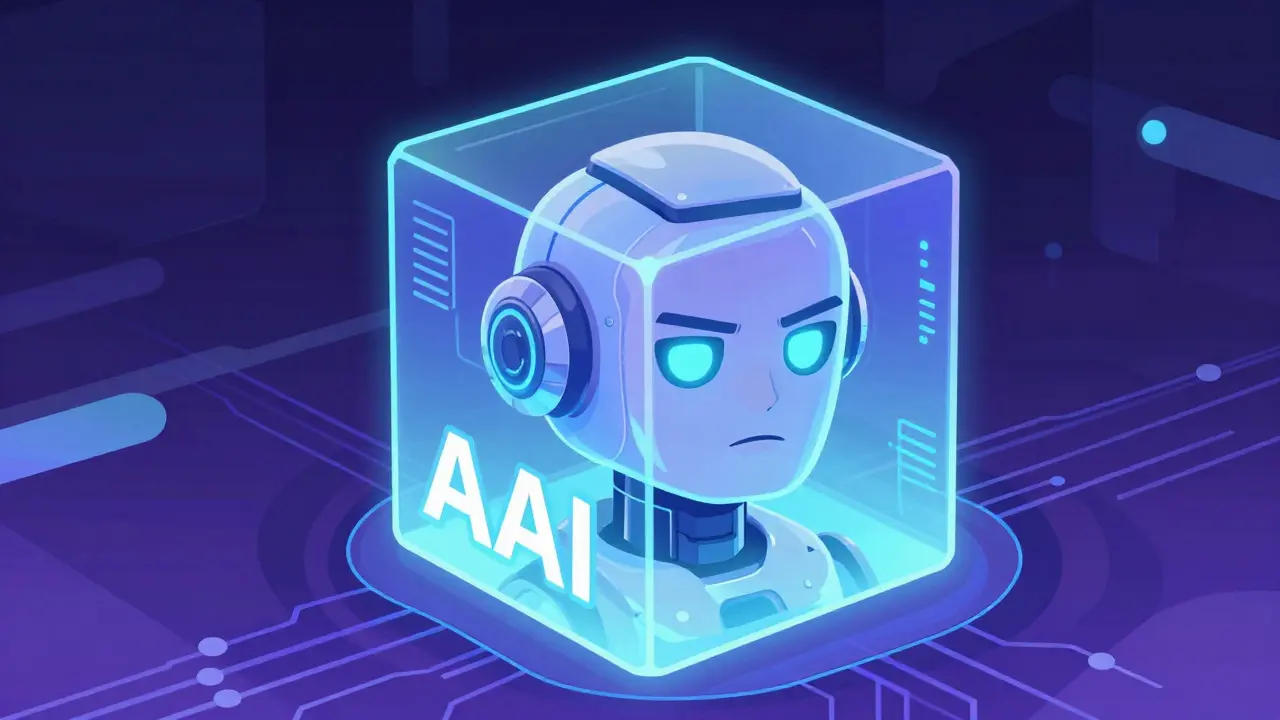
You’ve likely seen the ticker AAAI flashing on your screen, often accompanied by wild price swings and hype about "autonomous AI agents." It’s easy to get swept up in the narrative that this is just another tech breakthrough. But before you click buy, we need to separate the marketing buzz from the actual mechanics of what this token represents. The reality is stark: AAAI_agent is not a standalone company or a traditional software product. It is a speculative asset built on top of the Virtuals Protocol, which is a decentralized platform for creating, owning, and monetizing AI agents as tokenized assets.
If you are looking for a stable investment with clear utility, this might not be it. If you are curious about how the intersection of artificial intelligence and blockchain is evolving-and willing to accept extreme volatility-then understanding the architecture behind AAAI is crucial. This guide breaks down exactly what AAAI_agent is, how the Virtuals ecosystem works, and why the risks here are significantly higher than buying Bitcoin or Ethereum.
The Core Concept: What Is an AI Agent Token?
To understand AAAI, you first have to understand the concept of an "AI Agent" in the context of cryptocurrency. In the traditional tech world, an AI agent is a piece of software that performs tasks autonomously. On the Virtuals Protocol, these agents are treated as digital assets. They have their own identity, their own economy, and yes, their own cryptocurrency token.
AAAI_agent is one such entity within this ecosystem. It is designed to act as an autonomous financial or informational assistant, leveraging large language models (LLMs) to interact with users. However, unlike a standard app you download from the App Store, AAAI exists entirely on the blockchain. Its value is derived from its perceived utility, community adoption, and the liquidity locked into its trading pool.
This model relies on a mechanism called Initial Agent Offering (IAO), which is a launchpad method where creators lock native protocol tokens to establish liquidity pools for new agent tokens. When AAAI was launched, its creators didn't just code a bot; they created a token with a fixed supply. This token is what you are buying when you trade AAAI.
How Virtuals Protocol Powers AAAI
AAAI does not exist in a vacuum. It is deeply integrated with the Base Network, which is Ethereum's Layer 2 scaling solution developed by Coinbase. This choice of infrastructure is significant. Base offers low transaction fees and high speed, which is essential for an AI agent that might need to execute micro-transactions or update its state frequently. Without Layer 2 technology, the gas fees on mainnet Ethereum would make running an autonomous agent economically unviable.
The parent platform, Virtuals Protocol, provides the infrastructure. Think of Virtuals as the operating system, and AAAI as one of the apps running on it. The protocol uses its native token, VIRTUAL, which serves as the ecosystem's native currency for transactions, liquidity pairing, governance, and AI inference payments. Here is how the relationship works:
- Liquidity Provision: To launch AAAI, the creators had to lock VIRTUAL tokens. This locks up capital and aligns the interests of the agent creators with the health of the broader Virtuals ecosystem.
- Inference Payments: Every time AAAI processes a complex query or performs a task, it may consume computational resources. These costs are often settled in VIRTUAL tokens, creating a demand sink for the base currency.
- Governance: Holders of VIRTUAL can vote on parameters that affect all agents, including AAAI. This means the rules of the road for AAAI can change based on community decisions.
This interdependence is critical. If the Virtuals Protocol loses relevance or faces technical issues, AAAI suffers directly. You are not just betting on an AI chatbot; you are betting on the entire infrastructure supporting it.
Tokenomics: The Numbers Behind AAAI
Let’s look at the hard data. Understanding the tokenomics is the best way to gauge potential supply shocks and long-term viability. Most agents on the Virtuals Protocol, including AAAI, follow a standardized structure to ensure fairness and transparency during the Initial Agent Offering.
| Attribute | Value / Detail |
|---|---|
| Total Supply | 1 Billion Tokens |
| Liquidity Lock Period | 10 Years |
| Trading Pair | AAAI/VIRTUAL |
| Underlying Chain | Ethereum (via Base L2) |
| Launch Mechanism | Initial Agent Offering (IAO) |
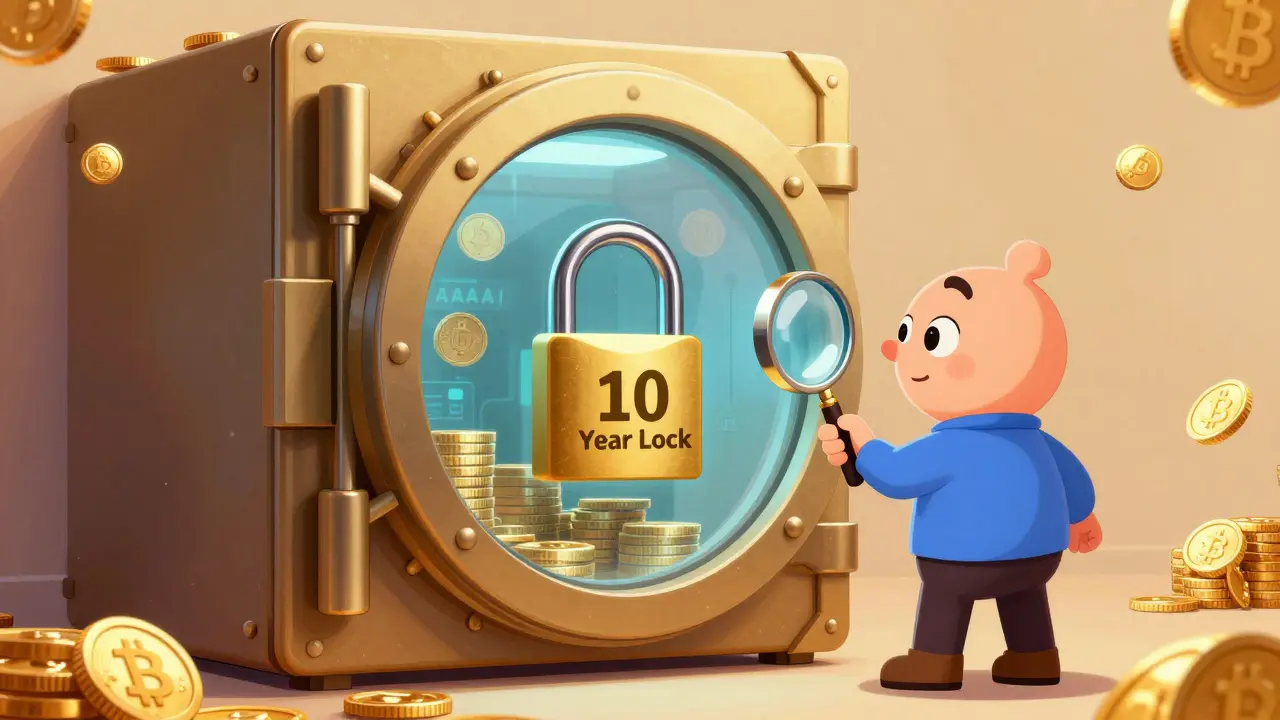
The fixed supply of 1 billion tokens means there is no inflationary pressure from minting new coins. This is generally bullish for price stability, assuming demand holds. However, the 10-year liquidity lock is a double-edged sword. On one hand, it prevents rug pulls where developers drain the liquidity pool immediately after launch. On the other hand, it means that if the project fails, those funds are effectively frozen for a decade, offering little recourse to investors.
The trading pair being AAAI/VIRTUAL is also noteworthy. You cannot easily swap AAAI for USDC or ETH without going through a multi-hop trade or using a bridge. This adds friction and slippage, especially during periods of high volatility. Your exposure is tied to both the performance of the AI agent and the market cap of the Virtuals Protocol itself.
Risks and Red Flags: What Could Go Wrong?
We need to talk about the dangers. The AI crypto sector is notoriously volatile, and projects like AAAI_agent sit at the very edge of speculation. Here are the primary risks you must consider:
- Technological Obsolescence: AI moves fast. Today’s cutting-edge agent can be tomorrow’s outdated relic. If AAAI’s underlying model isn’t updated regularly, its utility drops to zero. Unlike established tech companies with R&D budgets, many crypto AI agents rely on community-driven updates, which can be inconsistent.
- Smart Contract Vulnerabilities: Even though Virtuals Protocol is built on secure infrastructure, bugs happen. A vulnerability in the agent’s smart contract could lead to loss of funds. Always check if the code has been audited by reputable firms.
- Regulatory Uncertainty: Governments worldwide are still figuring out how to regulate AI and crypto separately. Combining them creates a legal gray area. Future regulations could restrict the operation of autonomous financial agents, impacting AAAI’s ability to function.
- Hype-Driven Volatility: Many AI agent tokens see massive pumps driven by social media trends rather than fundamental usage. When the hype fades, prices can crash 80-90% in days. AAAI is no exception to this rule.
It is also important to note that "autonomy" is often overstated. While AAAI may claim to operate independently, human oversight is usually required for major decisions or model adjustments. Don’t assume it’s a set-and-forget investment.
How to Evaluate AAAI_agent vs. Other AI Tokens
If you are considering investing in AAAI, you should compare it against other players in the AI crypto space. Not all AI tokens are created equal. Some focus on data storage, others on compute power, and some, like AAAI, on autonomous interaction.
When comparing, look at three key metrics:
- Active User Base: Does AAAI have real people interacting with it daily, or is it just bots talking to each other? Check social channels and on-chain activity for genuine engagement.
- Revenue Model: How does the agent make money? Does it charge for premium features? Does it take a cut of trades? A clear revenue stream is vital for long-term sustainability.
- Team Transparency: Who is behind AAAI? Are the developers doxxed (publicly identified)? Anonymous teams carry higher risk, as accountability is lower.
Compared to larger, more established crypto projects, AAAI is a high-risk, high-reward play. It lacks the network effects of Bitcoin or the developer ecosystem of Ethereum. Its value is purely speculative until it demonstrates undeniable, scalable utility.

Practical Steps: How to Interact with AAAI Safely
If you decide to proceed, safety is paramount. Here is a step-by-step approach to minimizing risk:
- Use a Non-Custodial Wallet: Never connect your main wallet to unknown dApps. Use a burner wallet with only the funds you are willing to lose.
- Verify the Contract Address: Scammers create fake tokens with similar names. Always copy the contract address directly from the official Virtuals Protocol documentation or verified aggregators like CoinGecko or CoinMarketCap.
- Start Small: Treat your initial investment as tuition. Learn how the platform works, how swaps execute, and how liquidity behaves before committing significant capital.
- Monitor Liquidity Depth: Low liquidity means high slippage. If you try to sell a large amount of AAAI, you could crash the price yourself. Check the order book depth before entering or exiting positions.
Remember, the goal is not just to buy low and sell high, but to survive the volatility long enough for the technology to mature. Patience and discipline are your best tools in this space.
The Future Outlook: Where Is This Heading?
The convergence of AI and blockchain is still in its infancy. Projects like AAAI_agent are early experiments in tokenizing intelligence. If successful, they could pave the way for a new economy where AI agents own assets, earn income, and interact with humans on equal footing. If they fail, they will serve as cautionary tales about the limits of speculation.
Keep an eye on developments in the Virtuals Protocol ecosystem. Updates to the Base Network, changes in regulatory frameworks, and advancements in AI model efficiency will all impact AAAI’s trajectory. Stay informed, stay skeptical, and never invest more than you can afford to lose.
Is AAAI_agent a safe investment?
No, AAAI_agent is considered a high-risk speculative asset. It is subject to extreme price volatility, technological obsolescence, and smart contract risks. Only invest funds you are prepared to lose entirely.
What is the total supply of AAAI tokens?
The total supply of AAAI tokens is fixed at 1 billion. This supply was established during its Initial Agent Offering (IAO) on the Virtuals Protocol.
Which blockchain does AAAI run on?
AAAI runs on the Base Network, which is a Layer 2 scaling solution built on top of Ethereum. This allows for faster and cheaper transactions compared to the Ethereum mainnet.
What is the role of the VIRTUAL token?
VIRTUAL is the native currency of the Virtuals Protocol. It is used for liquidity pairing with agent tokens like AAAI, paying for AI inference costs, and participating in governance votes.
Can I withdraw my liquidity from AAAI anytime?
Liquidity for AAAI is typically locked for 10 years as part of the Initial Agent Offering mechanism. This prevents immediate rug pulls but also means funds are inaccessible for that period.
Who created AAAI_agent?
While specific details on the individual creators of AAAI may vary, it was launched via the Virtuals Protocol platform, which was founded by Jansen Teng and Wee Kee Tiew. The agent itself is a product of this ecosystem.