
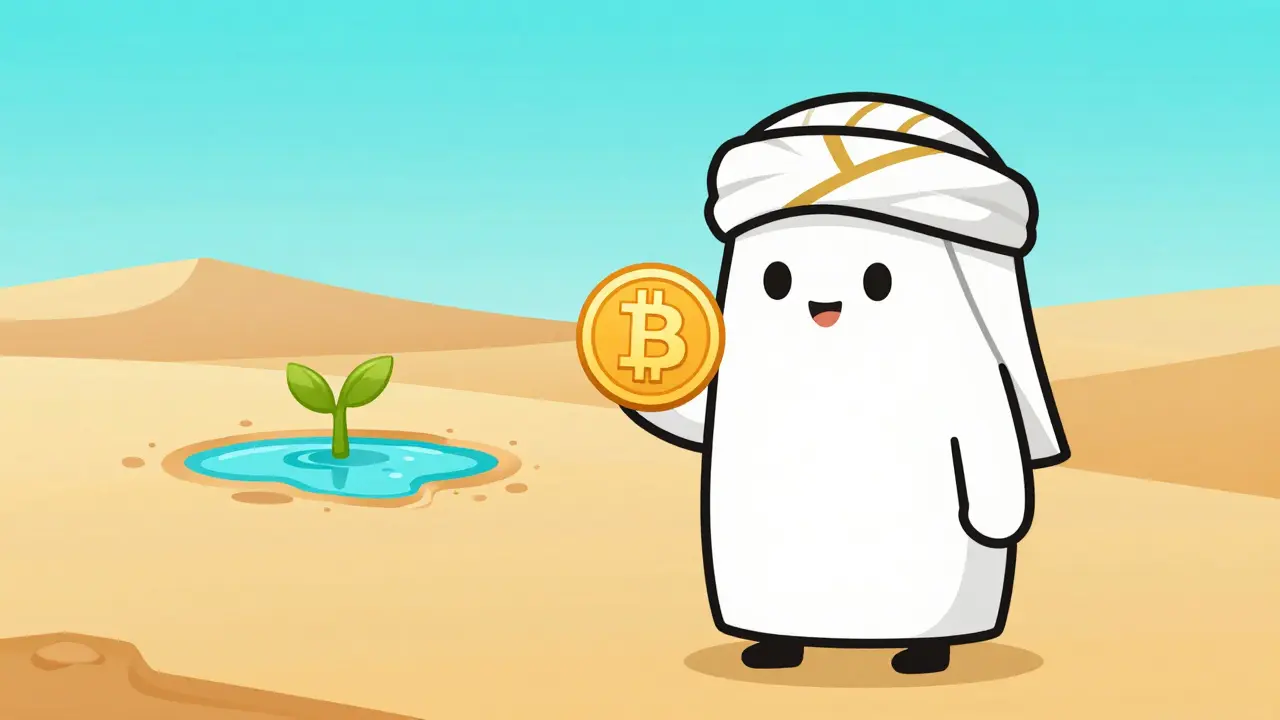
Have you ever stumbled upon a cryptocurrency with a market cap smaller than your weekly grocery bill? That is the reality of Sultanoshi, also known as STOSHI. It is a niche meme token that blends desert folklore with the mystery of Bitcoin’s creator. While it sounds intriguing on paper, the numbers tell a very different story about its current status in mid-2026.
If you are looking for the next big thing, this might not be it. But if you want to understand how ultra-low-cap tokens operate, or if you simply found this ticker and need to know what it actually is, you have come to the right place. We will break down the facts, the risks, and the technical details without the hype.
The Story Behind Sultanoshi
Sultanoshi is a community-driven meme cryptocurrency themed around the fusion of a 'Sultan' desert legend and the myth of Satoshi Nakamoto. The project leans heavily into narrative rather than utility. Its branding focuses on concepts like freedom, unity, and decentralized power. You will often see phrases like "turning a desert into an oasis" used to describe its growth potential.
This isn't a protocol with complex governance or enterprise solutions. It is a culture project. The team behind it uses gimmicks to keep attention, such as "Dump 2 Earn" mechanics, superhero-themed "Seeds," and birthday Easter eggs promoted on Discord. These features are designed to create engagement within a small community rather than to solve real-world problems.
Technical Specs: From Ethereum to Solana
One of the most significant changes for STOSHI happened recently. Originally launched in 2025 on the Ethereum blockchain using the ERC-20 standard, the token has since migrated. As of mid-2026, Sultanoshi operates primarily on Solana, utilizing SPL-style token contracts.
Why does this matter? If you hold the old Ethereum version, it may no longer be the active asset. To trade the current STOSHI, you need a Solana-compatible wallet like Phantom. You also need SOL to pay for transaction fees. This migration was a strategic move to lower costs and tap into Solana’s high-speed ecosystem, which is popular for meme coins due to its low gas fees compared to Ethereum.
| Feature | Detail |
|---|---|
| Ticker | STOSHI ($Stoshi) |
| Current Blockchain | Solana (migrated from Ethereum) |
| Total Supply Cap | 10 Million STOSHI |
| Circulating Supply | ~8.1 Million STOSHI |
| Token Type | Fungible Meme Token |

Market Reality: The Microcap Trap
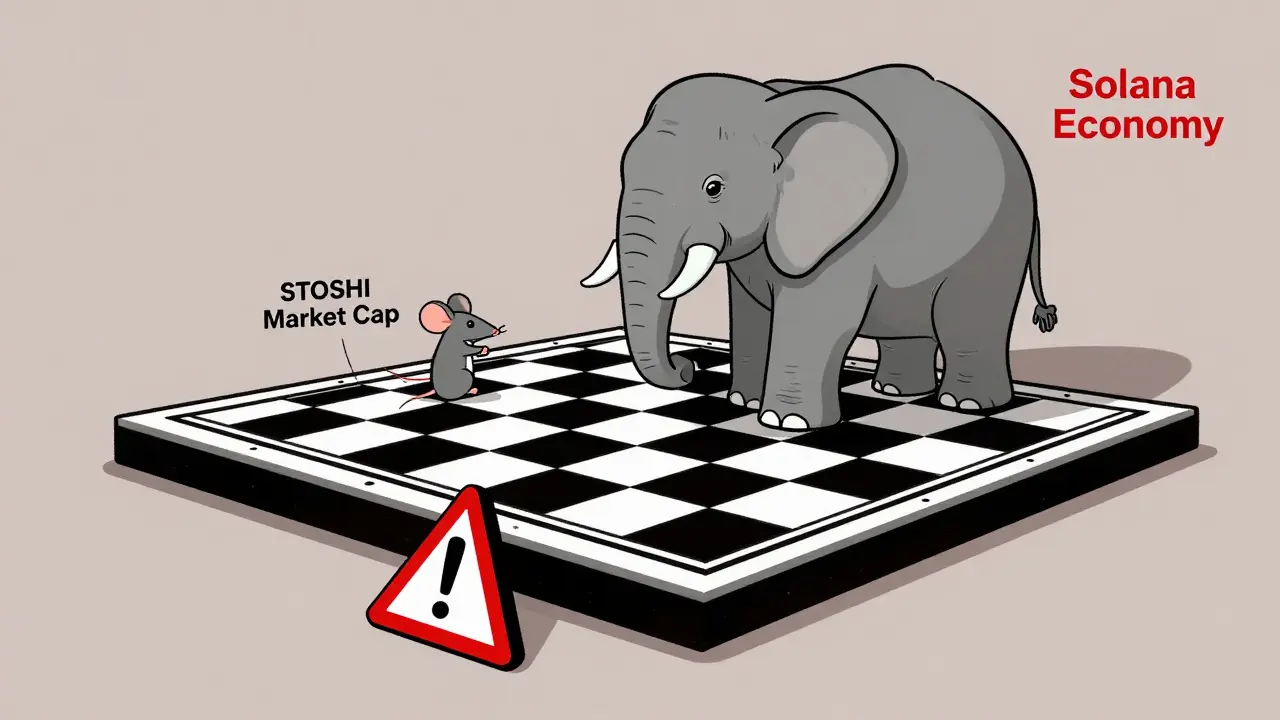
Let's look at the hard numbers because they are stark. As of July 2026, Sultanoshi is trading at approximately $0.0001163 USD per token. With a circulating supply of around 7.4 to 8.1 million tokens, the total market capitalization hovers between $866 and $8,290 USD depending on the data source.
To put that in perspective, the entire global economy of Sultanoshi is worth less than a decent laptop. Compare this to Solana itself, which has a market cap over $48 billion. STOSHI is statistically invisible in the broader crypto market. It ranks around #12,480 among listed cryptocurrencies. This extreme low valuation means there is almost no liquidity. Daily trading volume is often under $20. If you try to buy even $100 worth, you could move the price significantly due to slippage, or worse, find no one willing to sell.
Risks You Cannot Ignore
Trading tokens like Sultanoshi carries severe risks that go beyond normal market volatility. Here is what you need to watch out for:
- Scam Warnings: Analytics platforms like AXON have flagged STOSHI with a "SCAM" warning. Bitget explicitly notes concerns about the contract holding zero coins in early stages, a common red flag for rug pulls.
- Liquidity Risk: With daily volumes under $20, getting your money out can be difficult. There is no guarantee you will find a buyer at the price you expect.
- No Team Transparency: There are no named founders, no whitepaper, and no GitHub repository linked to public profiles. You are trusting anonymous developers with your capital.
- Regulatory Void: STOSHI is not listed on major regulated exchanges like Binance or Coinbase. It exists only in the unregulated DeFi space, meaning there is no recourse if something goes wrong.
Bitget’s editorial team described it as having "explosive reach" in search trends but warned it could become a "cautionary meme case." They advise users to do their own research (DYOR) aggressively before engaging.
How to Trade STOSHI (If You Choose To)
If you decide to proceed despite the risks, here is the practical process. Remember, this involves interacting with decentralized finance (DeFi) protocols, which require technical care.
- Set Up a Wallet: Download a Solana-compatible wallet like Phantom or Solflare. Secure your seed phrase offline. Never share it.
- Acquire SOL: Buy Solana (SOL) on a reputable exchange and transfer it to your wallet. You need SOL to pay for network fees and to swap for STOSHI.
- Connect to a DEX: Navigate to Raydium, the primary decentralized exchange hosting the STOSHI/SOL pair.
- Verify the Contract: Double-check the token address. Scammers often create fake tokens with similar names. Ensure you are swapping for the correct Solana contract.
- Execute the Swap: Input the amount of SOL you wish to spend. Set your slippage tolerance carefully-high slippage might be needed due to low liquidity, but it increases the cost.
Note that Crypto.com lists STOSHI as informational but marks it as "not tradable" on their platform. Your access is limited to these peer-to-peer DeFi venues.
Is Sultanoshi Worth It?
Sultanoshi fits the profile of a high-risk, speculative meme token. It has no utility, no established development roadmap, and negligible market presence. Its value is driven entirely by short-term narrative hype and community sentiment. For most investors, especially beginners, the risk of total loss is extremely high. The combination of scam flags, lack of transparency, and micro-market cap makes it a dangerous play.
If you are curious about crypto culture, studying STOSHI can be educational. But treating it as a serious investment requires ignoring many standard safety checks. Proceed with extreme caution, and never invest more than you can afford to lose completely.
What is the current price of Sultanoshi (STOSHI)?
As of mid-2026, STOSHI trades at approximately $0.0001163 USD. Prices fluctuate wildly due to extremely low liquidity, with some trackers showing values up to $0.0008 during brief spikes.
Is Sultanoshi safe to invest in?
No, it is considered highly risky. Analytics firms like AXON have issued scam warnings. The token lacks a transparent team, has minimal liquidity, and operates without regulatory oversight. Total loss of capital is a real possibility.
Which blockchain does STOSHI use?
Sultanoshi originally launched on Ethereum but has migrated to the Solana blockchain. You need a Solana wallet and SOL tokens to interact with the current version of STOSHI.
Where can I buy Sultanoshi?
STOSHI is not available on major centralized exchanges like Binance or Coinbase. It can only be traded on decentralized exchanges (DEXs) like Raydium on the Solana network.
What is the total supply of STOSHI?
The maximum supply cap is 10 million STOSHI tokens. The current circulating supply is approximately 8.1 million tokens, which is unusually low for a meme coin.


Steven Briggs
just read the whole thing and honestly it feels like a trap waiting to happen