
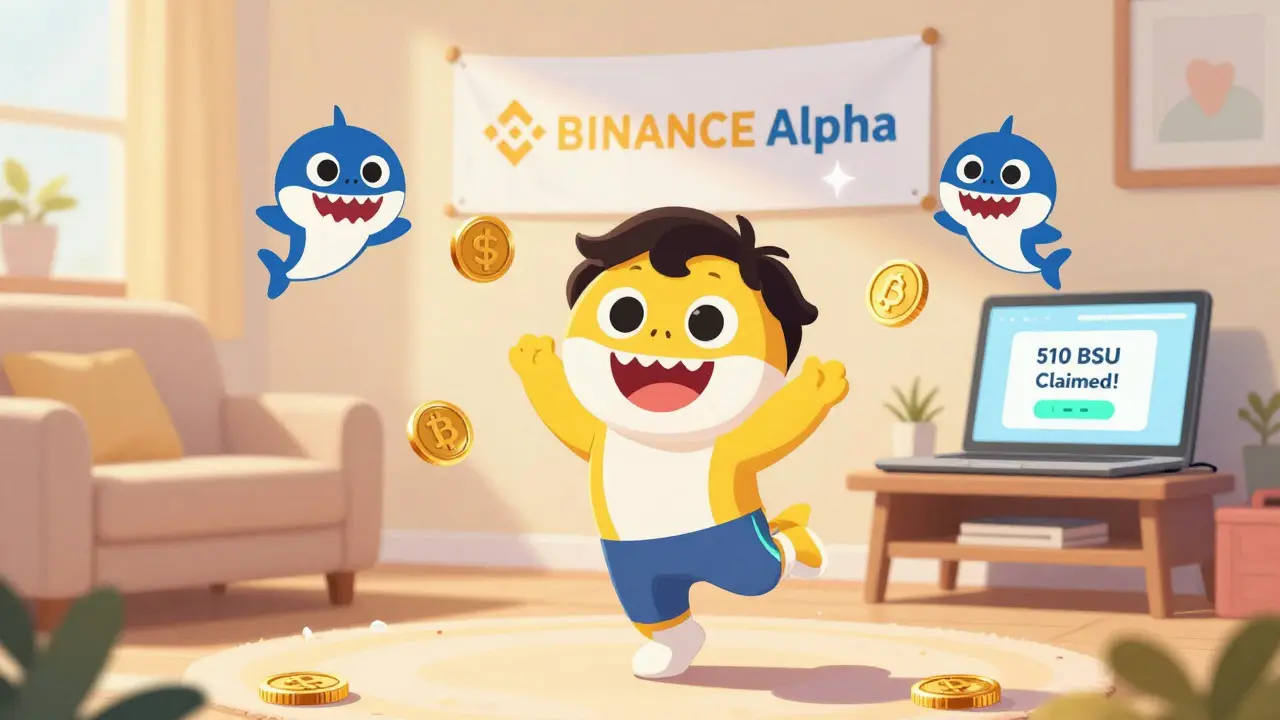
On August 9, 2025, something unusual happened in the crypto world. Not another DeFi protocol. Not another Layer 2 chain. But a token based on a kids’ song - Baby Shark Token (BSU) - launched on Binance Alpha with a simple promise: give away 510 tokens to people who had earned 200 Alpha Points. No whitepaper. No smart contract audits. Just a catchy tune and a loyalty program.
It wasn’t supposed to be serious. But thousands of people showed up anyway.
How Did Baby Shark Token Even Get Created?
The Baby Shark Universe token didn’t come from a team of blockchain engineers. It didn’t emerge from a Discord community of 10,000 people. It came from Binance’s internal team, looking for ways to make crypto feel less intimidating. They noticed how often people talked about memes, songs, and pop culture in crypto forums. So they asked: what if we built a token around something everyone already knows?
The answer was Baby Shark. That’s it. The song. The dance. The viral video. The thing your toddler hums at 3 a.m. Binance didn’t license the IP from Pinkfong - they just used the cultural weight of it. No legal disclaimers. No official partnership. Just a token named after a global phenomenon.
It launched on Binance Alpha - a small, invite-only section of Binance designed for testing new tokens before they hit the main exchange. BSU was the first token ever listed there. That alone made it a test case: can a meme-based token, with zero technical utility, actually attract real users?
The Airdrop: 510 Tokens, 200 Points, 24 Hours
The airdrop wasn’t free. You had to earn Alpha Points first. These aren’t random. You get them by trading on Binance, staking, or even just logging in daily. To qualify for the BSU airdrop, you needed 200 points. That’s not easy if you’re new. But here’s the twist: every hour after launch, the requirement dropped by 15 points. So if you waited, you needed fewer points. But if you waited too long, the tokens ran out.
Only 510 tokens were available. That’s it. No more. No future airdrops. Each claim cost 15 Alpha Points. So if you had 200, you spent 15 to get 510 BSU. You didn’t get more by having more points. You didn’t get extra for referring friends. It was a flat, one-time reward.
You had 24 hours to claim. Miss it? Your tokens vanished. No email reminders. No second chances. Binance didn’t even send a push notification. You had to remember to check the Alpha Events page.
At the time of the airdrop, each BSU token was valued at roughly $0.064. So 510 tokens = about $32.60. Not life-changing money. But for someone who’d been trading on Binance for months, it was a nice bonus. A reward for showing up.
Why Did People Care?
Most crypto airdrops promise future utility: governance votes, staking rewards, access to new dApps. BSU promised nothing. No roadmap. No team. No tokenomics beyond the airdrop. So why did 12,000+ people try to claim it?
Because it was fun.
People didn’t buy BSU to make money. They bought it because they remembered dancing to Baby Shark at their kid’s birthday party. Because they saw memes of Baby Shark as a crypto whale. Because they wanted to be part of the joke.
One Reddit user wrote: “I claimed it just to tell my niece I own a Baby Shark coin. She screamed. That was worth 15 points.”
That’s the real story. BSU wasn’t about finance. It was about culture. Binance wasn’t trying to build a blockchain project. They were trying to make crypto feel human.
What Happened After the Airdrop?
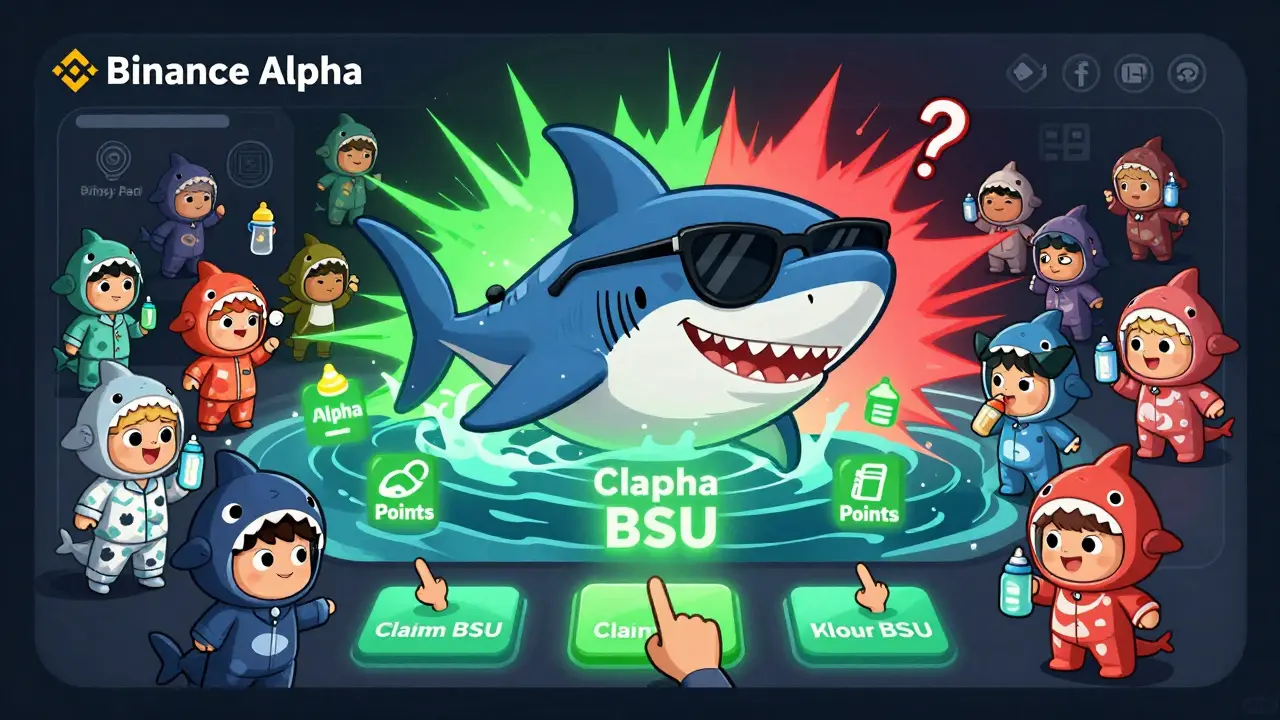
The token started trading on Binance Alpha immediately after the airdrop ended. Trading volume spiked for the first 48 hours. Then it dropped. By week two, daily volume was under 500 BSU traded. That’s less than $30 in value.
There were no updates. No new features. No team announcements. No website beyond a single page on Binance. No Twitter account. No Telegram. Just a token on a niche exchange, quietly floating.
Some people held it. Others sold it immediately. A few tried to list it on other exchanges. No luck. No one else wanted it.
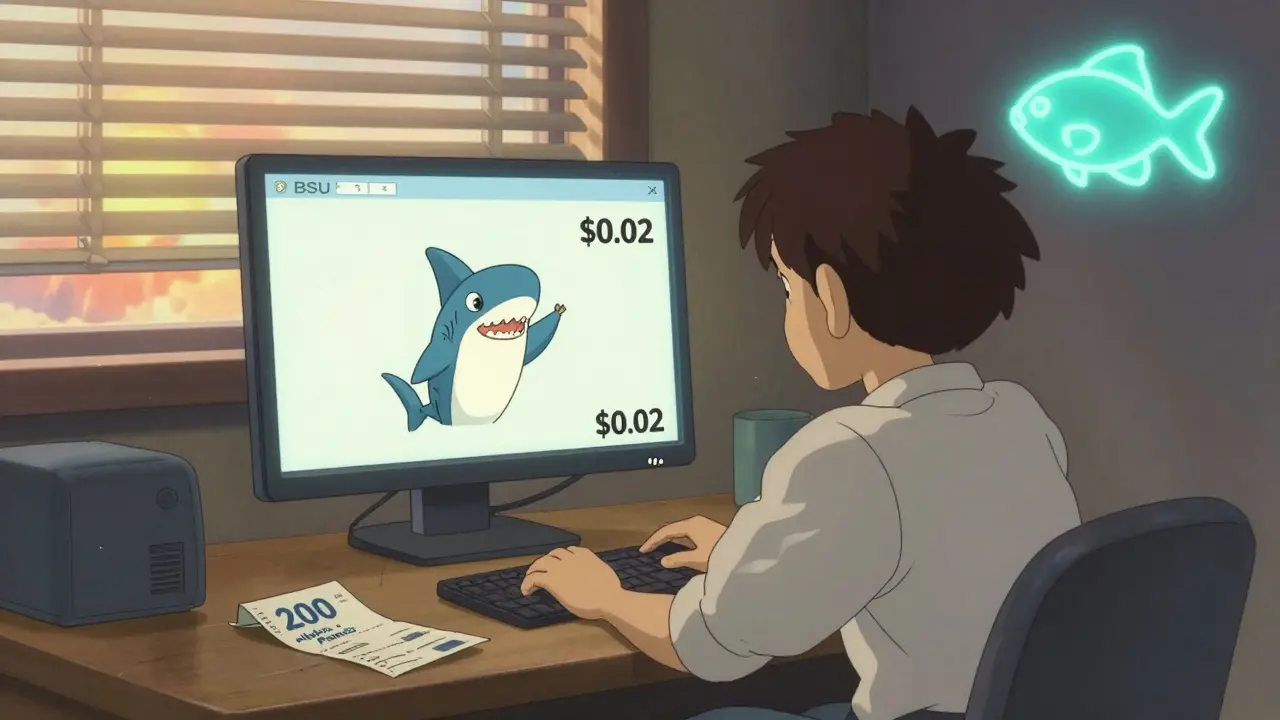
Today, BSU still trades on Binance Alpha. The price hovers around $0.02. It’s not dead. But it’s not alive either. It’s a ghost of a moment.
What Does Baby Shark Token Tell Us About Crypto?
BSU was never meant to be the next Bitcoin. It was meant to be a signal. A test. A way to ask: can we attract regular people to crypto by using things they already love?
The answer? Yes - but only if you don’t overcomplicate it.
Most crypto projects try to sound smart. They use terms like “decentralized liquidity pools” and “cross-chain interoperability.” BSU didn’t need any of that. It just needed a song.
It also showed that users don’t always want utility. Sometimes they want joy. Sometimes they want to feel like part of a shared joke. Crypto doesn’t have to be serious to succeed. It just has to connect.
Other projects noticed. In late 2025, Binance Alpha launched a second entertainment token based on a viral TikTok dance. Then one based on a 90s cartoon. The pattern is clear: Binance is building a new category - entertainment tokens.
These aren’t investments. They’re experiences.
Could This Happen Again?
Yes. And it already has.
Since August 2025, Binance Alpha has launched three more tokens like BSU: one based on a famous YouTube prank, one on a 2000s pop band, and one on a meme that exploded during the 2024 U.S. election. All had similar airdrops: small token supplies, low point requirements, 24-hour claiming windows, and zero technical specs.
None of them have high market caps. None of them are “important” in the traditional crypto sense. But they all got attention. They all got people talking. And that’s what Binance wanted.
For every Bitcoin miner or DeFi whale, there are millions of people who just want to feel something when they open their crypto app. BSU gave them that.
Final Thoughts: Was It Worth It?
If you got the airdrop? Yes. You got free tokens. You got a weird story. You got to be part of crypto’s strangest moment in 2025.
If you didn’t? You missed out. But you didn’t miss much.
Baby Shark Token didn’t change the world. It didn’t move markets. It didn’t even change Binance’s business model. But it did something quieter - it reminded people that crypto doesn’t have to be cold, complex, or serious. Sometimes, it just has to be fun.
And maybe, just maybe, that’s the future.
Was the Baby Shark Token airdrop real?
Yes, the Baby Shark Token (BSU) airdrop was real and officially run by Binance Alpha. It launched on August 9, 2025, at 5:00 PM UTC+8. Only users with at least 200 Binance Alpha Points could claim 510 BSU tokens. The claim window lasted 24 hours, and 15 Alpha Points were consumed during the claiming process. All details were posted on Binance’s official Alpha Events page.
How many Baby Shark Tokens were distributed in the airdrop?
Exactly 510 BSU tokens were distributed in total. Each eligible user received one allocation of 510 tokens. There was no tiered system - whether you had 200 or 500 Alpha Points, you still got the same amount. Once all 510 tokens were claimed, the airdrop ended permanently.
Do you need to have a Binance account to claim Baby Shark Token?
Yes. You needed an active Binance account with access to the Alpha section and a minimum of 200 Alpha Points accumulated through trading, staking, or daily logins. The airdrop was not available to external wallets or users outside Binance’s ecosystem. No MetaMask, Trust Wallet, or other wallets could be used to claim it.
What happened to the Baby Shark Token after the airdrop?
After the airdrop ended, BSU began trading on Binance Alpha. Trading volume peaked in the first two days, then dropped sharply. As of early 2026, the token still trades on Binance Alpha with a price around $0.02 per token. There have been no updates, team announcements, or utility developments. It remains a low-volume, entertainment-focused token with no roadmap or future plans.
Is Baby Shark Token a good investment?
No. Baby Shark Token was never designed as an investment. It has no utility, no team, no roadmap, and no technical infrastructure beyond being listed on Binance Alpha. Its value is purely speculative and based on cultural nostalgia. Most holders sold immediately after the airdrop. Its price has steadily declined since launch. Treat it as a novelty, not a financial asset.
Could another Baby Shark-style airdrop happen?
Yes - and it already has. Since BSU, Binance Alpha has launched several similar entertainment tokens based on viral memes, cartoons, and songs. The pattern is clear: Binance is experimenting with culturally familiar themes to attract casual users. These aren’t meant to replace Bitcoin or Ethereum. They’re meant to bring in people who don’t care about blockchain - but do care about a song they danced to as a kid.


Megan Lavery
I claimed BSU just to show my nephew the dance. He screamed like he’d seen a real shark. Best 15 points I ever spent. 🦈💃