
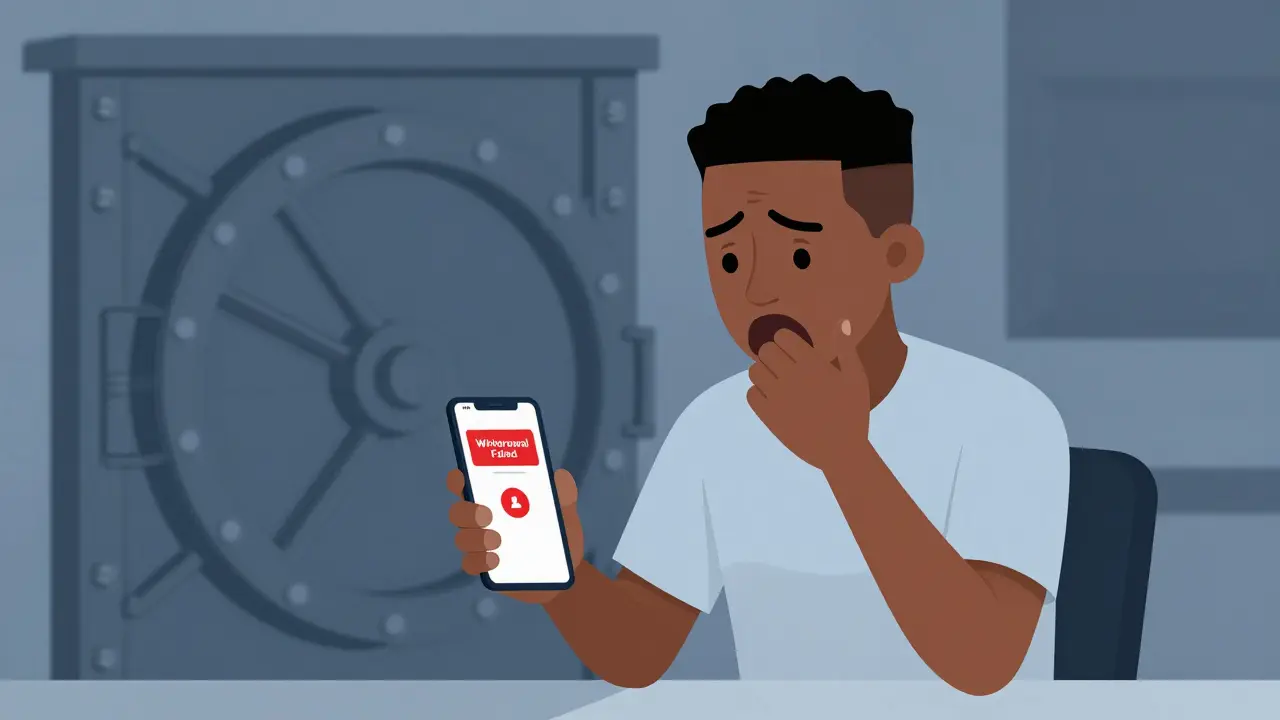
Imagine logging into your favorite trading app, seeing a nice profit, and then realizing you can’t withdraw a single Naira. Your bank account is frozen. The exchange says it’s out of their hands. This isn’t a hypothetical nightmare for Nigerians anymore-it’s the daily reality for those using unlicensed platforms.
The landscape changed drastically with the Investments and Securities Act (ISA) 2025, which is legislation that mandates all crypto exchanges operating in Nigeria must obtain a license from the Securities and Exchange Commission (SEC). If you are trading on a platform without this specific Nigerian SEC license, you are walking through a minefield. The Central Bank of Nigeria (CBN) and the Economic and Financial Crimes Commission (EFCC) are not just watching; they are actively freezing accounts linked to non-compliant services.
Why Unlicensed Exchanges Are Dangerous Now
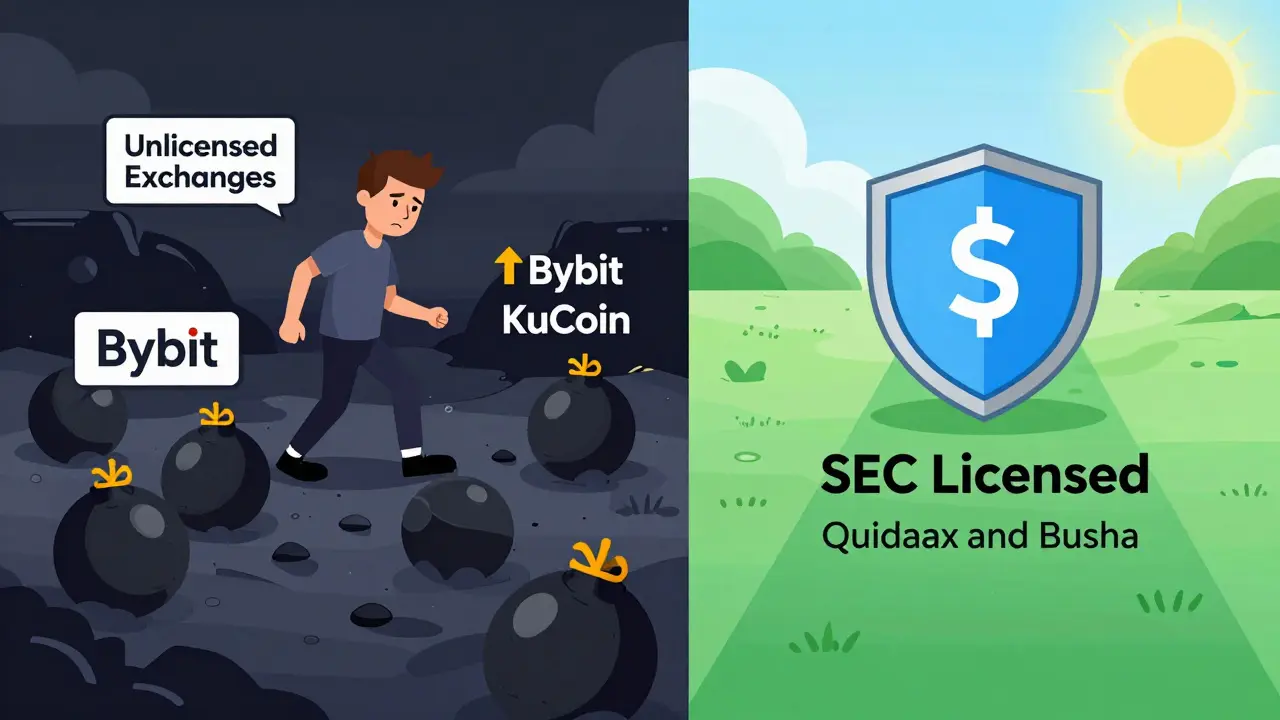
Before 2025, many Nigerians used global giants like Binance or Bybit because local options were limited or banks were hesitant. That era is over. The ISA 2025 treats cryptocurrency as securities. This means the SEC has the legal power to seize assets, place liens on properties, and shut down operations that don’t comply.
Here is the hard truth: if an exchange does not have a physical presence and a license in Nigeria, your money has no legal protection under Nigerian law. When the EFCC freezes funds-which they did to ₦548.6 million worth of accounts in September 2024 alone-they target the flow of money between banks and these offshore entities. You are caught in the middle.
- Asset Seizure: Under Section 134 of the ISA 2025, regulators can forfeit assets held by illegal operators.
- Bank Account Freezes: Banks are now required to verify the SEC licensing status of any crypto entity they deal with. If your exchange isn’t on the list, your bank will block transactions.
- No Consumer Protection: Licensed exchanges must carry insurance coverage up to ₦50 million per user. Unlicensed ones have zero obligation to refund you if they hack, fail, or flee.
The Only Safe Bets: Licensed Platforms
As of mid-2026, the number of fully compliant exchanges is small but growing. Currently, only two major platforms hold full SEC approval for retail trading in Nigeria: Quidax and Quidax Technologies Limited is an SEC-licensed crypto exchange incorporated in Nigeria with RC number 1782456 and Busha (operating as Busha Fintech Limited, RC 1834562).
These platforms meet strict technical requirements. They integrate directly with the National Identity Number (NIN) system for KYC verification. They offer seamless Naira settlement with minimum deposits as low as ₦1. Most importantly, they are integrated into the banking infrastructure approved by the CBN.
| Feature | Licensed (e.g., Quidax, Busha) | Unlicensed (e.g., Bybit, KuCoin, Binance P2P) |
|---|---|---|
| Legal Status | Fully compliant with ISA 2025 | Operating illegally; high risk of shutdown |
| Bank Integration | Direct Naira deposits/withdrawals | Blocked by banks; relies on risky P2P |
| Consumer Insurance | Up to ₦50 million per account | None |
| KYC Method | NIN-integrated biometric verification | Offshore ID checks; often lax |
| Average Fee | ~0.25% | ~0.15% (but higher hidden risks) |
| Dispute Resolution | 3.2 days average via SEC | 28+ days; often unresolved |
Platforms You Should Avoid Immediately
You need to be very careful with international platforms that do not have a dedicated Nigerian subsidiary holding an SEC license. While they may still allow you to sign up, using them exposes you to severe regulatory action.
Bybit and KuCoin have faced direct enforcement actions. In late 2024, the EFCC froze accounts linked to USDT trading on these platforms. Users reported losing access to millions of Naira, with recovery taking months and often resulting in partial losses. One user on Reddit documented losing ₦2.4 million after a freeze, spending 47 days trying to recover just 63% of their funds.
Binance P2P is another major red flag. While Binance itself is a giant, its P2P interface in Nigeria operates in a gray area regarding direct fiat integration. The SEC has explicitly warned against platforms facilitating unregulated P2P trading without proper KYC. Since 92% of Nigeria’s crypto volume previously went through P2P due to banking bans, this channel is now heavily scrutinized. Using Binance P2P means you are dealing with individual sellers who may send you fraudulent transfer alerts, leading to scams and potential police involvement.
Decentralized Exchanges (DEXs) like Uniswap might seem safe because there is no central company to ban. However, the risk shifts entirely to you. If you bridge funds from a centralized wallet to a DEX and your source wallet gets flagged by the EFCC for interacting with an unlicensed entity, your assets can still be frozen at the entry point. Furthermore, DEXs offer zero customer support. If you make a mistake, your money is gone forever.
How to Verify If an Exchange Is Legitimate
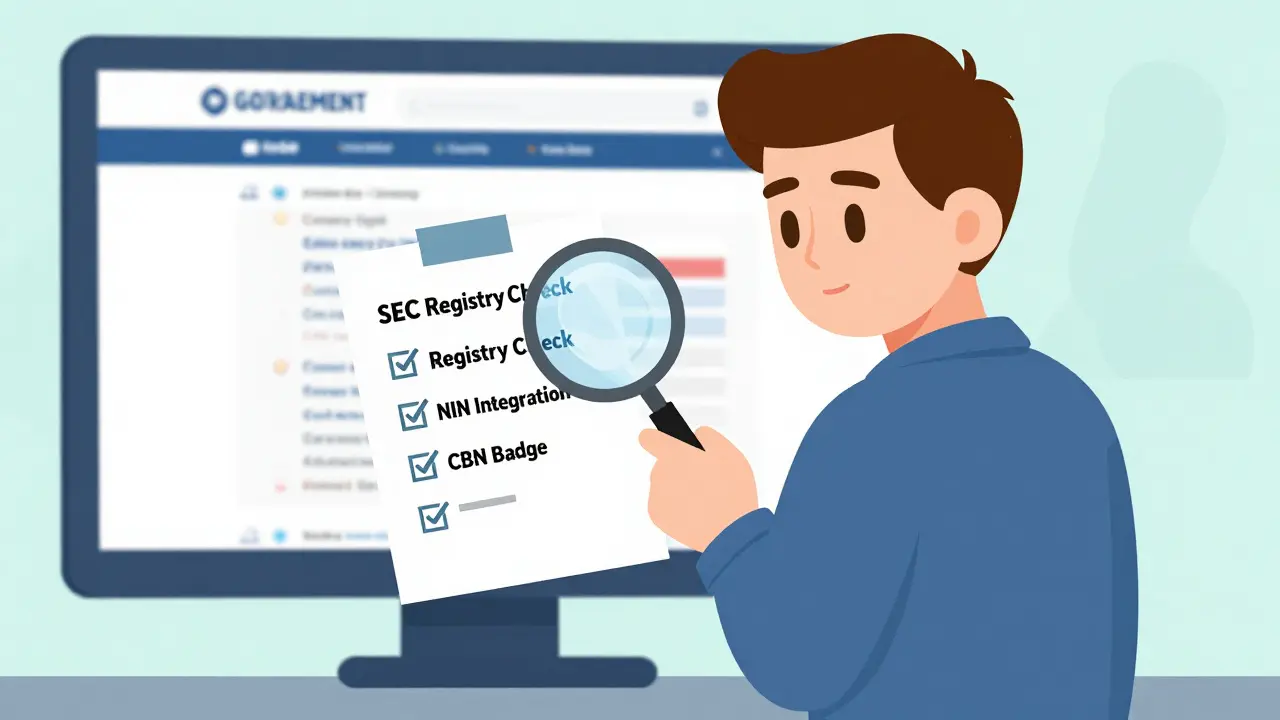
Don’t trust marketing emails or Telegram groups. Verification requires checking official government sources. Here is a step-by-step process to ensure your safety:
- Check the SEC Registry: Visit the official Securities and Exchange Commission website at sec.gov.ng/crypto-exchanges. Look for the exchange’s name. Licensed platforms display a unique license number, such as SEC/CRP/2025/001.
- Verify Corporate Registration: Go to the Corporate Affairs Commission (CAC) registry. A legitimate exchange must be incorporated in Nigeria. For example, search for "Quidax Technologies Limited" or "Busha Fintech Limited." If you see a company registered in the Seychelles or Malta, it is not locally liable.
- Look for the CBN Badge: Licensed exchanges must display a "CBN Verified" badge on their landing page. You can also verify this by sending an SMS code 'VERIFY [exchange name]' to 20255.
- Check for NIN Integration: During the sign-up process, if the platform asks for your National Identification Number (NIN) and integrates it directly, it is likely compliant. Offshore platforms typically ask for passports or driver’s licenses from other countries.
The Hidden Cost of "Cheaper" Fees
Many users stick to unlicensed exchanges because the fees are slightly lower-around 0.15% compared to 0.25% on licensed platforms. This is a dangerous trade-off. Consider the total cost of ownership:
If you lose ₦1 million due to a frozen account, a fee saving of ₦2,500 is meaningless. Data from the Blockchain Association of Nigeria shows that 67% of users on unlicensed exchanges experienced at least one account freeze, compared to only 3% on licensed platforms. The stress, time spent visiting EFCC offices, and potential loss of principal far outweigh the marginal difference in transaction costs.
Additionally, unlicensed platforms often suffer from liquidity issues during market volatility. Because they cannot easily move large amounts of Naira through the banking system, withdrawals can get stuck for weeks. Licensed exchanges have guaranteed banking channels, ensuring faster settlements.
What Happens If You Get Frozen?
If you are already using an unlicensed exchange, the best advice is to exit slowly and legally before further enforcement waves hit. But if your account is already frozen, here is what you face:
The resolution process is long and bureaucratic. According to the Nigerian Cybercrime Unit, disputes involving unlicensed platforms take an average of 28 days to resolve, if they resolve at all. You will need to provide proof of funds, transaction history, and potentially travel to EFCC offices multiple times. There is no guarantee of full recovery. In contrast, disputes with licensed platforms are resolved in an average of 3.2 days through established consumer protection protocols.
Do not attempt to bypass restrictions using third-party "money changers" or informal agents. These individuals are often linked to fraud rings. The EFCC has increased its crypto fraud investigation unit to 47 personnel as of June 2025, specifically targeting these informal networks.
Future Outlook: A Regulated Market
Nigeria is moving away from being the world’s second-largest P2P Bitcoin market toward a regulated institutional ecosystem. The ISA 2025 has already reduced unregulated crypto activity by 63%. Analysts predict that by Q2 2026, nearly all remaining unlicensed exchanges will be effectively blocked or shut down within the country.
The goal is financial inclusion with security. With 36% of adults unbanked, crypto fills a gap, but only if it is safe. By sticking to SEC-licensed platforms like Quidax and Busha, you participate in the growth of the Nigerian digital economy without risking your life savings to regulatory crackdowns.
Can I still use Binance in Nigeria?
Using Binance P2P carries significant risk. While the global platform exists, it lacks a specific SEC license for direct fiat operations in Nigeria. The SEC has warned against unlicensed platforms, and banks may block transactions associated with Binance. It is safer to use fully licensed alternatives like Quidax or Busha.
Which crypto exchanges are legal in Nigeria in 2026?
As of mid-2026, Quidax and Busha are the primary exchanges with full SEC licensing. Always verify the current list on the official SEC website (sec.gov.ng) as new licenses may be issued.
Why was my bank account frozen for crypto trading?
Banks are required by the CBN to stop processing transactions for unlicensed crypto entities. If you traded on a platform without an SEC license, your bank may have flagged the transaction as suspicious or illegal, leading to a freeze pending investigation by the EFCC.
Is it safe to use decentralized exchanges (DEXs)?
DEXs like Uniswap lack regulatory oversight and consumer protection. While they are not "banned," moving funds to them from Nigerian banks can trigger flags if the source funds are traced to unlicensed activities. Additionally, you have no recourse if you are scammed or make an error.
How do I check if a crypto exchange is licensed?
Check the SEC registry at sec.gov.ng/crypto-exchanges. You can also verify the company’s registration with the Corporate Affairs Commission (CAC) and look for the "CBN Verified" badge on the exchange’s website. Sending an SMS 'VERIFY [name]' to 20255 is another method.