

Pakistan used to be one of those countries where you kept your mining operation quiet. If you ran a farm here, you were walking a tightrope between legal grey areas and outright bans. That changed drastically last summer. By mid-2025, the government pulled back the curtain completely, replacing uncertainty with a structured regulatory framework. You can now mine legally in Pakistan, but only if you play by the new rules set out in the Virtual Assets Act.
It is easy to get excited when you hear "2,000 megawatts allocated for mining." But the devil lives in the details regarding electricity tariffs and licensing thresholds. Before you plug in any ASIC miner, you need to understand what the regulators actually require versus what they allow. This isn’t just about hardware anymore; it is about compliance with financial authorities that have spent the last six months defining exactly how virtual assets fit into the national economy.
The New Regulatory Reality
In July 2025, the Virtual Assets Act, 2025 became law, shifting oversight from a vague banking prohibition to a dedicated authority known as the Pakistan Virtual Asset Regulatory Authority (PVARA). This body now sits at the top of the chain for anything related to virtual asset service providers (VASPs). Unlike previous attempts by the State Bank of Pakistan to simply block transactions, this Act creates a path to legitimacy for large-scale operations.
You cannot operate without a license. PVARA treats mining pools and large commercial rigs as financial service providers subject to scrutiny similar to banks. They enforce Financial Action Task Force (FATF) standards rigorously. This means your anti-money laundering protocols need to be ironclad before you even submit an application. The agency explicitly bans board members from insider trading or misuse of information, signaling that corporate governance is just as important as your hash rate.
If you are planning small-scale operations, the timeline matters. The rollout plan divided licensing into phases. Phase 1 wrapped up late last year, focusing entirely on massive international players capable of exceeding 1 exahash per second. Now, as we move through early 2026, Phase 2 opens the door for domestic miners. However, there is a minimum capacity requirement of 100 petahashes per second (PH/s). If your setup doesn't hit these numbers, you fall outside the initial licensed protection net and risk operating in the shadows again.
Power Availability and Grid Constraints
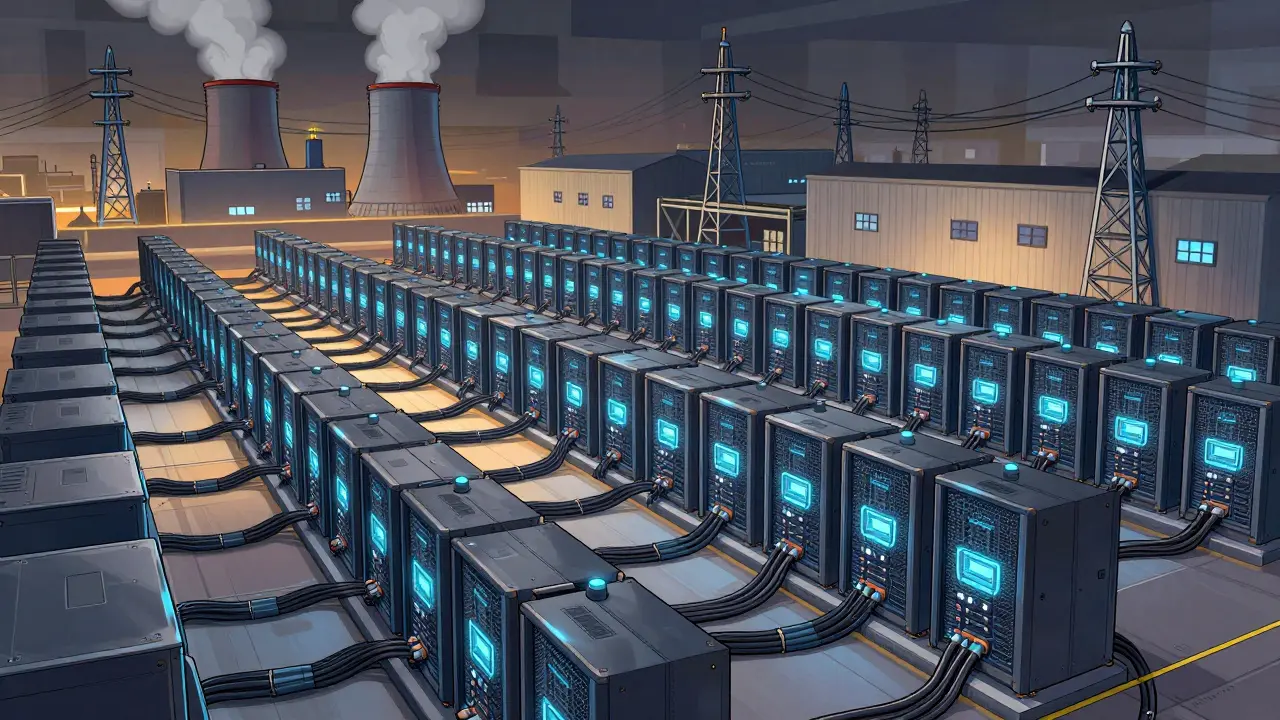
The most attractive part of the new policy is the energy commitment. The government announced an allocation of 2,000 megawatts specifically for Bitcoin mining and AI data centers. In August 2025, this news sent shockwaves through the community because Pakistan had previously struggled to keep its own grid stable during peak hours. How does a nation prioritize mining when basic businesses struggle?
| Type of User | Tariff Class | Connection Minimum |
|---|---|---|
| Residential | Subsidized Residential Rate is prohibited for mining operations. The government explicitly banned the use of subsidized household power for commercial gain. | Prohibited |
| Commercial Miner | Industrial Tariffs apply to all registered mining farms. Rates reflect the cost of coal-based generation and grid transmission. | Minimum 500 kW connection required |
| Grid Source | Excess coal station capacity and underutilized SME power | Must maintain 70% renewable/repurposed energy ratio by 2027 |
The strategy relies on “stranded” capacity. There are coal plants running below capacity due to low demand from struggling factories and SMEs switching to solar. Rather than letting that power go to waste, the state channels it to mining farms. This logic addresses some of the International Monetary Fund’s earlier objections regarding fiscal risks, though consultations on tariff sustainability continued through late 2025.
To make this work technically, your equipment needs high efficiency. If you are planning to deploy machines here, look at the joules-per-terahash metric. The guidelines suggest 30-40 joules per terahash as the standard for viability. Anything older and less efficient eats too much margin once the industrial tariff hits your bill. If Pakistan utilizes the full 2,000 MW allocation with modern hardware, analysts predict a contribution of over 60 exahashes per second to the global network, putting them in the top five mining hubs.
Taxation and Income Reporting
Bringing mining into the light means paying taxes. Under the reforms finalized in 2025, the Federal Board of Revenue (FBR) classifies crypto mining income as taxable revenue. You treat your mined coins as regular income rather than capital assets until you sell them. The tax brackets are progressive, meaning your liability scales with your earnings.
-
Income Tax Rates: For taxable income up to PKR 600,000, the rate is 5%. As earnings grow, the percentage climbs steeply to a maximum of 35% for income exceeding PKR 12 million annually.
-
Capital Gains Tax: When you eventually sell the mined cryptocurrency, a flat 15% tax applies to the profit made on the transaction.
-
Filing Requirements: All operations must report earnings using Form IT-1. The annual deadline is September 30. Failure to file results in penalties, and PVARA shares operational data directly with the FBR starting from mid-2025.
Many investors worry about cash flow liquidity. Since banks remain cautious, you need to manage your fiat conversion carefully. While you can pay taxes in fiat currency, getting funds out of a crypto wallet into a bank account remains a bottleneck unless you are working with a regulated partner approved under the new sandbox environment.
Banking and Liquidity Challenges
Here is where things get messy for newcomers. Even with the Virtual Assets Act, the State Bank of Pakistan (SBP) has maintained its stance that digital currencies are not legal tender. Banks are still instructed that existing banking laws prohibit institutions from dealing directly in cryptocurrencies. This creates a paradox: you are licensed to mine by PVARA, but you might find your bank account frozen or blocked if you receive large inflows labeled as "crypto proceeds."
Solving this requires working through authorized intermediaries. The regulatory framework encourages the development of compliant exchanges and custodial services that bridge the gap between digital assets and traditional banking. Some firms have successfully navigated this by routing settlements through offshore entities while keeping their operational costs in local Pakistani rupees.
Licensing Process for International Firms
The bar is set intentionally high for foreign entities. If you represent an established crypto firm looking to expand into Pakistan, you already need a home base license. PVARA accepts pre-vetted companies regulated by major bodies like the US SEC, UK FCA, UAE VARA, or Singapore MAS. This protects Pakistan from unregulated bad actors and aligns with FATF expectations.
Domestic applicants face steeper proof requirements. You must demonstrate technology standards, security audits, and detailed business models explaining environmental impact. One unique requirement for regional success involves religious compliance. The Act includes provisions for Shariah-compliant mining. Operators can apply for a regulatory sandbox to prove their operations meet Islamic finance principles, removing one of the historical cultural barriers to adoption in the region.
Can I mine Bitcoin in Pakistan as a hobbyist?
Currently, the licensing framework focuses on commercial scale. Phase 2 targets minimums of 100 PH/s. Hobbyists running single GPUs likely do not meet the volume threshold yet. Until guidelines expand to micro-miners, small setups may remain in a grey zone, so proceed with caution regarding utility contracts.
Is it legal to buy electricity for mining from a residential line?
Absolutely not. The draft mining guidelines explicitly prohibit using subsidized residential tariffs for commercial mining. All facilities must operate on industrial tariffs with a connection size of at least 500 kilowatts. Violating this invites immediate shut-down notices and fines from PVARA.
What happens if I refuse to pay the 15% capital gains tax?
PVARA transmits transaction data to the FBR. Evasion leads to heavy penalties and potential loss of your mining license. Non-compliance also flags your business for future audit restrictions, making it difficult to access international markets later.
Does PVARA approve mining hardware before deployment?
They do not approve brands, but they verify efficiency metrics. Your application must list expected energy consumption and hash rates. If your hardware exceeds the allowed joule-per-terahash limits, you might fail the environmental impact assessment within the application.
How does the State Bank of Pakistan affect my bank account?
Banks remain cautious. While the activity is legal under PVARA, banks view crypto transfers as high risk. You must disclose your mining income clearly during account opening and ideally route conversions through authorized local exchange gateways to avoid freezing.


joshua kutcher
I think we finally have a clear path forward after years of guessing games. The Virtual Assets Act removes the biggest risk for serious operators here. People need to understand that playing by the rules protects your hardware investment more than anything else. It is about creating a stable environment where long-term planning becomes possible again. We saw how unstable things were when policies changed overnight without notice. This new framework provides the security required for foreign investors to consider us a viable hub. Compliance costs money upfront but saves massive losses down the road regarding legal action. I encourage everyone to read the fine print on the industrial tariff clauses specifically.