
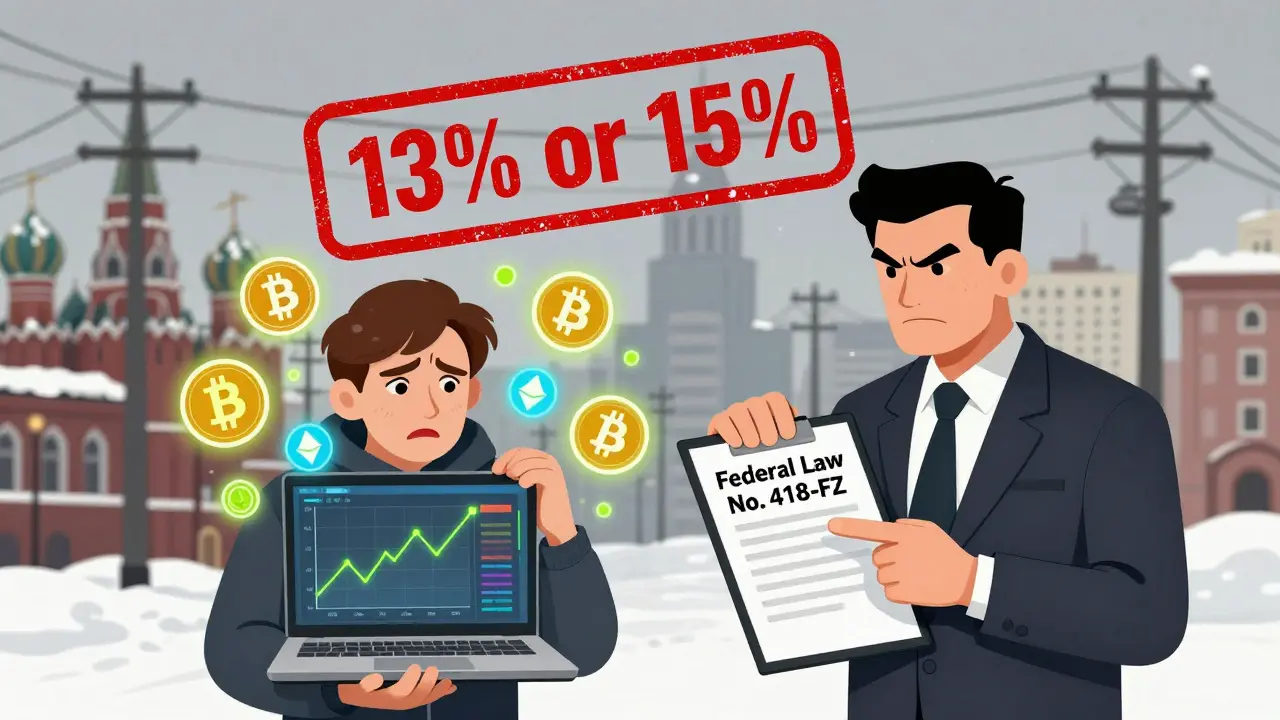
Since January 1, 2025, owning or trading cryptocurrency in Russia isn’t just a technical matter-it’s a legal obligation with real consequences. Federal Law No. 418-FZ, signed in late 2024, turned crypto from a gray-area asset into something the government tracks, taxes, and regulates. If you’re holding, trading, or mining digital assets in Russia, you’re now part of a system that demands records, reports, and payments. There’s no hiding anymore. And the rules aren’t just about money-they’re about control.
How Crypto Income Is Taxed Now
For Russian residents, cryptocurrency profits are treated like any other income. If you sell Bitcoin for rubles, trade one coin for another, or earn rewards from staking, that’s taxable income. The tax rate depends on how much you make in a year. If your total crypto income is under 2.4 million rubles ($32,653), you pay 13%. Anything above that? 15%. That’s the same rate applied to stock sales now-no more separate rules.
Non-residents don’t get the same deal. If you’re not a Russian tax resident but earn from crypto transactions within Russia, you’re hit with a flat 30% tax. No brackets. No exceptions. Just a higher rate.
And here’s the catch: there’s no exemption for holding crypto long-term. Unlike stocks or real estate, where you might avoid tax after three years, crypto doesn’t get that break. Even if you bought Bitcoin in 2020 and sold it in 2026, you still owe tax on the gain. The government doesn’t care how long you held it. Only the profit matters.
Corporate Crypto: Mining Is Heavily Restricted
If you’re running a mining operation, the rules are even stricter. All corporate crypto mining must use the general taxation system (OSNO). That means no more using simplified regimes like USN or ESHN to cut costs. You pay 25% on profits. That’s 20% higher than the standard corporate rate, and experts say it’s pushing miners out of the legal system.
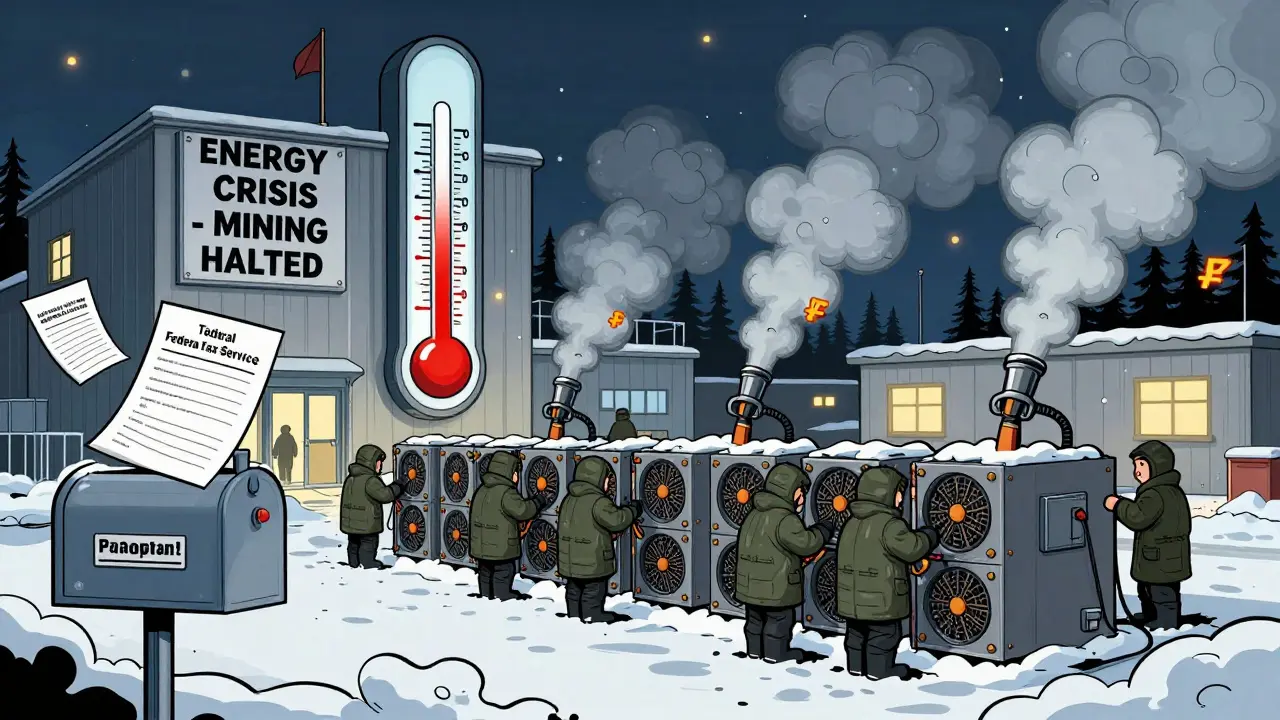
And it’s not just about taxes. Mining is outright banned in Dagestan, Chechnya, and the DPR/LPR regions until 2031. In Siberia and the Far East-places like Irkutsk, Buryatia, and Zabaykalsky Krai-you can only mine during certain months. When energy demand spikes in winter, mining shuts down. It’s not about efficiency. It’s about controlling power use.
Companies that mine or trade crypto must report quarterly to the Federal Tax Service. Fines for missing a report? Up to 40,000 rubles. If you underpay taxes? Penalties of 15-40% of what you owe, plus interest. The system is built to punish mistakes.
How Do You Even Calculate Your Tax?
Here’s where things get messy. You can’t just look at your exchange balance and call it a day. The law says you must use market prices from specific foreign exchanges. Not any exchange. Only those with:
- Daily trading volume over 100 billion rubles ($1.36 billion)
- At least three years of publicly available price data
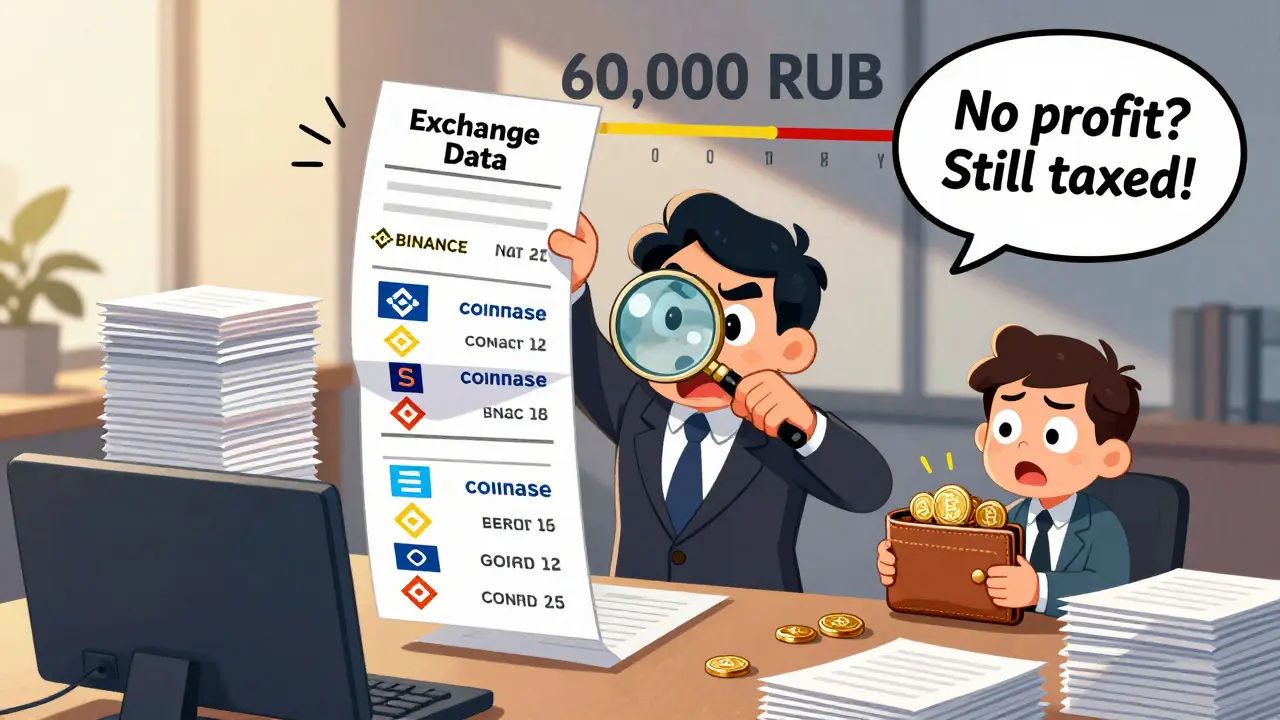
That means you can’t use local Russian platforms-most don’t meet the criteria. You can’t use Binance or Coinbase if they don’t publish the exact data the government wants. You have to dig up quotes from a handful of global exchanges that fit the bill. Then you have to match each transaction to the exact time and price.
Accountants say it’s a nightmare. A survey of 127 Russian accounting firms found 89% needed weeks of training just to handle crypto tax filings. Sixty-two percent said verifying foreign exchange data was their biggest hurdle. There’s no official Russian crypto price feed. The government expects you to do the work of a financial data analyst just to file your taxes.
Reporting Thresholds and Who Gets Caught
There’s a 600,000 ruble ($8,163) annual reporting threshold. If your total crypto transactions in a year are below that, you’re not required to file. Sounds harmless, right? But here’s the problem: it’s not about your profit. It’s about the total value of all buys, sells, and trades.
Let’s say you bought $1,000 worth of Ethereum, sold it for $1,200, bought $800 of Solana, and sold it for $1,100. That’s $3,100 in total transaction value. You didn’t make much profit, but you’re still under the threshold. No report needed.
But if you’re a small investor who does five small trades a month-$100 here, $200 there-you could easily hit 600,000 rubles in transaction volume without ever making a big gain. And now you’re forced into the system. The government doesn’t care if you broke even. If your activity crosses the line, you’re on the hook.
According to data from Garantex exchange, 78% of their users had annual transaction volumes below this threshold. That means the law is mostly targeting the middle and upper tier of crypto users-not the casual traders. But the system doesn’t distinguish between them. Everyone gets lumped together.
What’s Happening to the Market?
Since the law kicked in, the Russian crypto market has shrunk. The Association of Cryptocurrency and Blockchain Enterprises reported a drop from 1.8 million active users in late 2024 to 1.4 million by early 2025. About 38% of those who left moved to peer-to-peer (P2P) platforms, where there’s no official record of transactions. They’re still trading-but now it’s off the grid.
Domestic mining took a hard hit. In Irkutsk Oblast, where mining was once common, operations dropped by 22% in January 2025 after seasonal restrictions began. The government didn’t just tax miners-they made it harder to run them.
But not everyone is losing. Institutional players are stepping in. By February 2025, 47 banks and financial firms had registered as crypto service providers. They’re not trading for themselves-they’re offering custody, reporting, and compliance tools to clients. The system is being built for big money, not small holders.
Why This Law Exists
The Russian government didn’t create this system to help crypto users. It was designed to bring digital assets under state control. The VAT exemption for crypto transactions was a sweetener-it keeps businesses from leaving the market. But the real goal? To track every transaction, collect tax revenue, and reduce reliance on Western financial systems.
There’s also a geopolitical angle. The law works alongside Russia’s experimental cross-border crypto framework from March 2024. It lets Russian businesses settle international trade in crypto, bypassing sanctions. But now, those transactions are taxable. The state wants to profit from its own workaround.
The Ministry of Finance predicts Russia will collect 28 billion rubles ($381 million) in crypto taxes by 2027. But the Higher School of Economics says that’s overly optimistic. They estimate a 30-40% overstatement, because the market is already contracting. People are leaving. The system is too complex. And when compliance costs more than the tax itself, people stop playing by the rules.
What You Should Do Right Now
If you’re a Russian resident with crypto:
- Track every transaction: buy, sell, swap, stake, earn. Write down dates, wallet addresses, and exchange rates.
- Use only approved foreign exchanges for price data. Save screenshots or export logs.
- Calculate your total income and transaction volume. If you’re over 600,000 rubles in activity, prepare to file.
- Don’t assume holding long-term helps. You’re taxed on profit, regardless of time.
- If you mine, make sure you’re in a permitted region and using OSNO.
If you’re not sure where to start, hire an accountant who’s trained in crypto tax. Most regular firms still don’t know how to handle it. The Russian Association of Certified Accountants released a 287-page guide for this exact reason. It’s not optional anymore.
What’s Next?
The State Duma plans to review the law in July 2025. One major issue: the 600,000 ruble threshold. Right now, it’s based on total transaction volume, not profit. That’s unfair to small traders. Many expect a change-maybe switching to a profit-based threshold.
Also, the Central Bank is rolling out a digital ruble pilot for welfare payments in October 2025. That could change how people use crypto. If the government pays you in digital rubles, you might not need to touch Bitcoin at all.
For now, the message is clear: crypto in Russia is legal-but only if you play by the government’s rules. The system is rigid, complex, and designed to extract value. There’s no gray area left. If you’re in, you’re tracked. If you’re out, you’re avoiding risk. There’s no middle ground anymore.


Katherine Melgarejo
So Russia just turned crypto into a bureaucratic nightmare with extra steps and zero chill. I mean, who thought requiring foreign exchange data was a good idea? 😅