
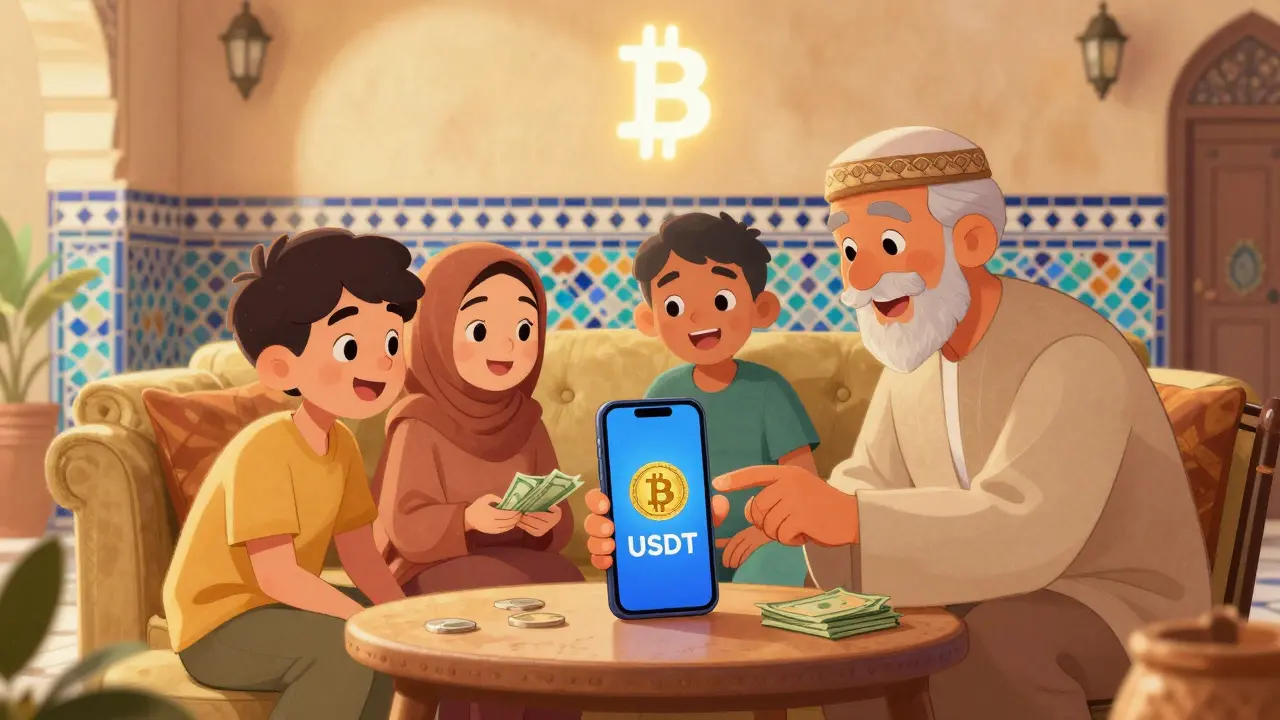
It’s 2026, and if you walk through the medinas of Marrakech or the streets of Casablanca, you’ll hear whispers about Bitcoin, USDT, and Ethereum-not as investments, but as lifelines. For millions of Moroccans, cryptocurrency isn’t about getting rich overnight. It’s about sending money home, paying for education abroad, or buying goods from Europe without waiting weeks or paying 15% in fees. And yet, the government says it’s illegal.
Why Moroccans Turn to Crypto When Banks Say No
In November 2017, Morocco’s Central Bank, Bank Al-Maghrib, banned all cryptocurrency transactions. The official reason? Risk. Volatility. Money laundering. No consumer protection. But behind the warnings, there’s a deeper truth: traditional banking systems in Morocco make international payments nearly impossible for ordinary people. Foreign exchange controls are strict. If you want to send $500 to your sister in Spain, you need paperwork, approvals, and sometimes weeks of waiting. Banks charge high fees-up to 12%-and often refuse outright if they suspect the recipient isn’t a "verified beneficiary." Many Moroccans working abroad, especially in France, Italy, and Spain, don’t even have access to formal banking channels. That’s where crypto steps in. A student in Rabat paying tuition in Canada? Uses USDT. A carpenter in Tangier sending earnings to his parents in Oujda? Converts crypto to local currency via peer-to-peer traders. A small business importing machinery from Turkey? Pays in Bitcoin to avoid bank delays. These aren’t fringe cases. They’re daily routines.The Underground Network That Keeps Running
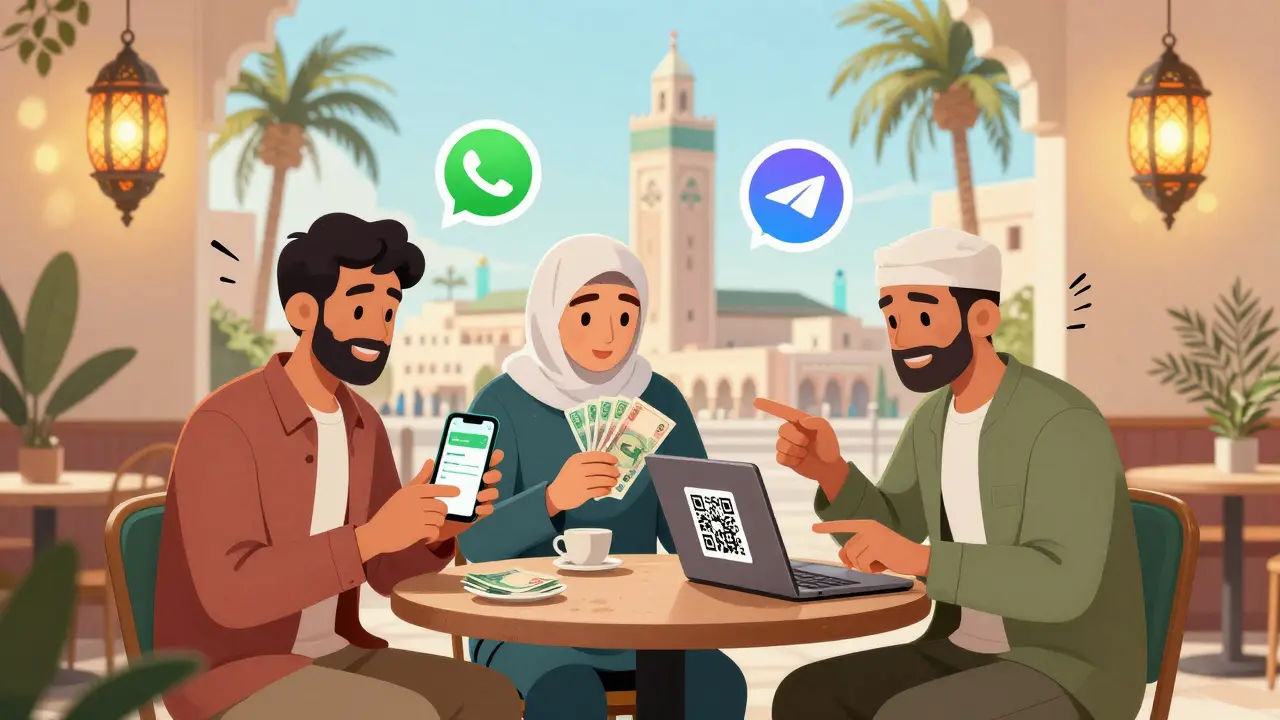
You won’t find crypto ATMs on Moroccan streets. You won’t see ads for Binance or Coinbase. But you’ll find WhatsApp groups. Telegram channels. Local meetups in cafés near universities. People trade crypto directly-cash for Bitcoin, mobile money for Ethereum. It’s all done in person or through trusted intermediaries. One trader in Fes told me he handles about 20 transactions a week. Each one averages $300. He doesn’t use exchanges. He meets buyers at parks, checks their ID on his phone, and transfers crypto from his wallet. He takes a 2% fee. Cheaper than Western Union. Faster than a bank wire. And legal? Technically, no. But no one’s been arrested for it. Market data backs this up. Even with the ban, Morocco’s crypto market is projected to hit $292.4 million by 2026. That’s not speculation. It’s based on transaction volume tracked by blockchain analytics firms and informal surveys conducted by local fintech researchers. People are using crypto. They just don’t talk about it in public.How It Actually Works: From Wallet to Cash
Here’s how a typical transaction flows:- A Moroccan living in France wants to send $800 to his family in Fez.
- He buys $800 worth of USDT on a foreign exchange-no KYC needed on some platforms.
- He sends the USDT to a trusted contact in Morocco via a wallet address.
- The contact receives the USDT and meets a local P2P buyer in Casablanca.
- The buyer gives him Moroccan Dirhams in cash-no bank account needed.
- The family gets the money within 20 minutes.
The Government’s Dilemma: Ban vs. Control
Bank Al-Maghrib hasn’t changed its official stance. But behind closed doors, things are shifting. In July 2025, the central bank finalized a draft law to legalize and regulate cryptocurrencies. Not to encourage them. Not to make them mainstream. But to bring them into the light-so they can be taxed, monitored, and controlled. At the same time, Morocco is developing its own digital currency-a Central Bank Digital Currency (CBDC)-in partnership with Egypt and the World Bank. This isn’t Bitcoin. It’s not decentralized. It’s a digital dirham, controlled entirely by the state. Think of it as a government-approved version of what people are already doing with crypto: fast, cheap, cross-border payments. The message is clear: The government doesn’t want people using unregulated crypto. But it also doesn’t want to lose control over the flow of money out of the country. So instead of fighting the tide, they’re building a dam-with their own water.The Real Reason Crypto Won’t Go Away
Morocco has one of the largest diasporas in Europe-over 3 million Moroccans living abroad. Every year, they send back more than $8 billion in remittances. That’s more than tourism revenue. More than phosphate exports. Traditional remittance services like Western Union and MoneyGram dominate-but they’re slow and expensive. Crypto cuts that cost in half. For families relying on this money, it’s not a luxury. It’s survival. And it’s not just the diaspora. Young entrepreneurs are using crypto to access global markets. A designer in Rabat sells digital art on OpenSea and gets paid in ETH. A freelance coder in Meknes invoices clients in the U.S. in USDT. These aren’t tech elites. They’re regular people with smartphones and internet access. The ban was meant to protect the financial system. But it’s protected the system from innovation-not the people from risk.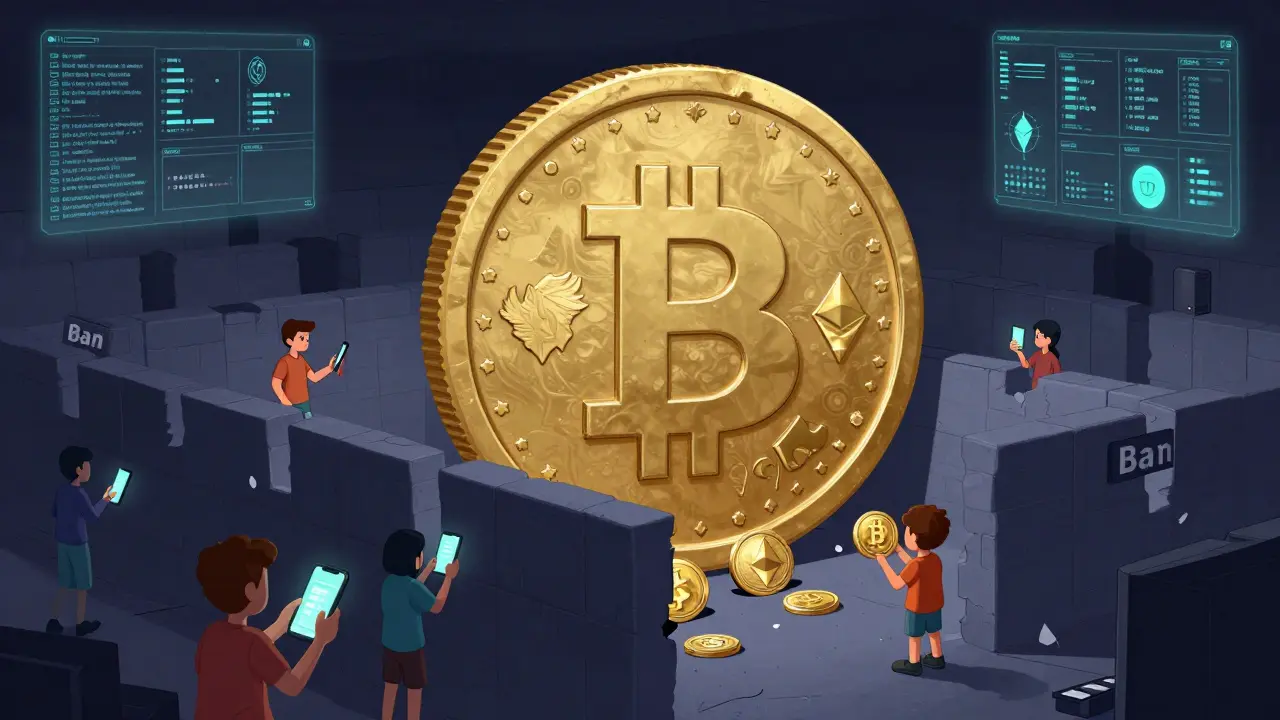
What Happens When You Get Caught?
Technically, using crypto for payments is illegal. But enforcement is patchy. There are no public records of anyone being jailed for buying Bitcoin to send money home. There are no crackdowns on P2P traders in cafés. The central bank focuses on large-scale exchanges and money laundering rings-not individuals. That doesn’t mean there’s no risk. If you’re caught using crypto to pay for illegal goods, or if your wallet is linked to a known darknet market, you could face fines or investigation. But for the vast majority of users? The risk is low. The reward? Huge.The Future: Regulated Crypto or State-Run Digital Currency?
Morocco stands at a crossroads. Will it continue to pretend crypto doesn’t exist? Or will it finally acknowledge reality and create a legal framework? The draft law from July 2025 suggests the latter. But it’s not about freedom. It’s about control. The CBDC will likely become the official tool for international payments. People will still use crypto privately-but eventually, the government will push everyone toward its own system. For now, though, crypto remains the only tool that works. It’s fast. It’s cheap. It’s accessible. And for millions of Moroccans, it’s the only way to stay connected to the world beyond their borders.What This Means for You
If you’re a Moroccan abroad: You can still send money home with crypto. Just use trusted contacts. Don’t use unregulated platforms. Keep records. Avoid large, sudden transfers. If you’re a business owner in Morocco: Accepting crypto for international orders is possible. But know the risks. Don’t convert to dirhams through unverified traders. Use escrow services when you can. If you’re outside Morocco and sending money: Consider USDT. It’s stable. It’s widely accepted. And it moves faster than any bank. The ban hasn’t stopped crypto. It just pushed it underground. And underground systems don’t disappear-they adapt.Is it legal to use cryptocurrency for payments in Morocco?
No, it’s not legal. Since November 2017, the Central Bank of Morocco has banned all cryptocurrency transactions. However, enforcement is inconsistent. Most individuals using crypto for personal remittances aren’t targeted. The government is focused on large-scale exchanges and criminal activity, not everyday users sending money to family.
How do Moroccans buy and sell crypto if it’s banned?
Moroccans use peer-to-peer (P2P) networks. They meet in person-often in cafés or public parks-to trade cash for crypto. WhatsApp and Telegram groups connect buyers and sellers. Some use foreign exchanges with no KYC to buy USDT or Bitcoin, then transfer to a local contact who gives them cash in dirhams. There are no official exchanges in Morocco.
What’s the most popular cryptocurrency used in Morocco?
USDT (Tether) is by far the most used. It’s a stablecoin pegged to the U.S. dollar, so its value doesn’t swing like Bitcoin. This makes it ideal for payments-people know exactly how much dirhams they’ll get. Bitcoin and Ethereum are used too, but mostly for larger transfers or savings, not daily payments.
Can Moroccans use crypto to pay for goods and services abroad?
Yes, and they do. Moroccan freelancers, artists, and small businesses increasingly invoice clients in Europe and North America in USDT or Bitcoin. Platforms like OpenSea, Fiverr, and Upwork allow crypto payouts. Many international suppliers, especially in Turkey and China, accept crypto because it’s faster and cheaper than bank transfers.
Is Morocco planning to legalize crypto?
Yes. In July 2025, the Central Bank of Morocco finalized a draft law to legalize and regulate cryptocurrency use. The goal isn’t to encourage speculation, but to bring crypto transactions into the formal system-especially for cross-border payments. The government is also developing its own digital currency (CBDC) as a state-controlled alternative.
Why is the government pushing a Central Bank Digital Currency (CBDC)?
The CBDC is Morocco’s way of offering the benefits of crypto-speed, low cost, cross-border efficiency-without losing control. Unlike Bitcoin, a CBDC is fully regulated by the central bank. It can be tracked, taxed, and restricted. The government wants to replace underground crypto use with a system it owns and monitors, especially for remittances and international trade.
Are there risks to using crypto in Morocco?
Yes. Since there’s no legal protection, if you’re scammed by a P2P trader, you have no recourse. Wallets can be hacked. Exchange accounts can be frozen. And if you’re linked to illegal activity, you could face legal consequences. But for most people using crypto to send money home, the risk is low-especially compared to the cost and delays of traditional banking.
How much money is being sent via crypto in Morocco?
The Moroccan crypto market is projected to reach $292.4 million by 2026. While this includes speculation, the majority of activity is tied to remittances and cross-border payments. Experts estimate over 60% of crypto usage in Morocco is for practical transactions-not trading.


Rob Duber
Okay but imagine being a Moroccan kid in Rabat trying to pay for your uni tuition while your bank tells you to "come back with a notarized letter from your great-aunt's cat"-then you just send USDT and boom, 17 minutes later your professor gets paid. This isn't crypto bro culture. This is survival tech. I'm not even mad, I'm impressed.
Also, why does every government think they can ban something that runs on math? You can't un-invent the internet, bro.