

Remember the panic of 2021? If you were trading Bitcoin in Lagos back then, you likely watched your bank account freeze because a teller spotted a transaction to a crypto exchange. For years, Nigeria’s stance on digital assets was a confusing mix of strict bans and quiet tolerance. But as of September 2026, that era is officially over. Crypto regulation in Nigeria has shifted from hostile ambiguity to structured oversight. President Bola Ahmed Tinubu signed the Investments and Securities Act (ISA) 2025 into law, effectively ending the regulatory limbo. Today, if you want to trade, hold, or invest in crypto here, you’re operating under clear rules set by the Securities and Exchange Commission (SEC) and the Central Bank of Nigeria (CBN).
So, what does this mean for you? It means you can no longer just download an app and start buying Ethereum without thinking about compliance. It also means banks are finally allowed to talk to you about it. This article breaks down exactly how the system works now, who holds the keys, and what traps you need to avoid in this newly regulated landscape.
The End of the Ban: How We Got Here
To understand where we are, you have to look at the timeline. In February 2021, the CBN issued a directive banning commercial banks from facilitating cryptocurrency transactions. They didn’t ban owning crypto outright, but they made it nearly impossible to move money between naira accounts and digital wallets. Banks froze accounts linked to exchanges like Binance and Quidax. Yet, Nigerians kept trading. Peer-to-peer (P2P) markets exploded because people refused to let go of their savings during high inflation.
By December 2023, the tide turned. The CBN lifted the ban, allowing banks to open accounts for licensed crypto businesses. Then came the big legal shift in March 2025. The ISA 2025 replaced the outdated 2007 securities law. Crucially, it defined digital assets-including cryptocurrencies-as securities. This gave the SEC the legal teeth to regulate exchanges, custodians, and brokers. It wasn’t just a policy tweak; it was a fundamental reclassification of what crypto is in the eyes of Nigerian law.
Who Controls Your Coins? The Regulatory Split
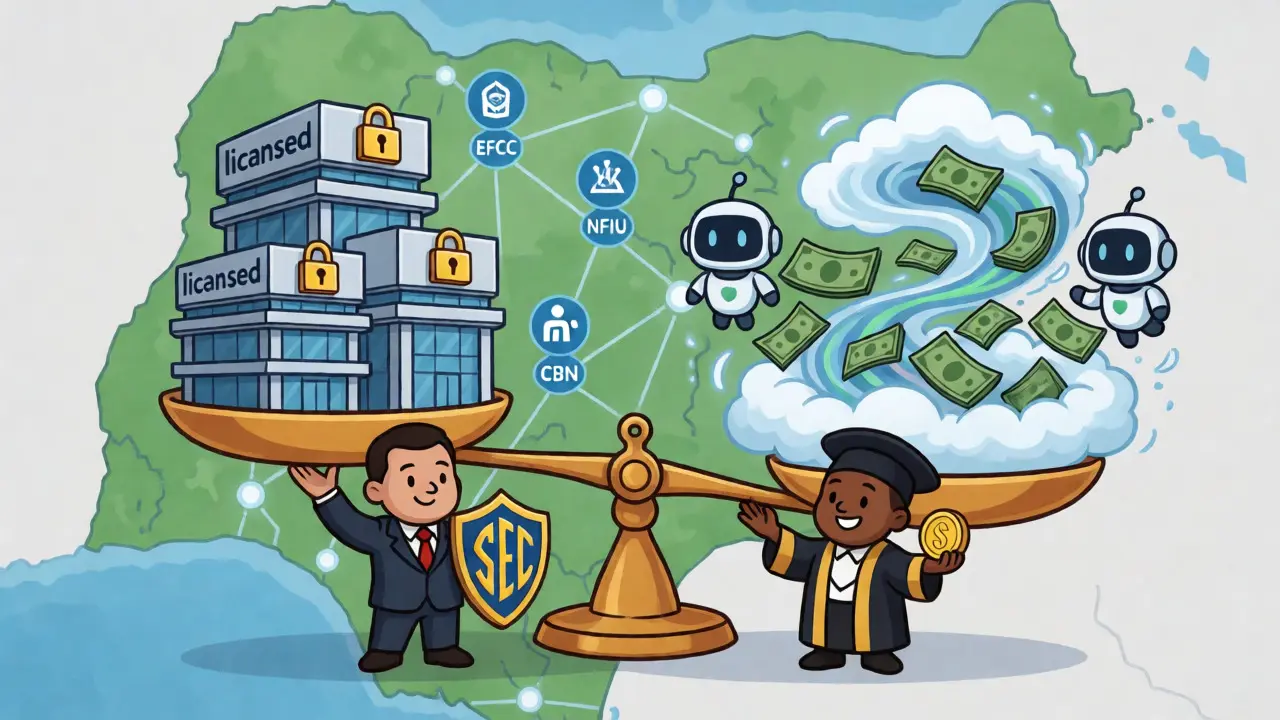
You might think one agency runs the show, but Nigeria uses a multi-agency approach. Think of it as a check-and-balance system designed to cover every angle of financial crime and market stability.
The Securities and Exchange Commission (SEC) is the primary regulator for anything investment-related. If you are buying tokens hoping they go up in value, or if you are running an exchange, you answer to the SEC. They enforce the Digital Assets Rules 2022, which require platforms to register, maintain paid-up capital, and submit to audits.
On the other side, the Central Bank of Nigeria (CBN) handles payments and currency flow. If you are using stablecoins for cross-border payments or converting naira to USDT, the CBN’s guidelines apply. They focus on anti-money laundering (AML) and ensuring that the flow of money doesn’t destabilize the naira.
Then there are the enforcers: the Economic and Financial Crimes Commission (EFCC) and the Nigerian Financial Intelligence Unit (NFIU). These bodies monitor transactions for fraud and suspicious activity. Under the new framework, regulators have gained access to telecom records to trace who is behind certain trades. This level of surveillance was unthinkable five years ago.
Licensing: What Exchanges Need to Survive
If you are wondering whether your favorite exchange is legit, check if they have a provisional or full license from the SEC. As of late 2024 and into 2026, only a handful of platforms have cleared this hurdle. Busha and Quidax were among the first to receive provisional licenses. Other major players are still in the vetting process.
Getting a license isn’t cheap or fast. A Virtual Asset Service Provider (VASP) must meet strict criteria:
- Paid-Up Capital: Companies must deposit significant funds with the SEC to prove financial stability.
- Local Presence: You need a physical office in Nigeria and Nigerian management personnel. No more offshore shell companies operating remotely.
- Fidelity Bonds: Insurance-like bonds protect customers if the company goes bust.
- Compliance Officer: A dedicated person responsible for reporting to the NFIU.
This structure creates a barrier to entry. While it protects users from fly-by-night scams, it also slows down innovation. New startups often struggle to afford the compliance costs, meaning the market tends to favor established giants.
Taxes and Penalties: The Cost of Compliance
Here is the part most traders overlook until it hits their wallet: taxes. The Nigeria Tax Administration Act (NTAA) 2025, which took effect in early 2026, introduced specific taxation rules for crypto. Previously, tax laws were vague. Now, gains from selling crypto are taxable events.
But it’s not just about paying taxes. It’s about penalties for non-compliance. If a VASP fails to report transactions or misses filing deadlines, the fines are steep. A defaulting platform faces an initial penalty of ₦10 million ($6,693) in the first month. Every additional month of delay adds another ₦1 million ($669). Worse, the SEC can suspend or revoke their license entirely. For individual traders, while direct enforcement on small P2P trades is still catching up, large inflows and outflows are increasingly flagged by banks.
| Requirement Category | Specific Obligation | Regulating Body |
|---|---|---|
| Registration | Must obtain SEC Provisional or Full License | SEC |
| Financials | Maintain minimum paid-up capital and fidelity bonds | SEC |
| Operations | Physical office in Nigeria with local management | SEC/CAC |
| Reporting | Submit regular reports on customer transactions | NFIU |
| Banking | Banks may provide services only to licensed entities | CBN |
What About NFTs and DeFi?
Not all digital assets fall under the same umbrella. The ISA 2025 draws a line between utility and security. If you buy an NFT purely for art or collectibles, you generally don’t face the same heavy regulations as someone buying a tokenized share of real estate. However, if an NFT project promises dividends or profits, the SEC treats it as a security.
Decentralized Finance (DeFi) remains a gray area. Since DeFi protocols operate on smart contracts without a central intermediary, applying traditional licensing rules is tricky. Currently, the SEC focuses on the gateways-the exchanges and wallets that connect fiat currency to these protocols. If you use a centralized platform to enter DeFi, you are covered by existing rules. Purely decentralized interactions are harder to police, but regulators are watching closely.
The Reality for Users: Risks and Benefits
For the average Nigerian trader, this new era brings mixed feelings. On the plus side, you have legal recourse. If a licensed exchange steals your funds, you can complain to the SEC. You can link your bank account directly to the exchange, eliminating the hassle of P2P transfers and the risk of getting your account frozen for "suspicious activity."
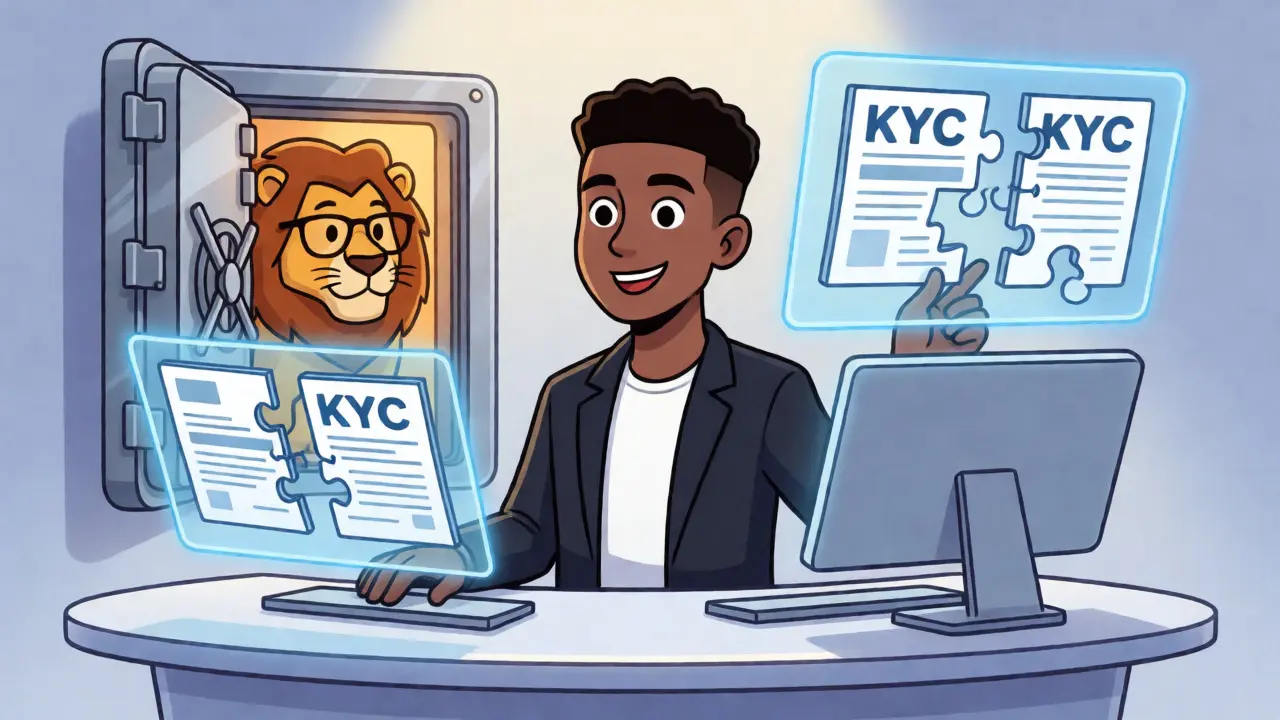
On the downside, privacy is reduced. KYC (Know Your Customer) requirements are stricter. You’ll need to upload your BVN (Bank Verification Number) and ID documents more frequently. There is also concern about government surveillance. With the EFCC and NFIU monitoring flows, large transactions are visible to authorities. Some users worry this could lead to arbitrary freezes if the system misinterprets a legitimate trade.
Another challenge is liquidity. Because only a few exchanges are fully licensed, the spread between buying and selling prices can be wider than on unregulated global platforms. Traders often find better rates on international exchanges, but moving money in and out requires careful navigation of banking limits.
Why Nigeria Matters Globally
You might ask, why should the world care about Nigeria’s crypto rules? Simple: volume. Between July 2024 and June 2025, Nigeria received an estimated $92.1 billion in crypto value. That ranks it among the top markets globally, nearly double South Africa’s activity. This massive adoption rate forced the government’s hand. They couldn’t ignore a sector handling billions in value.
Nigeria’s approach is becoming a template for other African nations. Kenya and South Africa have introduced crypto taxes, but Nigeria’s comprehensive licensing framework is more detailed. If successful, it could position Lagos as a fintech hub for West Africa, attracting foreign investment that previously hesitated due to regulatory uncertainty.
Next Steps for Traders and Investors
If you are active in the Nigerian crypto space today, here is what you should do:
- Verify Your Platform: Check the SEC website for the current list of licensed VASPs. Avoid platforms that cannot show proof of registration.
- Keep Records: Save screenshots of all transactions. With the NTAA 2025 in effect, you need proof of cost basis for tax calculations.
- Update KYC: Ensure your identity documents are current on your exchange profile. Outdated info can trigger withdrawals delays.
- Diversify Custody: Don’t keep all your coins on an exchange. Use a hardware wallet for long-term holdings to reduce counterparty risk.
The regulatory environment is still maturing. Expect updates to the guidelines as the SEC learns from the first year of implementation. Stay flexible, stay compliant, and keep an eye on official announcements rather than social media rumors.
Is Bitcoin legal to own in Nigeria?
Yes, owning Bitcoin and other cryptocurrencies is legal. The previous ban applied to banks facilitating transactions, not to individuals holding assets. Under the ISA 2025, crypto is recognized as a digital asset/security, making ownership explicitly lawful.
Can I still use peer-to-peer (P2P) trading?
Yes, P2P trading is still popular and legal. However, banks are now required to monitor these transactions more closely. Large or frequent P2P transfers may trigger additional verification requests from your bank to ensure compliance with AML laws.
Do I have to pay tax on my crypto profits?
Yes, the Nigeria Tax Administration Act 2025 introduces taxation on crypto gains. Profits from selling digital assets are subject to tax. You should consult a tax professional to determine your specific liability based on your trading volume and profit margins.
Which exchanges are currently licensed in Nigeria?
As of 2026, platforms like Busha and Quidax have received provisional licenses from the SEC. Several others are in the application pipeline. Always check the SEC's official registry for the most up-to-date list before depositing funds.
What happens if an exchange loses my money?
Licensed exchanges are required to hold fidelity bonds and maintain minimum capital reserves. If they fail, these mechanisms help compensate customers. You can file complaints with the SEC, which has the authority to investigate and penalize non-compliant firms.