
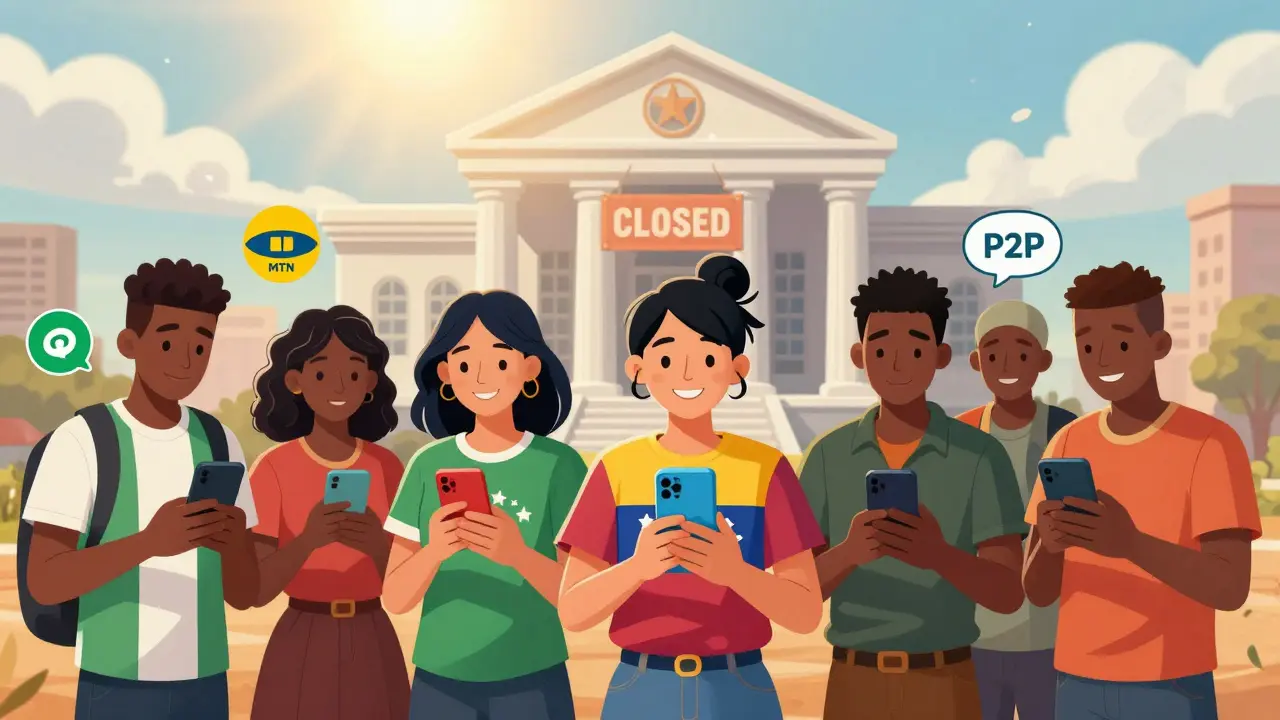
When your country bans crypto exchanges, your bank freezes your account, and inflation eats away your salary, where do you turn? For millions in places like Nigeria, Venezuela, Bangladesh, and Algeria, the answer isn’t a bank-it’s a P2P crypto platform. These aren’t fancy apps with slick interfaces. They’re lifelines. People use them to pay for food, send money home, or protect savings from crashing currencies. And they work because they skip the middleman entirely.
How P2P Crypto Works When Exchanges Are Banned
Traditional crypto exchanges like Coinbase or Binance get shut down in restricted countries because they’re centralized. The government can order them to freeze accounts or stop operations. P2P platforms are different. They don’t hold your money. They don’t control your wallet. They just connect you to someone else who wants to trade.
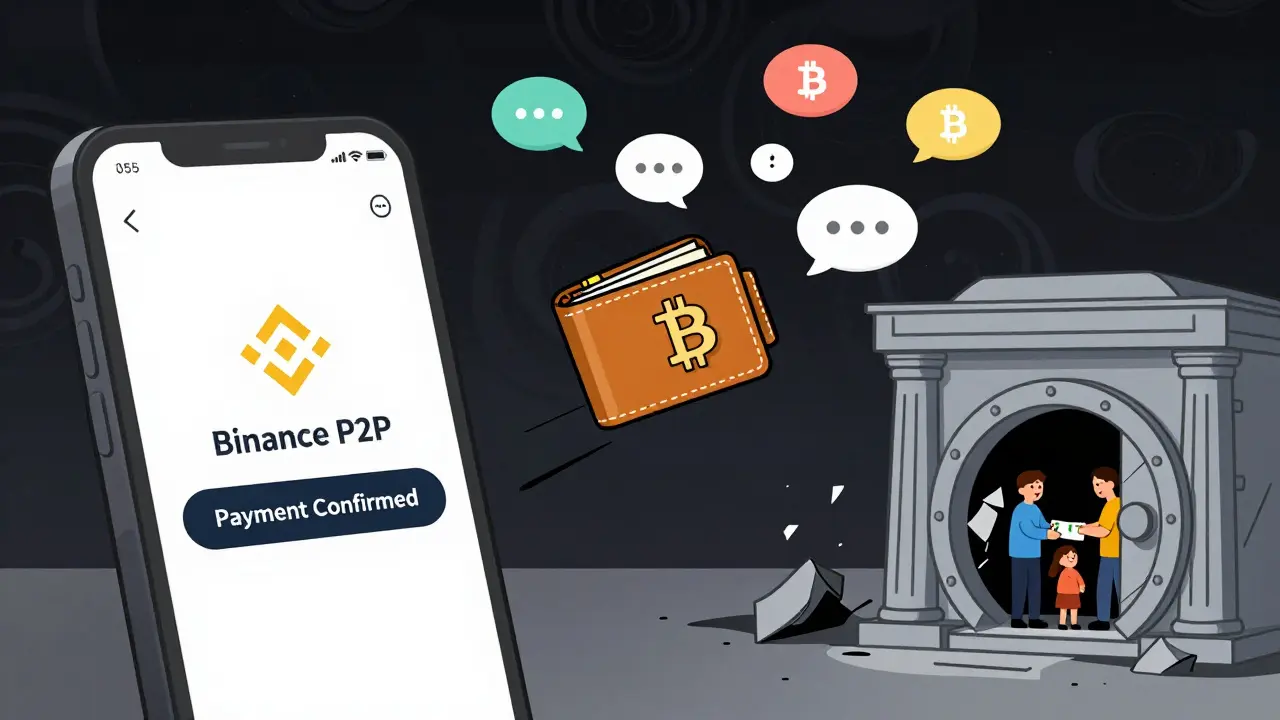
Here’s how it actually works: You list an offer to sell 0.1 BTC for 50,000 Nigerian naira. Someone else sees it, pays you via mobile money (like MTN Mobile Money or OPay), and the platform holds the Bitcoin in escrow until you confirm payment. Only then does the Bitcoin get released. If something goes wrong, the platform steps in. No bank. No government approval. Just two people trading directly.
This model exploded after Nigeria’s Central Bank banned banks from handling crypto in January 2017. Overnight, people lost access to their exchanges. But P2P platforms like Paxful and Binance P2P filled the gap. By 2023, Nigeria alone accounted for over $14 billion in P2P crypto volume-more than most G20 nations.
Platforms That Work in Restricted Zones
Not all P2P platforms survive in banned countries. Some get blocked. Others get pressured into shutting down. Only a few have adapted.
- Binance P2P: The biggest player. Supports over 100 payment methods including bank transfers, mobile wallets, and even cash deposits. It’s the go-to for Nigerians, Venezuelans, and Bangladeshis. Transaction fees? As low as 0.5%.
- Paxful: Built for restricted markets. Offers gift card trades, PayPal (in some regions), and even Amazon vouchers. It’s slower than Binance but has better support in local languages like Swahili and Hausa.
- Yellow Card: Focused only on Africa. Works with mobile money networks across 15 countries. No bank account? No problem. You can trade using MTN, Airtel, or Vodafone cash.
- Bisq: The only truly decentralized option. No sign-up. No KYC. No website you can shut down-it runs as a desktop app over the Tor network. But it’s harder to use. You need to understand Bitcoin wallets and node setup.
LocalBitcoins used to dominate-but after tightening KYC rules in 2020, its market share in banned countries dropped from 68% to under 30%. People left because they didn’t want to hand over their ID to a platform that could still get blocked.
Payment Methods That Keep P2P Alive
Forget credit cards. In restricted countries, the most common ways to pay are:
- Mobile money (MTN Mobile Money, Airtel Money, OPay, Paga)
- Bank transfers (even if the bank says it’s not allowed)
- Cash deposits (someone walks into a bank branch, deposits cash, and sends you a receipt)
- Gift cards (Amazon, Google Play, iTunes)
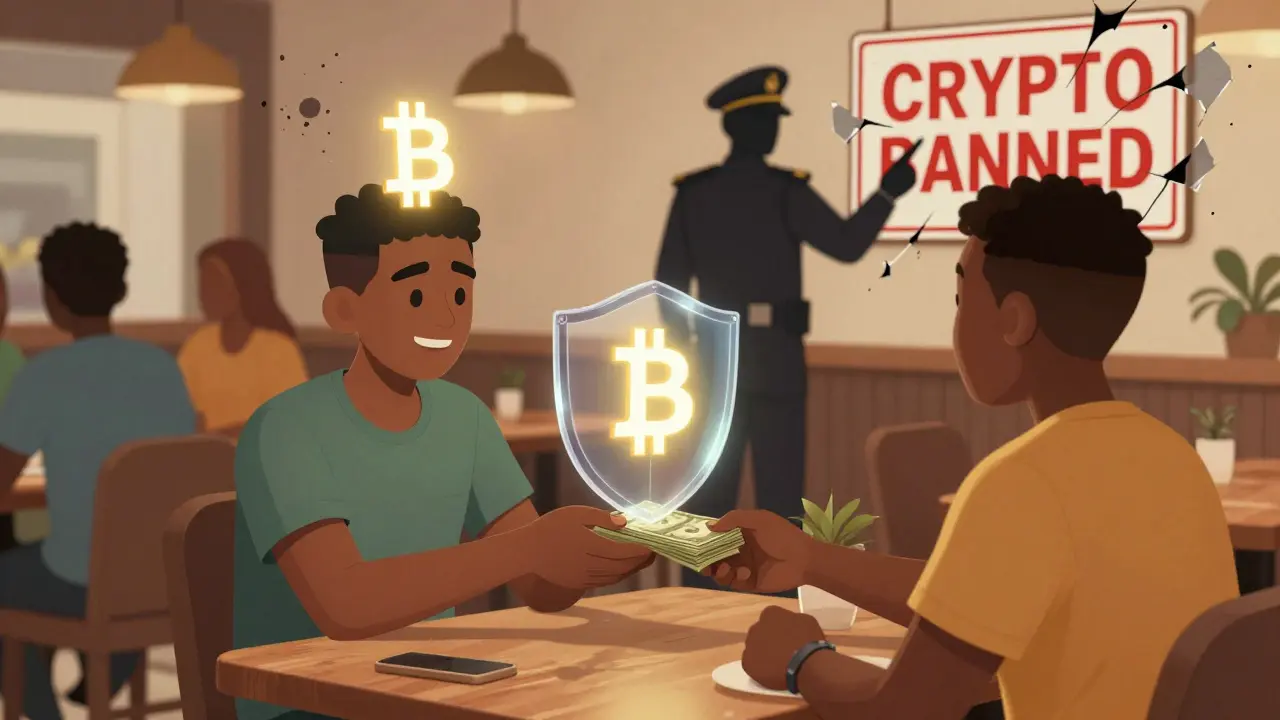
- Peer-to-peer cash meetups (in places like Lagos or Karachi, people still meet in cafes to swap cash for crypto)
Platforms adapt fast. If mobile money becomes popular in Ghana, they add it. If cash deposits rise in Venezuela, they train local moderators to verify receipts. This flexibility is why P2P survives where centralized exchanges fail.
The Real Benefits: More Than Just Crypto
People don’t use P2P crypto just because they like Bitcoin. They use it because they have to.
- Remittances: Sending $200 to family in another country costs $13 with Western Union. With P2P crypto? $2.40. In 2023, 41% of users in restricted countries said they used P2P mainly to send money home.
- Inflation protection: In Venezuela, where inflation hit 2,000% in 2022, people bought Bitcoin to keep their savings from turning into paper. Monthly P2P volume there peaked at $127 million.
- Financial access: 87% of Nigerian P2P users had no bank account before using crypto. Mobile phones became their bank.
These aren’t speculative investments. They’re survival tools.
The Dark Side: Risks You Can’t Ignore
There’s no free lunch. P2P crypto in restricted countries comes with serious dangers.
- Fraud: In 2022, 37% of all fraud cases on Paxful came from restricted countries. Scammers send fake payment screenshots, fake bank receipts, or pretend to be support agents.
- Bank account freezes: 22% of Nigerian P2P users had their bank accounts shut down in 2023-even though they never used their bank to trade crypto.
- Limited liquidity: In regulated markets, you can trade $100,000 in minutes. In Nigeria? The average order book depth is $8,500. You might wait hours to find a buyer.
- Legal gray zones: In Bangladesh, trading crypto is technically illegal. People do it anyway-but if caught, they face fines or jail.
Trustpilot reviews for Paxful in restricted countries average 3.2/5. Complaints? “Transaction held for 7 days.” “Can’t withdraw to local bank.” “Support took 48 hours.”
What Users Actually Need to Know
If you’re in a restricted country and want to try P2P crypto, here’s what you need to do:
- Download the app directly. Google Play and Apple App Store remove crypto apps in 11 banned countries. You’ll need to download APK files from the platform’s official website.
- Use a non-custodial wallet. Never leave crypto on the P2P platform. Withdraw to a wallet you control (like Trust Wallet or Exodus).
- Start small. Trade $10-$20 first. Test the process. See how long payments take. Learn the red flags.
- Check the seller’s history. Look for 100+ completed trades with 95%+ positive feedback. Avoid new sellers with no reviews.
- Never skip escrow. If someone asks you to send crypto before they pay, it’s a scam.
Most users need 8-12 hours of learning before they feel confident. That’s not a bug-it’s a feature. The system is designed to protect you from yourself.
The Future: More Pressure, More Innovation
Regulators aren’t giving up. China arrested over 1,200 people for crypto trades in 2023. Nigeria’s Central Bank is still banning banks. The FATF wants every P2P trade over $1,000 to report user data-the “travel rule.”
But innovation keeps pace. Platforms are now using Tor, encrypted messaging, and decentralized networks to stay alive. Some are even partnering with local telecoms to let users pay for crypto with airtime credit.
By 2025, P2P crypto volume in restricted countries is expected to hit $210 billion. Why? Because in places with hyperinflation, broken banks, and no safety net, people will always find a way to move money. P2P crypto isn’t a trend. It’s a response.
It’s not perfect. It’s not safe. But for millions, it’s the only option left.
Is P2P crypto legal in countries that ban crypto?
It’s complicated. Most countries that ban crypto don’t explicitly outlaw peer-to-peer trading between individuals. They ban exchanges, banks, and businesses from handling crypto. So while using P2P platforms isn’t always legal, it’s rarely prosecuted unless it involves large-scale money laundering. Enforcement is inconsistent, and most users operate under the radar.
Can I get arrested for using P2P crypto in a banned country?
It’s possible, but rare. Most arrests target large operators, not individual users. In China, authorities have arrested people for running P2P trading businesses. In Bangladesh, there have been isolated cases of people being fined for buying crypto. But for the average person trading $100-$500 per month, the risk is low. The bigger threat is bank account freezes, not jail.
Which P2P platform is safest in restricted countries?
Binance P2P is the most reliable due to its scale, liquidity, and 24/7 multilingual support. Paxful is good for users who need flexible payment options like gift cards. Bisq is the safest technically-it has no KYC and runs on Tor-but it’s harder to use. Avoid platforms with poor reviews, no escrow, or that ask for excessive personal data.
Why do P2P transactions take longer in restricted countries?
Because platforms add extra layers of verification. In Nigeria or Venezuela, fraud is common, so platforms require more screenshots, ID checks, and manual reviews. Payment methods like mobile money or cash deposits take longer to confirm than bank transfers in the U.S. or EU. Average completion time is 12-18 minutes, compared to 5-8 minutes in regulated markets.
Can I use P2P crypto if I don’t have a bank account?
Yes. In fact, most users in restricted countries don’t have bank accounts. Platforms like Yellow Card and Paxful support mobile money, cash deposits, and even airtime payments. All you need is a smartphone and internet access-even 2G is enough. Your phone becomes your bank.
What happens if the P2P platform gets shut down?
If a platform shuts down, your funds in escrow might be lost-but only if you left crypto on the platform. If you withdrew to your own wallet, you’re safe. That’s why experts always say: never hold crypto on a P2P exchange. Withdraw immediately after a trade. Decentralized platforms like Bisq can’t be shut down because they don’t have servers or headquarters.


Jeremy Lim
This is wild. I mean, really. People are using mobile money to buy Bitcoin like it's a grocery receipt. 😅 I just tried to send $20 via Venmo last week and got a 3-day audit. Meanwhile, someone in Lagos is trading BTC for airtime credits. The world is broken. And somehow, it works.