
TagCoin Mining Profitability Calculator
Calculate if mining TagCoin (TAG) is worth your time and resources based on real-world conditions.
Mining Analysis Results
Note: Based on article data showing mining difficulty of 0.10 and reported revenue of $0.0003 per day
Mining profitability depends on electricity costs and market prices which may change rapidly
TagCoin (TAG) isn't just another obscure crypto. It's a ghost with a license. Born around 2017-2018, it was meant to be the world's first universal rewards currency-something you could earn from shopping, use to pay for services, or even earn interest on. But today, it's barely alive. No one's trading it. No one's talking about it. And most major crypto sites don't even list it as active.
What TagCoin Actually Is (And Isn't)
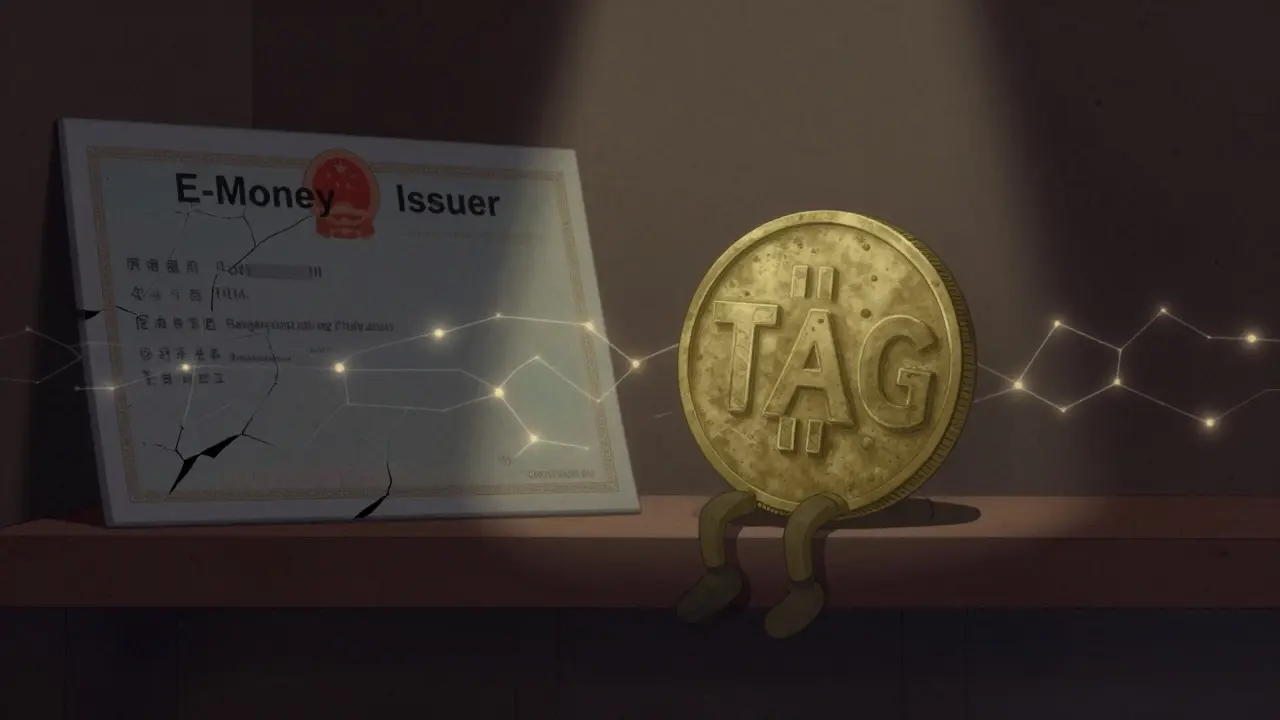
TagCoin is a cryptocurrency issued by Tagcash Ltd, a fintech company based in the Philippines. Unlike Bitcoin or Ethereum, it doesn’t operate as a fully decentralized network. Instead, Tagcash holds a central bank license from the Bangko Sentral ng Pilipinas (BSP) as an E-Money Issuer. That’s rare. Very few crypto projects have official government approval like this. But here’s the twist: even with that license, TagCoin has zero real-world adoption outside Tagcash’s own ecosystem.
Technically, TAG runs on three blockchains: Ethereum (as an ERC-20 token), a custom sidechain called Tagchain, and originally as a Scrypt-based proof-of-work coin. That means you could mine it-yes, mine it-with basic hardware. The mining difficulty? Just 0.10. For comparison, Bitcoin’s difficulty is over 63 trillion. That’s not a feature. It’s a red flag. Low difficulty usually means no one cares enough to secure the network properly.
Price, Supply, and Market Chaos
Here’s where things get messy. Different websites report wildly different prices for TAG:
- CryptoSlate says it’s $0.01722
- LiveCoinWatch says $0.000229-and hasn’t seen a trade since October 2019
- AltFINS says $0.000456 with a recent 35% jump
The circulating supply is consistently listed at 6,433,865.58 TAG. Multiply that by any of those prices, and you get a market cap between $120,000 and $140,000. That’s less than the cost of a single Tesla Model Y. Bitcoin’s market cap? Over $2 trillion. TagCoin is 0.00005% of that. It’s not a drop in the ocean. It’s a speck of dust on a satellite.
And here’s the kicker: LiveCoinWatch says the last trade happened in 2019. That’s six years ago. So why do some sites still show prices? Because someone’s manually updating them. Or worse-bot-driven fake volume.
Can You Mine TagCoin? (Spoiler: Don’t Bother)
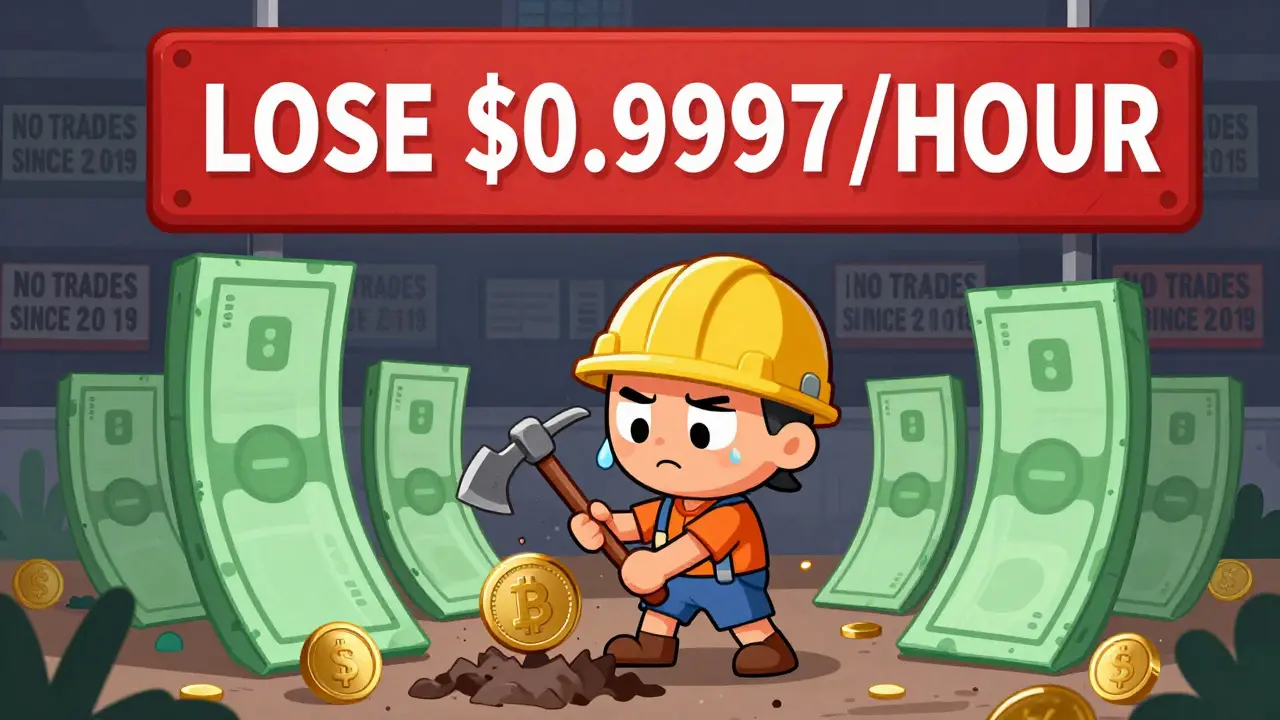
You could mine TAG. You’d need a Scrypt miner-like an Antminer L3+. The math is simple: you’d earn about $0.0003 per day. Your electricity bill for running that miner? Around $0.50 to $1.00 a day. You’d lose money every single hour. Even if you ran 100 miners, you’d still be in the red. The low difficulty doesn’t make it profitable. It makes it meaningless.
And there’s no point in mining it anyway. No exchange will let you cash out. No merchant accepts it. Even if you mined a million TAG coins, you couldn’t spend them outside Tagcash’s own app. And even there, adoption is near zero.
TagCoin’s Only Real Advantage (And Why It Doesn’t Matter)
Tagcash Ltd is one of fewer than 20 crypto companies globally with a central bank license. That’s impressive on paper. It means they’re legally allowed to issue digital money in the Philippines. But compliance doesn’t equal adoption. Look at stablecoins like USDC or USDT-backed by real reserves, used by millions, traded on every major exchange. TagCoin? No exchange lists it as active. No wallet supports it. No one uses it.
Even in the Philippines, where Tagcash operates, there’s no data showing TAG is used by consumers or businesses. The country’s crypto market grew 11.2% in 2022. TagCoin’s share? Undocumented. Probably zero.
The Predictions That Don’t Add Up
CoinLore claims TAG could hit $2.06 by 2025. That’s an 11,800% increase from its lowest reported price. How? They say it’s based on “AI models, RSI, MACD, and Fibonacci levels.” But those tools need real trading data to work. And there hasn’t been any since 2019. This isn’t forecasting. It’s fiction.
Major crypto analysts-people from CoinDesk, Cointelegraph, The Block-have never written about TagCoin. When asked about it on Twitter, one well-known crypto watcher simply said: “Never heard of it-probably dead if it’s not on CoinGecko’s active listings.” And it’s not.
No Community. No Support. No Future
Search Reddit for TagCoin. You’ll find maybe three posts in the last two years. None have more than two comments. Check Trustpilot. No reviews. Bitcointalk archives from 2019 show users confused about whether it was real or a scam. One user wrote: “Can’t figure out if this is a real project or just another token riding the crypto wave.” That was five years ago. Nothing’s changed.
Wallets? Trust Wallet, Exodus, MetaMask-they don’t support TAG. Tagcash’s own wallet? It has a 2.1/5 rating on obscure review sites. Users complain about 72-hour response times and poor English support. If you run into trouble, you’re on your own.
What Happens If You Buy TAG Today?
Let’s say you find a shady exchange still listing TAG. You buy 10,000 coins for $5. What now?
- You can’t send it to any mainstream wallet.
- You can’t trade it on Binance, Coinbase, or Kraken.
- You can’t cash out unless you find someone who still holds it-and good luck finding them.
- If you try to mine it, you’ll lose money.
- If you hold it, it’s worthless.
There’s no exit strategy. No liquidity. No future use case. It’s a digital dead end.
Final Verdict: Is TagCoin Worth It?
No.
TagCoin is a relic. A regulatory trophy with no users. A mining project with no miners. A rewards token with no rewards. Its only real claim to fame is a license no one uses. In a market with over 25,000 cryptocurrencies, TagCoin isn’t just obscure-it’s irrelevant.
If you’re looking for a crypto with real utility, regulatory backing, and active adoption, look elsewhere. Stablecoins, regulated payment tokens, or even Bitcoin itself have far more legitimacy and real-world use.
TagCoin? It’s not a coin. It’s a cautionary tale.
Is TagCoin (TAG) still being traded?
No, not meaningfully. The last verified trade on tracked exchanges happened on October 15, 2019. Some obscure platforms still list prices, but there’s no real buying or selling activity. The coin is effectively inactive.
Can I mine TagCoin and make money?
Technically yes, but practically no. The mining difficulty is extremely low (0.10), so you can mine it with basic hardware. But you’ll earn about $0.0003 per day while spending $0.50-$1.00 on electricity. You lose money every hour. Mining TAG is not profitable.
Is TagCoin backed by a real company?
Yes. TagCoin is issued by Tagcash Ltd, a fintech company that holds a central bank license as an E-Money Issuer from the Bangko Sentral ng Pilipinas. But having a license doesn’t mean the product is used. Tagcash’s own wallet has poor reviews, and TAG isn’t accepted anywhere outside their limited ecosystem.
Why isn’t TagCoin on CoinMarketCap or CoinGecko?
Because it doesn’t meet their activity requirements. Both platforms only list assets with real trading volume, active wallets, and verifiable data. TagCoin hasn’t had meaningful trading since 2019, so it’s been excluded from their active listings.
Can I use TagCoin to pay for things online?
No. There are no merchants, apps, or services outside Tagcash’s own platform that accept TAG. Even within Tagcash’s ecosystem, there’s no evidence of real usage. It’s not a payment tool-it’s a digital placeholder.
Is TagCoin a scam?
It’s not officially classified as a scam, but it behaves like one. There’s no transparency, no community, no liquidity, and no real use case. The price predictions are fantasy. The trading data is fake. The only thing real is the regulatory license-which hasn’t translated into adoption. It’s a high-risk, zero-reward asset.


Abhishek Bansal
This is the most accurate takedown of a dead coin I've read in years. TagCoin isn't even a ghost-it's a haunted house with no doors.