

You’ve probably seen the buzz around Pera Finance, a decentralized protocol that promised to bring competitive trading to the blockchain. The name keeps popping up in Telegram groups and crypto forums, often attached to the word "airdrop." But here is the hard truth: if you are waiting for a massive, free distribution of PERA tokens right now, you might be looking at empty promises or outdated rumors.
The reality of the PERA token is complex. It launched years ago, saw significant price drops, and operates on a specific model that doesn't rely heavily on traditional airdrops for its current growth. Before you spend hours connecting wallets and making transactions hoping for a reward, you need to understand exactly what Pera Finance is, how their token works, and whether there is any legitimate opportunity left for new users.
What Is Pera Finance and the PERA Token?
To figure out if an airdrop is real, you first have to know what the project actually does. Pera Finance is a trading and yield farming protocol built on the Binance Smart Chain (BSC). Unlike typical liquidity mining pools where you just lock up assets, Pera Finance focuses on trading volume.
Think of it like this: Centralized exchanges (CEXs) often give rebates or rewards to high-volume traders. Pera Finance tried to bring that same mechanic to Decentralized Exchanges (DEXs). Their core product allows other platforms to integrate "swap farming" services. This means traders can earn Annual Percentage Rates (APR) based on how much they trade, not just how much liquidity they provide.
The PERA token is the fuel for this ecosystem. It was designed as a proof-of-concept for their broader technology. The goal was to allow any DEX to launch customizable on-chain trading competitions. If you traded a lot on a supported pair, you earned rewards. The PERA token itself serves as the governance and utility asset within this system.
| Attribute | Details |
|---|---|
| Blockchain Network | Binance Smart Chain (BEP-20) |
| Token Standard | BEP-20 |
| Total Supply | 125.35 Million PERA |
| Circulating Supply | ~104.62 Million PERA |
| Primary Use Case | Incentivizing trading volume via swap farming |
| Launch Year | 2021 |
The Truth About the Pera Finance Airdrop
Here is where things get tricky for newcomers. When people search for "Pera Finance airdrop," they are often mixing up two different timelines or confusing Pera Finance with other projects.
1. The Initial Launch Distribution (2021) Pera Finance did have a community allocation during its initial launch in mid-2021. They raised $2 million through various sales, including an IDO on Daomaker and an IEO on Gate.io. During this phase, 3% of the total supply was allocated to the "Community." However, this was part of the initial Token Generation Event (TGE), not a retroactive airdrop for random users today. If you weren't involved in those early private sales or IDOs, that boat has sailed.
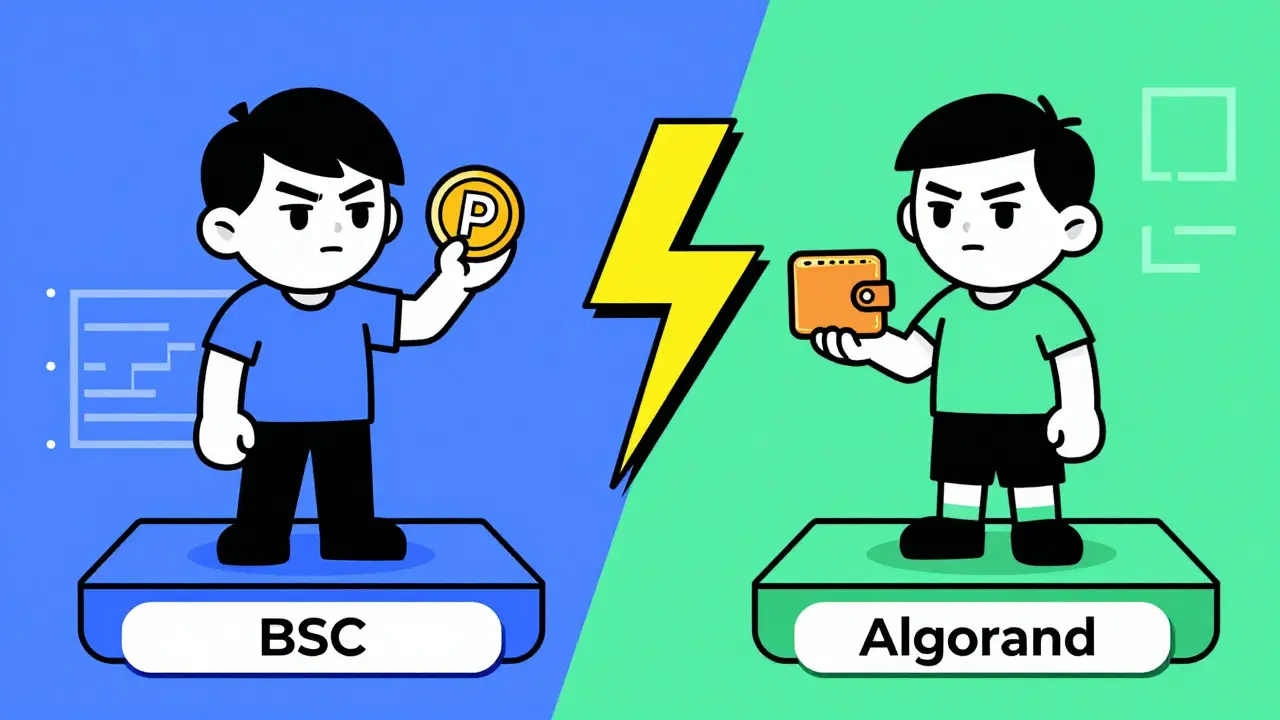
2. Confusion with Pera Wallet A major source of confusion is Pera Wallet. This is a completely different project. Pera Wallet is a non-custodial wallet built on the Algorand blockchain. It has had its own campaigns and airdrops in the past. Because both share the name "Pera," many users mistakenly believe that interacting with Pera Wallet will earn them PERA tokens from Pera Finance. It won’t. Pera Finance runs on BSC; Pera Wallet runs on Algorand. Keep your expectations separated.
3. Current Status of Airdrops As of August 2026, there is no official, widespread airdrop campaign announced by Pera Finance for new users. The project’s focus shifted from mass distribution to maintaining its existing yield farming protocols. Any website claiming you can "claim free PERA" right now without prior interaction history should be treated with extreme skepticism. Scammers love to clone popular but quiet projects to drain wallets.
How PERA Token Distribution Actually Works
Understanding the tokenomics helps explain why big airdrops aren't happening now. The PERA token has a fixed structure that was set during its 2021 launch. Here is how the pie was sliced:
- Private Sale (28%): Early investors who bought in before the public.
- Foundation (26%): Reserved for future development and operations.
- Team (16%): Locked allocations for the developers and staff.
- Seed Sale (13%): Early-stage backers.
- Advisors (8%): Consultants and industry experts.
- Public Sale (6%): Tokens sold during the IDO/IEO events.
- Community (3%): The portion typically associated with marketing and early user incentives.
Notice that the "Community" slice is quite small. Most of the tokens were distributed to investors and the team. The initial unlock schedule released 20% on listing day, followed by quarterly releases. By 2026, most of these tokens are already in circulation. There isn't a large reserve of unallocated tokens sitting around for a surprise airdrop.
Is PERA Still Worth Your Attention?
If you aren't getting free tokens, why would you care about Pera Finance? The answer lies in the utility rather than the speculation. Let’s look at the numbers.
When PERA launched, the price was around $0.10 USD. Today, it trades significantly lower, hovering around $0.000144 USD. That is a drop of over 99% from its peak. For pure investors looking for quick gains, this looks bad. But for traders interested in the mechanism, the story is different.
Pera Finance’s technology allows other DeFi projects to boost their volume. If you are an active trader on Binance Smart Chain, you might still find value in using Pera’s swap farming pools. Instead of earning rewards by providing liquidity (which carries impermanent loss risk), you earn by trading. This can be beneficial if you are already planning to trade those pairs anyway.
However, you must do the math. With the token price so low, the APR (Annual Percentage Rate) needs to be substantial to make meaningful returns. Always check the current pool rates on the Pera Finance dashboard before committing funds. Don’t assume high yields are guaranteed; they fluctuate based on trading volume and token price.
How to Safely Interact with Pera Finance
If you decide to participate in the yield farming or check for any potential future micro-incentives, safety is paramount. Here is how to approach it without losing your principal investment.
- Use a Dedicated Wallet: Never use your main wallet holding your life savings. Set up a separate MetaMask or Trust Wallet instance specifically for BSC interactions. Fund it only with what you can afford to lose.
- Verify the URL: Phishing sites are rampant. Always bookmark the official Pera Finance website. Do not click links from Twitter DMs or Telegram bots. Look for the verified badge on social media profiles.
- Check Contract Addresses: Before swapping or staking, copy the contract address from a trusted tracker like CoinMarketCap or CoinGecko and compare it to the one in your wallet. Scammers often create fake tokens with the same name but different addresses.
- Understand Gas Fees: Since Pera Finance is on Binance Smart Chain, gas fees are generally low compared to Ethereum. However, during network congestion, fees can spike. Ensure you have enough BNB in your wallet to cover transaction costs.

Common Pitfalls to Avoid
In the world of DeFi airdrops and yield farming, ignorance is expensive. Here are three common mistakes users make with projects like Pera Finance:
Chasing Ghost Airdrops: Many users spend weeks clicking buttons on unofficial dApps hoping for a retroactive airdrop. These dApps often have hidden mint functions that allow developers to steal your connected assets. If the official website doesn’t announce an airdrop, it doesn’t exist.
Ignoring Impermanent Loss vs. Trading Rewards: While Pera Finance focuses on trading rewards, some pools may still require liquidity provision. Understand the difference. Trading rewards compensate for activity; liquidity rewards compensate for risk. If you’re not actively trading, you might be better off in a standard liquidity pool elsewhere.
Confusing Similar Names: Again, watch out for Pera Wallet (Algorand) or other similarly named projects. Always double-check the blockchain network. Sending BSC tokens to an Algorand address will result in permanent loss of funds.
Future Outlook for Pera Finance
So, what’s next for Pera Finance? The project has survived the bear market that wiped out many of its 2021 peers. This suggests a degree of resilience. The focus seems to be on integrating their swap farming module with larger ecosystems. If they partner with major DEXs or Layer-2 solutions, we might see renewed interest in the PERA token.
For now, the narrative has shifted from "free money" to "utility tool." If you are a degenerate trader who loves volume, Pera Finance offers a unique way to monetize your habits. If you are a passive investor looking for a quick airdrop payout, you might want to look elsewhere. The era of easy, unearned PERA tokens is likely over.
Is there an active Pera Finance airdrop in 2026?
No, there is currently no official, widespread airdrop campaign for Pera Finance in 2026. The initial community allocations occurred during the 2021 launch. Be wary of scams claiming otherwise.
What blockchain is the PERA token on?
The PERA token operates on the Binance Smart Chain (BSC) using the BEP-20 standard. It is not on Ethereum or Algorand.
Is Pera Finance the same as Pera Wallet?
No. Pera Finance is a DeFi protocol on Binance Smart Chain focused on trading competitions. Pera Wallet is a non-custodial wallet on the Algorand blockchain. They are unrelated projects.
How can I earn PERA tokens now?
You can earn PERA tokens by participating in their swap farming pools. This involves trading specific token pairs on integrated DEXs to generate volume-based rewards. You can also buy PERA on supported exchanges.
Why did the PERA token price drop so much?
Like many DeFi tokens launched in 2021, PERA experienced significant volatility due to market cycles, reduced hype around yield farming, and token unlocks from early investors. The price reflects current market demand versus supply.