

Ever wondered how a small Australian family managed to distribute 20 million tokens to 10,000 lucky gamers without their servers crashing? That’s exactly what PLAYA3ULL GAMES did with their flagship $3ULL token airdrop campaign. If you missed the initial buzz in early 2024 or are trying to understand if this project is still worth your attention today, you’re in the right place. This isn’t just about free crypto; it’s about understanding a publisher that tries to fix the broken relationship between players and game developers.
The core promise here is simple but ambitious: give players true ownership of their in-game assets. Unlike traditional studios where your rare sword disappears when the server shuts down, PLAYA3ULL uses blockchain tech to make sure you actually own what you earn. But before you rush to buy $3ULL or hunt for new drops, let’s break down exactly how that massive airdrop worked, what the tech stack looks like, and whether this "gamer-first" approach holds water in 2026.
The Mechanics of the CMC and $3ULL Airdrop
Let’s look at the numbers because they tell a clear story about intent. The campaign, officially titled "CMC and $3ULL Airdrop," ran from February 19 to March 11, 2024. Why those dates? They aligned perfectly with the broader market hype cycle around Web3 gaming recovery. The total prize pool was substantial: 20 million $3ULL tokens. That might sound huge, but split among 10,000 winners, each winner received an average of 2,000 tokens. It wasn’t a lottery where one person got rich; it was a broad distribution meant to bootstrap a community.
To qualify, users had to jump through specific hoops designed to boost visibility on major platforms. You needed to add $3ULL to your CoinMarketCap watchlist, join their Discord channels, share designated social media posts, and register with a compatible wallet address. This strategy is classic growth hacking: leveraging CoinMarketCap’s massive traffic to drive organic interest while simultaneously building a dedicated Discord base. For many participants, the real value wasn’t just the tokens themselves, but the access to a growing ecosystem that promised more than just speculative trading.
Under the Hood: Avalanche Subnet and Master Nodes
You can’t talk about PLAYA3ULL without talking about its infrastructure. Most casual gamers don’t care about blockchains, but they do care about speed and cost. Nobody wants to pay $5 in gas fees to buy a health potion. PLAYA3ULL solves this by operating on an Avalanche Subnet. Think of a Subnet as a private lane on the Avalanche highway. It offers the security of the main chain but allows for custom rules, higher throughput, and lower transaction costs specifically optimized for gaming applications.
Complementing this is their Master Node Network. This network handles decentralized indexing and storage, which is crucial for keeping game states synchronized across thousands of players without relying on a single central server. It’s a robust framework designed to meet the unique technical demands of crypto-integrated games. When you combine fast transactions with low fees, you remove the biggest friction points that have historically kept mainstream gamers away from Web3 projects.

Why PLAYA3ULL Is Different From Typical Play-to-Earn
Let’s be honest: the first wave of play-to-earn games felt like chores. You clicked buttons all day for pennies. PLAYA3ULL positions itself differently by focusing on "high quality play-to-earn playable games." Their model shifts the focus from grinding for tokens to enjoying PC-based experiences where rewards are a bonus, not the sole purpose. They emphasize free-to-play and fun-to-play mechanics, ensuring that the game stands on its own merits even if the token price fluctuates.
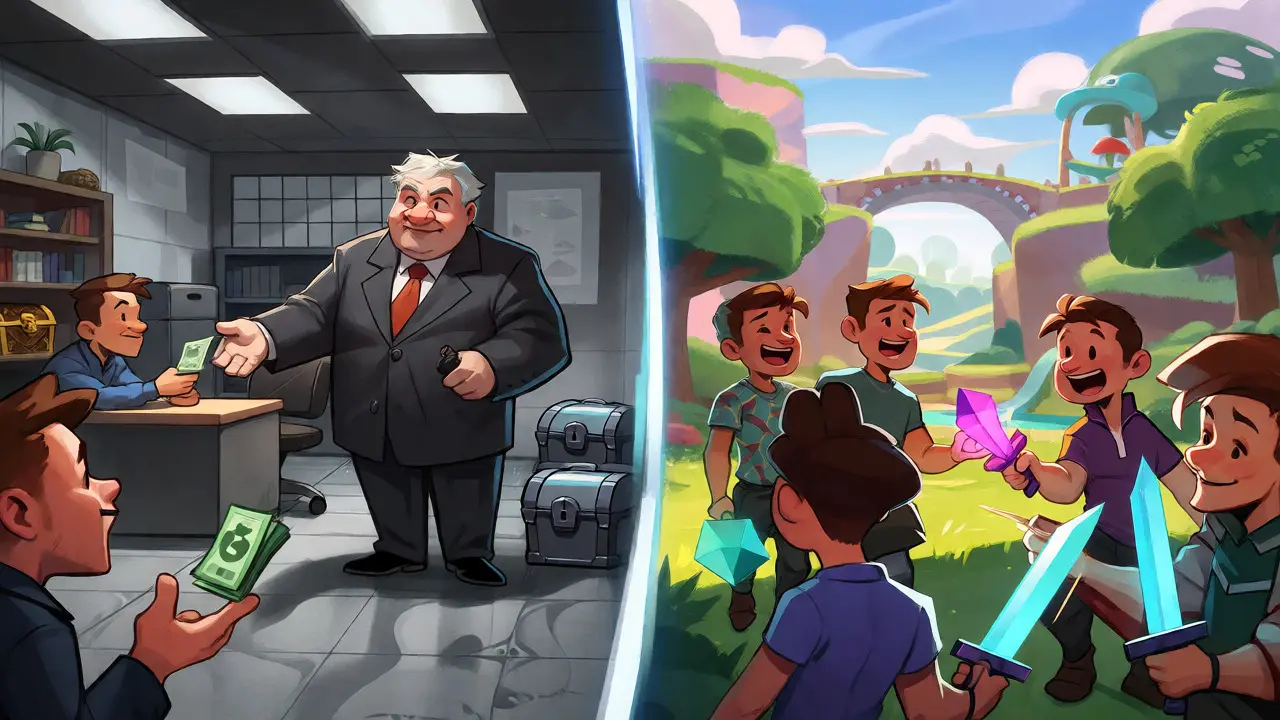
| Feature | Traditional Web2 Games | PLAYA3ULL Web3 Games |
|---|---|---|
| Asset Ownership | Studio owns everything; you rent access. | Player owns NFTs via blockchain. |
| Monetization | Pay-to-win, skins, battle passes. | Play-to-earn, asset trading, node rewards. |
| Infrastructure | Centralized servers (AWS/Azure). | Avalanche Subnet + Master Nodes. |
| Community Role | Consumers only. | Stakeholders with governance influence. |
This distinction matters because it changes the economic dynamic. In traditional games, every dollar you spend goes into the company’s pocket. In the PLAYA3ULL ecosystem, money circulates among players who trade assets. The company acts more like a platform provider than a gatekeeper. This aligns with their stated values of openness and independence, aiming to create a sustainable economy rather than a pump-and-dump scheme.
Getting Involved Today: Nodes and Community
So, the airdrop is over. What’s next for someone interested in joining now? The entry barrier has been lowered significantly thanks to their Node ownership opportunities. Currently, the listed Node Price is $0, allowing participants to earn $3ULL tokens daily through the Master Node Network. This is a clever way to decentralize the network further while rewarding early adopters who didn’t catch the airdrop. You don’t need expensive hardware; these nodes run efficiently on standard setups, making them accessible to regular users.
Beyond nodes, the community aspect is vital. With over 150,000 members on Discord, PLAYA3ULL operates with a remote-first culture described internally as "a family BBQ." Team members are encouraged to be themselves and speak openly. This cultural transparency often translates to better communication with users. If you’re looking to get involved, start by engaging in their Discord. It’s not just a support channel; it’s where design decisions are discussed and where players have actual input on future game features. The learning curve involves managing a cryptocurrency wallet capable of interacting with the Avalanche Subnet, but once you get past the initial setup, the experience mirrors traditional PC gaming quite closely.
Risks and Realities in the Web3 Gaming Sector
No discussion about crypto gaming would be complete without addressing the risks. While PLAYA3ULL’s use of Avalanche provides scalability, the sector remains volatile. Token prices can swing wildly based on broader market sentiment, not just game performance. Additionally, the complexity of managing NFTs and wallets can deter non-crypto-native gamers. There’s also the competition factor. Big names like Immutable X and Ronin Chain are vying for the same audience. PLAYA3ULL’s competitive advantage lies in its niche focus on high-quality PC titles and its proprietary infrastructure, but execution is key.
Furthermore, keep an eye on their development pace. The company has indicated ongoing commitment with copyright notices extending through 2025 and beyond, signaling long-term operational stability. They are also pioneering AI-driven tools to streamline game development, which could help them iterate faster than competitors stuck in legacy pipelines. However, always remember that in Web3, utility must eventually outweigh speculation. If the games aren’t fun enough to retain players after the initial token incentives fade, the ecosystem will struggle regardless of the underlying tech.
Frequently Asked Questions
Is the PLAYA3ULL airdrop still active?
No, the major "CMC and $3ULL Airdrop" campaign concluded on March 11, 2024. However, users can still participate in the ecosystem by running Master Nodes or playing available games to earn rewards.
What blockchain does PLAYA3ULL use?
PLAYA3ULL operates on an Avalanche Subnet. This provides high speed and low transaction fees specifically tailored for gaming applications, unlike general-purpose chains that can suffer from congestion.
Do I need to buy a node to play?
Not necessarily. While owning a node allows you to earn $3ULL tokens daily, many games are free-to-play. Nodes are primarily for those who want to contribute to network security and earn passive income.
How much did winners receive in the airdrop?
The total pool was 20 million $3ULL tokens distributed among 10,000 winners. On average, each winner received approximately 2,000 tokens, though exact amounts varied based on eligibility criteria and verification status.
Is PLAYA3ULL suitable for beginners?
It requires some familiarity with crypto wallets. However, the team provides extensive guides, and the Discord community is very helpful. Once you set up your wallet on the Avalanche Subnet, the gameplay feels similar to standard PC games.