
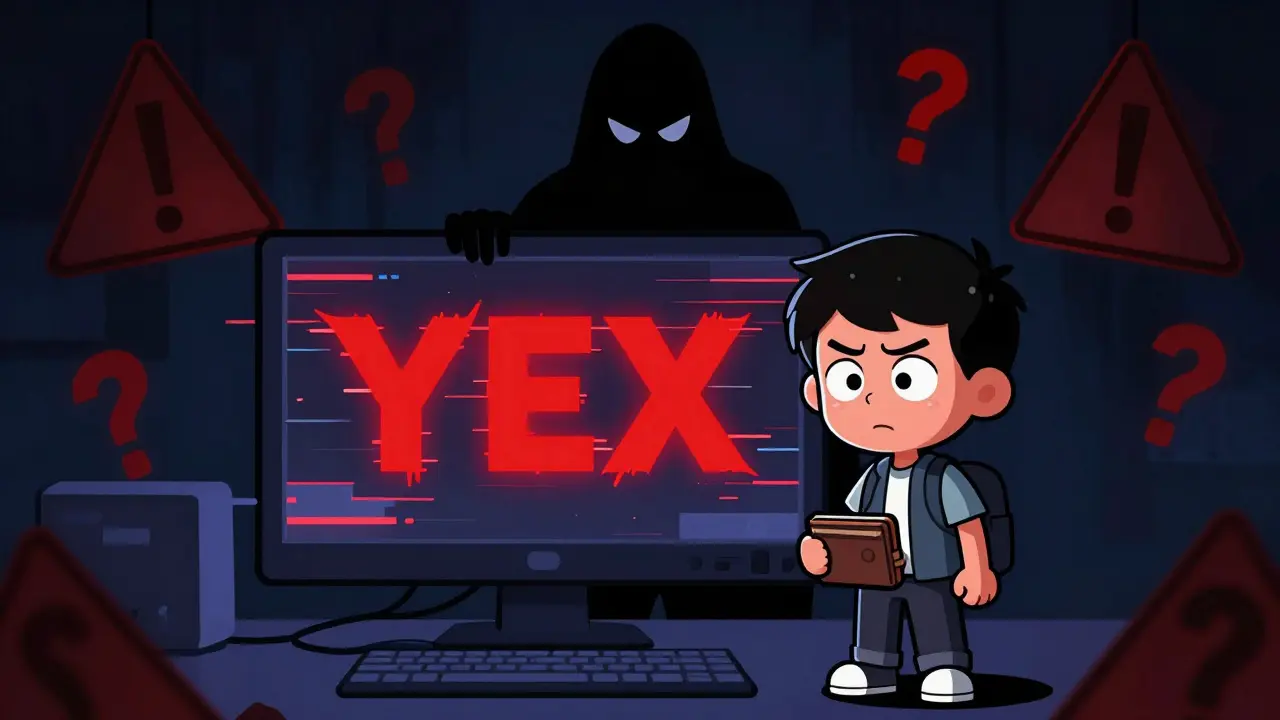
You found the name YEX is a cryptocurrency trading platform that has generated significant caution due to a lack of verifiable information and potential security risks. You probably saw an ad promising high returns or heard about it on social media. Before you send even one dollar to this platform, stop. In the world of crypto, silence from reputable sources is often louder than any marketing claim. After digging through industry databases, security reports, and user forums, here is the hard truth: there is almost no credible evidence that YEX is a legitimate, secure exchange.
This isn't just a negative review; it's a safety alert. When a platform doesn't appear in standard security audits, lacks transparent fee structures, and has zero presence on trusted review sites like Trustpilot or Reddit, the risk isn't just low-it's critical. This guide breaks down why YEX raises so many red flags and gives you the tools to spot similar scams before they drain your wallet.
The Silence Speaks Volumes: Why YEX Is Missing From Records
In the cryptocurrency industry, legitimacy is built on transparency. Established platforms like Binance, Coinbase, or Kraken are constantly discussed in news outlets, regulatory filings, and security audits. They publish their team members, their office locations, and their compliance records. Now, look at YEX. Where is the information?
I searched for YEX in every major directory and security database available in 2026. The result? Nothing. No official website with clear contact details, no registered company entity, no history of security audits. This absence is not accidental. It is a hallmark of what experts call "fake cryptocurrency exchanges." According to data from DataVisor, these fraudulent platforms often operate with minimal security measures, making it incredibly easy for operators to disappear with users' money.
Think about it. If YEX were a real, functioning business handling millions of dollars in assets, wouldn't it want to prove its worth? Legitimate exchanges spend fortunes on marketing their security features. They boast about their insurance policies and their regulatory licenses. YEX does none of this. Instead, it operates in the shadows. That shadow is where your money goes if you deposit funds.
| Feature | Legitimate Exchange (e.g., Coinbase, Kraken) | Suspicious Platform (e.g., YEX) |
|---|---|---|
| Regulatory Status | Licensed in multiple jurisdictions; public compliance reports | No verifiable license; anonymous ownership |
| Security Audits | Regular SOC-1/SOC-2 audits; public penetration test results | No audit history; no third-party verification |
| User Reviews | Thousands of reviews on Trustpilot, Reddit, and forums | Zero independent reviews; only paid ads or fake testimonials |
| Fund Storage | 98%+ in cold storage; insured against theft | Unknown; likely hot wallets vulnerable to hacking |
| Transparency | Clear fee schedules; published team bios | Vague fees; anonymous team; hidden terms |
Red Flags: How to Spot a Fake Exchange Immediately
If you are still considering using YEX, you need to understand the specific tactics scammers use. These platforms don't just rely on luck; they use psychological triggers to get you to act fast. Here are the most common signs that a crypto exchange is not trustworthy.
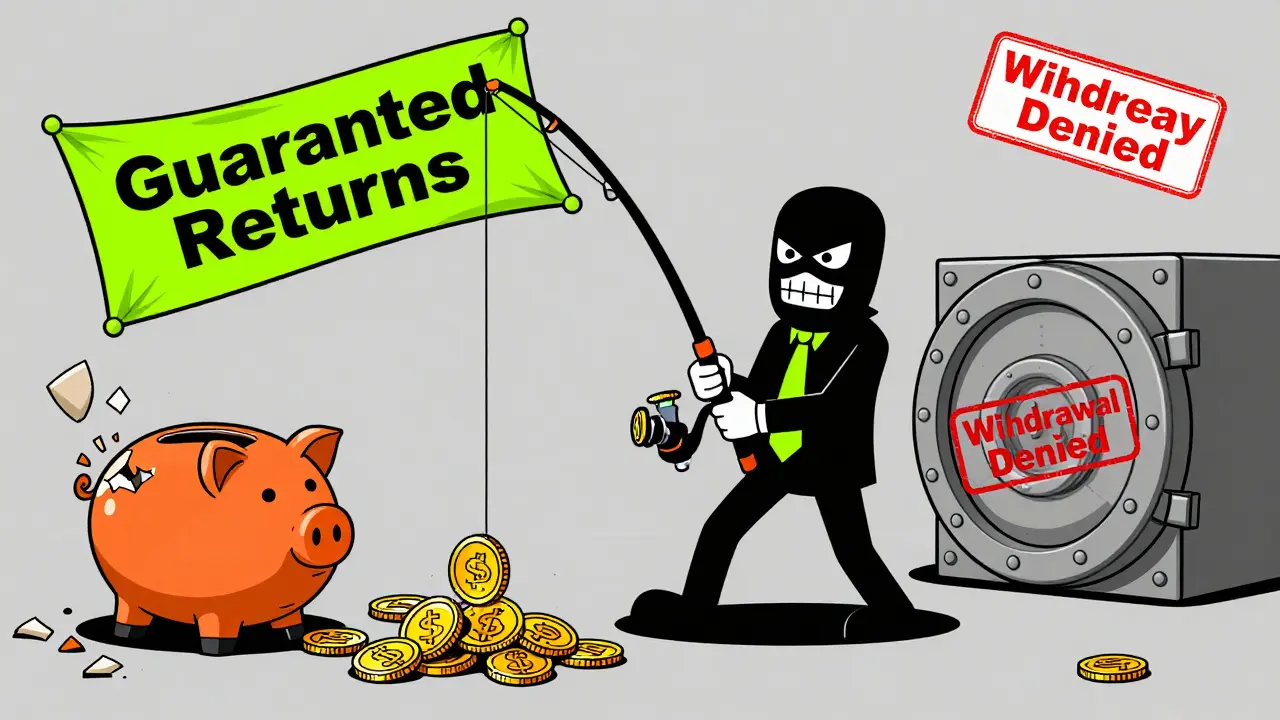
- Promises of Guaranteed High Returns: Crypto markets are volatile. Any platform claiming you will make 10%, 50%, or 100% returns with "zero risk" is lying. Legitimate exchanges do not guarantee profits; they provide tools for you to trade.
- Pressure to Deposit Quickly: Scammers create urgency. They might tell you that a "special offer" expires in an hour or that you need to verify your identity immediately to access funds. Real exchanges give you time to think.
- Poor Website Quality: Look closely at the YEX website. Does it have grammatical errors? Are the images generic stock photos? Is the URL slightly misspelled (e.g., yex-crypto.com instead of yex.com)? These are classic signs of a hastily built phishing site.
- Lack of Two-Factor Authentication (2FA): A legitimate exchange will force you to enable 2FA. If YEX allows you to trade without robust security like authenticator apps or hardware keys, it is not protecting your account.
- Withdrawal Issues: The ultimate test of an exchange is whether you can get your money out. Users of fake platforms often report being able to deposit but never withdraw. They are told to pay "taxes" or "fees" to release funds, which is another scam layer.
DataVisor’s research highlights that fake exchanges often have poor security measures or none at all. This means hackers can steal your funds, or worse, the operators themselves can shut down the site and vanish. Without multi-signature wallets or cold storage, your assets are sitting in a digital piggy bank with no lock.
What Legitimate Security Looks Like in 2026
To understand why YEX fails, you need to know what good looks like. In 2026, the bar for crypto exchange security is higher than ever. Here is what you should expect from any platform you trust with your money.
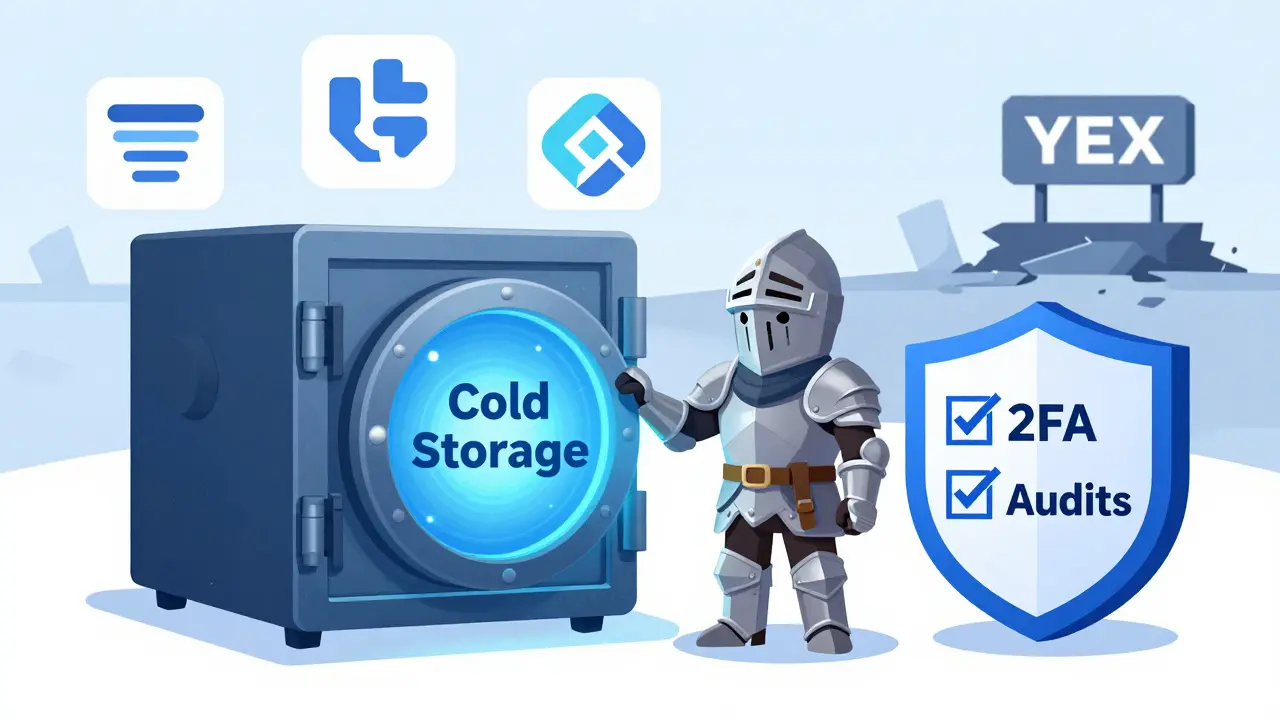
Cold Storage is Non-Negotiable. Reputable exchanges keep the vast majority of user funds in offline wallets. For example, Coinbase maintains 98% of customer funds in cold storage. This means even if their servers are hacked, the thieves cannot access the actual crypto. Shamla Tech notes that cold storage solutions are inaccessible via the internet, providing a critical layer of defense. If YEX does not explicitly state how much of your balance is in cold storage, assume it is all online and vulnerable.
Multi-Factor Authentication (MFA) and Multi-Signature Wallets. Chainup emphasizes that MFA is essential for account protection. But beyond just logging in, withdrawals should require additional steps. Hashcodex points out that multi-signature wallets require multiple private keys to authorize transactions. This prevents a single point of failure. If one key is compromised, the funds remain safe. YEX offers no evidence of implementing such sophisticated controls.
Regular Security Audits. Pixel Web Solutions explains that SOC-2 audits address IT security, ensuring the platform is secure against breaches. Major exchanges undergo these audits annually and publish the results. Antier Solutions notes that only 2% of existing crypto exchanges have registry lock security features, and less than 10% have DNSSEC protection. While these are advanced metrics, the basic requirement is a recent, independent security audit. YEX has none.
Insurance Coverage. Accidents happen. Legitimate exchanges mitigate this risk with insurance. Kraken, for instance, offers up to $250,000 in FDIC insurance for USD deposits and additional crypto insurance through Lloyd's of London. This provides a safety net for users. YEX offers no such protection. If YEX gets hacked, you lose everything, and there is no recourse.
The Human Cost: Real Risks of Using Unverified Platforms
It is easy to dismiss warnings as fear-mongering until you see the real-world impact. CipherTrace’s 2022 Cryptocurrency Crime Report revealed that crypto-related crimes reached $14 billion in 2021. A significant portion of this loss came from exchange hacks and fraudulent platforms. When you use an unverified exchange like YEX, you are not just risking a bad investment; you are becoming part of this statistic.
Consider the story of a user who deposited Bitcoin into a new, obscure exchange. The platform showed impressive gains on the dashboard. Excited, the user tried to withdraw. Suddenly, the account was frozen. Support demanded a "verification fee" of 0.5 BTC. The user paid, hoping to recover their funds. The next day, the support team asked for another fee for "network congestion." Eventually, the website went dark. The user lost their initial deposit plus the extra fees. This pattern is repeated thousands of times daily across fake exchanges.
Why does this happen? Because these platforms are designed to take money, not facilitate trade. They may use fake order books to show liquidity that doesn't exist. Your trades might not be executed at all; they are just numbers on a screen meant to encourage you to deposit more. Once you try to leave, the trap snaps shut.
How to Verify Any Crypto Exchange Before You Deposit
You don't have to take my word for it. You can perform your own due diligence. Here is a step-by-step checklist to verify any exchange, including checking if YEX passes the test.
- Check Regulatory Licenses: Search for the exchange’s name in government financial regulator databases. In the US, check the SEC or FinCEN registries. In Europe, look for MiCA compliance. If YEX is not listed, it is operating illegally in those jurisdictions.
- Search for Independent Reviews: Go to Trustpilot, Reddit, and Bitcointalk. Search for "YEX scam" or "YEX withdrawal issues." If there are no reviews, or only glowing five-star reviews with generic text, be suspicious. Real users complain when things go wrong. A perfect score is often a sign of bought reviews.
- Verify Contact Information: Look for a physical address and phone number. Use Google Maps to check if the address is a real office or a virtual mailbox. Try calling the number. If it goes to voicemail or a generic answering service, that is a red flag.
- Analyze the Team: Legitimate exchanges list their founders and executives with LinkedIn profiles. Can you find the CEO of YEX? Do they have a professional history in finance or tech? Anonymous teams are a major warning sign.
- Test Customer Support: Ask complex questions about fees, security, and withdrawal limits. See if the responses are helpful and specific. Scammers often use bots or vague answers to avoid committing to anything in writing.
- Start Small: If you still want to proceed, deposit the minimum amount possible. Try to withdraw it immediately. If you encounter delays, fees, or excuses, close the account and move your funds elsewhere.
Shamla Tech advises users to "be cautious when clicking on links or downloading attachments from unknown sources" and to "always verify the authenticity of emails and websites." Apply this mindset to YEX. Do not trust the source that referred you to the platform; trust the evidence.
Better Alternatives: Safe Exchanges for 2026
There is no reason to use a risky platform like YEX when secure, regulated alternatives exist. Depending on your needs, consider these established options:
- For Beginners: Coinbase is a highly regulated US-based exchange known for its user-friendly interface and strong security practices. It is publicly traded, meaning it must adhere to strict financial reporting standards. It offers insurance on fiat holdings and keeps most crypto in cold storage.
- For Advanced Traders: Kraken is a long-standing exchange offering deep liquidity, low fees, and robust security features including multi-signature wallets. Kraken has never been hacked and is known for its transparent proof-of-reserves.
- For Global Users: Binance is the largest crypto exchange by volume, offering a wide range of coins and trading pairs. While it faces regulatory scrutiny in some regions, it remains a dominant player with extensive security infrastructure and insurance funds.
These platforms have spent years building trust. They have survived market crashes, regulatory changes, and cyber attacks. They invest heavily in security because their reputation depends on it. YEX has none of this history. Why gamble with your savings when safe options are free to join?
Protecting Yourself: Essential Security Habits
Even with a legitimate exchange, you must protect your own accounts. Security is a shared responsibility. Here are non-negotiable habits for every crypto user.
Enable Two-Factor Authentication (2FA). Never use SMS-based 2FA if you can avoid it, as SIM swapping is a real threat. Use an authenticator app like Google Authenticator or Authy, or better yet, a hardware key like YubiKey. This adds a layer of security that cannot be phished easily.
Use Strong, Unique Passwords. Do not reuse passwords from other sites. Use a password manager to generate complex, random passwords for each exchange. A weak password is the easiest way for hackers to gain access.
Be Wary of Phishing Attempts. Scammers send emails that look like they come from your exchange, asking you to update your info. Always check the sender’s email address and hover over links to see the actual URL. Never click on links in unsolicited emails. Go directly to the exchange’s website by typing the address manually.
Store Private Keys Securely. If you hold crypto in a personal wallet, your private keys are your money. Never share them. Store them offline in a hardware wallet or write them down on paper and keep them in a safe place. Digital copies of keys are vulnerable to malware.
Monitor Account Activity. Regularly check your transaction history and login attempts. Set up alerts for any withdrawals. If you see something suspicious, contact support immediately and change your password.
Educating yourself is the best defense. As Shamla Tech suggests, "Educate Yourself" about security threats. The more you know, the harder it is for scammers to trick you.
Is YEX a legitimate crypto exchange?
Based on current information in 2026, YEX appears to be illegitimate. There is no verifiable regulatory license, no independent security audits, and no credible user reviews. The lack of transparency and presence in authoritative sources strongly suggests it is a fake or high-risk platform.
Can I withdraw money from YEX?
Users of similar fake exchanges often face severe difficulties withdrawing funds. Common tactics include demanding additional fees, freezing accounts, or simply disappearing. If YEX follows this pattern, you may lose your entire deposit. It is highly recommended not to deposit funds.
How can I tell if a crypto exchange is a scam?
Look for red flags such as guaranteed high returns, anonymous ownership, lack of regulatory licenses, poor website quality, and absence of independent reviews. Legitimate exchanges are transparent about their security measures, fees, and team members.
What security features should a safe exchange have?
A safe exchange should offer cold storage for the majority of funds, multi-factor authentication (MFA), regular third-party security audits (like SOC-2), insurance coverage for assets, and clear, transparent fee structures. It should also have a verified physical address and responsive customer support.
Are there any positive reviews for YEX?
Any positive reviews found for YEX are likely fake or paid for. Legitimate platforms have mixed reviews on independent sites like Trustpilot and Reddit, reflecting real user experiences. The complete absence of organic discussion or complaints is itself a warning sign.
What should I do if I already deposited money into YEX?
If you have deposited funds, attempt to withdraw them immediately. Do not pay any additional fees requested by support. Document all communications and transactions. If you cannot withdraw, report the platform to local financial authorities and consider filing a police report for fraud.


Brad Ranks
Wow, this is exactly the kind of drama I live for. The silence from YEX is deafening, isn't it? It’s like they’re playing hide and seek with our money but forgot to tell us where they hid it. I mean, come on, if you’re running a legit business, you don’t just vanish into thin air without leaving a single trace. It’s almost theatrical in its incompetence.