

State Channel Cost Calculator
Calculate Your Savings
State channels drastically reduce transaction costs for frequent payments. Calculate how much you could save by moving from on-chain transactions to state channels.
Results
- State channels require opening/closing channels with one-time costs (not shown in this calculation)
- Not all transactions can be processed via state channels (e.g., 31.7% fail due to poor routing on Lightning Network)
- Requires locking up funds in channels (only about 35% actively used)
Imagine sending a coffee payment in under a second, paying less than a penny in fees, and never touching the blockchain. That’s what state channels do. They’re not magic - they’re smart contracts, cryptography, and clever protocol design working together to make blockchains faster, cheaper, and more usable. But they’re not a fix for everything. If you’re trying to build a DeFi app that swaps tokens, interacts with lending pools, and tracks NFTs in real time, state channels won’t help you. But if you’re paying for digital content, topping up a prepaid card, or sending small amounts to the same person every day? They’re the best tool you’ve got.
How State Channels Actually Work
State channels aren’t complicated once you break them down. Think of them like a private conversation between two people who’ve agreed to settle their bills at the end of the month. Instead of going to the bank every time one owes the other, they just write down who owes what on a piece of paper. Each time they trade, they sign a new version of that paper. At the end, they take the final signed version to the bank, and the bank gives out the money based on that. On blockchain, that “piece of paper” is a signed state update. It shows the current balance between two parties. Every new transaction creates a new version, and each one invalidates the last. Only the final one gets submitted to the blockchain. The rest? They stay off-chain. That’s why you can do thousands of transactions per second between two people - no network congestion, no gas fees. The process has three clear steps:- Opening the channel: Both parties lock funds into a multisig smart contract on-chain. For Bitcoin’s Lightning Network, this is a 2-of-2 signature setup - both people must sign to move funds out. On Ethereum, it’s usually a channel manager contract that defines rules for disputes.
- Off-chain transactions: Participants exchange cryptographically signed updates. These updates are instant, free, and private. No one else on the network sees them. Each update is a new snapshot of who owns what.
- Settling the channel: When done, either party can close the channel by submitting the latest signed state to the blockchain. The contract releases funds according to that final balance. If someone tries to cheat by submitting an old state, the other party has a window (usually 1,000-2,000 blocks on Ethereum) to prove fraud and claim all the funds.
Lightning Network vs. Raiden Network
The two biggest state channel implementations today are Bitcoin’s Lightning Network and Ethereum’s Raiden Network. They serve similar purposes but were built for different blockchains and have different trade-offs.| Feature | Lightning Network (Bitcoin) | Raiden Network (Ethereum) |
|---|---|---|
| Launch Year | 2015 (whitepaper), 2018 (mainnet) | 2017 (alpha), 2022 (v0.10.1) |
| Primary Use Case | Micropayments, remittances, digital goods | Gaming microtransactions, real-time app payments |
| Transaction Speed | <100ms | <200ms |
| Fee per Transaction | ~$0.0001 | ~$0.0002 |
| Channel Capacity (Oct 2023) | 4,912 BTC (~$158.7M) | ~12,000 ETH (~$23M) |
| Public Nodes | 16,842 | ~1,200 |
| Developer Tools | LND (Go), c-lightning (C), Eclair (Scala) | Python, Solidity, custom smart contracts |
| Documentation Quality | 4.3/5 (BOLT specs) | 3.6/5 (API changes often unannounced) |
| Community Size | 1,247 GitHub contributors, 14,382 Slack members | 389 GitHub contributors, 2,145 Discord members |
Where State Channels Win - and Where They Fail
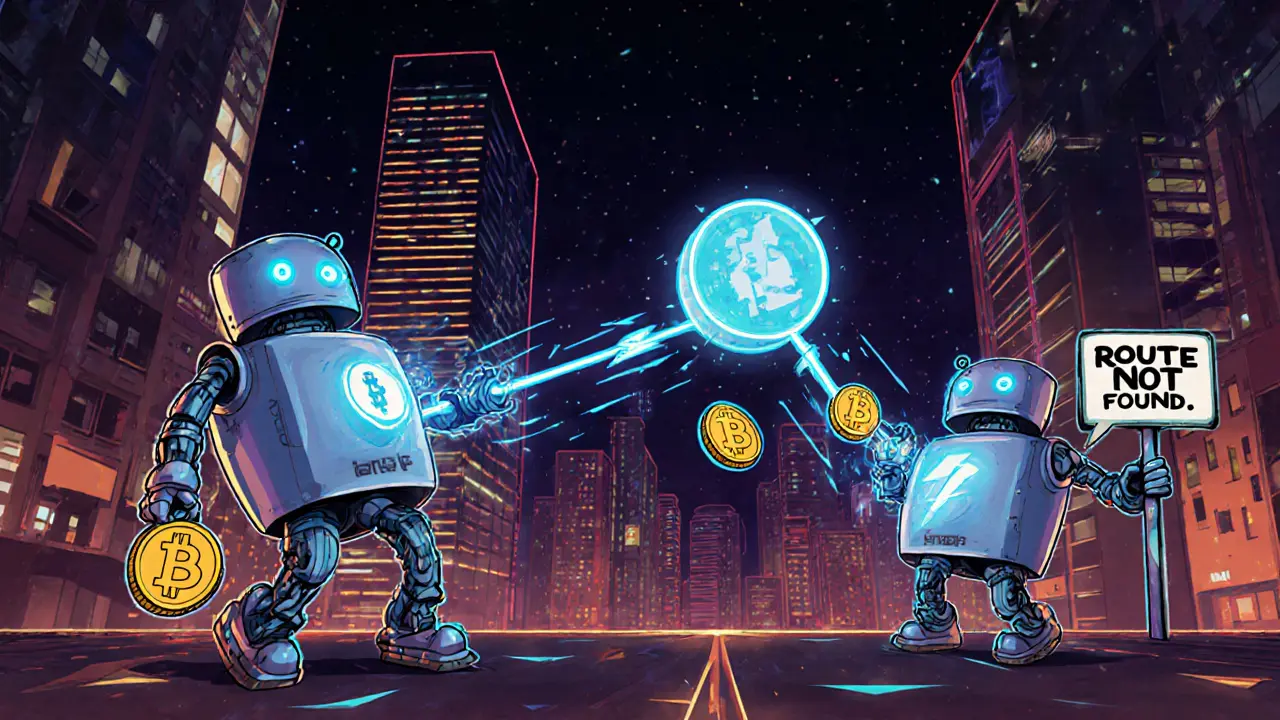
State channels are unbeatable in one scenario: high-frequency, bilateral transactions. If you’re a utility company paying a smart meter every hour, or a game developer handling 10,000 microtransactions per minute, state channels cut costs by 99.8% compared to on-chain payments. Bitrefill’s case study shows they went from $2.17 per transaction to $0.003 - that’s not optimization, that’s a revolution. They’re also private. Unlike rollups, which publish compressed transaction data on-chain, state channels keep everything between the two parties. No one can see your payment history unless you tell them. But here’s where they break down:- You need a direct channel - or a trusted route - to send money. If you want to pay someone you’ve never transacted with, you can’t just send it. You need a path through intermediaries. Lightning’s routing success rate for small payments is only 68.3%. That means over 1 in 3 payments fail because no good route exists.
- You have to lock up capital. Every channel requires you to put your funds on hold. Research shows only about 35% of locked capital is actively used at any time. That’s a huge inefficiency compared to rollups, which use nearly 100% of locked funds.
- It’s not composable. You can’t connect a state channel to a DeFi protocol. You can’t lend your channel balance, borrow against it, or trade it. That’s why DeFi apps moved to rollups - they can interact with each other.
- It’s hard to manage. Users report spending hours a week rebalancing channels. One Reddit user said he spent 2 hours a week just keeping his Lightning channels open. That’s not user-friendly.
Real User Experiences
People who use state channels every day have strong opinions. On Reddit, u/LightningUser2021 said he made 1,247 coffee purchases over 11 months - each for 2 to 5 cents - with no issues. “It’s like cash, but digital,” he wrote. But he also admitted: “I spend more time managing channels than I do spending.” A developer on r/ethdev said his team built a game with Raiden and slashed transaction costs by 99%. But it added three months to their timeline. “We had to write our own channel manager. No one else had done it before. Documentation was outdated.” Enterprise users are happier. Bitrefill’s numbers speak for themselves. But even they see limits. Their biggest problem? “People don’t understand why their payment failed. They think it’s broken. It’s just a bad route.” And then there’s the surveillance risk. Dr. Sarah Jamie Lewis pointed out at DEF CON that even though transactions are private, the pattern of who’s sending money to whom can be analyzed. If you’re constantly sending small amounts to a specific node, someone watching the network can guess what you’re doing - even if they can’t see the amount or the recipient’s identity.The Future: Hybrid Solutions and Virtual Channels
The field isn’t standing still. New ideas are emerging to fix state channels’ biggest flaws. Lightning Labs released Lightning Loop v2 in August 2023. It lets users automatically rebalance channels without trusting a third party. It cut rebalancing costs by 63%. That’s a big win. Connext’s NXTP protocol (v4.1.0, April 2023) introduced “state channel hubs.” Instead of needing direct channels between every pair of users, you connect to a hub. The hub routes payments for you. Routing success jumped from 68% to 89.4% for small payments. Even more exciting is MIT’s research on “virtual channels.” Imagine if you could send money to someone without ever opening a direct channel with them. Virtual channels let you use existing channels in the network as if they were yours. This could solve the network effects problem - the reason state channels struggle to grow beyond early adopters. But here’s the hard truth: market data doesn’t lie. Messari’s Q3 2023 report predicts rollups will capture 78-85% of the layer-2 market by 2027. Why? Because they’re easier to build on, they’re composable, and they don’t require users to manage channels. State channels won’t disappear. They’ll just become niche tools - like a scalpel instead of a hammer. They’re perfect for micropayments, recurring billing, and private bilateral transfers. But for anything complex? Rollups are the future.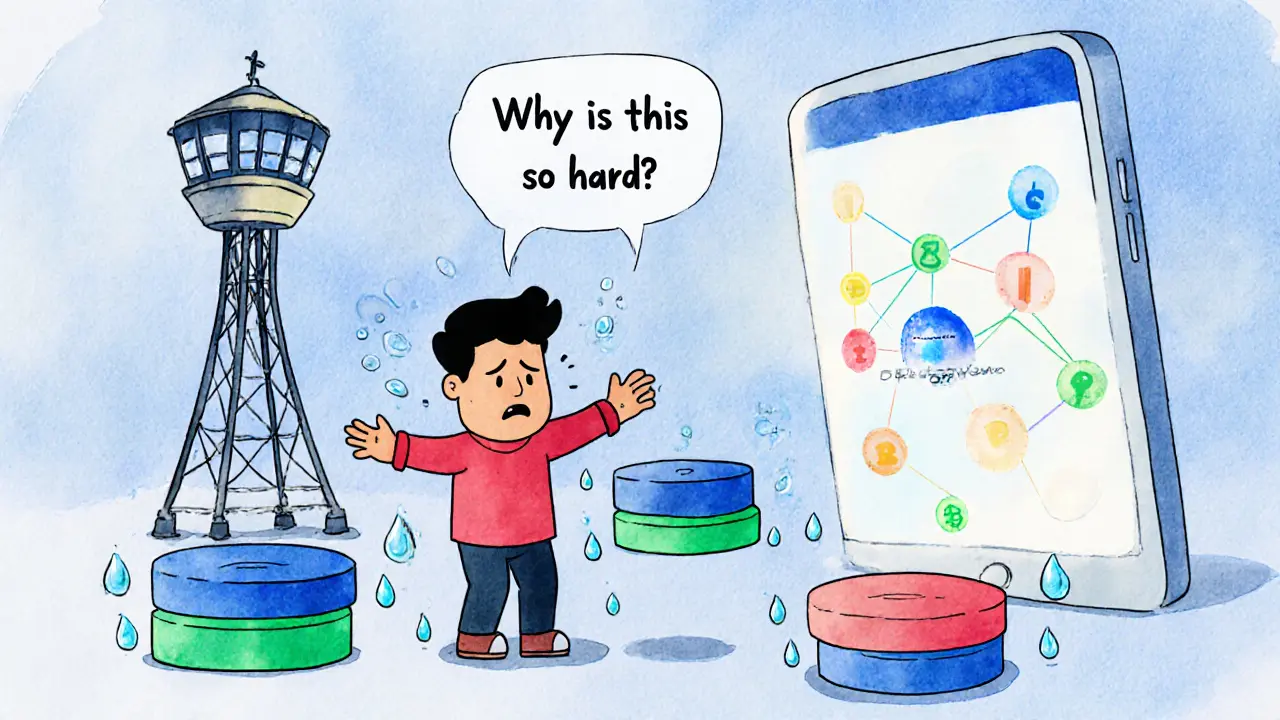
Should You Use Them?
Ask yourself:- Are you sending small, frequent payments to the same people or services?
- Do you need privacy - no one else should see your transaction history?
- Are you willing to manage channels, rebalance funds, and handle occasional payment failures?
Are state channels the same as sidechains?
No. Sidechains are separate blockchains that connect to the main chain through a two-way peg. They have their own consensus, validators, and rules. State channels are not blockchains - they’re off-chain agreements between two or more parties. All transactions happen privately, and only the opening and closing states are recorded on-chain. Sidechains process transactions on their own chain; state channels avoid the chain entirely until settlement.
Can I use state channels on my phone?
Yes, but with caveats. Wallets like Phoenix (for Bitcoin) and Eclair Mobile let you open and manage Lightning channels on Android and iOS. But mobile apps can close channels unexpectedly during updates or when the phone goes to sleep. Users report losing funds or having to manually reopen channels after app crashes. It works, but it’s not as reliable as desktop clients.
What happens if one party goes offline?
If one party disappears, the other can still close the channel and claim their funds - as long as they submit the latest signed state before the dispute window closes. But if they don’t monitor the blockchain during that window, they risk losing funds if the offline party submits an old, fraudulent state. That’s why some wallets now offer “watchtowers” - third-party services that monitor your channels for you and automatically submit the correct state if needed.
Do state channels work across different blockchains?
Not natively. Lightning works on Bitcoin, Raiden on Ethereum. But protocols like Connext and Hop are building bridges between them. These allow you to send a payment from a Lightning channel to a rollup on Ethereum, for example. But it’s still early, and each bridge adds complexity and risk.
Are state channels regulated?
Yes, increasingly so. The SEC’s 2023 enforcement action against Zap, a Lightning-enabled exchange, set a precedent: if you facilitate off-chain transactions between users, you may be classified as a money transmitter. This means operators of channel hubs, routing services, or payment processors may need licenses. That’s a major hurdle for startups trying to build on state channels.
Next Steps
If you’re a developer and want to try state channels:- Start with Lightning Network. Install LND or c-lightning on a testnet.
- Open a channel with a friend using test BTC.
- Send a few microtransactions. Watch how the signed state updates work.
- Try routing a payment through a third node. See how HTLCs make it work.
- Download Phoenix Wallet (Android/iOS) or BlueWallet.
- Buy a small amount of BTC and open a channel.
- Use it to buy a coffee from a Lightning-enabled store.
- Don’t worry if a payment fails - it’s normal. Try again later.