

Polygon vs Ethereum Transaction Fee Calculator
Transaction Type
Fast transactions (2-3 seconds) with fees under $0.10
Slow transactions (15-60+ seconds) with fees $10-$50
Savings
0% of your transaction cost
Trading crypto on Ethereum can cost you $20 in gas fees for a simple swap. On SushiSwap on Polygon, that same trade costs less than a dollar-sometimes just 10 cents. If you’ve been holding off on DeFi because of high fees and slow confirmations, Polygon changed everything. And SushiSwap is one of the most powerful platforms built on it.
What Is SushiSwap on Polygon?
SushiSwap started in 2020 as a fork of Uniswap, created by anonymous developers who wanted to give users more than just token swaps. They added SUSHI tokens-rewarding liquidity providers and letting them vote on platform changes. By May 2021, they launched on Polygon, a Layer 2 solution that cuts Ethereum’s fees by 99% and speeds up transactions from minutes to seconds. On Polygon, SushiSwap isn’t just a swap tool. It’s a full DeFi hub. You can trade tokens, stake SUSHI for passive income, lend and borrow crypto, and join yield farms-all without handing over your keys to a central company. Your wallet stays in control. That’s the whole point of decentralized finance.How It Works: No Order Books, Just Pools
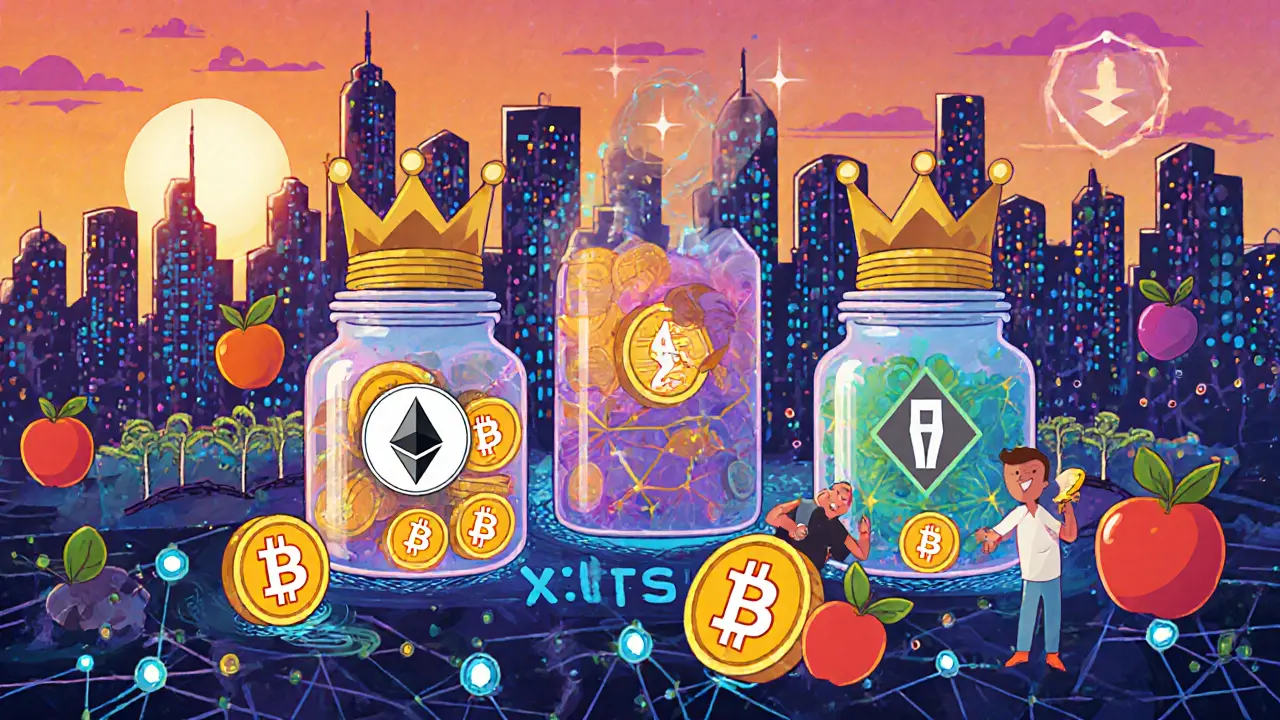
Unlike centralized exchanges like Binance or Coinbase, SushiSwap doesn’t match buyers and sellers. Instead, it uses liquidity pools. Imagine a jar filled with ETH and USDC. Anyone can add money to that jar. In return, they get a share of the trading fees generated every time someone swaps ETH for USDC-or vice versa. When you trade on SushiSwap, you’re not buying from another person. You’re trading against the pool. The price shifts slightly based on supply and demand, but it’s always fair and automated. Smart contracts handle everything. No middlemen. No delays. No paperwork. Polygon makes this even better. On Ethereum, a single swap can take 15-60 seconds and cost $10-$50 during busy times. On Polygon? You’ll see your trade confirmed in 2-3 seconds, with fees under $0.10. That’s why over 30-40% of SushiSwap’s total volume now flows through Polygon.Why Choose SushiSwap Over Other Polygon DEXes?
Polygon has its own native DEXes like QuickSwap. So why pick SushiSwap? First, it’s not just a swap tool. QuickSwap is focused on fast, cheap trading. SushiSwap gives you more:- Staking: Lock your SUSHI tokens to earn xSUSHI, which gives you a share of platform fees and voting power.
- Yield Farms: Deposit LP tokens (from adding liquidity) into farms to earn extra rewards in SUSHI or other tokens.
- Lending & Borrowing: Use Kashi lending markets to leverage positions or borrow against your crypto holdings.
- Multi-chain: You can bridge assets from Ethereum, BSC, or Avalanche directly into Polygon and trade them here.
Real Fees and Speeds: Polygon vs Ethereum
Here’s what you actually pay on Polygon versus Ethereum:| Feature | Polygon (SushiSwap) | Ethereum (SushiSwap) |
|---|---|---|
| Average Swap Fee | $0.01-$0.10 | $10-$50 |
| Transaction Speed | 2-3 seconds | 15-60+ seconds |
| Liquidity Pool Deposit | $0.05-$0.30 | $15-$80 |
| Staking/Unstaking | $0.02-$0.15 | $5-$25 |
| Bridge (Ethereum → Polygon) | $0.10-$0.50 | $10-$40 |
That difference isn’t theoretical. In October 2025, a user on Reddit swapped 500 USDC for MATIC on Polygon. Total cost: $0.08. On Ethereum, the same trade during peak hours would’ve cost $23. That’s a 28,750% savings.
Tokenomics: SUSHI Isn’t Just a Utility Token
SUSHI is the backbone. As of November 2025, it trades at $2.19 with a $574 million market cap. It’s not a pump-and-dump coin-it has real utility.- Governance: Hold SUSHI to vote on protocol upgrades, fee splits, or new features.
- Staking: Convert SUSHI to xSUSHI. You earn a portion of trading fees and get boosted rewards in yield farms.
- Yield Boosting: xSUSHI holders get higher APYs in farms-sometimes 2-3x more than regular LPs.
- Token Burns: A portion of trading fees is used to buy back and burn SUSHI, reducing supply over time.
What Users Actually Say
Reddit and Discord are full of real stories. Here’s what stands out:- Pros: “I moved all my trading from Binance to SushiSwap on Polygon. My fees dropped from $500/month to $15.” - u/DeFiNewbie2025
- Pros: “The bridge from Ethereum works. Took 8 hours, but I got my ETH safely converted to MATIC.” - u/LiquidityProvider99
- Cons: “I added liquidity to a new token pool. Price dropped 30%. Lost $800 because of impermanent loss. Didn’t know it could happen.” - u/CryptoNoob_2024
- Cons: “The interface is overwhelming. 10 tabs, 5 different yield options. Took me 3 weeks to understand what I was doing.” - u/DeFiStudent
How to Get Started
You need three things:- A wallet: MetaMask is the most popular. Trust Wallet and Coinbase Wallet also work.
- Polygon network added: In MetaMask, add Polygon’s RPC:
https://polygon-rpc.com. Chain ID: 137. - Some MATIC: You need MATIC to pay for gas. Buy $5 worth on Binance or Coinbase, then bridge it to Polygon.

Common Mistakes to Avoid
Most losses on SushiSwap come from simple errors:- Ignoring slippage: Set slippage at 0.5-1% for stablecoins. For new tokens, go up to 3-5%. Too low? Your trade fails. Too high? You get ripped off.
- Adding liquidity to risky tokens: A new token with 10x APY? It might be a rug pull. Check the team, audit reports, and liquidity lock status.
- Not understanding impermanent loss: If the price of your two tokens diverges, you lose value compared to just holding them. Use tools like DeFiLlama to estimate potential losses.
- Forgetting to claim rewards: Yield farms don’t auto-claim. You have to hit “harvest” every few days or you miss out.
Is SushiSwap on Polygon Safe?
The code has been audited multiple times by firms like CertiK and PeckShield. No major exploits in 2024 or 2025. But safety isn’t just about audits-it’s about you. Never share your private key. Never click “approve” on a site you don’t trust. Never use a wallet you don’t control. And don’t assume “DeFi is safe.” It’s not. It’s permissionless. That means anyone can build a token that looks real but drains your wallet. The platform itself is solid. The risk is in the tokens you trade and the liquidity pools you join.What’s Next for SushiSwap?
In late 2024, SushiSwap launched V2 features on Polygon: concentrated liquidity (like Uniswap V3). That means you can set price ranges for your liquidity, earning more fees when prices stay in your range. In 2025, they’re testing zkEVM integration. That could slash fees even further and add privacy features. If it works, SushiSwap could become the dominant DeFi hub on Polygon. But competition is fierce. QuickSwap is improving fast. Uniswap V3 on Polygon has more TVL. And centralized exchanges are adding DeFi-like features-like Binance’s “Earn” section that lets you stake crypto with one click. SushiSwap’s future depends on two things: keeping fees low, and keeping users engaged with real rewards-not just hype.Final Verdict: Who Should Use It?
Use SushiSwap on Polygon if:- You want to trade crypto with fees under $0.10
- You’re tired of waiting 30 seconds for a transaction
- You want to earn passive income from your crypto holdings
- You’re comfortable with self-custody and understand basic DeFi risks
- You want a simple app like Coinbase
- You don’t want to learn how to use a wallet or bridge assets
- You expect customer support to fix your mistakes
- You’re looking for a short-term pump
Is SushiSwap on Polygon safe to use?
Yes, the platform’s smart contracts have been audited multiple times and have had no major exploits since 2022. However, safety depends on you. Never approve unknown tokens, never share your private key, and avoid high-risk liquidity pools. The platform is secure-your choices determine your risk.
How do I get SUSHI tokens?
You can buy SUSHI directly on SushiSwap by swapping other tokens like USDC, MATIC, or ETH. You can also earn it by providing liquidity to SushiSwap pools or by staking LP tokens in yield farms. The easiest way for new users is to buy it on a centralized exchange like Binance or Coinbase and bridge it to Polygon using the SushiSwap bridge.
What’s the difference between SUSHI and xSUSHI?
SUSHI is the native governance token. When you stake SUSHI, you receive xSUSHI, which represents your staked position. xSUSHI gives you a share of platform fees and boosts your rewards in yield farms. You can’t trade xSUSHI directly-it’s a staking receipt, not a tradable asset. To get SUSHI back, you unstake xSUSHI.
Can I lose money using SushiSwap?
Yes. You can lose money in three ways: impermanent loss (if token prices move sharply), rug pulls (if you join a scam pool), or smart contract bugs (rare, but possible). Always research tokens before adding liquidity. Use tools like DeFiLlama to check pool safety scores. Never invest more than you can afford to lose.
Why is SushiSwap on Polygon better than on Ethereum?
Polygon offers 100-1000x lower fees and 10x faster transactions than Ethereum. On Ethereum, a simple swap can cost $20 and take minutes. On Polygon, it costs pennies and finishes in seconds. For active traders and yield farmers, Polygon is the only practical choice. SushiSwap’s multi-chain design lets you use the same wallet and strategy across networks-but Polygon is where most users operate today.
Does SushiSwap have a mobile app?
No, SushiSwap doesn’t have an official mobile app. You access it through a browser on your phone using a Web3 wallet like MetaMask. The interface works fine on mobile, but it’s not optimized for touch. For complex tasks like staking or farming, it’s better to use a desktop browser.
How long does it take to bridge assets to Polygon?
Bridging from Ethereum to Polygon typically takes 7-20 minutes. The bridge uses a security mechanism that requires a 7-day waiting period if you want to withdraw back to Ethereum. This is a safety feature to prevent exploits. For daily trading, you won’t need to bridge back often.
What’s the best way to learn how to use SushiSwap?
Start with the official Sushi Academy on their website-it’s free and covers the basics. Then join the SushiSwap Discord and ask questions. Watch YouTube tutorials from trusted creators like Coin Bureau or Defi Dad. Practice with small amounts first. Don’t rush. DeFi is powerful, but mistakes are expensive.


Kristi Malicsi
It's wild how we treat DeFi like it's magic when it's just math and incentives
People act like not paying $20 in gas is a revolution when really it's just moving from one system to another
The real question isn't fees-it's whether you're actually gaining anything beyond cheaper transactions
We keep chasing efficiency while ignoring the core issue: most of us don't know what we're even doing
And yet everyone's convinced they're a DeFi guru after one successful swap
It's like buying a Ferrari and then driving it to the grocery store
Just because you can doesn't mean you should
And don't get me started on yield farms-people treat them like free money machines
Meanwhile, half the liquidity pools are just honeypots with fancy UIs
But hey, at least the fees are low, right?