
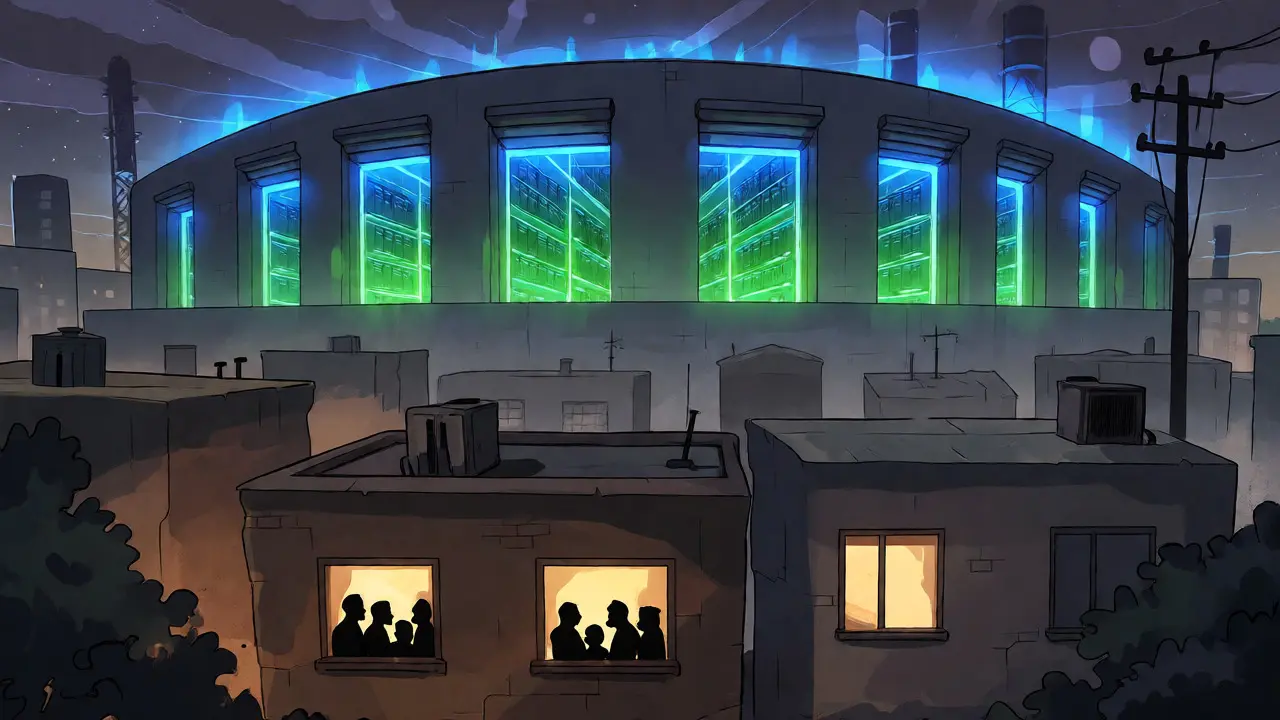
Imagine living in a country where your lights go out for hours every day because the government is running massive computer servers to mine digital gold. That is the reality for many Iranians today. While ordinary citizens struggle with rolling blackouts and rising utility bills, a specific group has quietly taken over the nation's electricity grid. This isn't just about tech enthusiasts setting up rigs in their basements. It is a strategic operation run by the Islamic Revolutionary Guard Corps (IRGC), which has turned cryptocurrency mining into a tool for bypassing international sanctions and consolidating economic power.
The story of crypto in Iran is not one of decentralized freedom. It is a tale of state control. When global sanctions cut off Iran from traditional banking channels, the regime looked for alternatives. Cryptocurrency offered a way to move value without leaving a clear audit trail in Western banks. But instead of letting the market decide who mines Bitcoin, the state stepped in. Today, a significant portion of Iran’s mining capacity is controlled by entities linked to the Supreme Leader and the military-industrial complex, creating a two-tiered system that favors the powerful while punishing the public.
The Rise of the State-Backed Mining Cartel
By 2019 and 2020, reports began surfacing that the IRGC had made deep inroads into the cryptocurrency sector. This wasn't accidental. Under directives from Supreme Leader Ali Khamenei, the IRGC established large-scale mining farms to compensate for losses in dollar revenue caused by sanctions. These operations were often structured as joint ventures with foreign partners, particularly Chinese firms, leveraging Iran’s extremely low electricity prices to maximize profit margins.
One prominent example is the 175-megawatt Bitcoin mining farm in Rafsanjan, Kerman Province. Nominally a joint venture between an IRGC-affiliated enterprise and foreign investors, this facility operates with minimal oversight from civilian authorities. Because it sits within special economic zones or military bases, it enjoys exclusive access to subsidized power. This setup allows the cartel to operate with a veneer of legitimacy while effectively commandeering national resources.
| Feature | IRGC/State-Linked Miners | Private Licensed Miners | Unlicensed Private Miners |
|---|---|---|---|
| Electricity Cost | Subsidized or effectively free; often unpaid | High industrial tariffs | Risk of theft charges; high risk |
| Regulatory Oversight | Minimal; internal military/bonyad rules | Strict Ministry of Industry compliance | None until caught |
| Sales Channel | Direct to Central Bank or offshore exchanges | Mandatory sale to Central Bank of Iran | Black market or P2P networks |
| Security | Armed protection; political immunity | Vulnerable to policy changes | Vulnerable to raids and confiscation |
Energy Theft and the Civilian Impact
The most visible consequence of this unchecked expansion is the energy crisis. Industrial-scale Bitcoin farms use Application-Specific Integrated Circuit (ASIC) miners that consume electricity on a massive scale. In 2022, the Iranian parliament passed legislation allowing the military to establish private power plants and transmission lines. This legal shift enabled the IRGC to redirect public electricity-originally intended for cities and industries-toward their secret mining farms.
Ali Abadi, Iran’s Energy Minister and a former IRGC commander, famously described unauthorized crypto mining as "putting a hand in others' pockets" and called it "an ugly and unpleasant theft." His comments highlight the irony: a former member of the very organization driving the demand acknowledged the strain on the grid. For regular Iranians, this means frequent power cuts during peak summer heat or winter cold, while the lights stay on at the mining facilities.
Estimates suggest that well over half of all mining hardware in Iran is operated by state-related entities. With approximately 180,000 active devices nationwide, around 80,000 are in private hands, but the remaining bulk falls under the control of quasi-state organizations like Astan Quds Razavi, a massive religious foundation supervised by the Supreme Leader. This concentration of power creates a de facto monopoly, where the regime profits from national resources while civilians bear the cost.
Sanctions Evasion Through Blockchain
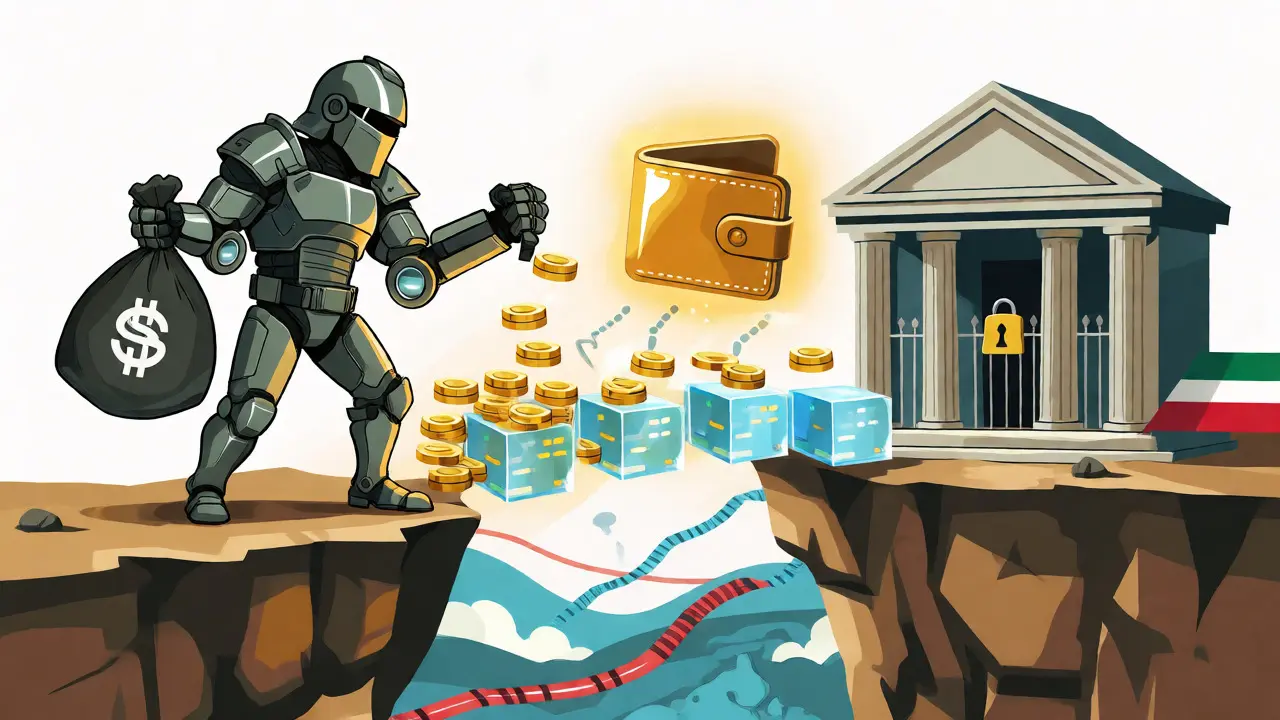
Why does the IRGC care so much about Bitcoin? The answer lies in sanctions evasion. Traditional bank transfers require multiple verifications and leave clear audit trails that US Treasury officials can track. Cryptocurrency transactions, however, occur directly between digital wallets. They offer relative anonymity and do not require intermediary banks, making them ideal for funding proxy groups in regional conflicts.
Blockchain analytics firms have identified Iran as one of the world's major Bitcoin producers in recent years. Both the US Treasury Department and Israeli intelligence have targeted Bitcoin wallets tied to IRGC operations. These wallets serve as conduits for moving value out of a sanctioned economy. By converting mined Bitcoin into stablecoins or other assets, the IRGC can purchase goods and services on the international market without exposing themselves to the SWIFT network restrictions.
This capability relies on two key features of blockchain technology: direct peer-to-peer transfer and cryptographic privacy. Unlike fiat currency, which is subject to central bank controls and capital flight restrictions, Bitcoin allows the state to accumulate wealth outside the traditional financial system. This accumulation acts as a hedge against further economic isolation.
The Regulatory Maze for Ordinary Citizens
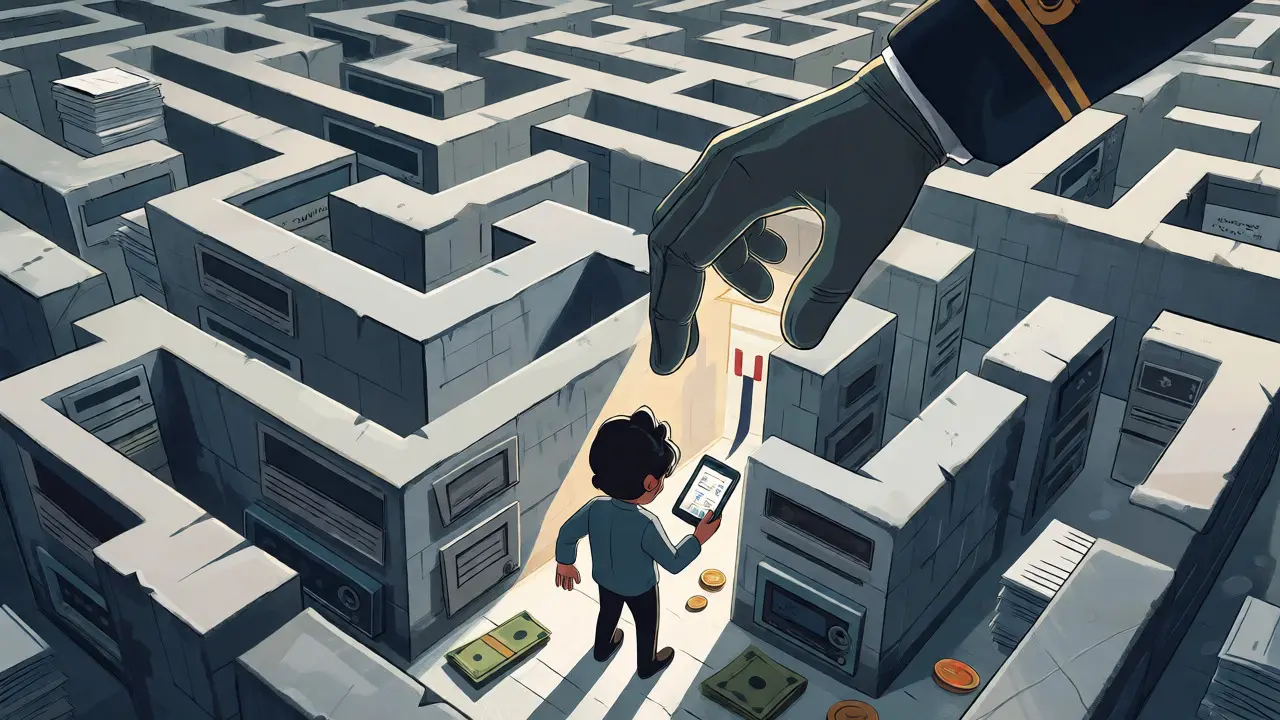
For private citizens, the regulatory landscape is confusing and restrictive. In 2019, Iran officially recognized cryptocurrency mining as a legal industry. However, the licensing process is managed by the Ministry of Industry, Mines, and Trade, and it comes with heavy strings attached. Licensed miners must sell their digital assets directly to the Central Bank of Iran (CBI). This requirement prevents them from selling on open markets where they might get better rates, effectively capping their profitability.
Moreover, licensed miners face high energy tariffs. Many find it financially unsustainable to compete with the subsidized rates enjoyed by state-linked farms. As a result, a significant portion of mining activity has gone underground. Unlicensed miners operate in a gray area, risking fines and equipment confiscation if caught. Yet, they continue to operate because the potential rewards outweigh the risks, especially when compared to the limited opportunities in the broader Iranian economy.
Recent developments show the state tightening its grip. In December 2024, the Central Bank implemented programs blocking cryptocurrency-to-rial payments through domestic websites. By January 2025, some exchanges were selectively unblocked, but only those using a government API that provides full user data visibility. This move signals a desire to monitor rather than eliminate crypto activity, ensuring that any transaction involving Iranian rials is traceable by the state.
How Iranians Navigate the System
Despite strict controls, Iranian citizens remain active in the crypto space. Platforms like Nobitex are popular, but they operate under stringent regulations. The Central Bank prohibits the use of foreign-mined cryptocurrencies for domestic transactions, forcing users to rely on locally sourced coins or specific exchange mechanisms. To circumvent these restrictions, many Iranians use Virtual Private Networks (VPNs) to access foreign exchanges. This cat-and-mouse dynamic allows individuals to preserve wealth in dollars or Bitcoin, avoiding local inflation and government scrutiny.
However, this freedom is fragile. The state maintains the ability to shut down internet access or block specific platforms at will. For the average user, holding crypto is less about speculation and more about survival-a way to protect savings from a rapidly depreciating rial. Meanwhile, the IRGC continues to expand its mining footprint, secure in the knowledge that its political connections provide immunity from the same crackdowns applied to private operators.
Frequently Asked Questions
Is cryptocurrency mining legal in Iran?
Yes, cryptocurrency mining is technically legal in Iran, but it requires a license from the Ministry of Industry, Mines, and Trade. Licensed miners must sell their mined coins to the Central Bank of Iran and pay higher electricity rates. A large amount of mining occurs without licenses, operating in a legal gray area.
What role does the IRGC play in crypto mining?
The Islamic Revolutionary Guard Corps (IRGC) controls a significant portion of Iran's mining infrastructure. They operate large-scale farms, often in partnership with foreign companies, utilizing subsidized or unpaid electricity. Their involvement is driven by the need to generate foreign currency and evade international sanctions.
Why does Iran have such cheap electricity for miners?
Iran subsidizes energy heavily due to its vast oil and gas reserves. However, state-backed miners, particularly those linked to the IRGC, often receive even lower rates or fail to pay bills entirely. This preferential treatment allows them to mine Bitcoin profitably despite global fluctuations in hardware costs and coin prices.
How does crypto mining affect ordinary Iranians?
The primary impact is energy shortages. Large mining farms consume massive amounts of electricity, contributing to widespread power outages across Iranian cities. Additionally, the diversion of resources to state-controlled projects limits the economic benefits that ordinary citizens might otherwise see from the tech sector.
Can regular people trade crypto in Iran?
Regular people can trade crypto, but with restrictions. Domestic exchanges like Nobitex are regulated, and transactions may be monitored via government APIs. Many users employ VPNs to access international exchanges, though this carries risks regarding connectivity and regulatory enforcement.