
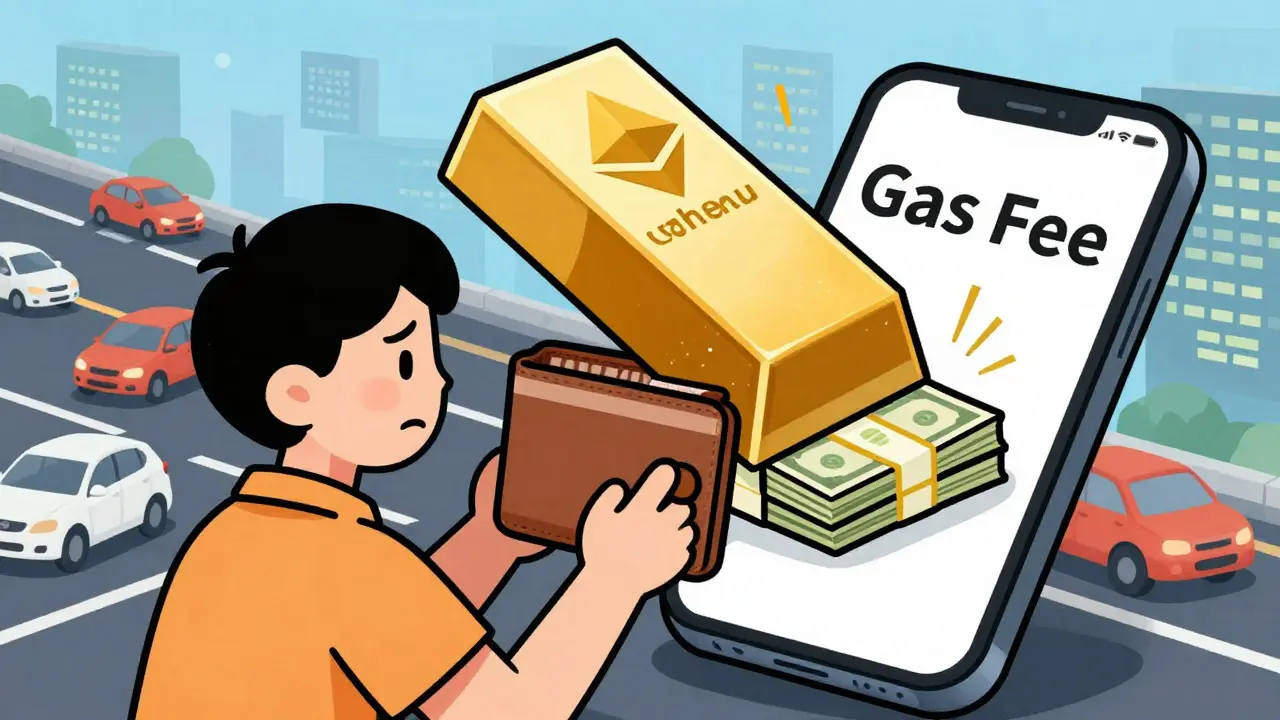
You try to swap a token on Uniswap or mint an NFT, and suddenly your wallet pops up with a fee that looks like a rent payment. It’s frustrating. For years, Ethereum gas fees have been the biggest headache for anyone using decentralized finance (DeFi). But here is the twist: if you are reading this in 2026, those sky-high prices might feel like ancient history. Thanks to major upgrades like the Dencun update, average fees have plummeted by nearly 95% compared to just a couple of years ago. Yet, spikes still happen. So why do they fluctuate so wildly, and what is actually happening under the hood?
To understand why you sometimes pay $145 for a simple transfer and other times pay less than a dollar, we need to look at how Ethereum works. It isn’t just a bank ledger; it is a global computer. Every time you interact with it, you are asking thousands of computers around the world to do work. You pay them for that work. That payment is called "gas."
The Anatomy of a Gas Fee
Gas is not a fixed price. Think of it more like fuel for a car, but instead of buying gallons, you buy computational steps. The unit of measurement is gwei, which is a tiny fraction of an Ether token (1 gwei = 0.000000001 ETH). When you send a transaction, two things determine the final cost:
- The Gas Limit: This is how much computation your transaction requires. A simple ETH transfer is cheap because it only needs about 21,000 units of gas. But if you are interacting with a complex smart contract, like swapping tokens on a decentralized exchange, that transaction might require 150,000 to 300,000 units.
- The Gas Price: This is how much you are willing to pay per unit of gas. This price changes constantly based on demand.
In August 2021, Ethereum introduced EIP-1559, also known as the London Hard Fork. This was a game-changer. Before EIP-1559, users had to guess what fee to pay in a blind auction. Now, there is a base fee that adjusts automatically based on network congestion and is burned (destroyed) permanently. On top of that, you can add a priority fee (or tip) to validators to get your transaction processed faster. This dual-component system made fees more predictable, but it didn’t solve the root problem: when everyone wants to use the network at once, the base fee shoots up.
Supply vs. Demand: The Core Problem
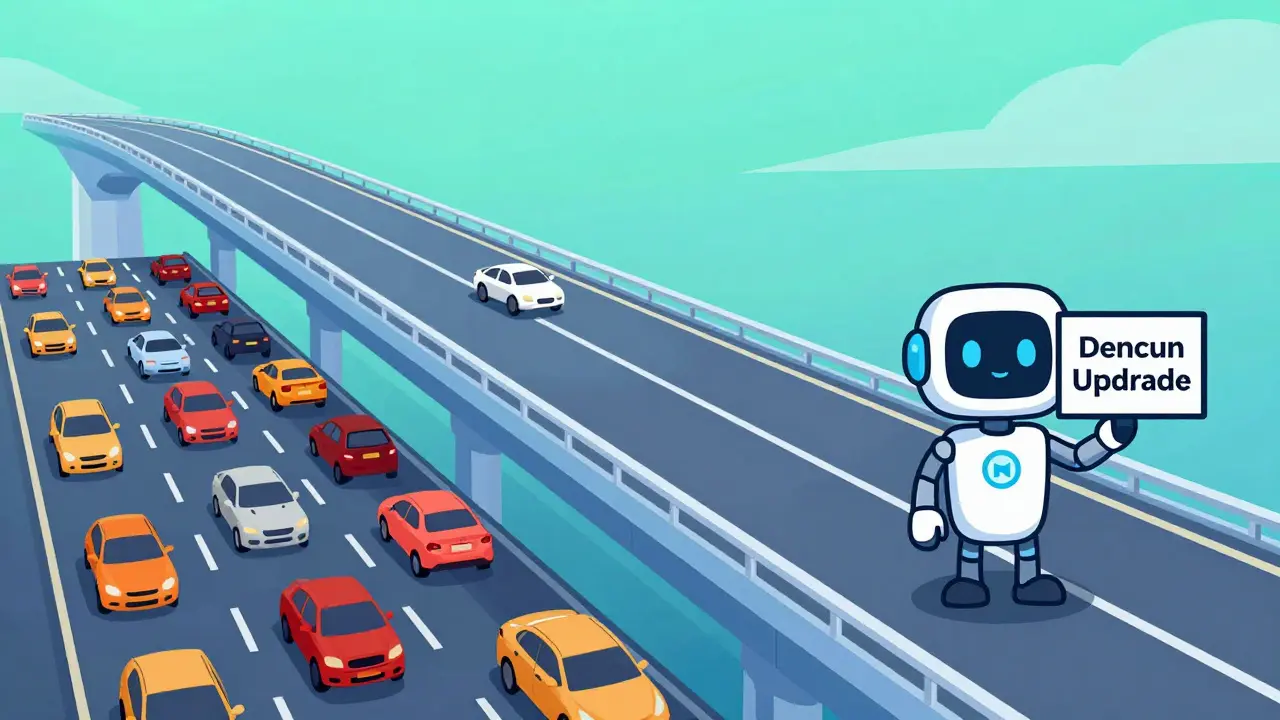
Imagine a highway with only one lane. If ten cars want to pass through at the same time, traffic jams form. Drivers start offering money to jump ahead in line. That is exactly what happens on Ethereum during peak hours.
Ethereum has a block space limit. Each block can only hold a certain amount of data and computation. When popular events happen-like a viral NFT drop, a new token launch (such as WLFI), or high volatility in DeFi-the number of pending transactions exceeds the block space available. Users compete by raising their gas prices. Validators pick the transactions with the highest fees first. This creates a feedback loop where fees spiral upward.
| Transaction Type | Estimated Gas Units | Complexity Level |
|---|---|---|
| Simple ETH Transfer | 21,000 | Low |
| ERC-20 Token Transfer | 65,000 - 70,000 | Medium |
| Uniswap Swap | 150,000 - 300,000+ | High |
| NFT Minting | 100,000 - 200,000 | High |
This table shows why some transactions are inherently more expensive. Even if the gas price per unit is low, a complex interaction will always cost more than a simple transfer because it consumes more network resources.
The 2025-2026 Shift: How Fees Dropped 95%
If you remember paying $86 for a swap in 2024, you might be shocked to see averages around $0.40 today. What changed? Two main factors drove this dramatic reduction.
First, the Dencun Upgrade, implemented in early 2024, introduced proto-danksharding (EIP-4844), which significantly reduced the cost of posting data to Ethereum's mainnet. This upgrade specifically targeted Layer 2 networks, allowing them to store transaction data more cheaply on Ethereum. Since most user activity has moved to these Layer 2s, the pressure on the mainnet eased considerably.
Second, the massive migration to Layer 2 solutions like Arbitrum, Optimism, and Base absorbed the bulk of daily transactions. These networks process transactions off-chain and then bundle them into a single proof submitted to Ethereum. This means millions of swaps and trades happen without clogging the main Ethereum highway. As a result, the average gas price dropped from 72 gwei in 2024 to roughly 2.7 gwei in 2025. Daily total gas revenue fell from $23 million peaks to around $7.5 million, indicating a healthier, less congested ecosystem.
Why Do Spikes Still Happen?
Even with these improvements, fees aren't dead. They just behave differently. In February 2025, during the launch of the WLFI token, gas prices spiked from under 1 gwei to over 100 gwei. Transfers that usually cost cents suddenly exceeded $145. Why?
Sid Sridhar, CEO of a Web3 infrastructure company, noted that these spikes are "a clear reminder that the network, while sophisticated, remains vulnerable during periods of high demand." When a single event generates massive interest, it can overwhelm the capacity of both Layer 1 and the bridges connecting to Layer 2s. Additionally, not all applications have fully migrated to Layer 2s yet. Some legacy DeFi protocols still operate primarily on Ethereum mainnet, meaning users interacting with them face the full brunt of congestion.
Furthermore, market volatility drives speculation. When crypto markets swing wildly, traders rush to adjust positions. This sudden surge in volume outpaces the network's ability to process blocks efficiently, causing temporary but painful fee increases.
How to Avoid High Gas Fees
You don't have to accept whatever fee the network throws at you. Here are practical strategies to keep your costs down:
- Use Layer 2 Networks: Whenever possible, bridge your assets to Arbitrum, Optimism, Base, or Polygon. Fees on these networks are typically 90-99% lower than on Ethereum mainnet. Most major DeFi apps now support these chains.
- Time Your Transactions: Network usage follows human patterns. Fees are generally 25-40% lower during weekends and early morning hours (UTC). Avoid transacting during peak US or European trading hours if the transaction isn't urgent.
- Monitor Gas Trackers: Use tools like ETH Gas Station or GasNow to check real-time conditions. These platforms show you the current base fee and suggest optimal priority fees. Don't blindly accept the default suggestion from your wallet; often, you can lower the priority fee slightly without risking confirmation delays.
- Batch Transactions: If you need to perform multiple actions, look for interfaces that allow batching. Sending three separate transfers costs three times the gas. One batched transaction costs significantly less.
The Future of Ethereum Fees
Is Ethereum becoming cheaper forever? Not necessarily "forever," but the trend is positive. The combination of efficient burning mechanisms (which make ETH deflationary during high usage) and scalable Layer 2 architectures suggests that routine transactions will remain under $1 for the foreseeable future. However, Ethereum’s value proposition includes security and decentralization. Maintaining that level of security requires economic incentives for validators. Therefore, fees will never be zero, and they will always reflect scarcity during high-demand events.
For enterprise clients and large investors, even peak fees are negligible compared to the value transferred. For retail users, the shift to Layer 2s has democratized access. The era of paying $50 to move $10 is largely behind us, replaced by a hybrid model where Ethereum provides the secure settlement layer, and Layer 2s provide the fast, cheap execution layer.
What causes Ethereum gas fees to spike suddenly?
Sudden spikes occur when network demand exceeds block space supply. This often happens during viral events like NFT mints, new token launches, or high market volatility. Users bid up the priority fee to get their transactions included quickly, driving up the overall cost.
Are Ethereum gas fees gone after the Dencun upgrade?
No, fees are not gone, but they have decreased dramatically. The Dencun upgrade reduced data costs for Layer 2 networks, leading to a ~95% drop in average user fees. However, fees still exist to compensate validators and prevent spam.
What is the difference between gas limit and gas price?
Gas limit is the maximum amount of computational work your transaction requires (determined by complexity). Gas price is how much you pay per unit of gas (determined by market demand). Total fee = Gas Limit × Gas Price.
Which Layer 2 networks have the lowest fees?
Networks like Arbitrum, Optimism, Base, and Polygon offer significantly lower fees than Ethereum mainnet. Among these, Base and Arbitrum often see very competitive rates due to high liquidity and optimization, though exact costs vary by congestion levels on each specific chain.
When is the best time to transact on Ethereum to save money?
The best times are typically weekends and early mornings UTC. Network activity drops during these periods, reducing competition for block space and lowering the base fee and priority tips required.