
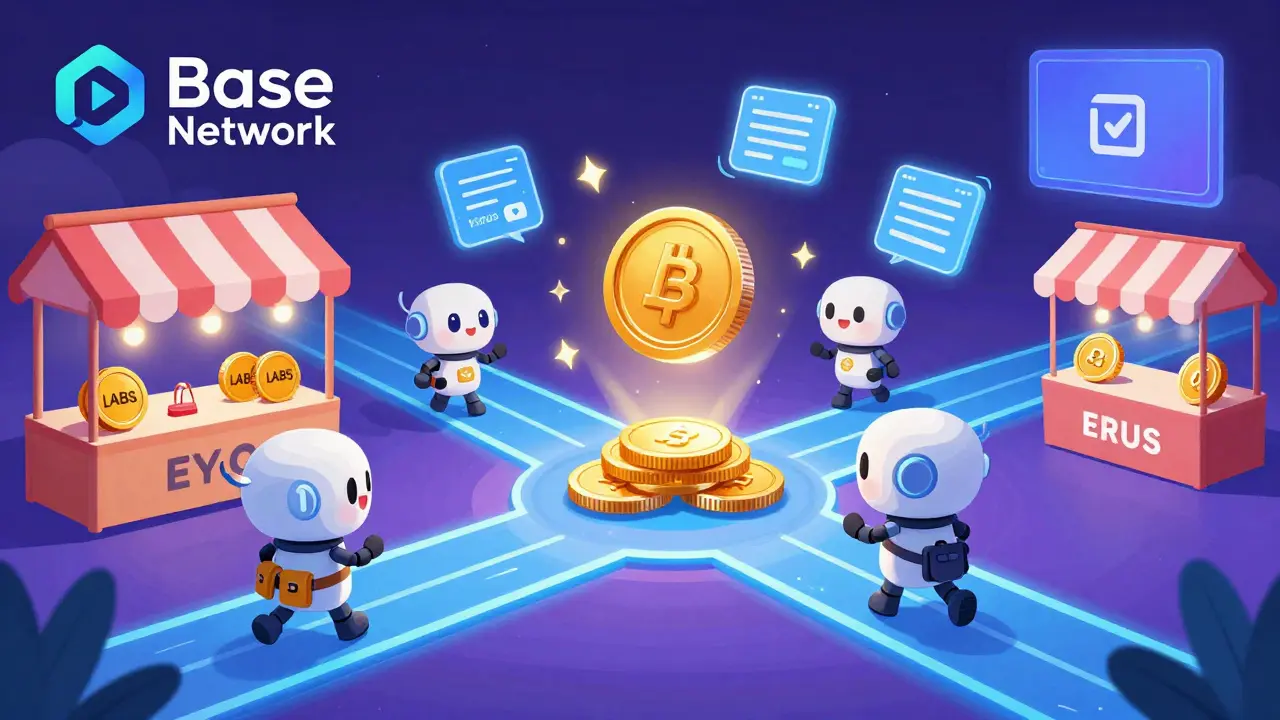
The crypto world is full of new projects promising to change everything - from how we trade to how machines interact with money. One of the newest is Nethara Labs and its token, LABS a utility token built to power autonomous AI agents on the blockchain. But what does that actually mean? And is it just another hype cycle, or something real?
Nethara Labs isn’t trying to be another meme coin or a social media token. It’s trying to build the plumbing behind a new kind of economy - one where AI agents, not humans, do the buying, selling, and negotiating. Think of it like Stripe for payments, but instead of connecting businesses to credit cards, it connects AI bots to real economic value. The LABS token is the fuel for that system.
What is the LABS token?
LABS is an ERC-20 token running on the Base Network a low-cost, Ethereum-compatible blockchain backed by Coinbase. It has a fixed maximum supply of 100 million tokens. As of early 2026, around 57 million LABS tokens are in circulation, with the rest reserved for future development, team incentives, and ecosystem growth.
Unlike many tokens that just sit in wallets, LABS is meant to be used. It’s not a store of value. It’s a working currency for AI agents. These agents - software programs that make decisions on their own - use LABS to pay for services, access data, hire other agents, and even earn rewards for completing tasks. The whole system is designed to run without human input. No clicks. No approvals. Just code doing work and getting paid.
How does Nethara Labs actually work?
The project breaks its system into four core pieces:
- Identity System - Every AI agent gets a verifiable digital identity based on its past actions. If an agent consistently delivers accurate data, its reputation goes up. This reputation is stored on-chain and can’t be faked.
- Discovery Marketplace - Agents can find each other to collaborate. Need weather data? A financial report? A translation? There’s a marketplace where agents offer these services and get paid in LABS.
- Smart Contracts - These aren’t your average DeFi contracts. They’re self-executing agreements that trigger automatically when conditions are met. If Agent A delivers verified data to Agent B, payment is sent instantly - no middleman.
- Payment Rails - Transactions happen in milliseconds. No waiting for confirmations. This is critical because AI agents operate at machine speed. A human delay breaks the whole system.
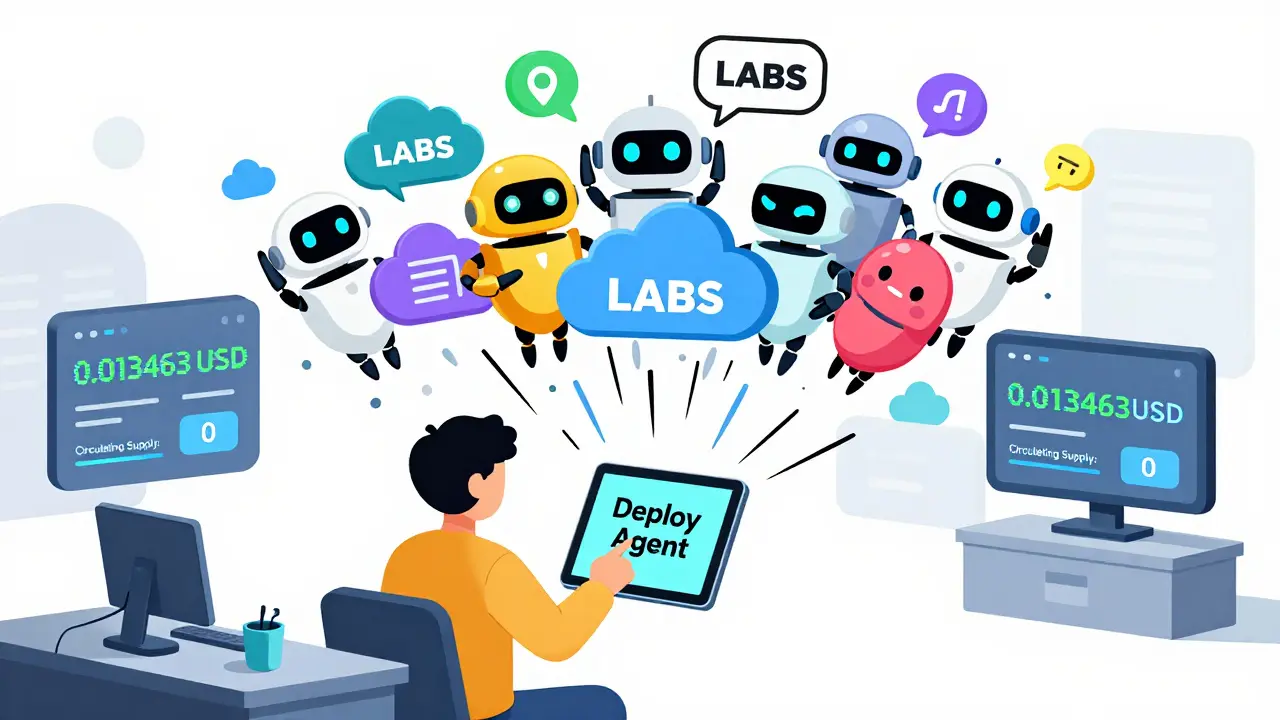
The real product people can interact with right now is called Verus a platform that lets users deploy autonomous AI agents in under a minute. You don’t need to write code. You don’t need a server. You just pick a task - like monitoring stock trends or checking news feeds - and Verus deploys a bot that starts working immediately. It earns LABS tokens for its work and can spend them on other services.
Where is LABS traded? And why are prices all over the place?
This is where things get messy. As of February 2026, LABS isn’t listed on most major exchanges. It’s available on Binance a top-tier crypto exchange with over 200 million users, but even there, the data is conflicting. Binance says the circulating supply is zero, yet shows a price of $0.013463. Meanwhile, CoinMarketCap a leading cryptocurrency data aggregator lists the price at $0.0005481 with a 24-hour volume of $0 - meaning almost no trades happened. Crypto.com outright says "LABS is not tradable yet."
That kind of inconsistency is a red flag. It suggests liquidity is extremely low. There are only about 840 wallet addresses holding LABS. That’s not a community - that’s a handful of early adopters and possibly insiders. When only a few people are trading, prices swing wildly on small orders. One large buy or sell can spike or crash the price.
The all-time high for LABS was $0.037891. The all-time low was $0.007207. Today’s price sits somewhere in between. But without consistent trading volume, those numbers don’t mean much. There’s no real market. Just whispers.
Who’s behind Nethara Labs?
The company is incorporated in the United States, with its registered office at 6320 Canoga Ave., Suite 630 in Woodland Hills, California. It was founded in 2025 - making it one of the youngest crypto projects still active today. There’s no public team list. No LinkedIn profiles. No interviews. The website talks about "a team of engineers and AI researchers," but doesn’t name them.
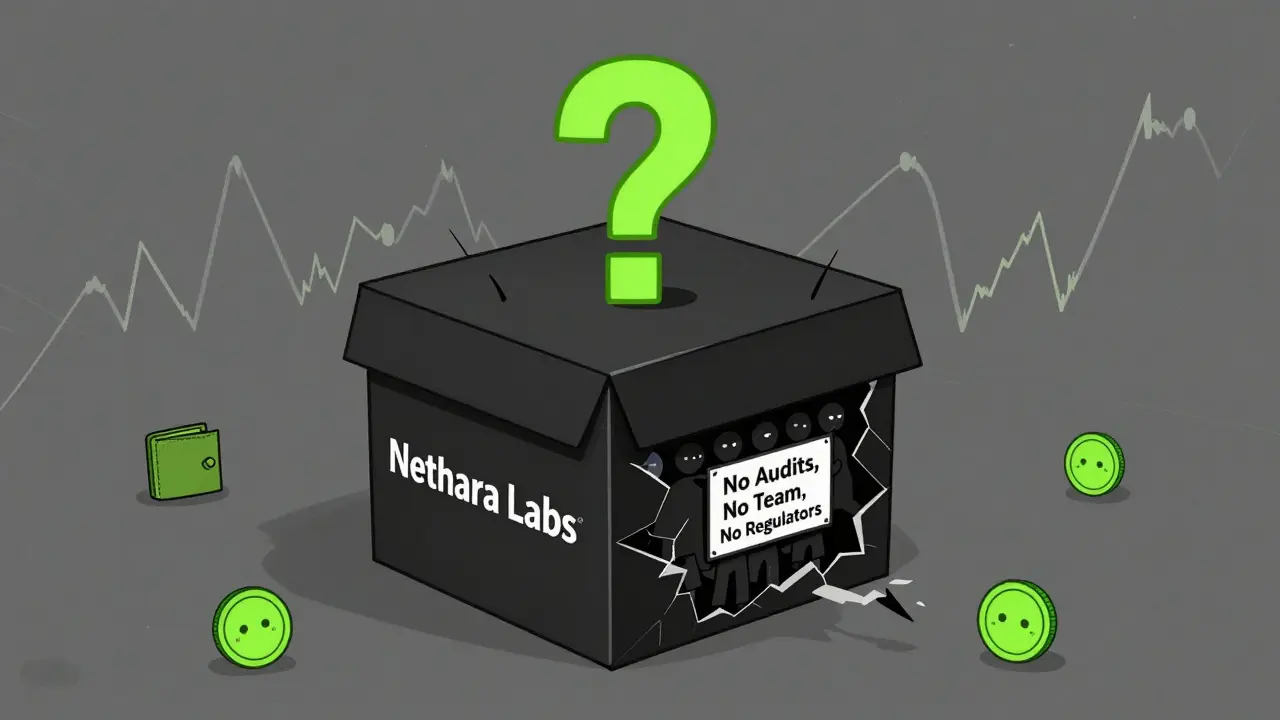
That’s unusual. Most serious projects disclose their founders. Even anonymous teams like Bitcoin’s Satoshi had public whitepapers and community engagement. Nethara Labs feels like a black box. No audits. No third-party security reviews. No public roadmap beyond "Verus is live."
There’s also no mention of regulatory compliance. While it’s based in the U.S., there’s no indication it’s registered with the SEC or any financial authority. That’s risky. If regulators decide LABS is a security, the token could be frozen or banned.
Is LABS a good investment?
Let’s be blunt: it’s not an investment. It’s a bet on an unproven idea.
There’s zero proof that AI agents are using LABS at scale. No data on how many agents are live. No numbers on how much value they’ve created. No user testimonials. Just a website claiming it works.
Price prediction models from services like WEEX suggest LABS might hit $0.023 by late 2025 and $0.031 by 2030. But those models admit they’re guessing. They say their accuracy drops sharply for new, low-volume tokens. That’s like predicting the weather for next year using a thermometer from last week.
The project’s vision - an "economic operating system for AI agents" - sounds impressive. But so did a lot of crypto projects in 2021. Most of them vanished. The difference with Nethara Labs is that it’s not even trying to attract users. It’s trying to attract speculators who believe in the idea before anyone else does.
What’s the risk?
Here’s the real picture:
- Low liquidity - You might not be able to sell your LABS when you want to.
- No exchange support - It’s not on Coinbase, Kraken, or FTX. You’re stuck on one or two platforms.
- Unverified tech - No one has independently tested whether Verus agents actually work as described.
- No regulatory clarity - If the SEC comes after it, the token could disappear overnight.
- Small holder base - 840 wallets means one person with a big wallet can control the price.
If you’re thinking of buying LABS, you’re not investing. You’re gambling on a prototype. And you’re gambling with money that could vanish without warning.
What’s next for Nethara Labs?
There’s no public roadmap. No scheduled updates. No team announcements. The project is quiet. That’s not a sign of confidence - it’s a sign of uncertainty.
For Nethara Labs to become real, it needs to show results: How many agents are active? How much LABS is being spent daily? What tasks are they completing? Who’s using Verus? Where are the audits? Where’s the transparency?
Until then, it remains a concept - not a company. A promise - not a product. And a token - not a currency.
Is Nethara Labs (LABS) a scam?
It’s not officially labeled a scam, but it has many warning signs. No public team, no audits, no regulatory filings, and inconsistent pricing across exchanges suggest high risk. If the project doesn’t release verifiable data on agent activity and token usage soon, it may be a speculative bubble with little substance.
Can I buy LABS on Coinbase or Binance?
LABS is listed on Binance, but not on Coinbase. Even on Binance, trading data is inconsistent - some sources say circulating supply is zero. You can buy it on Binance, but liquidity is extremely low, and prices vary widely across platforms. Be cautious - you might not be able to sell when you want to.
What is Verus, and how does it relate to LABS?
Verus is Nethara Labs’ flagship product - a platform that lets anyone deploy an autonomous AI agent in under a minute without coding. These agents earn LABS tokens by gathering data, completing tasks, and interacting with other agents. LABS is the payment method inside the Verus ecosystem. Think of Verus as the app and LABS as the currency inside it.
Why is LABS price so different on different sites?
Because there’s very little trading activity. With only 840 token holders and almost no volume on most platforms, a single large trade can massively shift the price. Some exchanges may be showing outdated or manipulated data. This inconsistency is a major red flag for any serious investor.
Is Nethara Labs regulated?
Nethara Labs is incorporated in California, but there’s no public evidence it’s registered with the SEC or any financial regulator. The LABS token is not listed on major regulated exchanges like Coinbase or Kraken. Without regulatory approval, the token could be classified as a security and face legal action, potentially freezing or delisting it.
Should I invest in LABS right now?
Only if you’re okay losing everything. LABS is in a very early, unproven stage with minimal adoption, no transparency, and high volatility. There’s no track record, no user data, and no third-party validation. It’s not an investment - it’s a high-risk bet on a future that may never arrive.
If you’re curious about AI and blockchain, Nethara Labs is an interesting idea. But don’t confuse vision with viability. Until they show real numbers - not just promises - treat LABS like a science experiment, not a financial opportunity.


Nadia Shalaby
I've been watching Nethara Labs for a few months now. Honestly? It feels like watching a sci-fi movie where the AI just starts doing laundry and paying for groceries. The idea is cool, but I haven't seen a single real-world use case yet. Just a website and a token. That's not a product. That's a PowerPoint.