
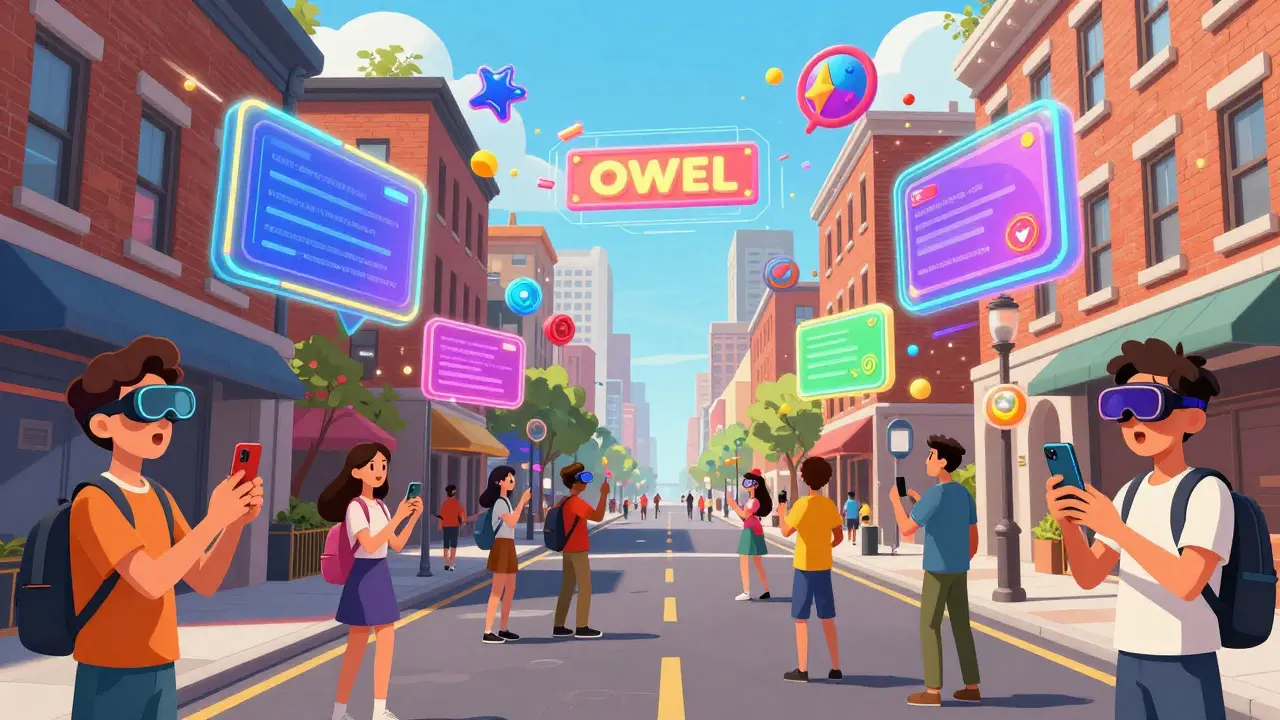
Imagine walking down your street and seeing digital art, hidden messages, or interactive games floating in the air, anchored to the actual buildings around you. This isn't a scene from a sci-fi movie; it's the goal of the OVER platform. At the center of this ambition is the OVR crypto coin is an ERC-20 utility token that powers a decentralized Augmented Reality (AR) ecosystem. It's designed to bridge the gap between the physical world and the digital layer, creating what some call a "spatial web."
Quick Summary: The OVR Ecosystem at a Glance
- Core Purpose: Powers the OVER platform, a community-driven 3D mapping and AR infrastructure.
- Key Mechanism: Uses a "Map2Earn" model to pay users for mapping the real world.
- Digital Assets: Combines fungible OVR tokens with non-fungible OVRLand parcels.
- Network: Built on the Ethereum blockchain for security and compatibility.
- Current State: Over 1.3 million users and 880,000 land parcels sold.
How OVR Actually Works
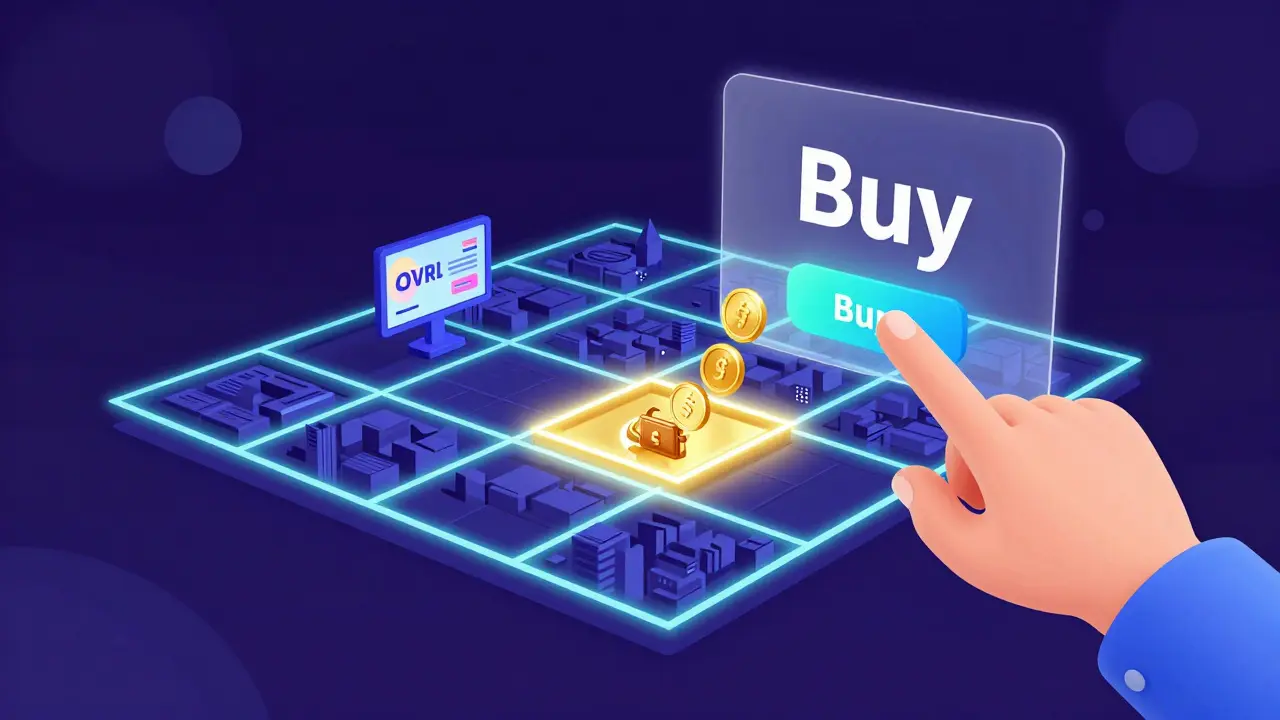
To understand the coin, you have to understand the map. The OVER platform has essentially divided the entire surface of the Earth into 1.6 trillion digital parcels. These are called OVRLands, which are ERC-721 non-fungible tokens (NFTs) each representing roughly 300 square meters of physical space . Think of it like digital real estate, but instead of a plot in a virtual world, you own the AR rights to a specific spot in the real world.
The OVR crypto coin acts as the fuel for this entire machine. You don't just hold it as an investment; you use it to buy these land parcels, pay for transaction fees, and acquire 3D assets. It's the primary medium of exchange. If a developer wants to place an AR experience on a piece of land, or if a user wants to buy a digital asset to enhance their AR view, OVR is the currency used to make that happen.
The Map2Earn Model: Getting Paid to Map
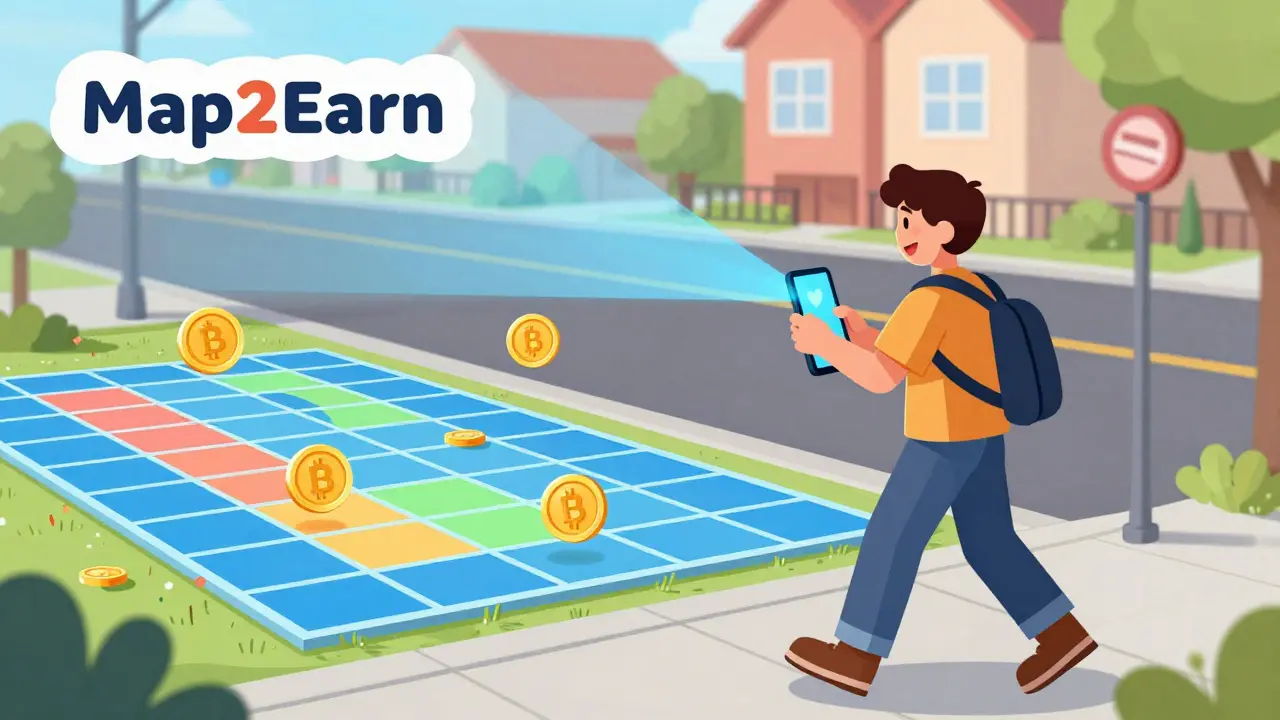
One of the most interesting parts of this project is its approach to data. Creating a high-quality 3D map of the world is incredibly expensive and difficult. Instead of hiring a massive company to do it, OVER uses a DePIN (Decentralized Physical Infrastructure Network) approach. This is where the Map2Earn™ program comes in.
Essentially, if you have a smartphone, you can help map the world. By walking around and capturing 3D data of your surroundings, you contribute to the platform's accuracy. In exchange for this effort, the platform compensates you with OVR tokens. You have two choices here: you can mint your mapping data into an OVRMap NFT (which you own) or sell that data directly to the OVER project to get immediate token rewards. It turns your morning walk into a potential income stream.
Token Economics and Market Reality
From a technical standpoint, OVR is an ERC-20 token, meaning it follows the standard for fungible tokens on the Ethereum blockchain. This allows it to be easily traded on exchanges and stored in most common crypto wallets.
The supply side is quite specific. The original total supply was set at 110 million tokens. As of April 2026, the circulating supply sits around 51 million. However, the market has been a rollercoaster. The coin has seen massive volatility, trading at roughly $0.038. For context, it's currently down significantly from its all-time high, which is common for many niche utility tokens that launched during the initial NFT and Metaverse hype cycles.
| Feature | OVR Token | OVRLand |
|---|---|---|
| Token Standard | ERC-20 (Fungible) | ERC-721 (NFT) |
| Primary Use | Currency, Payments, Rewards | Ownership of physical coordinates |
| Acquisition | Exchanges / Map2Earn | Marketplace / Auctions |
| Value Driver | Ecosystem demand & Utility | Location desirability & AR traffic |
The Decentralized Marketplace
Everything in the OVER ecosystem is handled via a decentralized marketplace. This isn't a store managed by a central company; it's run by smart contracts. When you bid on a piece of land or sell an AR experience, the smart contract handles the exchange of OVR tokens for the asset automatically.
For landowners, this creates a business opportunity. If you own a piece of OVRLand in a high-traffic area-like near a famous landmark or a busy shopping district-you can rent out that space to AR publishers. These publishers pay to show their content to people passing by in the real world, and you, the landowner, get a cut of that revenue. It's essentially digital billboard leasing for the AR age.
Is This Just Another Metaverse Project?
There is a big difference between OVR and projects like Decentraland or The Sandbox. Those are "virtual worlds" where you go to a different place. OVR is about "spatial web" infrastructure. It doesn't want to take you away from the real world; it wants to add a layer of data on top of it.
By leveraging the DePIN movement, OVR is building a utility that could be used by anyone-from city planners to advertisers to gamers. The success of the coin depends entirely on how many people actually use AR glasses or apps in their daily lives. As AI and wearable tech (like smart glasses) become more common, the need for a mapped, decentralized layer of the world becomes more practical.
How can I start earning OVR tokens?
The primary way to earn is through the Map2Earn program. You'll need to join the project's community (typically via Discord) to get an invitation code and access the platform. Once in, you use your smartphone to create 3D maps of physical locations, which you can then sell to the project or mint as NFTs for OVR rewards.
What happens if I own OVRLand?
Owning OVRLand gives you the rights to the AR layer of that specific 300-square-meter physical area. You can publish your own AR experiences there or rent the space to B2B publishers who want to reach people in that location, allowing you to earn a share of the revenue.
Is OVR a safe investment?
Like most small-cap utility tokens, OVR is highly volatile. It has experienced a significant drop from its all-time high. While it has real-world utility and a large user base, its price is heavily dependent on the adoption of AR technology and the overall health of the crypto market.
Where can I trade OVR coins?
Since it is an ERC-20 token, OVR is traded on various cryptocurrency exchanges that support Ethereum-based assets. You can also trade digital assets like OVRLand within the platform's own decentralized marketplace using OVR as the currency.
What is the difference between OVR and an OVRMap?
OVR is the currency (the money) used across the platform. An OVRMap is a specific NFT that represents the 3D data of a physical location. You use OVR to buy OVRMaps, or you earn OVR by creating the data that makes up an OVRMap.
Next Steps for Users
If you're a tech enthusiast, the best move is to explore the Map2Earn program. It's the lowest-risk way to get involved since it requires time and effort rather than a large financial investment. Just make sure your device supports the necessary 3D mapping requirements.
For investors, keep a close eye on the adoption of AR hardware. The value of OVR is tied to the "spatial web." If companies like Apple or Meta drive a surge in smart glasses usage, the infrastructure provided by OVER becomes significantly more valuable. Always check the circulating supply and FDV (Fully Diluted Valuation) before making a move to ensure you understand the potential for future token dilution.


Deepak Prusty
The mention of ERC-20 is basic. Everyone knows that's just the standard for utility tokens on Ethereum and doesn't actually explain the underlying smart contract efficiency or how the liquidity pools are structured for OVR.