
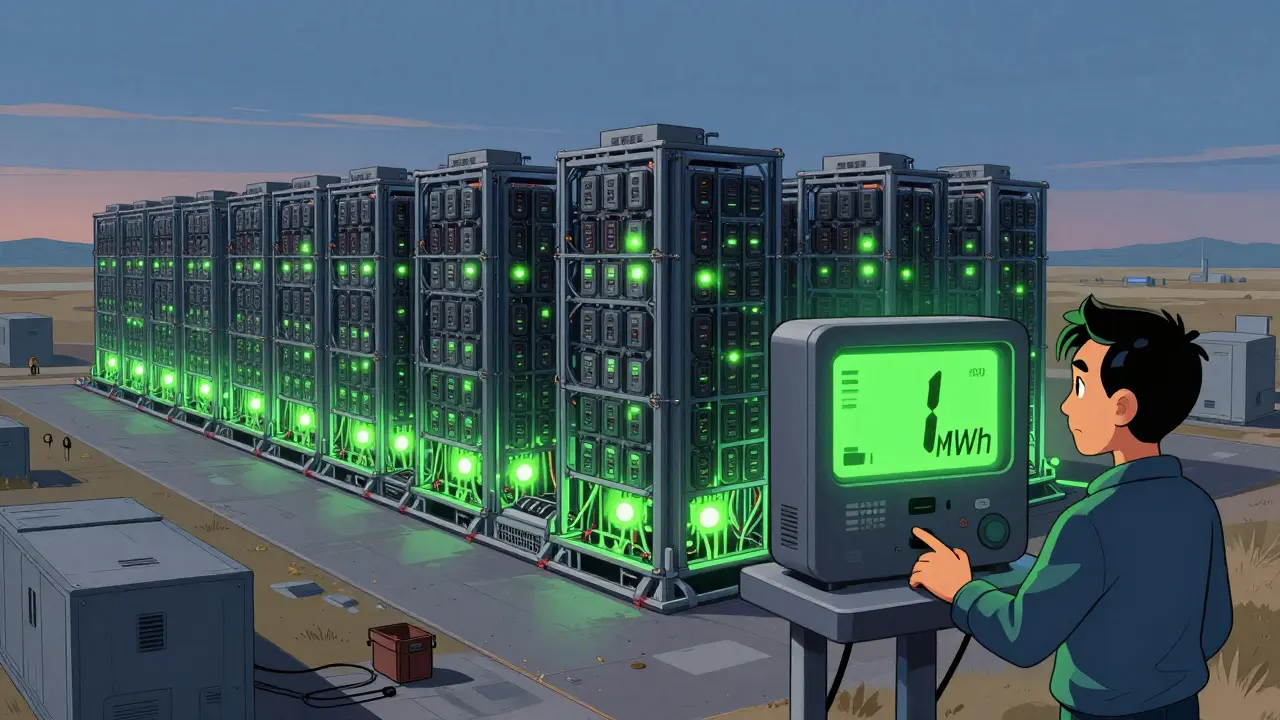
Imagine running a massive data center only to find out your power is being cut because the national grid can't keep up. That is the reality for many in Kazakhstan. After China banned cryptocurrency mining in 2021, a wave of miners flooded into Central Asia, drawn by cheap power. But the honeymoon ended quickly. The sudden surge put an incredible strain on the energy grid, forcing the government to move from a welcoming stance to a strict system of electricity rationing and heavy oversight.
The State-Run Power Marketplace
To stop the grid from collapsing, Kazakhstan didn't just raise prices; they took over the distribution process. Today, legitimate operators must deal with a state-run electricity marketplace managed by the Ministry of Energy. This isn't a free-for-all. The government has implemented a strict cap where mining farms can only purchase a maximum of 1 megawatt-hour (MWh) per transaction. For a large-scale operation, this is a logistical headache, requiring multiple transactions to keep the machines humming.
It is a system designed to prevent any single operator from sucking the grid dry. By controlling the flow through a centralized platform, the state can pivot power toward residential areas or strategic industries if a shortage hits. If you are a legal miner, you aren't just buying power; you are operating within a highly monitored ecosystem where every kilowatt is tracked.
The Cost of Staying Legal
Getting a license to mine in Kazakhstan is now a gated process. The government has issued only 84 licenses to legitimate operations. To stay on the right side of the law, miners must register every single piece of hardware in a national database-which already tracks about 415,000 machines-and connect through one of five accredited mining pools.
But the restrictions don't stop at the power plug. The financial requirements are just as rigid. As of 2025, miners are required to sell 75% of their mined assets on platforms within the Astana International Financial Centre (known as AIFC), which is a financial hub in Kazakhstan designed to attract foreign investment through a separate legal framework based on English law). This is a jump from the 50% requirement in 2024, effectively forcing miners to integrate their operations with the state's approved financial channels. Add a 15% tax rate on profits to the mix, and the "cheap energy" lure of Kazakhstan starts to look a lot more expensive.
| Requirement | Value / Limit | Purpose |
|---|---|---|
| Max Power Purchase | 1 MWh per transaction | Grid stability & load balancing |
| AIFC Asset Sale | 75% of mined crypto | Financial transparency & regulation |
| Profit Tax Rate | 15% | State revenue generation |
| Hardware Tracking | Mandatory registration | Preventing illegal "gray" mining |
The Dark Side: Illegal Mining and Power Theft
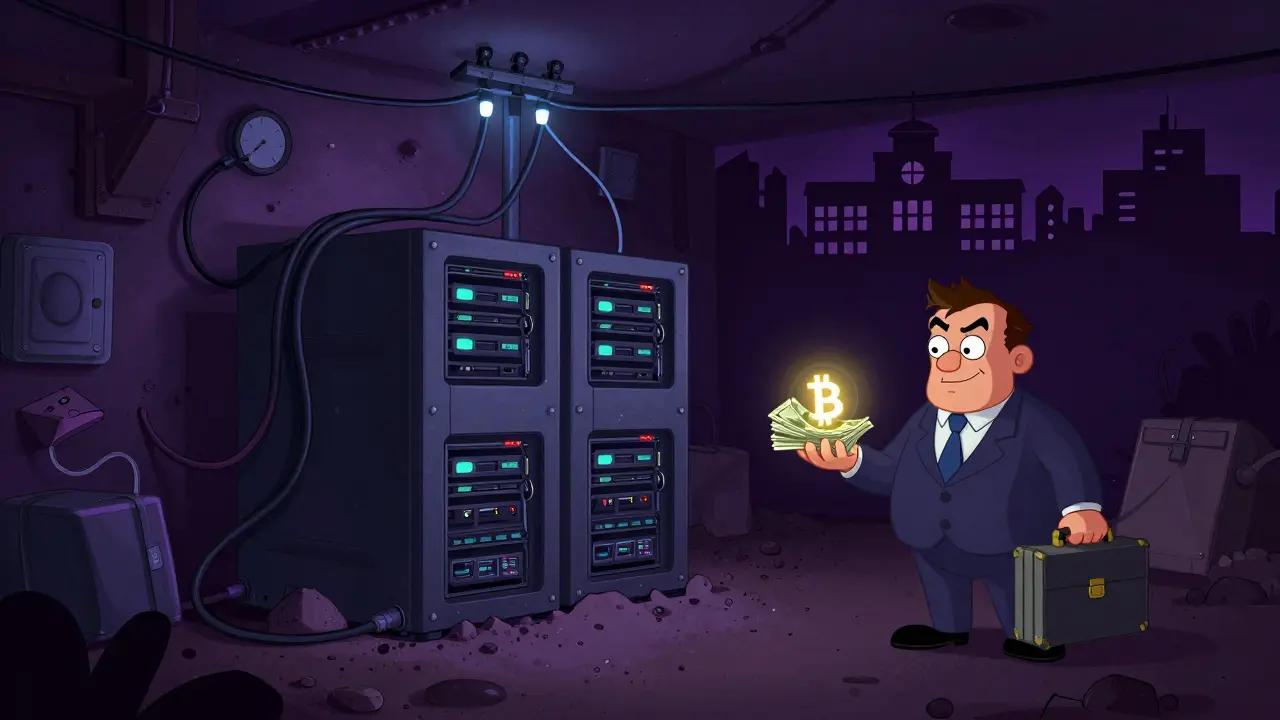
While legal miners struggle with paperwork, a shadow industry has thrived. The gap between official rationing and actual usage is often filled by corruption. A shocking example happened in October 2025 in the East Kazakhstan Oblast. The Financial Monitoring Agency (AFM) and national security services uncovered a massive illegal operation that had been stealing power for two years.
This wasn't just a few hidden rigs in a basement. Corrupt utility employees were diverting electricity intended for hospitals, schools, and residential homes to unauthorized mining farms. This single operation consumed over 50 MWh of stolen power, costing the state roughly $16.5 million (9 billion tenge). To put that in perspective, the amount of electricity stolen was enough to power a city of 70,000 people. The bust resulted in the seizure of luxury apartments and cars bought with the proceeds, proving that for some, bypassing the rationing system was a goldmine.
The 70/30 Energy Compromise
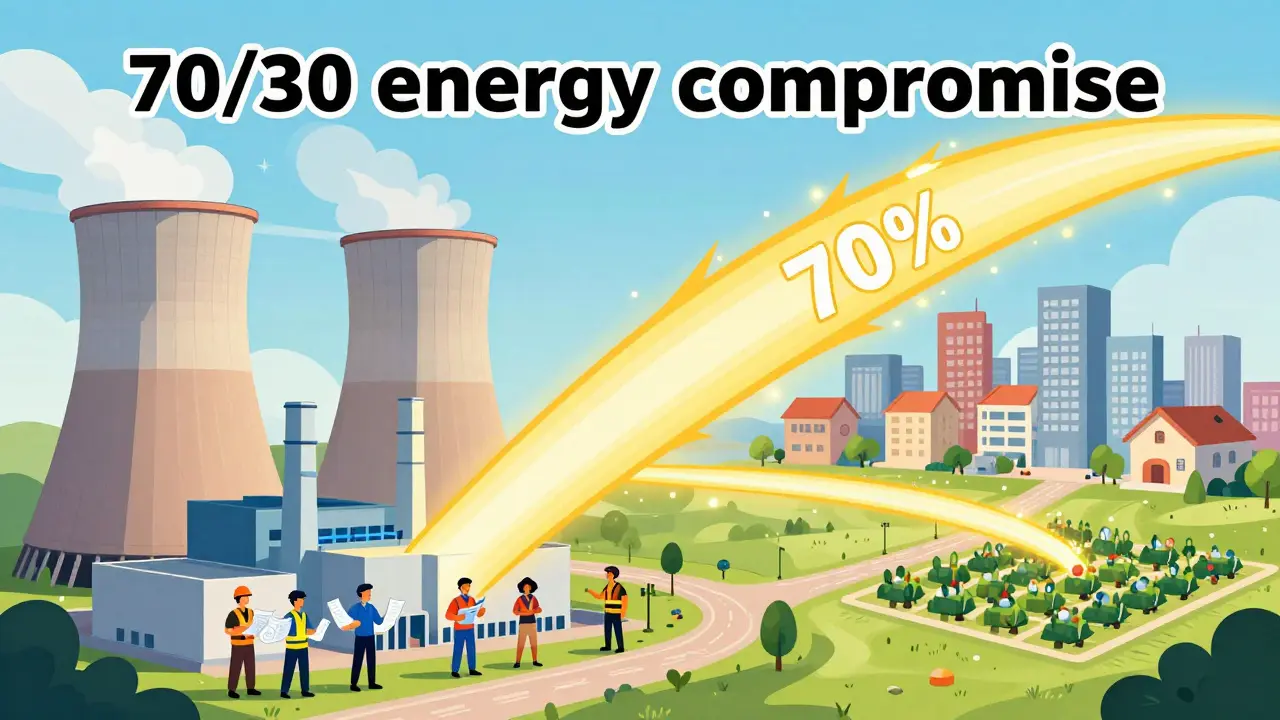
The government knows that completely banning mining is a losing game, as it drives the industry underground. Instead, they are proposing a more symbiotic relationship called the "70/30 energy programme." The idea is simple: foreign investors fund the upgrade of thermal power plants. In exchange, 70% of the new capacity goes to the national grid to help citizens, while the remaining 30% is reserved specifically for crypto mining.
This move attempts to solve the core problem-lack of infrastructure-without compromising energy security. It turns miners from "energy parasites" into infrastructure partners. If this rolls out successfully, it could stabilize the grid and provide a predictable power supply for the industry, removing the need for erratic rationing and transaction caps.
Navigating the Operational Hurdles
For anyone actually trying to operate a business under these rules, the learning curve is steep. You can't just plug in a miner and start earning. You need a legal team to handle the AIFC filings and an accountant to manage the 15% tax and quarterly reports. Compliance costs now eat up about 10% to 15% of operational expenses for mid-sized farms.
Small-scale miners are feeling the squeeze the most. The administrative bottlenecks of the state marketplace and the cost of compliance favor the big players who have the capital to navigate the bureaucracy. It has created a market where only the most well-funded operations can survive the regulatory gauntlet.
Can I mine cryptocurrency in Kazakhstan without a license?
Technically possible, but extremely risky. The government actively tracks hardware and monitors power spikes. Unlicensed mining is treated as electricity theft, which can lead to heavy fines, seizure of equipment, and criminal charges, as seen in the 2025 East Kazakhstan raids.
What is the AIFC requirement for miners?
Miners are required to sell 75% of their cryptocurrency assets through platforms registered with the Astana International Financial Centre (AIFC). This ensures the government can monitor the flow of funds and ensure taxes are paid.
How does the 1 MWh purchase limit work?
Legal miners must buy electricity through the Ministry of Energy's state-operated marketplace. To prevent any single farm from overloading the grid, the system limits individual transactions to 1 megawatt-hour. Larger farms must perform multiple transactions to meet their energy needs.
What happens to the taxes paid by crypto miners?
Mining operations are subject to a 15% tax rate on their profits. These funds are integrated into the national budget, though there are ongoing discussions about using such revenue to further upgrade the energy grid.
Is the 70/30 energy program currently active?
It is a proposed framework where foreign investors upgrade power plants in exchange for a 30% allocation of the energy for mining. While it is a key part of the government's strategy to balance the grid, implementation varies by region and specific investment deals.
What's Next for Miners?
If you're looking at Kazakhstan today, the focus is on stability over growth. The days of the "Wild West" are over. Future movements will likely involve more control over licensed exchanges and potentially the decriminalization of trading for those who stay within the legal system.
For existing operators, the priority should be rigorous documentation. If you aren't keeping precise electricity records and AIFC sale logs, you're a target for the next wave of audits. For new entrants, the best bet is to look for partnerships that align with the 70/30 energy model, as that's the only sustainable path the government is currently carving out for the industry.


Robert Smith
Wild how the grid just can't cope ⚡️😂