
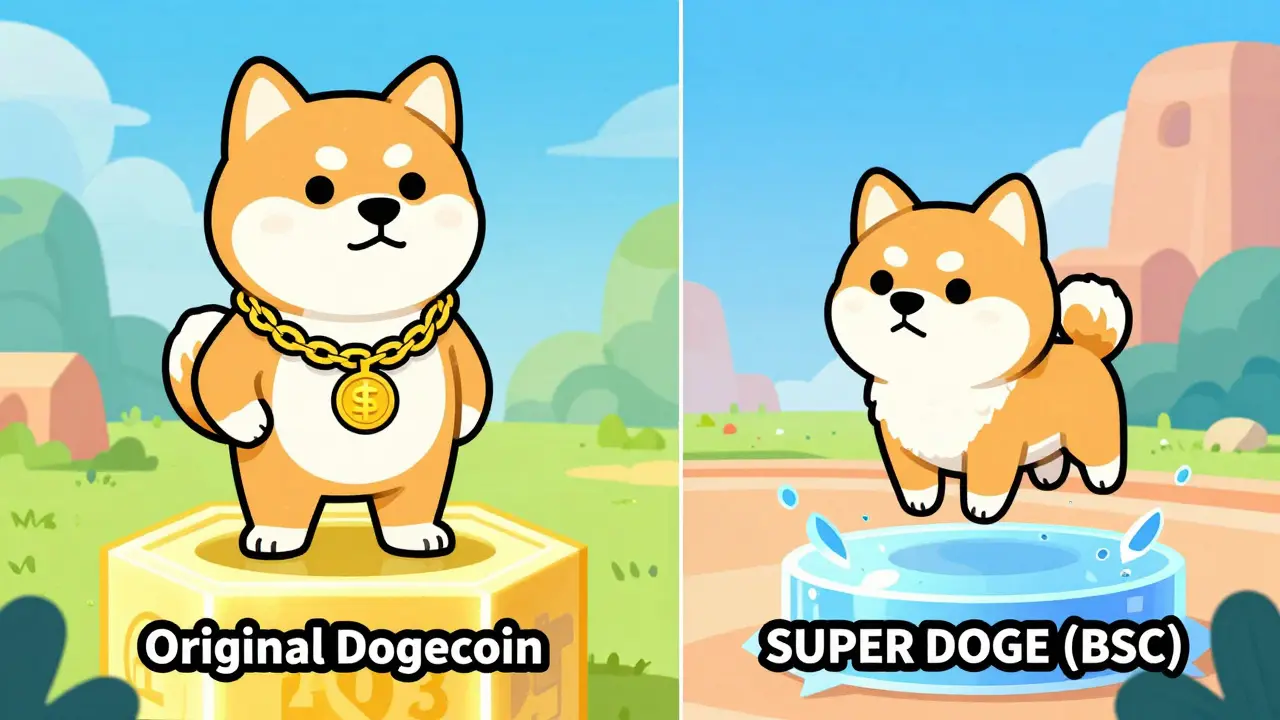
Have you seen the ticker SUPER DOGE pop up on a price chart or a social media feed and wondered if it’s the same as the famous Dogecoin? It’s an easy mistake to make. The name is similar, the logo likely features a Shiba Inu, and the ticker symbol is often just "DOGE." But here is the hard truth: they are completely different assets with vastly different levels of risk.
If you are looking at SUPER DOGE, you are not looking at the original cryptocurrency created in 2013. You are looking at a newer, smaller token built on the Binance Smart Chain. Understanding this difference is the only way to protect your money from accidental buys or hype-driven losses. Let’s break down exactly what this token is, how it works, and why you need to be careful before buying.
The Critical Difference: SUPER DOGE vs. Original Dogecoin
The biggest confusion in the crypto space right now involves names that sound alike but operate on entirely different networks. To understand SUPER DOGE, you first have to understand what it is not.
Original Dogecoin is a standalone blockchain launched in December 2013 by software engineers Billy Markus and Jackson Palmer. It runs its own network, has its own miners, and uses a proof-of-work consensus mechanism similar to Bitcoin. It is a top-tier cryptocurrency with a market capitalization that has historically exceeded $70 billion and daily trading volumes in the billions of dollars.
SUPER DOGE, on the other hand, is a token issued on the Binance Smart Chain (BSC). It does not have its own blockchain. Instead, it relies on the BSC infrastructure for security and transactions. This makes it a derivative asset-a meme-inspired token that borrows branding from the original Doge ecosystem but operates independently on a different technical layer.
| Feature | Original Dogecoin (DOGE) | SUPER DOGE (DOGE on BSC) |
|---|---|---|
| Blockchain Network | Own Layer-1 Blockchain (Proof-of-Work) | Binance Smart Chain (BEP-20 Token) |
| Launch Date | December 6, 2013 | Recent (Emerging Project) |
| Market Cap | Multi-Billion USD (Top Tier) | Micro-Cap / Illiquid (Low Volume) |
| Creators | Billy Markus & Jackson Palmer | Anonymous / Unverified Team |
| Risk Level | Moderate (High Volatility) | Extreme (Speculative/Niche) |
When you see "DOGE" on a screen, always check the contract address or the network label. If it says BSC or BEP-20, you are dealing with SUPER DOGE or a similar clone, not the original asset.
How SUPER DOGE Works on Binance Smart Chain
Since SUPER DOGE is a token on the Binance Smart Chain, it behaves differently than native coins like Bitcoin or Ethereum. Here is what that means for you as a user:
- No Independent Miners: SUPER DOGE does not have its own miners securing the network. It inherits security from Binance Smart Chain. This means lower transaction fees and faster confirmations compared to Bitcoin, but also dependence on BSC’s stability.
- Wallet Compatibility: You cannot store SUPER DOGE in a standard Dogecoin wallet. You need a wallet that supports BSC tokens, such as Trust Wallet or MetaMask configured for the BSC network. If you send SUPER DOGE to a Dogecoin address, you will lose your funds permanently.
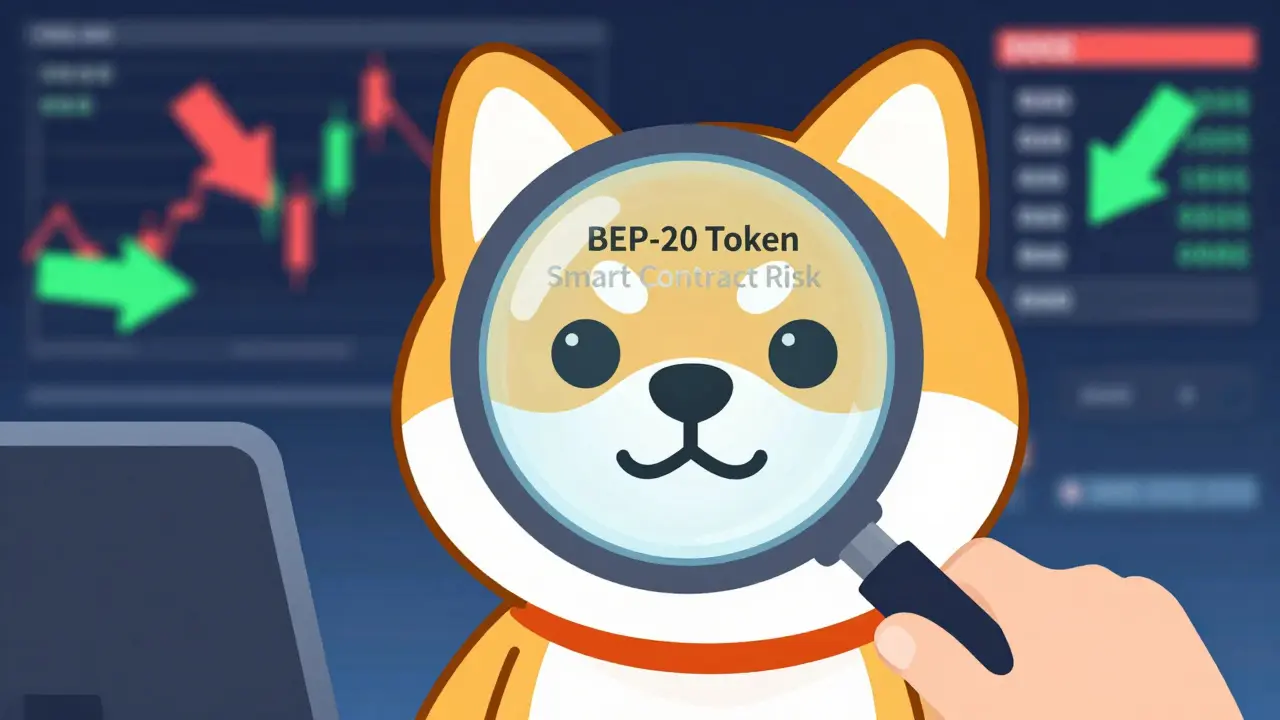
- Smart Contract Dependency: As a BEP-20 token, SUPER DOGE exists as code within a smart contract. Its supply, transfer rules, and potential burn mechanisms are defined by this contract. Unlike the transparent, open-source history of original Dogecoin, many BSC meme tokens lack public audits or detailed whitepapers.
This technical setup makes SUPER DOGE easier to trade on decentralized exchanges (DEXs) like PancakeSwap, but it also introduces smart contract risk. If there is a bug in the token’s code, or if the developers retain hidden privileges (like minting infinite tokens), holders can suffer total losses.
Price, Liquidity, and Market Reality
Let’s talk about the numbers, because they tell a very different story than the marketing hype might suggest. Data aggregators like Crypto.com list SUPER DOGE with a price often hovering around $0.001089 USD. While a sub-cent price sounds "cheap," it is misleading. Price per token does not equal value; market capitalization and liquidity do.
Here is the reality of SUPER DOGE’s market status based on recent data snapshots:
- Negligible Volume: Trading volume is frequently reported as "N/A" or extremely low. This means there are very few buyers and sellers active at any given moment.
- High Slippage Risk: With low liquidity, selling a large amount of SUPER DOGE could crash the price significantly. You might want to sell $100 worth, but only get $80 because there aren’t enough buy orders waiting.
- Volatility: Prices can swing wildly. One snapshot showed a +1.67% gain, while another showed a -1.28% drop. In micro-cap tokens, these swings can turn into 50% or 90% drops overnight without warning.
Compare this to original Dogecoin, which processes over $3 billion in daily volume. That liquidity allows you to enter and exit positions easily. SUPER DOGE lacks this depth, making it a high-risk speculative asset rather than a stable store of value.
Community Hype vs. Verified Fundamentals
Proponents of SUPER DOGE often highlight its "rapidly growing community" and "collaborative ethos." Sources like Blockspot.io describe it as an emerging project focused on mutual support. While community is vital in crypto, you must ask: what backs this community?
In the case of original Dogecoin, the community is backed by:
- A decade-long track record since 2013.
- Real-world usage for tipping on Reddit and Twitter.
- Major exchange listings (Coinbase, Binance, Kraken).
- Transparent development teams.
For SUPER DOGE, the available information is sparse. There are no widely recognized founders, no published whitepaper detailing long-term utility, and no evidence of major institutional adoption. Descriptions calling it a "new type of currency with innovative technology" are generic marketing phrases used by thousands of BSC tokens. Without concrete use cases-such as integration into DeFi protocols, NFT marketplaces, or real-world payment systems-the value proposition rests entirely on speculation.
Be wary of Telegram groups or Discord servers promising guaranteed returns. In the world of anonymous BSC tokens, "community" can sometimes mask pump-and-dump schemes where early insiders sell off their holdings once retail investors buy in.
Is SUPER DOGE a Good Investment?
I am not a financial advisor, but I can help you assess the risk profile. SUPER DOGE falls into the category of high-risk, speculative assets. Here is how to approach it:
Who might consider it?
- Experienced traders who understand how to read on-chain data and manage extreme volatility.
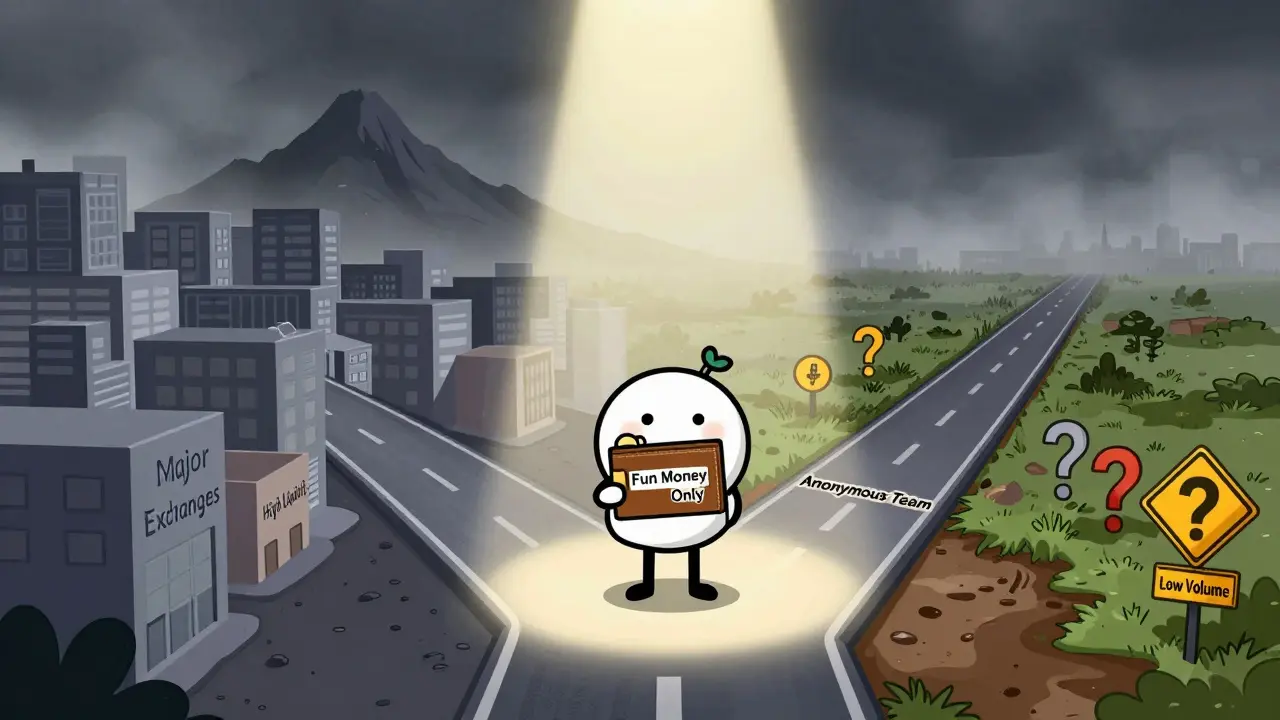
- Investors willing to allocate only "fun money"-funds they are prepared to lose 100% of.
Who should avoid it?
- Beginners new to cryptocurrency.
- Anyone seeking stable growth or long-term savings.
- Investors who confuse ticker symbols and might accidentally buy SUPER DOGE instead of Dogecoin.
If you decide to proceed, never invest more than you can afford to lose. Treat it like a lottery ticket, not a retirement plan. Always verify the contract address on a trusted explorer like BscScan before connecting your wallet. Never click links from unknown sources claiming to offer "free SUPER DOGE"-these are almost always phishing scams designed to drain your wallet.
Key Takeaways for Safe Trading
To navigate the confusing landscape of meme coins, keep these rules in mind:
- Check the Network: Always confirm if you are trading on the mainnet (Dogecoin) or a sidechain/token platform (BSC/Ethereum).
- Verify Liquidity: Look for consistent trading volume. If volume is "N/A" or near zero, stay away.
- Research the Team: Anonymous teams are common in crypto, but verified teams add a layer of accountability. Lack of transparency is a red flag.
- Use Hardware Wallets: For any significant holdings, use a hardware wallet like Ledger or Trezor that supports BSC tokens, rather than leaving funds on an exchange.
Crypto is exciting, but it is also filled with traps. SUPER DOGE is a real token, but it is a small, illiquid one operating in the shadows of its much larger, more established namesake. Do your homework, check your addresses, and trade carefully.
Is SUPER DOGE the same as Dogecoin?
No. SUPER DOGE is a separate token built on the Binance Smart Chain (BSC). Original Dogecoin is a standalone blockchain launched in 2013. They have different technologies, different teams, and different market values. Confusing them can lead to significant financial loss.
Where can I buy SUPER DOGE?
SUPER DOGE is primarily traded on decentralized exchanges (DEXs) like PancakeSwap due to its presence on Binance Smart Chain. Some centralized exchanges like Bitget may also list it. Always verify the contract address before trading to ensure you are buying the correct token.
Why is the trading volume for SUPER DOGE listed as N/A?
An "N/A" volume usually indicates that the token has very low trading activity or is not actively tracked by major data aggregators. This suggests low liquidity, meaning it may be difficult to buy or sell large amounts without affecting the price significantly.
What wallet do I need for SUPER DOGE?
You need a wallet that supports Binance Smart Chain (BSC) tokens, such as Trust Wallet, MetaMask, or SafePal. You cannot use a standard Dogecoin wallet or a Bitcoin-only wallet to store SUPER DOGE.
Is SUPER DOGE a scam?
While not necessarily a "scam" in the legal sense, SUPER DOGE carries high risks typical of anonymous meme tokens. These include low liquidity, lack of transparency, and potential for rapid value depreciation. Always treat such investments as high-risk speculation and never invest money you cannot afford to lose.