

Imagine a world where a government could quietly change a law in a digital archive, or a pharmaceutical company could alter the expiration date of a batch of medicine without anyone noticing. In traditional databases, this is exactly what happens-someone with "admin" access can change, delete, or forge records. This is why blockchain immutability is such a big deal. It isn't just a technical feature; it's a guarantee that once a piece of data is written into the ledger, it's carved in digital stone. If you try to change one character in an old block, the cryptographic hash breaks, and the entire network knows immediately.
For most of us, a slightly wrong typo in a spreadsheet is a nuisance. But in sectors where a single altered digit can mean the difference between a patient getting the right drug or a fraudulent transaction slipping through a bank, this "cannot-be-changed" property is a lifesaver. Here is how this technology is actually being used to solve high-stakes problems.
Securing the Future of Healthcare and Patient Records
Healthcare is perhaps the most sensitive area for data integrity. Traditionally, Electronic Medical Records is a digital version of a patient's paper chart that is often fragmented across different providers . When records are moved between hospitals, things get lost or, worse, accidentally altered. By using a blockchain, providers can ensure that a patient's history-allergies, previous surgeries, and chronic conditions-remains untouched.
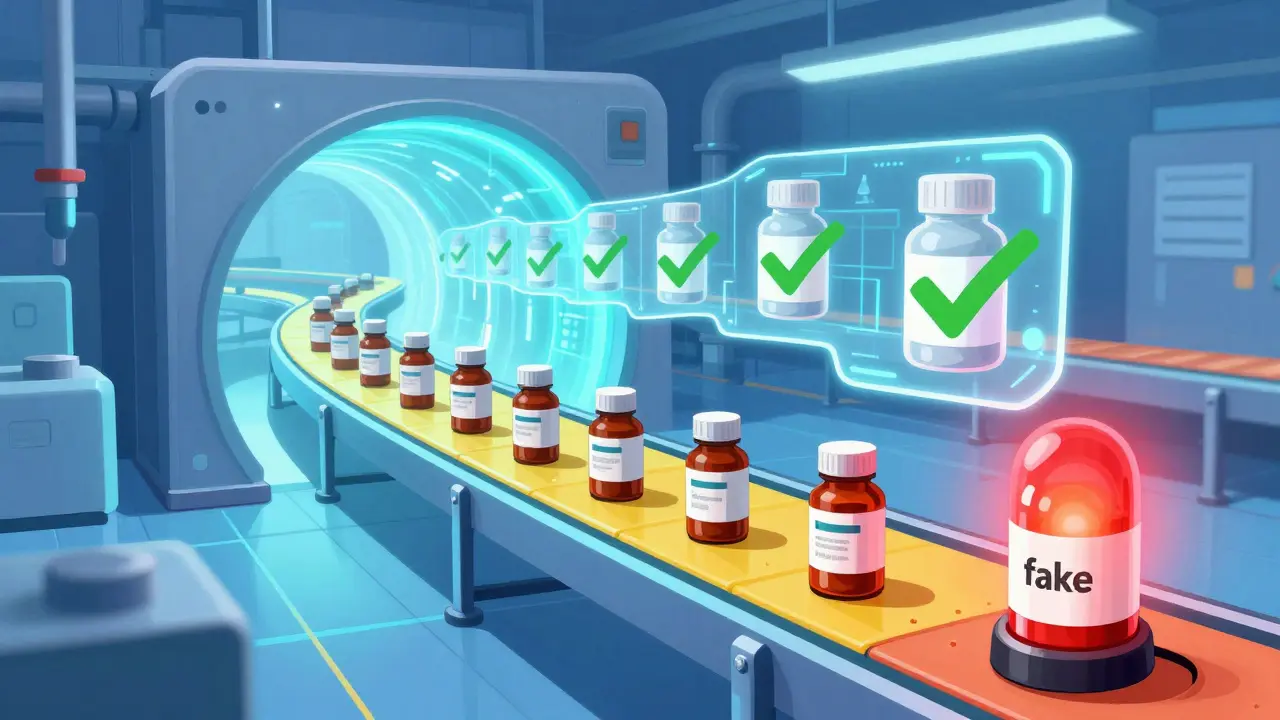
Because the ledger is distributed, no single hospital "owns" the truth. This prevents unauthorized changes to a patient's history, which is critical during emergencies. Beyond the clinic, immutability is tackling the counterfeit drug crisis. Pharmaceutical companies now use blockchain to track medicine from the factory to the pharmacy. If a bad actor tries to insert fake pills into the supply chain, the immutable record will show a gap or a mismatch in the origin data, making the fraud obvious instantly.
Bulletproof Audit Trails for Cybersecurity
Every company wants an audit trail, but most are just logs in a database that a skilled hacker can wipe after an attack to hide their tracks. Blockchain changes this by creating a record that is functionally impossible to delete. In cybersecurity, this is used for forensic analysis. If a breach occurs, investigators can look at the immutable log to see exactly who accessed what and when, knowing the attacker couldn't have "cleaned up" the evidence.
This is especially vital for regulatory compliance in finance. Instead of spending months and millions on manual audits, companies can provide regulators with a cryptographic proof that their records haven't been tampered with since the moment they were entered. It moves the process from "trust me, we checked the logs" to "here is the mathematical proof that nothing changed."
End-to-End Transparency in Supply Chains
Supply chains are often a mess of emails, PDFs, and phone calls. When a foodborne illness outbreak happens, it can take weeks to find the contaminated farm. With an immutable ledger, that time drops to seconds. Projects like the IBM Food Trust is a blockchain-based network that allows food suppliers and retailers to track produce in real-time allow retailers to trace a bag of spinach back to the exact field it was picked from.
| Feature | Traditional Database | Blockchain Ledger |
|---|---|---|
| Data Alteration | Possible by admin/hackers | Mathematically impossible |
| Verification | Requires third-party trust | Self-verifying via cryptography |
| Traceability | Fragmented/Manual | Instant and continuous |
| Proof of Origin | Paper-based/Easily forged | Digital twin/Immutable hash |
This also extends to luxury goods. If you're buying a high-end watch, you don't want to rely on a piece of paper that can be printed in a basement. An immutable record creates a "digital twin" of the asset. Every time the watch changes hands, the record is updated. Since the history cannot be rewritten, the provenance of the item is guaranteed.
Giving Power Back to the User with Identity Management
Most of our identities are stored in silos-Google, Facebook, or government databases. If those databases are hacked, your identity is stolen. The concept of Self-Sovereign Identity is a model for digital identity where individuals have full ownership and control of their personal data uses blockchain immutability to flip this script. Instead of a company vouching for you, the blockchain holds an immutable proof of your identity verification.
For financial institutions, this streamlines the KYC (Know Your Customer) process. Currently, every bank you open an account with makes you upload the same ID and utility bills. With an immutable identity system, you can have your identity verified once. That verification is recorded on the blockchain. When you join a new bank, they simply check the immutable record. They don't need to store your sensitive documents, and you don't have to resubmit them, reducing the risk of data breaches.
Protecting Intellectual Property and Digital Rights
Digital art and music are incredibly easy to steal. Once a file is online, it can be copied a million times. While blockchain can't stop someone from taking a screenshot, it provides an immutable timestamp of creation. This serves as indisputable proof of who owned the asset first.
Creators can use Smart Contracts is self-executing contracts with the terms of the agreement directly written into lines of code to automate royalty payments. Because the contract is immutable, the artist doesn't have to trust a record label to calculate the payments correctly. The code executes the payment automatically based on the immutable data of sales, ensuring the creator gets their fair share without a middleman skimming off the top.
Governance and the Rise of DAOs
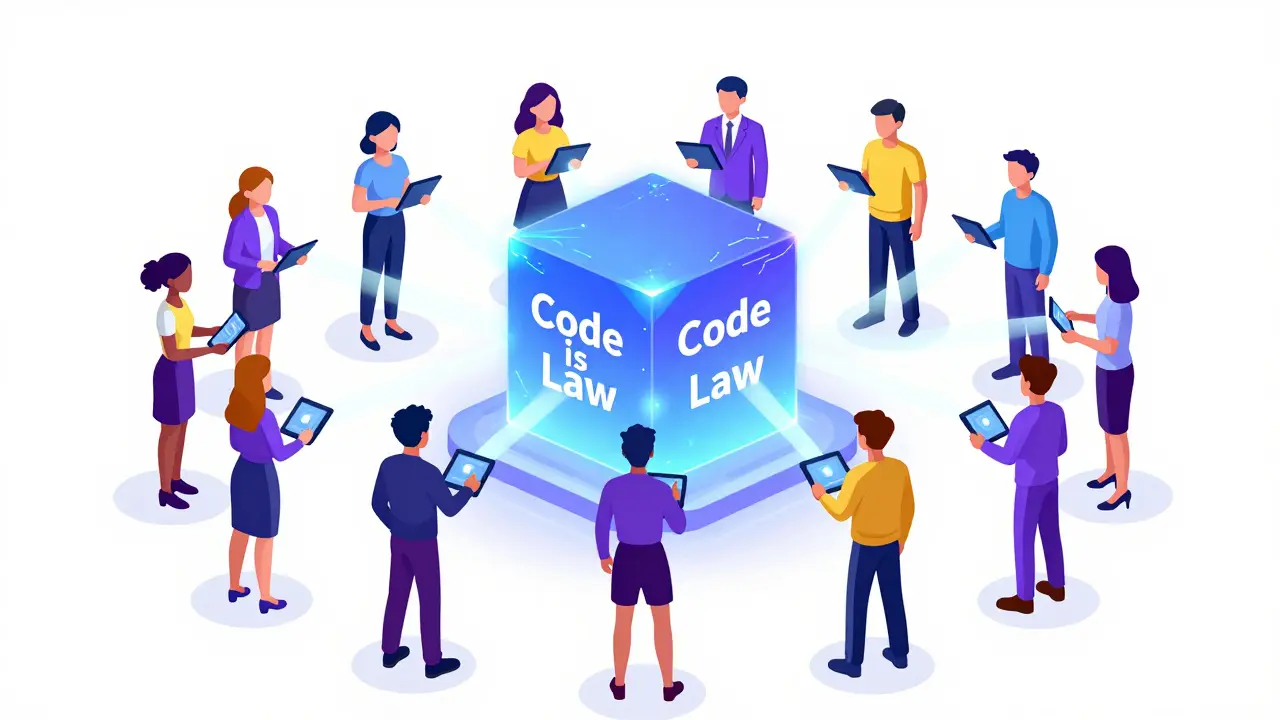
Traditional organizations suffer from "closed-door" decision-making. DAOs (Decentralized Autonomous Organizations) is organizations run by rules encoded as a computer program, transparently controlled by organization members solve this by putting the rules of the organization on the blockchain. If the community votes to change a treasury limit, that vote is recorded immutably.
No executive can swoop in and change the result of a vote after the fact. In a DAO, the code is the law. This creates a level of transparency where every single transaction and governance decision is public and unchangeable, eliminating the bureaucracy and corruption often found in traditional corporate structures.
Research Integrity and Clinical Trials
One of the darker sides of science is "p-hacking" or data manipulation, where researchers tweak results to make a drug look more effective than it is. This can lead to dangerous medications reaching the market. Blockchain immutability prevents this by requiring researchers to hash their data and protocols *before* the trial begins.
Once the data is recorded during the trial, it cannot be altered to fit a desired narrative. This ensures the integrity of the research and builds trust with both the regulators and the public. When combined with the Internet of Medical Things (IoMT), where devices automatically upload data to the blockchain, the human element of manipulation is removed entirely.
Can data on a blockchain ever be changed if it's immutable?
Strictly speaking, no. You cannot "edit" a block. However, you can add a *new* block that updates the information. For example, if a balance changes from $10 to $20, the original $10 record stays there forever, and a new record is added. The history remains intact, which is exactly why it's useful for auditing.
What happens if someone enters wrong data into an immutable blockchain?
This is known as the "garbage in, garbage out" problem. Immutability ensures the data isn't changed, but it doesn't guarantee the data was correct when it was first entered. This is why blockchain is usually paired with strict validation processes or multi-signature approvals to ensure the data is accurate before it's committed to the ledger.
Does immutability conflict with privacy laws like GDPR?
Yes, this is a major challenge. GDPR's "right to be forgotten" clashes with blockchain's "never forget" nature. The solution is usually to store sensitive personal data *off-chain* and only store a cryptographic hash (a digital fingerprint) of that data on the blockchain. To "delete" the data, you destroy the off-chain source, making the on-chain hash useless.
Is immutability the same as security?
Not exactly. Immutability means the data can't be changed. Security covers a broader range, including who can *see* the data (privacy) and who can *add* data (access control). A blockchain can be immutable but still insecure if the private keys to the accounts are stolen.
How does hashing create immutability?
Each block contains a unique mathematical fingerprint (hash) of the previous block. If you change one bit of data in Block 1, its hash changes. Because Block 2 was built using Block 1's hash, Block 2 now becomes invalid. This creates a domino effect that breaks the entire chain, alerting the network to the tampering immediately.
Next Steps and Implementation
If you're looking to implement an immutable system, start by identifying where "trust gaps" exist in your current workflow. Are you relying on a third party to verify documents? Are you worried about internal staff altering records?
- For Businesses: Look into private or consortium blockchains if you need high speed and privacy but still want an immutable audit trail for regulators.
- For Developers: Focus on the logic of your smart contracts. Since the code is immutable once deployed, a bug in your contract can be permanent and costly. Use rigorous auditing tools before launching.
- For Consumers: Support platforms that use self-sovereign identity to take control of your personal data and reduce your reliance on centralized tech giants.


vijendra pal
Actually most people dont get that hashing is the real magic here!! 🚀 If you dont understand SHA-256 you dont understand blockchain period. Its basically the bedrock of the whole thing and most people just treat it like a magic box 📦